Online Piano Lessons vs. Traditional Teachers: Which Gets Kids Results Faster?
![[HERO] Online Piano Lessons vs. Traditional Teachers: Which Gets Kids Results Faster?](https://ipianolab.s3.us-west-2.amazonaws.com/blog/posts/7/assets/marblism/cdn.marblism.com/k7S6AizRnVG.webp)
If you're trying to figure out whether to sign your child up for traditional in-person piano lessons or try an online program, you're asking the right question. And honestly? The answer might surprise you.
Here's the thing: both methods can absolutely work. Your child can learn piano with a traditional teacher who comes to your house once a week, and they can also learn through a well-designed online program. The real question isn't whether one is "better" than the other in some absolute sense, it's which one helps your child learn faster and stay more engaged.
Let's break down what actually matters when it comes to getting results.
The Traditional Piano Lesson Model (And Why It Works... Sometimes)
Traditional piano lessons typically look like this: A piano teacher for kids comes to your home (or you go to theirs) once a week for 30-60 minutes. Your child plays through their pieces, the teacher corrects mistakes, assigns new practice tasks, and then... your child is on their own until next week.
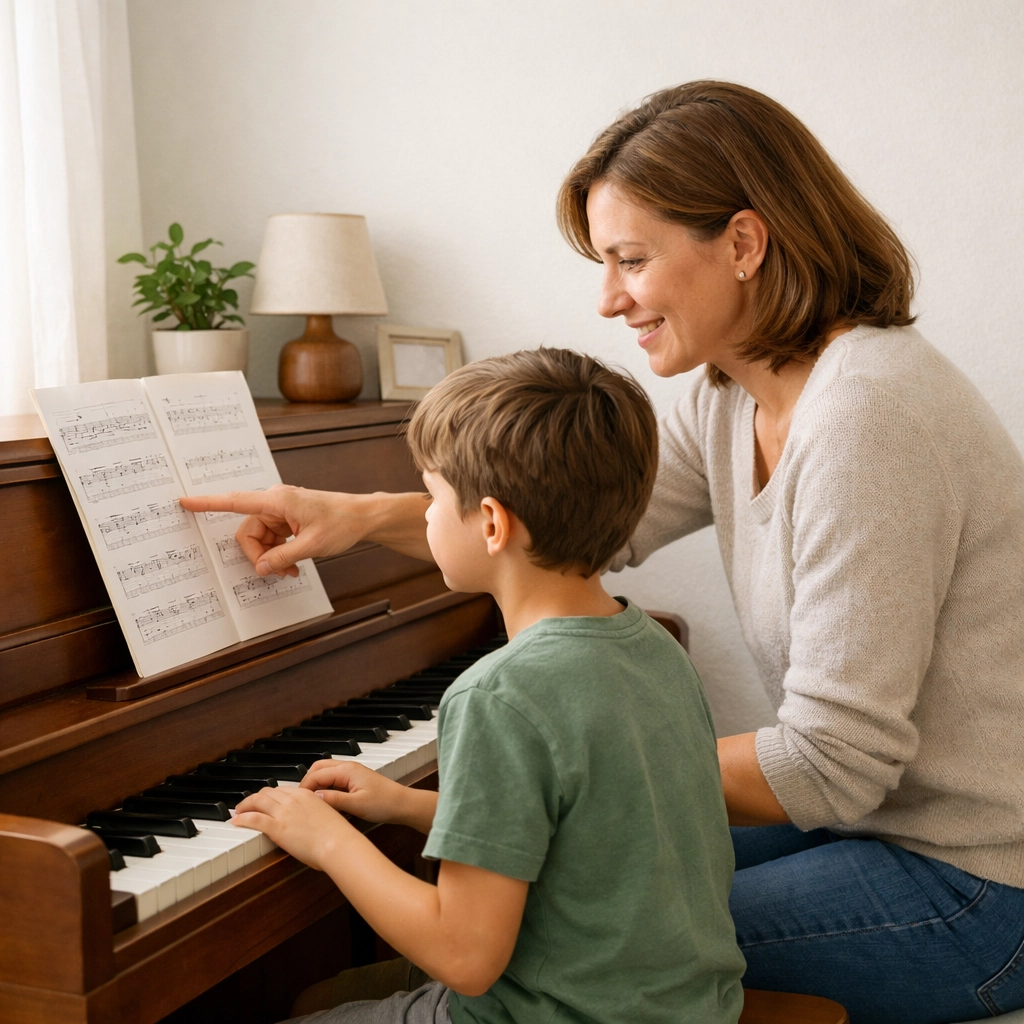
This model has worked for generations, no question about it. When it works well, kids get:
- Direct, in-person feedback on their hand position and technique
- A consistent weekly appointment that creates accountability
- Real-time answers to questions as they come up during the lesson
But here's where things get tricky. Once that lesson ends, your child practices alone for the next six days. They might remember what the teacher said on Monday, but by Thursday? Those instructions start getting fuzzy. They practice the same mistakes over and over because no one's there to catch them. And when they get stuck on a tricky measure, they either have to wait until next week to ask about it, or they just skip it entirely.
The result? Progress happens slowly. Kids who stick with it absolutely improve, but there's a lot of wasted practice time in between lessons.
How Online Piano Lessons Work Differently
Now let's talk about iPianoLab, which offers both in-person private lessons and an online curriculum that can supplement those lessons (plus online-only options)—all designed from the ground up for how kids actually learn.
The biggest game-changer? Your child can practice with their teacher on-screen anytime they sit down at the keyboard. Not once a week. Not when it's convenient to schedule a Zoom call. Anytime.
Here's what that looks like in practice:
Your child opens the lesson on their tablet or laptop, and their instructor is right there on the screen, demonstrating exactly what to do. They can watch the teacher's hands, pause when they need to, rewind when something doesn't click the first time, and replay the same section ten times if that's what it takes.
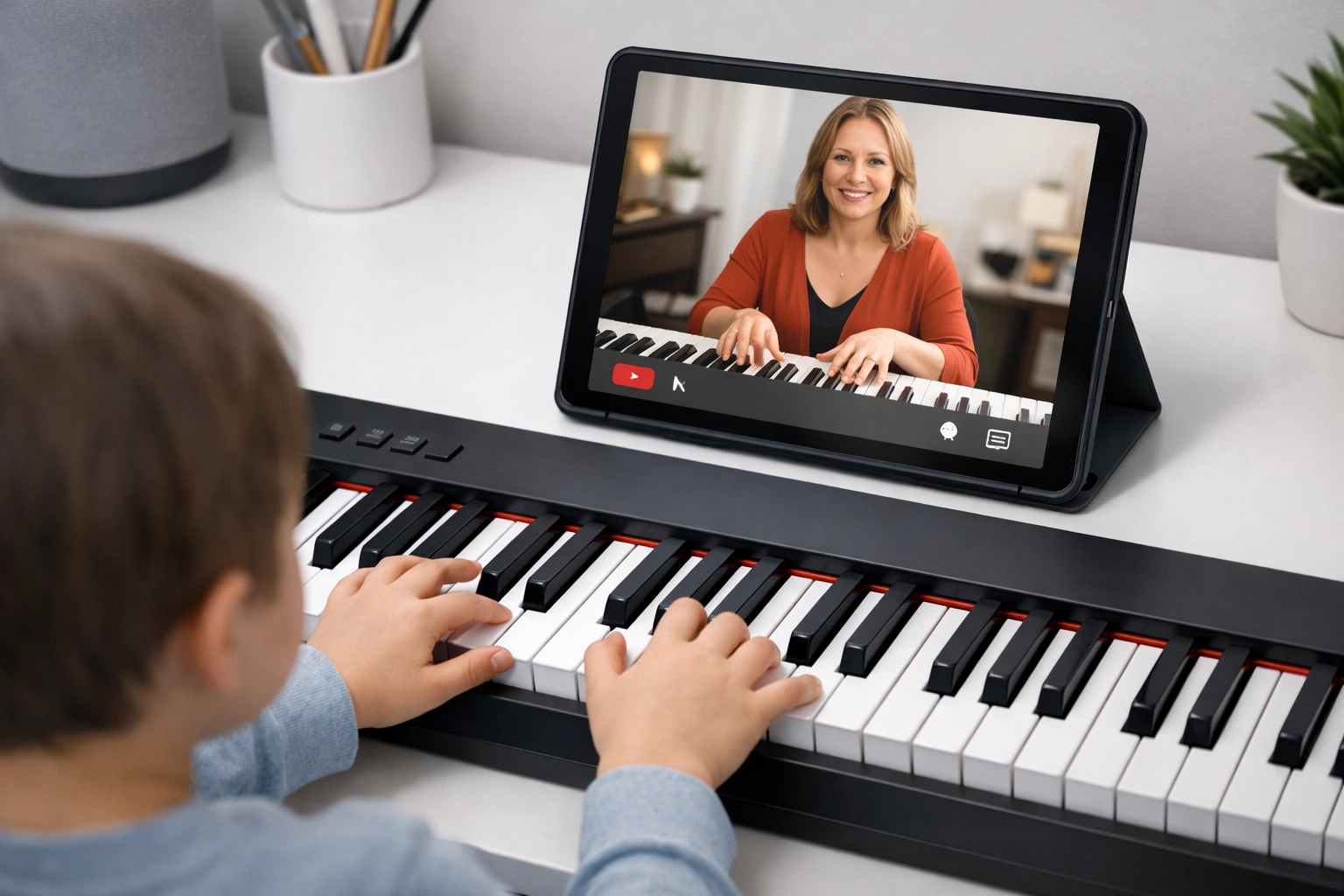
Think about how different this is from traditional practice. Instead of trying to remember what the teacher said three days ago, your child has their instructor available every single time they practice. That's five, six, seven practice sessions per week with guidance instead of just one.
Why "Always Available" Actually Speeds Up Progress
When researchers look at what helps kids learn piano faster, three things keep coming up: quality instruction, consistent practice, and immediate feedback.
Traditional lessons nail the first one (assuming you found a great teacher), but they struggle with the other two. Kids might practice consistently, but they're practicing alone. And feedback? That only happens once a week.
Online piano lessons flip this equation. With a platform like iPianoLab, kids get:
- Instruction that's been refined and perfected (not dependent on whether your teacher is having a good or bad day)
- Built-in consistency because lessons are always accessible
- Immediate visual feedback by following along with the on-screen teacher
One study even suggested that online piano students can progress up to 67% faster with the right program, largely because they're not wasting practice time on repeated mistakes.
But beyond the numbers, there's something else that matters even more: engagement.
The Engagement Factor (Why Kids Actually Stick With It)
Let's be real, most kids quit piano within the first year. Not because they can't learn it, but because they get bored or frustrated.
Traditional lessons often start with scales, theory exercises, and classical pieces that most eight-year-olds have zero interest in. It's the "eat your vegetables" approach to music education.
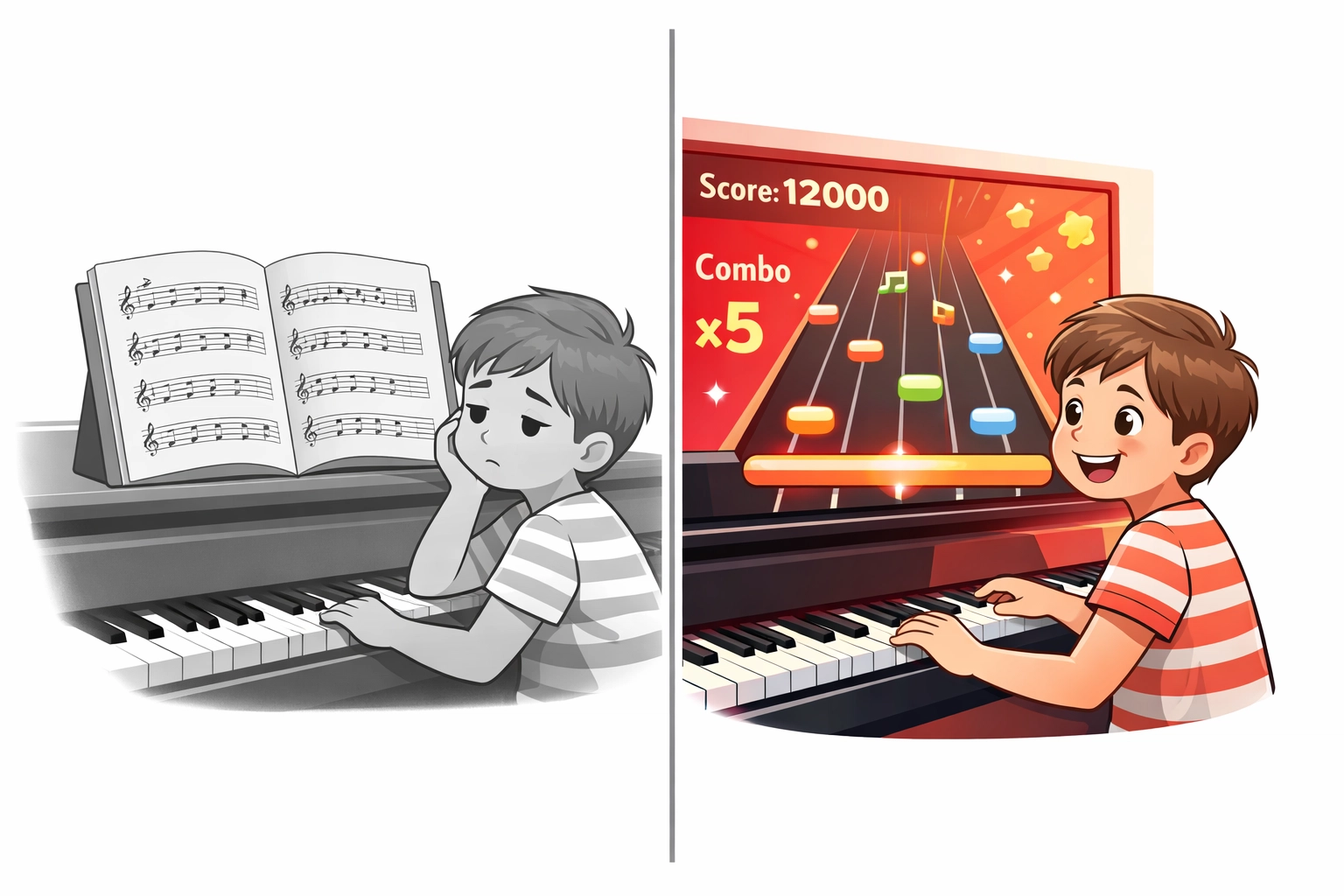
iPianoLab takes a completely different approach. Kids learn by playing songs they actually know and love, pop hits, movie soundtracks, songs they hear on the radio. They're learning the exact same skills (rhythm, hand coordination, reading music), but they're excited about what they're playing.
When kids are engaged, they practice more. When they practice more, they improve faster. It's pretty straightforward.
Plus, there's a game-based element that makes practice feel less like homework and more like... well, not homework. Kids earn points, unlock new songs, and track their progress in ways that appeal to how their brains are wired.
What About the Cost?
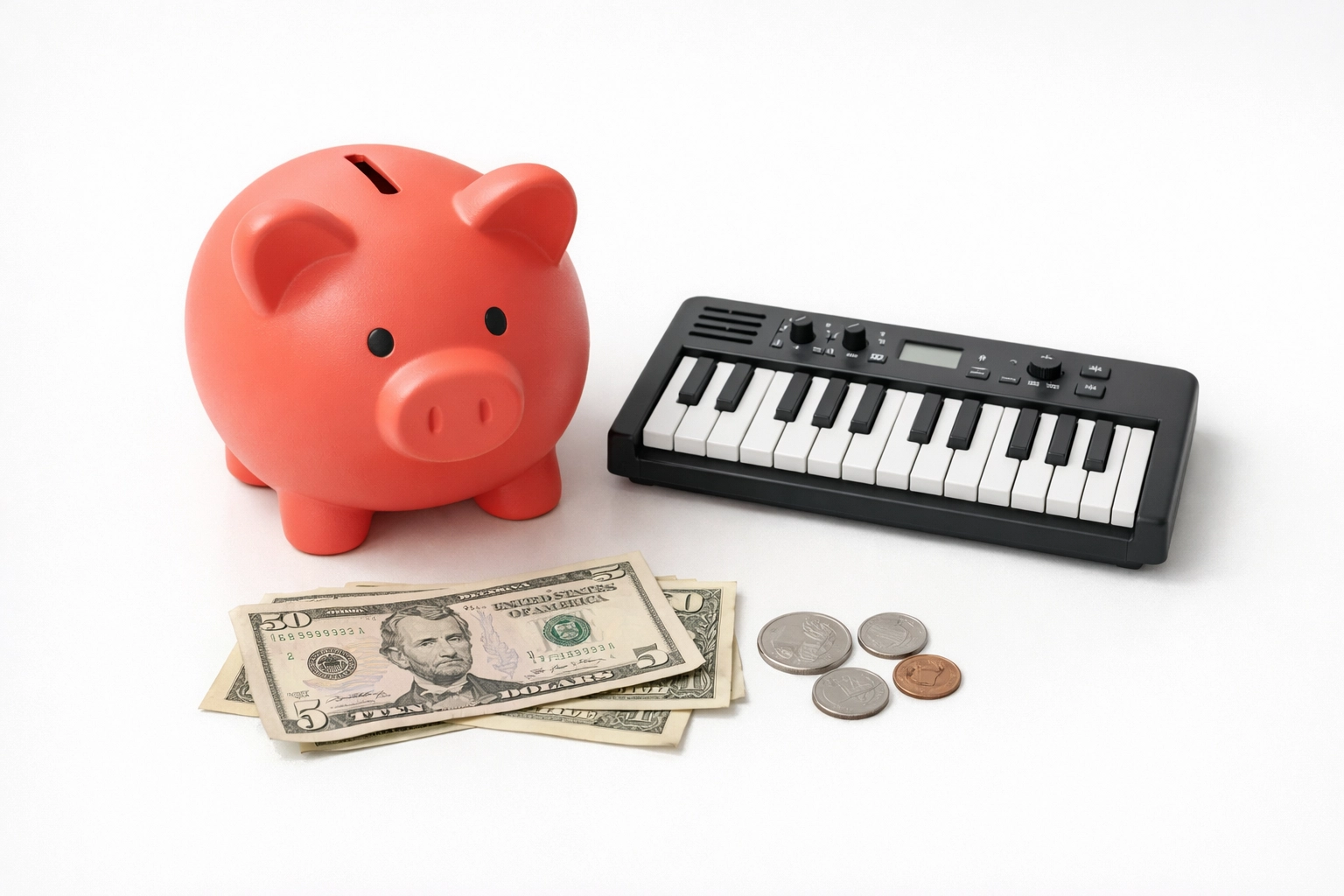
Here's something worth mentioning: online piano lessons typically cost about 45% less than hiring a local piano teacher for kids.
Traditional private lessons usually run anywhere from $30-$80 per session (sometimes more in cities). That's $120-$320+ per month for once-a-week instruction.
Online programs like iPianoLab offer unlimited access to hundreds of lessons for a fraction of that cost. Your child can take as many lessons as they want, practice as much as they want, and you're not paying by the hour.
If budget is a concern (and when isn't it?), online lessons remove a major barrier to entry.
"But What About Real-Time Feedback?"
This is the question parents ask most often, and it's totally valid. "Isn't it better to have a teacher right there who can correct mistakes in the moment?"
In theory, yes. In practice? Not always.
Here's why: Most traditional teachers spend the majority of each lesson just listening to what the student practiced that week. They offer corrections, sure, but those corrections only help if the child remembers them during solo practice. And most don't.
With iPianoLab's method, the on-screen instructor demonstrates the correct technique during every practice session. Kids see the right way to play something immediately before they try it themselves. They're not developing bad habits in the first place because they have a model to follow in real-time.
And if you want real-time, in-person coaching, iPianoLab also offers private lessons—with the option to use the online curriculum at home between lessons so practice stays clear (and progress stays steady). Or you can go online-only if that fits your schedule better.
So Which Gets Kids Results Faster?
The honest answer? A high-quality online program designed specifically for kids: like iPianoLab: typically produces faster results than traditional once-a-week lessons.
Why? Because learning happens during practice, not during lessons. And when kids have access to expert instruction during every practice session (not just once a week), they simply learn more efficiently.
They make fewer mistakes because they're following along with the teacher. They stay more engaged because they're playing songs they love. They practice more consistently because the lessons are always available when they have time. And they progress faster because they're not spending six days a week practicing incorrectly.
Does this mean traditional lessons don't work? Of course not. Plenty of kids have learned piano the traditional way and gone on to play beautifully. But if you're specifically asking which method gets results faster, the research and real-world experience both point toward well-designed online programs.
Ready to See the Difference?
If you're curious what iPianoLab looks like for your family—private in-person lessons, online-only learning, or private lessons plus online support at home—you can check out the options here: https://ipianolab.com. Low pressure, simple choices, and you can pick what fits your schedule.
The good news? You don't have to choose between "working" and "working quickly." With the right approach, you can have both. Your child can learn piano in a way that's actually fun, fits into your family's schedule, and helps them improve faster than the traditional once-a-week model.
And honestly? That's exactly what music education should look like in 2026.