Can My Child Start Piano Lessons in the Middle of the School Year?
Yes—children can start piano lessons in the middle of the school year. A January, November, or mid-semester start is not automatically “too late.” The better question is whether the available class or learning format fits your child’s age, attention, schedule, and beginner level.
A new student does not need to catch up on every song other children have played. They need a clear entry point, a manageable first routine, and instruction that begins from what they know now.
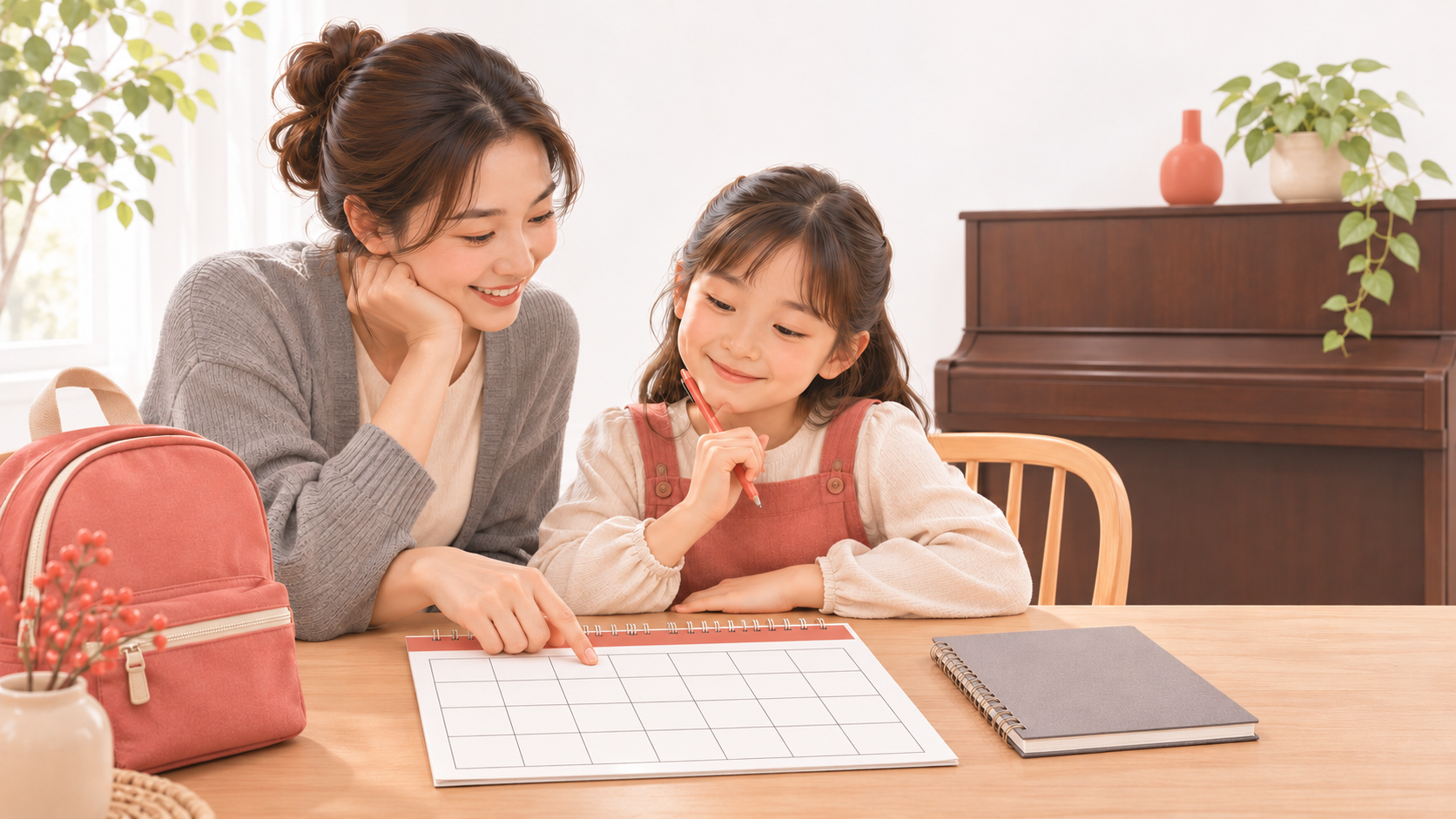
Is it okay to start piano lessons midyear?
It is usually fine to start midyear when a suitable beginner opening or flexible learning path is available. Piano learning is not tied to one school-calendar start date. Beginners still need the same foundations—listening, rhythm, keyboard geography, simple patterns, note reading, coordination, and a repeatable practice routine—whether they begin in September or February.
Midyear can even be a practical time to begin. The family already knows the school-week rhythm, so it is easier to see where one lesson and a few short practice windows could realistically fit. The key is to avoid treating the child like a late arrival who must race through earlier material.
| Parent concern | What matters more |
|---|---|
| “Everyone else started in the fall.” | Whether the program offers an appropriate beginner entry point now. |
| “My child will be behind.” | Starting at the correct level and building one skill at a time. |
| “Our schedule is already full.” | A lesson time and short home routine the family can repeat. |
| “We missed the ideal age.” | Current curiosity, readiness, and willingness to try again. |
Use this five-question midyear readiness check
A child does not need prior music experience. Before enrolling, look for a practical match between the child and the routine:
- Is your child interested? Curiosity about songs, sounds, or the instrument is a better starting signal than pressure from an adult.
- Can they follow one short direction? A beginner only needs to listen, copy, stop, and try again in small steps.
- Is there a repeatable time? One reliable lesson time plus a few brief home sessions is more useful than an ambitious plan the family cannot sustain.
- Can the lesson start at the beginning? Ask whether a new student will receive a beginner entry point rather than being expected to imitate material they have never learned.
- Does the format fit? Some children enjoy a group routine; others need a quieter or more flexible online path.
If you are also deciding whether your child is ready by age or development, use the parent piano-readiness guide. A midyear date does not override the child’s actual readiness.
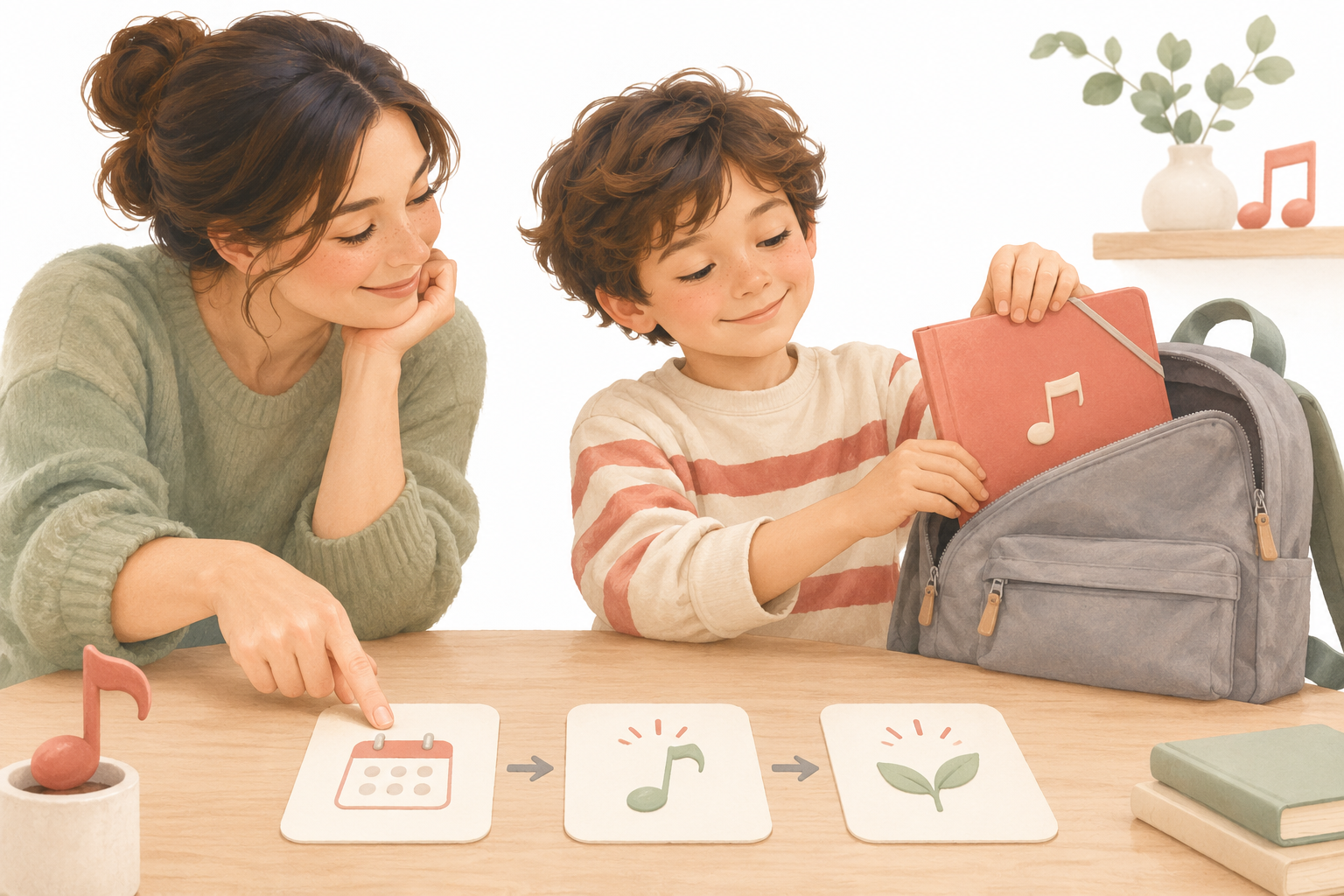
What should the first two weeks of piano lessons look like?
The first two weeks should create clarity, not speed. A healthy beginning helps the child know where to start, what to repeat, and how to finish one short practice session.
Week 1: learn the routine
- Meet the teacher or open the online learning path.
- Learn one or two basic musical actions, such as copying a rhythm or finding a starting area.
- Leave with one specific task the child can show at home.
- Choose two or three short practice windows that do not compete with the hardest parts of the school day.
Week 2: repeat before adding
- Reconnect with the same starting routine.
- Repeat the easiest successful part before adding a new step.
- Notice whether the child understands the assignment without constant correction.
- Ask the teacher one focused question if the home step is unclear.
Parents do not need to become the piano teacher. Your most useful job is to make starting easy, protect a calm practice window, and help the child remember the teacher’s next step. The guide to helping a child practice without becoming the teacher shows how to do that with less friction.
How much should a child practice after a midyear start?
Keep early practice short enough that the child can finish with a clear success. The exact length depends on age, assignment, and lesson format. For a new beginner, a focused five- or ten-minute session can be more useful than a long session filled with guessing and correction.
Use one tiny goal at a time: clap the rhythm, find the starting note, repeat the first phrase, or show the easiest part once. When the child knows what to do next, consistency can grow naturally. If the assignment gets lost between lesson and home, use the practice-assignment reset.
Choose the right midyear lesson format
The best format is the one your child can enter at an appropriate level and keep using. Before enrolling, confirm current availability and how beginners join.
After-school or group classes
A group can work well for children who enjoy classmates, shared routines, and a predictable weekly meeting. Ask whether there is a new beginner opening, how placement is handled, and what a child should know before the first class. Explore the current iPianoLab school-program path.
Online learning
An online path can be useful when the family needs a flexible start date or wants to repeat instructions at home. It still works best with a regular time, a ready learning space, and brief adult help at the beginning. Review iPianoLab online learning.
Private lessons
Private instruction can suit a child who benefits from individual pacing, quieter feedback, or a schedule that does not match a group opening. Ask how the teacher introduces a complete beginner and how practice directions are shared with parents.
Questions to ask before enrolling midyear
- Is this opening designed for a complete beginner?
- Will my child start at the beginning of a level or receive an individual entry plan?
- What should we have ready at home?
- How will we know what to practice after the first lesson?
- What happens if the current group is already beyond the beginner material?
- Is there another format if this opening is not the right fit?
A trustworthy answer may be “this particular class is not the right entry point.” That is useful placement information, not a sign that the child missed the year.
Frequently asked questions
Is January too late to start piano lessons?
No. January can be a good time to start if an appropriate beginner option is available and the family can support a simple weekly routine. Confirm placement rather than assuming every ongoing class accepts new beginners.
Can my child join a piano class after it has already started?
Sometimes, but it depends on the class structure, current level, and available openings. Ask whether the teacher can provide a true beginner entry point without asking the child to skip foundations.
Will a midyear beginner be behind other children?
Children progress at different rates. The useful comparison is not with students who began earlier; it is whether your child understands the next small step, can repeat it, and is gaining confidence.
Should we wait until summer or next fall?
Wait if the schedule has no sustainable space, the child is not interested, or no suitable beginner option is available. Do not wait only because the calendar is between traditional enrollment seasons. A flexible online or private path may offer another entry point.
Does my child need a piano before the first lesson?
Ask the specific program what is required. Most children benefit from regular access to a suitable keyboard instrument for home practice, but families should confirm the expected setup before buying equipment.
Your child did not miss the right moment
The right moment is not one date on the school calendar. It is the point when interest, a suitable beginner path, and a repeatable family routine meet. Start with one clear lesson, one small home task, and enough time to see whether your child wants to return.
See current iPianoLab signup options or explore online learning.