The 15-Minute Daily Piano Practice Plan That Actually Gets Results (No Nagging Required)
![[HERO] The 15-Minute Daily Piano Practice Plan That Actually Gets Results (No Nagging Required)](https://cdn.marblism.com/BKr3t16DqYV.webp)
Let's be honest: getting your child to practice piano can feel like negotiating a hostage situation. You've tried reminders, timers, bribes, and maybe even a little guilt. But what if the problem isn't your child's motivation? What if it's the hour-long practice session you've been told they "need"?
Here's the truth that might change everything: 15 minutes of focused practice beats an hour of forced, distracted playing every single time. And the best part? When you structure those 15 minutes the right way, kids actually want to show up because they can see real progress without the exhaustion.
This isn't about lowering the bar. It's about working smarter with how to practice piano in a way that fits real life: busy schedules, short attention spans, and all.
Why Short Practice Sessions Work Better for Kids
Think about how kids learn anything new. Whether it's a video game level or a skateboard trick, they get better through repeated short bursts of focused effort: not marathon sessions. The same principle applies to piano lessons for kids.
When practice sessions stretch too long, several things happen:
- Focus deteriorates (usually around the 20-minute mark)
- Mistakes start getting repeated and reinforced
- Frustration builds instead of confidence
- Practice becomes something to dread rather than enjoy
But 15 minutes? That's doable. It's short enough that it doesn't feel overwhelming, but long enough to make real progress when structured properly. And here's the magic: when kids practice 4-6 days a week for just 15 minutes, they actually advance faster than those cramming in longer, sporadic sessions.
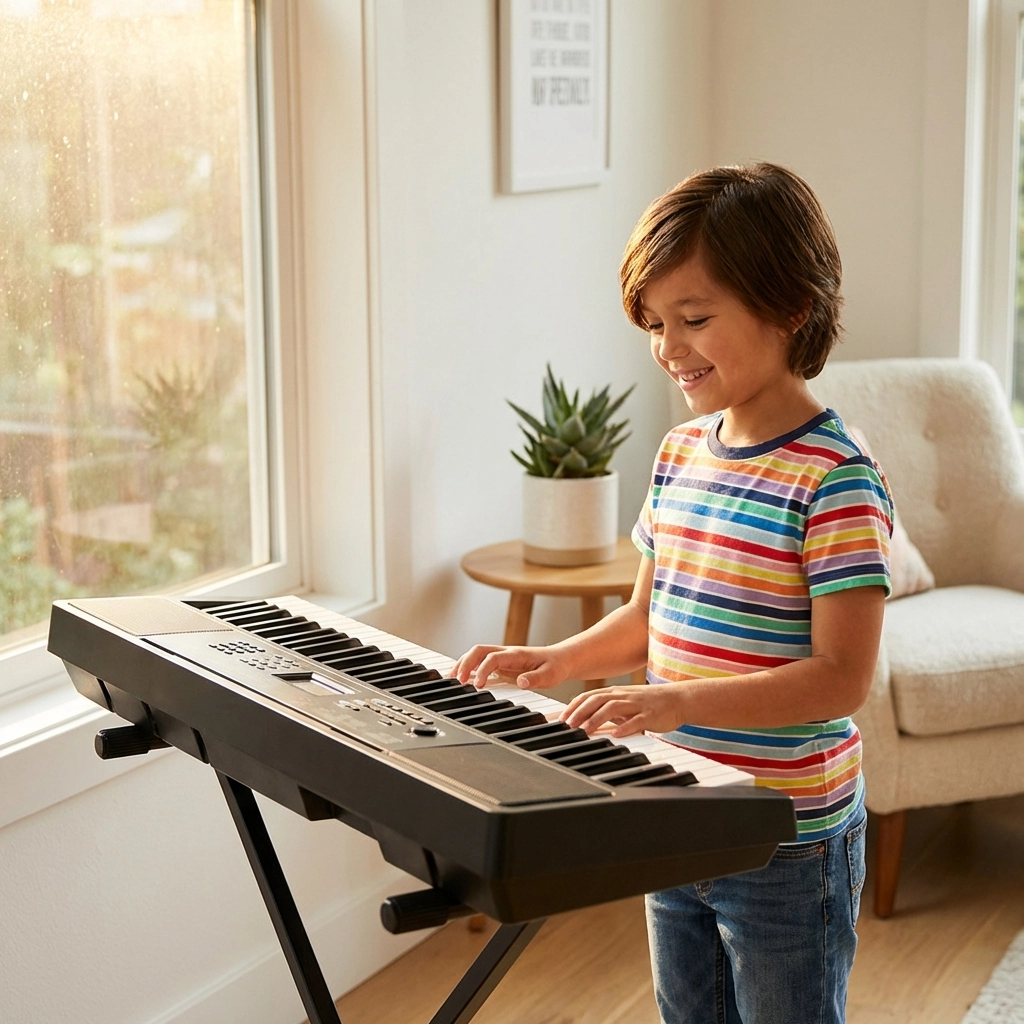
The 3-Phase Practice Structure That Works
Not all 15 minutes are created equal. The secret is dividing the time into three distinct phases. This structure gives your child a clear roadmap and prevents that aimless "playing through songs" approach that wastes time.
Phase 1: Warm-Up (5 minutes)
Start with something that gets the fingers moving and the brain engaged: but doesn't require heavy thinking. This might be:
- Simple scales in whatever key they're learning this week
- Finger exercises like five-finger patterns
- Hand coordination drills that feel more like games than work
The warm-up serves two purposes: it prepares the hands physically and removes that mental friction of "getting started." Your child gets an immediate small win, which sets a positive tone for the rest of the session.
Think of it like stretching before sports. Nobody questions that: it's just what you do.
Phase 2: Smart Planning (2 minutes)
This is the phase most kids skip, and it's costing them progress. Instead of randomly playing through their piece from the beginning (again), take two minutes to identify the problem spot.
Ask your child:
- "Which measure keeps tripping you up?"
- "Where do your hands get confused?"
- "What section sounds messy?"
Circle that section. That's the target for Phase 3. This laser-focused approach means your child will actually solve something in today's practice instead of just playing through problems over and over.
Phase 3: Deliberate Practice (8 minutes)
Now comes the real work: but it's focused work. Your child spends these 8 minutes working on that specific problem section identified in Phase 2.
This might mean:
- Playing just the right hand until it's smooth
- Slowing down the tricky measure to half-speed
- Practicing the hand coordination in that one spot
- Breaking it into even smaller chunks if needed
The goal isn't to play the whole piece. The goal is to make that one section noticeably better by the end of 8 minutes. That's measurable progress. That's what builds confidence and momentum.
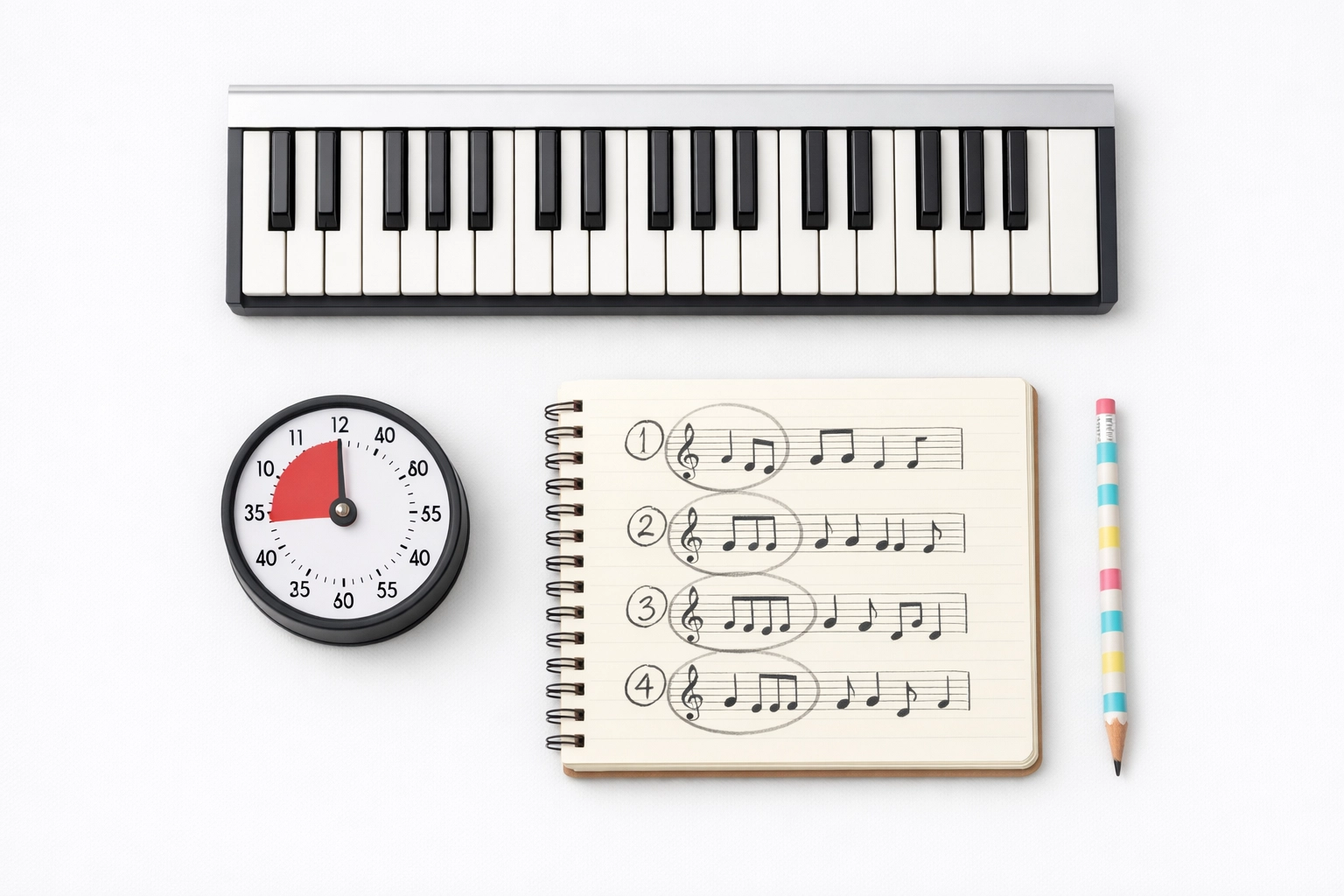
Making the Routine Stick (Without the Nagging)
Knowing what to practice is half the battle. Getting your child to actually do it consistently is the other half. Here's how to make this 15-minute routine a natural part of your day:
Anchor it to an existing habit. Right after school snack. Before dinner. After homework. When practice happens at the same time every day, it becomes automatic: no decision fatigue, no negotiation.
Keep the keyboard accessible. If your child has to dig the keyboard out of a closet and set it up every time, practice won't happen. Leave it set up in a common area where it's ready to go. (Need help choosing the right keyboard? Check out our keyboard buyers guide.)
Track the wins, not the minutes. Instead of asking "Did you practice for 15 minutes?" ask "Did you fix that tricky measure?" Progress is more motivating than time served.
Celebrate consistency over perfection. Four days of 15-minute practice beats one day of an hour-long session. The goal is building a sustainable habit, not cramming.
The iPianoLab Approach: Built for Busy Families
This efficient 15-minute structure isn't something we pulled out of thin air: it's baked into the iPianoLab method. We designed our beginner keyboard lessons specifically for families who don't have hours to spend on practice but still want their kids to develop real musical skills.
Every lesson breaks down into manageable chunks that kids can work through in short, focused sessions. The curriculum guides them to practice smart, not long. And because progress happens faster, motivation stays high: no nagging required.
As we evolve into PianoFlight, this approach to efficient, results-driven practice will be at the core of how we're shaping the future of music education. The days of forcing kids through hour-long torture sessions are over. The future is short, structured, and actually fun.
When You're Ready for More
If your child is crushing their 15-minute routine and hungry for more, that's the perfect time to explore additional learning environments. Lenox Hill Music Studios offers a fantastic professional studio environment where young musicians can take their practice to the next level with expert guidance and a community of other dedicated learners.
The beauty of building a solid at-home practice foundation first? Your child shows up to any lesson: whether online or in-person: actually prepared and making the most of that instruction time.
Building Long-Term Mastery (Without the Long-Term Battles)
Here's a bonus tip that takes the 15-minute routine to the next level: focus on one musical key per week. Spend the week practicing scales, chords, and pieces in that key. After six months of consistent practice, your child will have worked through all 12 major and minor keys.
This approach does two powerful things:
- It provides built-in variety so practice never feels stale
- It systematically builds comprehensive keyboard knowledge
Suddenly those "scary" pieces in different keys aren't scary anymore because your child has already practiced in that key. Technical barriers disappear. That's when piano gets really fun.
The Bottom Line
You don't need to force hour-long practice sessions. You don't need to become a drill sergeant. You just need 15 minutes, a simple structure, and consistency.
The three-phase approach: 5 minutes warming up, 2 minutes planning, 8 minutes focused work: gives your child a clear path to measurable progress. And when kids see themselves getting better, they don't need nagging. They want to practice.
This is how piano lessons for kids should work: efficient, effective, and actually enjoyable. Because music should add joy to your family's life, not stress.
Ready to get started? Explore our free resources to support your child's 15-minute practice routine, or check out our online lessons designed specifically for this smart, structured approach.
Now go set that timer for 15 minutes and watch what happens. No nagging required.