The Secret to Staying Motivated: Creating the Perfect Home Practice Space for Kids
![[HERO] The Secret to Staying Motivated: Creating the Perfect Home Practice Space for Kids](https://cdn.marblism.com/FokQWAAp2Ew.webp)
Your child's practice space can make or break their motivation to sit down at the keyboard. The good news? Creating an inspiring home practice area doesn't require a complete room makeover or a big budget, just a few smart tweaks that turn "ugh, practice time" into "can I play for five more minutes?"
Let's be honest: getting kids to practice piano can feel like pulling teeth. But here's what most parents don't realize: it's often not about the piano lessons themselves, it's about the environment where practice happens. A cluttered corner next to the laundry pile? That's not exactly inspiring. A bright, organized nook that feels like their own creative space? Now we're talking.
Whether you're just starting beginner piano practice at home or looking to refresh your current setup, this guide will show you exactly how to create a space that keeps your child engaged, motivated, and actually excited to practice.
Start With Location (It's Not What You Think)
Here's the thing about choosing where to put the keyboard: the "perfect" spot depends entirely on your child's age and personality.
For younger kids learning piano (roughly ages 5-9), you might think they need a quiet, private space. Actually, the opposite is usually true. Young children do better when they can practice near family activity: think kitchen, living room, or dining area. Why? They feel connected, not isolated, and you can offer encouragement or quick corrections while making dinner or folding laundry.
Older kids and teens are different. Once they've been taking piano lessons for kids for a while and can focus independently, a more private space works better. Less distraction means deeper concentration on technique and musicality.
Pro tip: If possible, position the keyboard near a window. Natural light keeps energy levels up and prevents that "stuffy practice room" feeling that makes kids want to bolt after ten minutes.
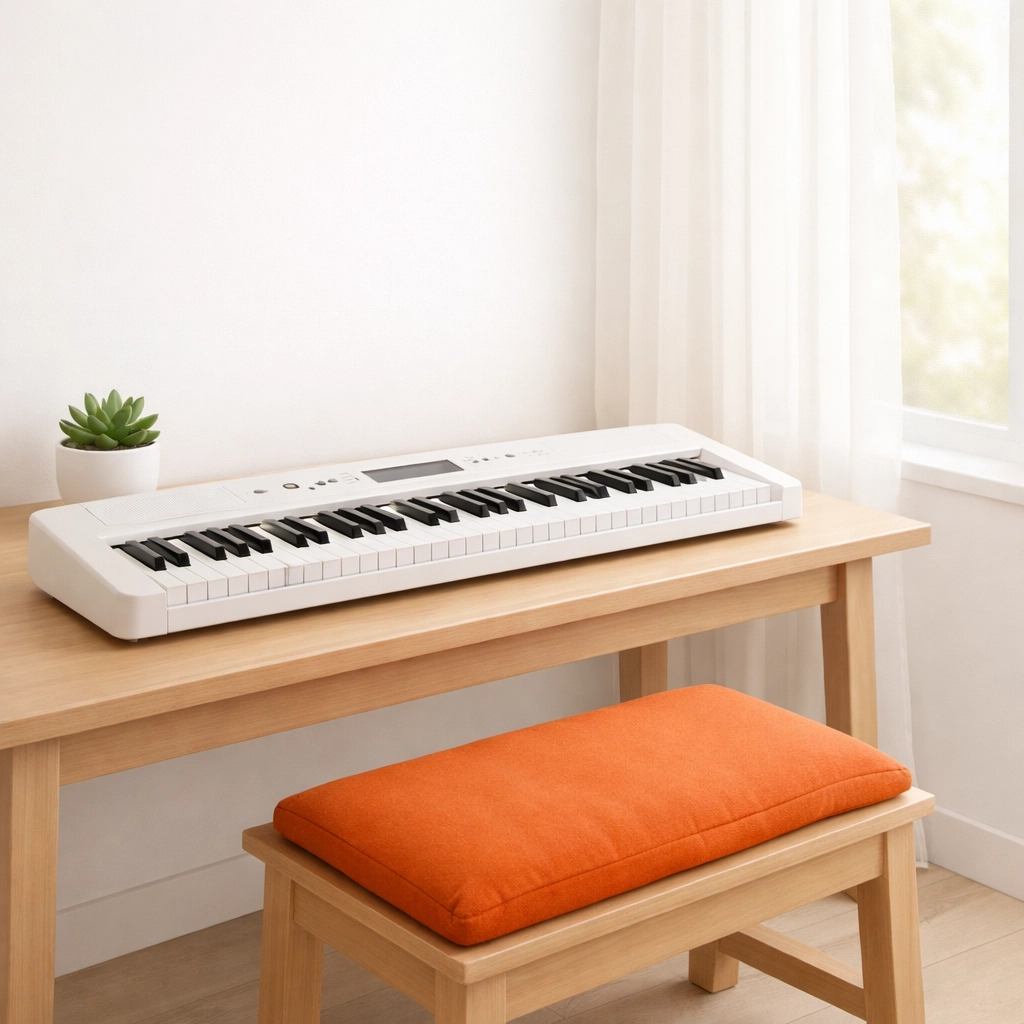
Color and Design: Small Changes, Big Impact
You don't need to repaint the entire room (though if you're up for it, go for it!). Even small pops of color can transform the practice experience.
Research shows that bright colors help with information retention and keep the brain stimulated: exactly what you want during beginner piano practice. Here's the cheat sheet:
- Green promotes focus and calm (perfect for technique work)
- Orange boosts mood (great for those Monday morning practices)
- Blue creates tranquility (ideal if your child gets frustrated easily)
- Red sparks creativity (use as an accent, not the whole wall)
You can add color through:
- A fun rug under the keyboard bench
- Colorful music note wall decals
- Bright cushions or throw pillows nearby
- A small lamp with a colored shade
The goal is to make the space feel inviting, not institutional. This isn't a classroom: it's their creative corner.
Make Organization Effortless
Here's where so many practice spaces fail: if finding materials is a hassle, practice becomes a hassle.
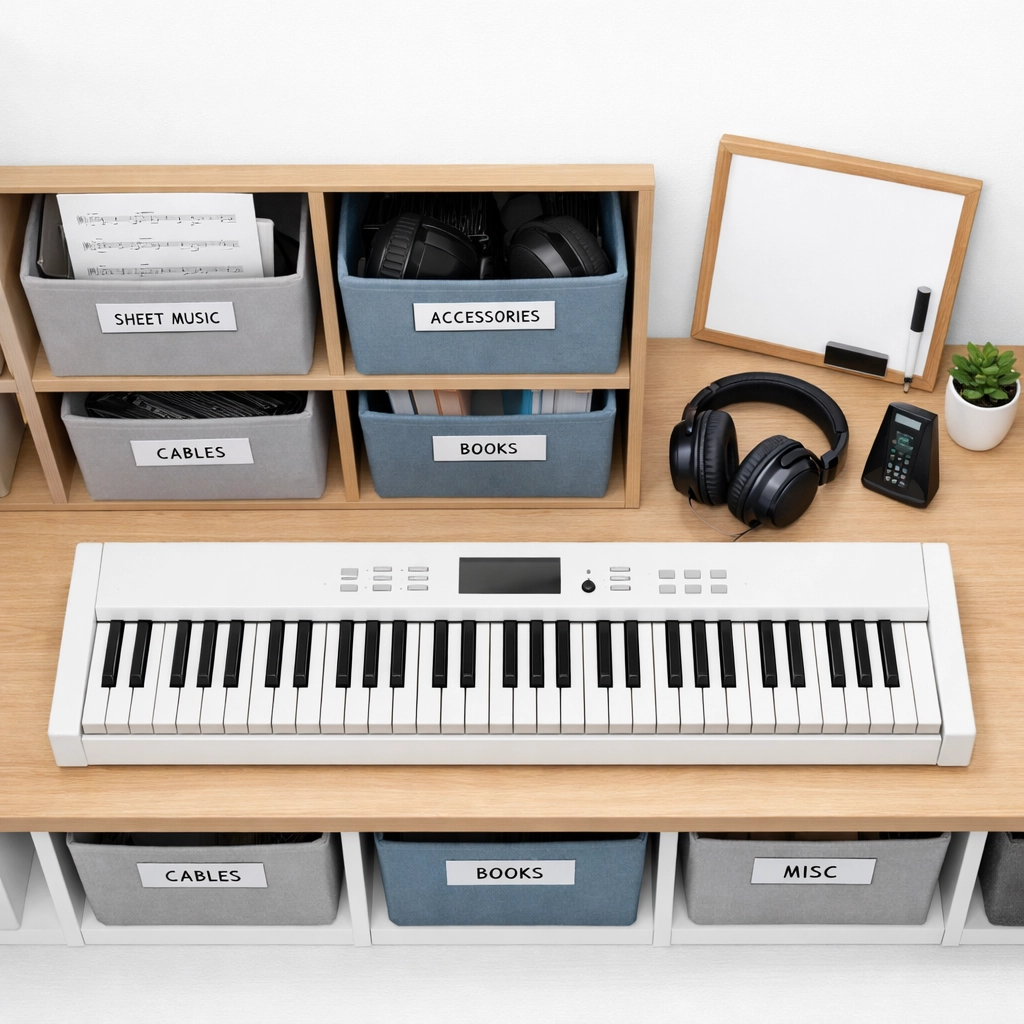
Set up low shelves or bins that your child can reach without asking for help. Label everything clearly:
- Sheet music bin
- Practice journal
- Keyboard accessories (headphones, sustain pedal)
- Stickers or reward chart materials
When kids can independently grab what they need and put it away, they take ownership of their music education. That sense of control is huge for motivation.
Use a small bookshelf or rolling cart next to the keyboard. Everything in arm's reach. No hunting around the house for that one song they were working on last Tuesday.
Create Activity Zones (Even in Small Spaces)
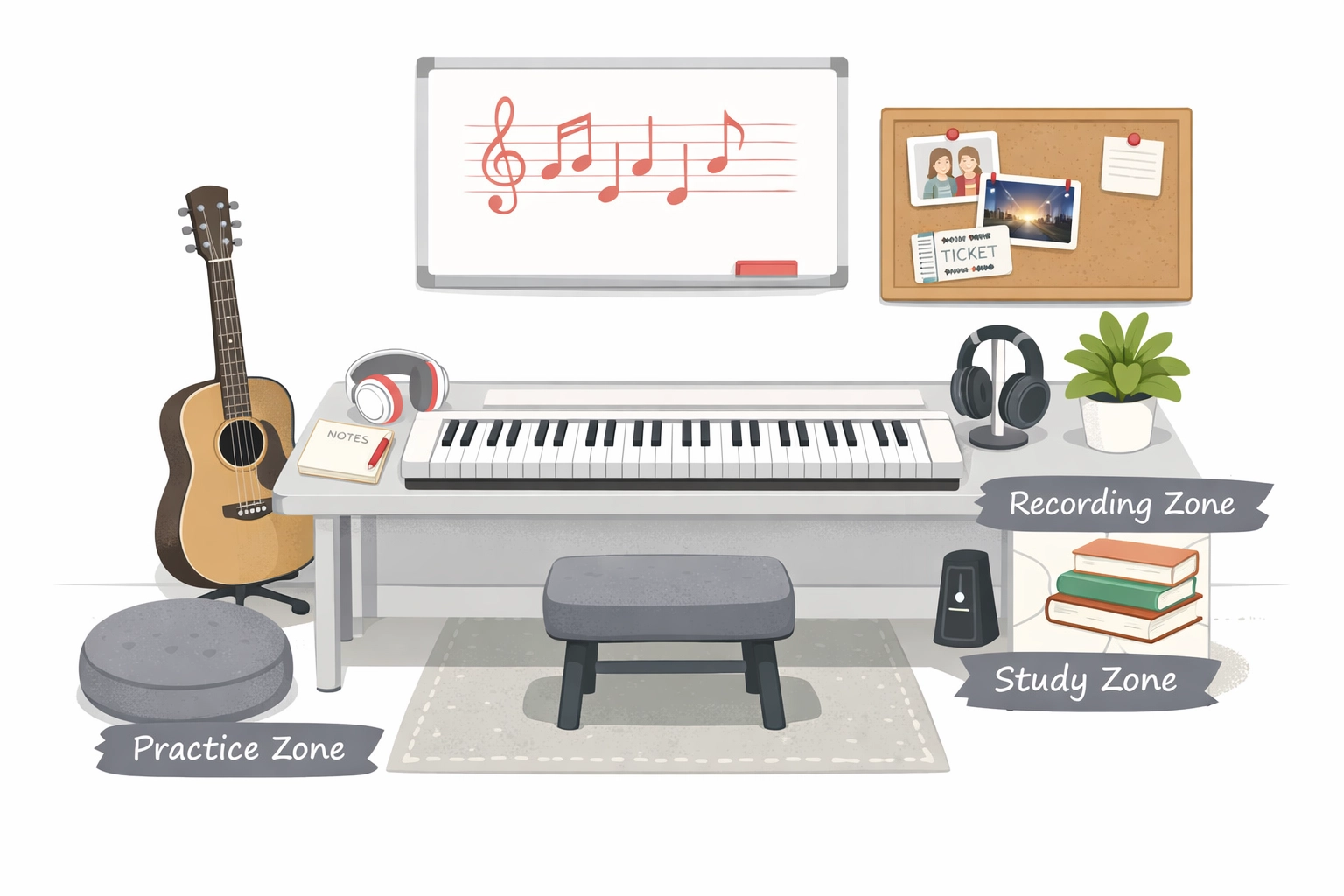
Think beyond just the keyboard. A complete practice space includes:
The playing zone: Obviously, the keyboard and bench. Make sure the bench is the right height: feet should rest flat on the floor or on a footstool.
The theory corner: A small whiteboard or chalkboard mounted on the wall nearby. Perfect for working out note names, drawing staffs, or your teacher's tips from the last lesson. Plus, kids love writing on whiteboards: it feels less like homework.
The inspiration spot: A small bulletin board for concert tickets, photos from recitals, or printouts of their favorite musicians. When they see what they're working toward, the daily practice feels more connected to their bigger goals.
You're not creating separate rooms: just designating purposes within one space. Even a 4x6 foot area can include all three zones.
Add One Unexpected Element
Here's the secret ingredient that turns a practice space from functional to genuinely exciting: something playful and unexpected.
This could be:
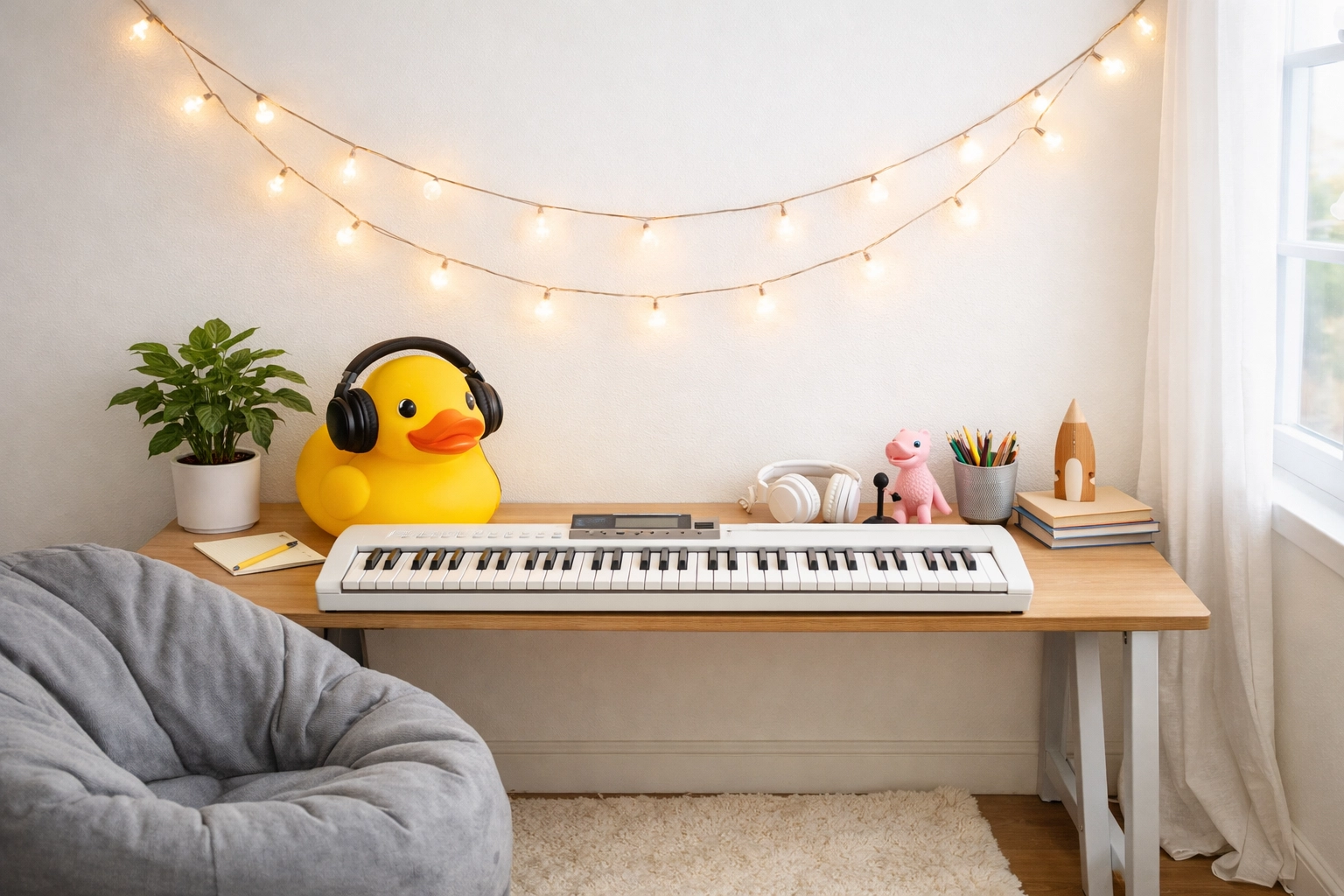
- A comfy bean bag chair for listening to music between practice sessions
- String lights around the practice area
- A small plant (real or fake) that makes the space feel alive
- A "performance corner" with a small carpet where they can give you mini-concerts
The idea is to make the practice space somewhere your child actually wants to hang out, not somewhere they're required to go.
When Home Practice Meets Professional Space
While creating an awesome home practice environment is essential for daily beginner piano practice, there's also real value in giving kids access to professional rehearsal environments. That's where facilities like Lenox Hill Music Studios come in: offering dedicated spaces designed specifically for music education for children.
There's something about practicing in a "real" music space that flips a switch for kids. The acoustics are better, the instruments are premium, and the environment signals "this is serious, but also special." Many students find that alternating between home practice and occasional sessions in a professional studio keeps their motivation high and gives them something to look forward to.
If you're in NYC and taking in-person lessons, having access to a professional studio space can be a game-changer, especially when preparing for recitals or working on more advanced pieces.
Keep It Low-Pressure
Here's what matters most: your home practice space should reduce stress, not add to it.
Don't stress about perfection. You don't need matching furniture or Pinterest-worthy aesthetics. You need:
- Good lighting
- Minimal distractions
- Easy access to materials
- A space that feels positive
That's it.
If your child walks away from practice feeling accomplished rather than defeated, you've created the right environment. If they occasionally choose to practice on their own without being asked? You've absolutely nailed it.
The Future of Music Education at Home
As music education continues to evolve, platforms like PianoFlight are reimagining how kids learn and practice at home. By combining engaging digital tools with time-tested teaching methods, the future of piano lessons for kids is more accessible and motivating than ever. The physical practice space you create at home becomes even more powerful when paired with modern learning approaches that meet kids where they are.
Whether your child is just starting out or years into their musical journey, the environment where they practice shapes their entire relationship with music. Make it bright, make it organized, make it theirs: and watch what happens.
Ready to set your child up for success? Check out our keyboard buyer's guide for recommendations on the best beginner instruments for your practice space, or explore our piano classes to pair that perfect home setup with expert instruction.