Group vs. Private Piano Lessons: Why Your Child Might Progress Faster in a Keyboard Club
![[HERO] Group vs. Private Piano Lessons: Why Your Child Might Progress Faster in a Keyboard Club](https://cdn.marblism.com/_kxnAYy7_RS.webp)
If you’re reading this, you’ve probably reached that exciting milestone: your child wants to learn to play music! Maybe they’ve been plinking away at a toy keyboard, or perhaps they’ve been begging you to let them learn keyboard like their favorite YouTuber.
Now comes the big question every parent faces: "Should I sign them up for private piano lessons, or would group piano classes be a better fit?"
For a long time, the traditional 1-on-1 model was considered the "gold standard." You find a teacher, they come to your house (or you go to theirs), and they sit with your child for 30 to 60 minutes of intensive instruction. But things are changing. At iPianoLab, we’ve seen a massive shift toward what we like to call the "Keyboard Club" model.
Believe it or not, for many kids, especially beginners, a group setting isn't just "cheaper" or "more convenient." It’s actually the environment where they progress the fastest. Let’s dive into why that is and help you figure out the best path for your budding Mozart.
The Traditional Approach: Private Piano Lessons
There’s no question about it: private piano lessons offer a level of tailored instruction that you just can't get anywhere else. In a 1-on-1 setting, the teacher can focus entirely on your child’s hand position, posture, and specific technical hurdles.
If your child is highly disciplined, naturally quiet, or already at an advanced level, a professional studio environment can be a game-changer. For families looking for that high-intensity, specialized focus, we often recommend checking out the amazing facilities at Lenox Hill Music Studios. They provide the kind of top-tier environment where technical precision really shines.
However, for a lot of kids, private lessons can feel a bit... heavy. Being the sole focus of an adult's attention for an hour can be intimidating. It creates a high-pressure environment where every "wrong" note feels magnified. For a six-year-old just starting out, that can lead to burnout faster than you can say "C Major scale."
Why the "Keyboard Club" Works: The Power of Social Learning
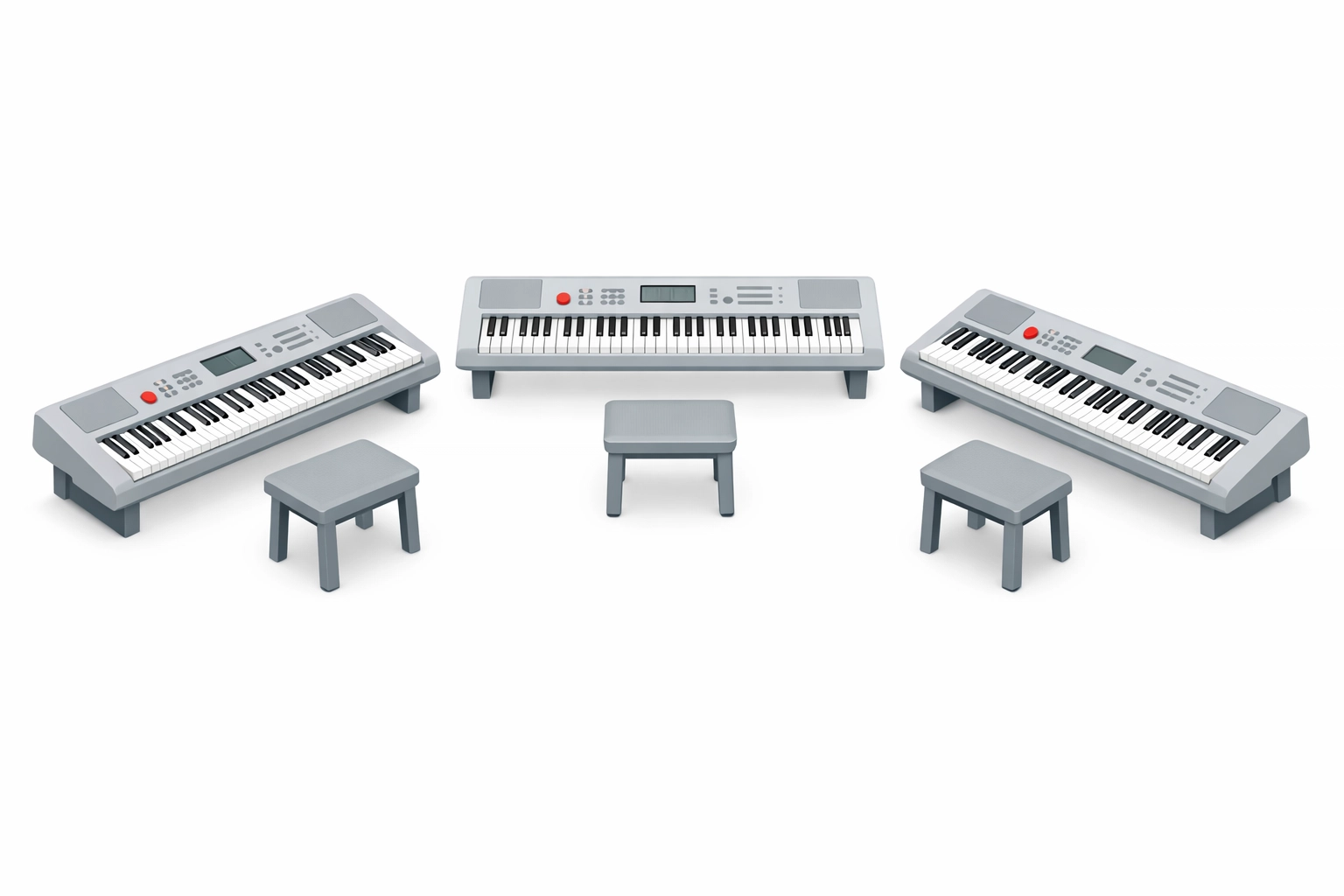
So, what is a "Keyboard Club"? It’s our way of describing group piano classes that prioritize fun, social interaction, and peer support. Here is the secret: kids love doing what other kids are doing.
1. Peer Motivation is a Superpower
In a group class, your child isn't just looking at a teacher; they’re looking at their friends. When they see a peer master a new song, their internal dialogue isn't "I'm failing," it's "Oh, cool! If they can do it, I can too!" This natural, positive peer pressure is one of the biggest drivers of progress. They want to keep up with the "club," which makes them more likely to learn keyboard skills with enthusiasm rather than obligation.
2. Lowering the "Performance Anxiety" Bar
In a 1-on-1 lesson, the student is "performing" for the teacher the entire time. In a group setting, the attention is distributed. This lower-pressure environment allows kids to experiment and make mistakes without feeling like they’re under a microscope. Ironically, by lowering the pressure, kids often gain confidence faster. They get used to playing while others are in the room, which makes future recitals much less scary!
3. The "Ensemble" Effect
Learning to play with others is a fundamental musical skill. In our group classes, students often play together in "unison" or even take on different parts of a song. This builds a rhythmic rock-solidness that solo students sometimes struggle with. They have to listen to the group, stay on beat, and keep going even if they miss a note: a vital skill for any musician.
The Progress Paradox: Is "Faster" Always Better?
A common concern parents have is: "Won't my child learn slower if the teacher has to help five other kids?"
It’s a fair question! If you measure progress strictly by how many pages of a textbook a child completes in a month, a private student might "win" by a hair. But if you measure progress by retention and long-term engagement, the group student often takes the lead.
The truth is, many kids who start with intensive private lessons quit within the first two years because they find it lonely or boring. A child who stays in a Keyboard Club for three years because they're having fun will ultimately be a much better pianist than the child who did one year of high-pressure private lessons and then never touched the piano again.
If you're wondering if your little one is even ready to start this journey, check out our post: Is your child too young for piano lessons? Here’s the truth.
Introducing PianoFlight: The Future of Music Education
We are so excited about the future of piano lessons for kids here at iPianoLab. We are currently transitioning to a brand-new platform called PianoFlight.
PianoFlight is designed to take the best parts of our "Keyboard Club" philosophy and supercharge them with cutting-edge technology. This platform will allow students to track their progress, access interactive materials, and stay connected with their musical community even when they aren't in class. By combining the social joy of group learning with the personalized data of a digital platform, PianoFlight ensures that no student gets left behind. It’s about making the learning experience more immersive, more intuitive, and: most importantly: more fun.
Is My Child Right for Group Classes?
While we love the group model, we know every child is different. Here’s a quick checklist to see if group piano classes are the right move for your family:
- Does your child enjoy social activities? If they love playdates, team sports, or group crafts, they’ll thrive in a Keyboard Club.
- Are they a beginner? Group classes are incredible for laying the foundation of rhythm, note reading, and basic technique without the "heavy" vibe of private study.
- Is budget a factor? Let’s be real: group classes are generally more affordable, often costing about half of what a private teacher charges. This makes it a low-risk way to see if your child actually likes the instrument.
- Do they need a confidence boost? For shy kids, the "safety in numbers" of a group class can actually help them find their voice.
If you’re ready to jump in, you can see our current class schedule here or even sign up for a trial.
Setting the Stage at Home
Regardless of whether you choose group or private, your child needs the right tools at home to succeed. You don't need a $10,000 grand piano to start! In fact, we usually recommend starting with a portable keyboard. It’s easier on the budget and perfectly fine for the first few years of lessons.
If you aren't sure what to buy, don't worry! We’ve put together a Keyboard Buyer’s Guide to help you find something great without breaking the bank.
The Bottom Line
Choosing between private piano lessons and a "Keyboard Club" doesn't have to be a stressful decision. Both paths have their merits! However, for most children, the social energy, peer motivation, and low-pressure environment of a group setting create a much stronger foundation for a lifelong love of music.
The goal isn't just to learn the notes; it’s to learn to love the instrument. When kids feel like they are part of a club rather than just "taking a class," the progress happens naturally.
If you want to learn more about how our specific method stacks up against traditional teaching, take a look at our deep dive: Online Piano Lessons vs. Traditional Teachers: Which Gets Kids Results Faster?.
Ready to see your child soar? Between the friendly environment of iPianoLab and the upcoming tech-boost from PianoFlight, there’s never been a better time to start.
Let’s get those fingers moving!
Want more tips, tricks, and free resources? Head over to our Free Stuff page or meet our amazing teachers to see who will be guiding your child's musical journey!