How to Choose the Best Keyboard for Beginners: The 2026 Parent’s Buying Guide
![[HERO] How to Choose the Best Keyboard for Beginners: The 2026 Parent’s Buying Guide](https://cdn.marblism.com/lbQLq8_2MD4.webp)
Hey there! If you’re reading this, you’ve probably reached that exciting (and maybe slightly daunting) milestone: your child wants to start piano. First off, congratulations! Music education is one of the greatest gifts you can give your kid. It builds confidence, sharpens focus, and: let’s be honest: it’s just plain cool.
But then you go online to buy a keyboard, and suddenly you’re staring at 500 different models with buttons that look like they belong on a spaceship. Do you need 88 keys? What on earth are "weighted hammers"? And do you really need to spend $1,000 just to see if they’ll stick with it?
The good news is that in 2026, we have better, more affordable options than ever before. At iPianoLab, now powered by PianoFlight: the future of music education: we’ve helped thousands of parents navigate this exact moment. We’ve tested the gear, heard the questions, and seen what actually works in the classroom and at home.
This guide is designed to cut through the noise and help you pick the perfect beginner keyboard without the headache.
The "Must-Haves" vs. "Nice-to-Haves"
When you’re looking for a beginner keyboard, it’s easy to get distracted by flashy features like "disco beat mode" or 500 different animal sounds. While those are fun for about ten minutes, they won’t help your child learn to play.
To give your child the best start in piano lessons for kids, here are the three non-negotiables:
- At Least 61 Keys: You’ll see smaller keyboards with 32 or 49 keys. Ignore them. They are toys. A 61-key keyboard is the "sweet spot" for beginners. It’s large enough to play almost any beginner or intermediate song but small enough to fit on a desk or a portable stand.
- Touch Sensitivity (Velocity): This is the big one. Touch sensitivity means that if your child presses the key softly, the sound is quiet. If they strike it hard, the sound is loud. Without this, they can’t learn "expression," and every song will sound like a flat robot.
- A Sustain Pedal Input: Even if the keyboard doesn’t come with a pedal, make sure it has a hole in the back labeled "Sustain" or "Damper." You’ll need this within the first few months of lessons.
Why the Number of Keys Matters
As I mentioned, 61 keys is our baseline. However, you might see "full-sized" 88-key digital pianos. Here’s the deal: 88 keys is what a real acoustic piano has. If you have the budget and the space, an 88-key weighted digital piano is fantastic because it mimics the feel of a "real" piano perfectly.
But: and this is a big "but": don’t feel pressured to buy a massive 88-key instrument on day one. If your child is 6 or 7 years old, a 61-key keyboard is much more approachable. It’s lighter, it’s portable, and it’s way less intimidating. If they fall in love with music (which they usually do at iPianoLab!), you can always upgrade to a full-sized piano later.
If you're wondering if your child is at the right age to start, check out our post: Is Your Child Too Young for Piano Lessons? Here’s the Truth.
Top Recommendations for 2026
The market has changed a lot recently, and brands like Yamaha, Casio, and Roland have stepped up their game. Here are our top picks for best keyboard for kids based on your budget.
The Budget-Friendly Rockstar: Yamaha PSR-E383
This is the "old reliable" updated for 2026. It’s affordable (usually under $200), has great touch sensitivity, and includes a massive library of sounds. It’s also built like a tank, which is great if you have a younger sibling who might be a little "enthusiastic" with their playing.
The "Feels Like a Real Piano" Choice: Korg Liano
If you want 88 keys but don’t want a heavy piece of furniture, the Korg Liano is a game-changer. It’s incredibly slim, runs on batteries if needed, and has a "semi-weighted" action that feels much more professional than a standard keyboard. It’s the perfect middle ground.
The Stylish Home Choice: Casio CT-S1
If you’re worried about a plastic-looking keyboard ruining your living room decor, the Casio CT-S1 is for you. It has a minimalist, retro look, great built-in speakers, and excellent keys. It doesn’t have a million buttons, which actually helps kids focus on just playing.
Weighted vs. Non-Weighted Keys: What’s the Big Deal?
You’ll hear the word "weighted" a lot. On a real piano, there are wooden hammers hitting strings. This makes the keys feel "heavy." Digital pianos try to mimic this with weights.
- Weighted keys are better for building finger strength and technique.
- Non-weighted (or synth-action) keys are easier for small, young fingers to press down.
For most kids starting out in a keyboard club or group lesson, non-weighted or semi-weighted keys are perfectly fine. It keeps the "fun factor" high because they don't get tired as quickly. As they progress into more advanced classical music, that’s when the weighted keys become important.
Connectivity: Playing with PianoFlight
We are living in 2026, and the way kids learn has evolved. At iPianoLab, we believe in PianoFlight, our proprietary system that makes learning feel like a game rather than a chore.
To get the most out of modern learning, look for a keyboard with a USB-MIDI port. This allows you to plug the keyboard directly into an iPad, laptop, or computer. This is essential for:
- Using learning apps.
- Recording original songs.
- Participating in online piano lessons that give instant feedback.
Connectivity is what turns a "plastic keyboard" into a powerful gateway to the future of music.
Where to Set Up Your Practice Space
Once you have the keyboard, where does it go? We recommend putting it in a "high-traffic" area: not tucked away in a lonely basement. If your child sees the keyboard while they're hanging out in the living room, they are much more likely to sit down for a quick 10-minute session.
If you’re in New York City and looking for a dedicated space to practice or even take in-person classes, we highly recommend checking out Lenox Hill Music Studios. They offer incredible rehearsal spaces and a professional environment that can really inspire a young musician.
For help making practice a habit, read our guide on The 15-Minute Daily Piano Practice Plan.
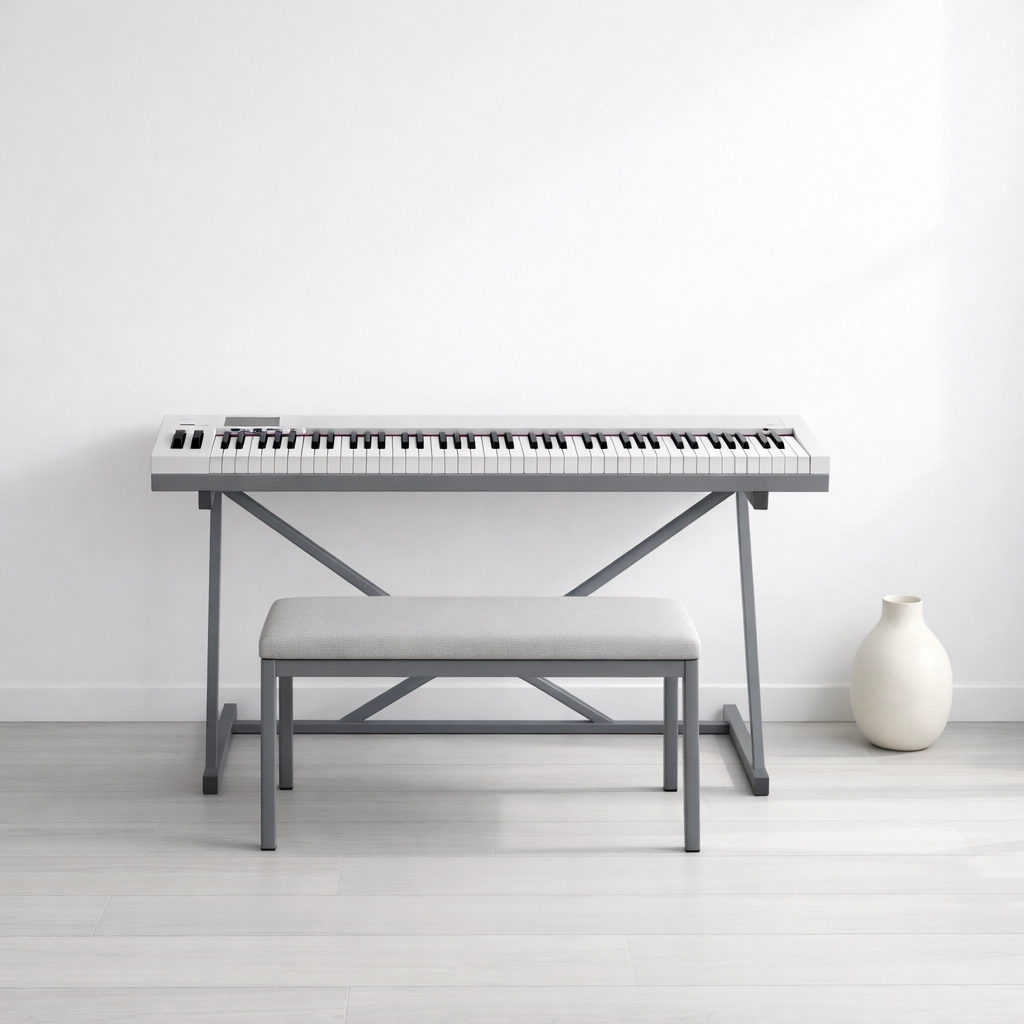
A bright, organized practice corner in a family living room makes the perfect music nook for every aspiring musician at home.
Buying Secondhand: A Parent’s Pro-Tip
You don’t always have to buy brand new! You can often find great deals on Facebook Marketplace or Craigslist. However, if you go the used route, perform this quick 3-step inspection:
- Play Every Single Key: Turn the volume up and press every key one by one. Listen for "clacking" sounds or keys that don't produce sound.
- Check the Jacks: Bring a pair of headphones and plug them into the "Phones" jack. Make sure the sound comes through both ears clearly.
- Test the Power Cord: Wiggle the power cord gently where it enters the keyboard. If the keyboard turns off, the internal connection is loose: skip it!
Encouragement for the Journey
Choosing a keyboard is just the first step in a wonderful adventure. Don't worry about finding the "perfect" instrument that will last 20 years. Your child’s needs will change as they grow, and that’s a good thing! It means they are progressing.
At iPianoLab, we’re here to support you every step of the way. Whether you’re looking for NYC-based classes, summer camps, or the flexibility of online learning, our goal is to make music the highlight of your child's week.
The most important thing is simply to get started. Once that keyboard is in your home and your child hears those first few notes, you’ll know you made the right choice.
If you have more questions or want to see our full list of recommended gear, head over to our Keyboard Buyer’s Guide. We’ve done the homework so you don't have to!
Ready to see what your child can do? Sign up to find a Keyboard Club or private teacher in your area and let’s start making some music together!
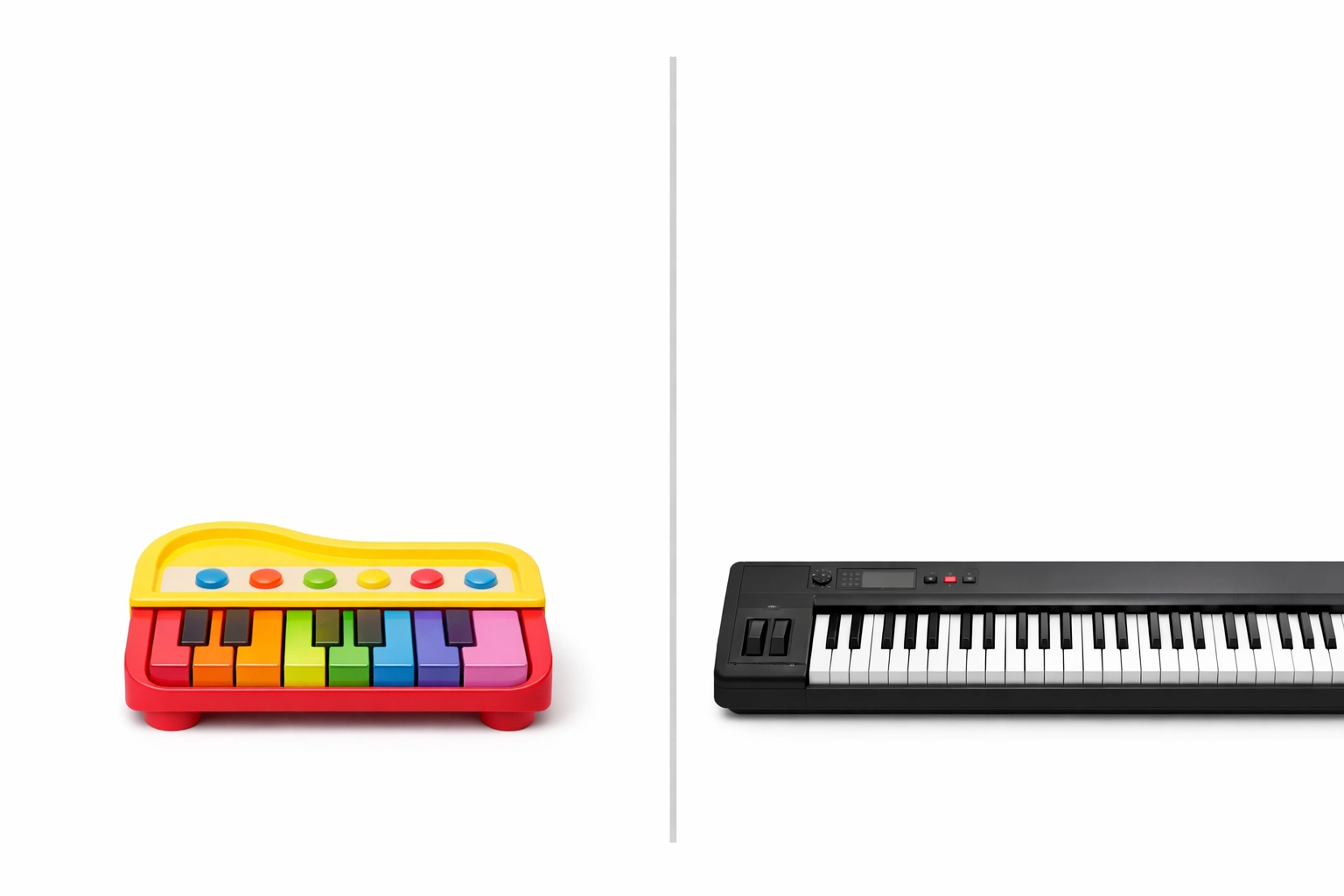
The difference between a toy keyboard and a beginner digital piano is night and day.
Quick Checklist for your 2026 Purchase:
- 61 or 88 keys? (61 is great for space; 88 is great for longevity).
- Is it "Touch Sensitive"? (Crucial for expression).
- Does it have a USB-MIDI port? (Crucial for PianoFlight and apps).
- Do you have a stand and a bench? (Proper posture prevents injury!).
- Did you get a sustain pedal? (You'll need it soon).
Happy shopping, and we can’t wait to see you in class!