5 Reasons After-School Music Programs Are Better Than Private Lessons
![[HERO] 5 Reasons After-School Music Programs Are Better Than Private Lessons](https://ipianolab.s3.us-west-2.amazonaws.com/blog/posts/3/assets/marblism/cdn.marblism.com/Vjd6lsplawX.webp)
Let's be honest: when you think of piano lessons for kids, you probably picture a quiet living room, a stern-looking teacher, and your child nervously sitting through a one-on-one session. That's how most of us learned, right?
But here's the thing, after school music programs are changing the game. They're turning beginner piano lessons into something kids actually look forward to, and they're doing it in ways that traditional private lessons just can't match.
If you're on the fence about whether group piano lessons or private instruction is the better choice for your child, you're in the right place. We're breaking down five solid reasons why after-school music programs might be the smarter move, especially if you want your kid to stick with music for the long haul.
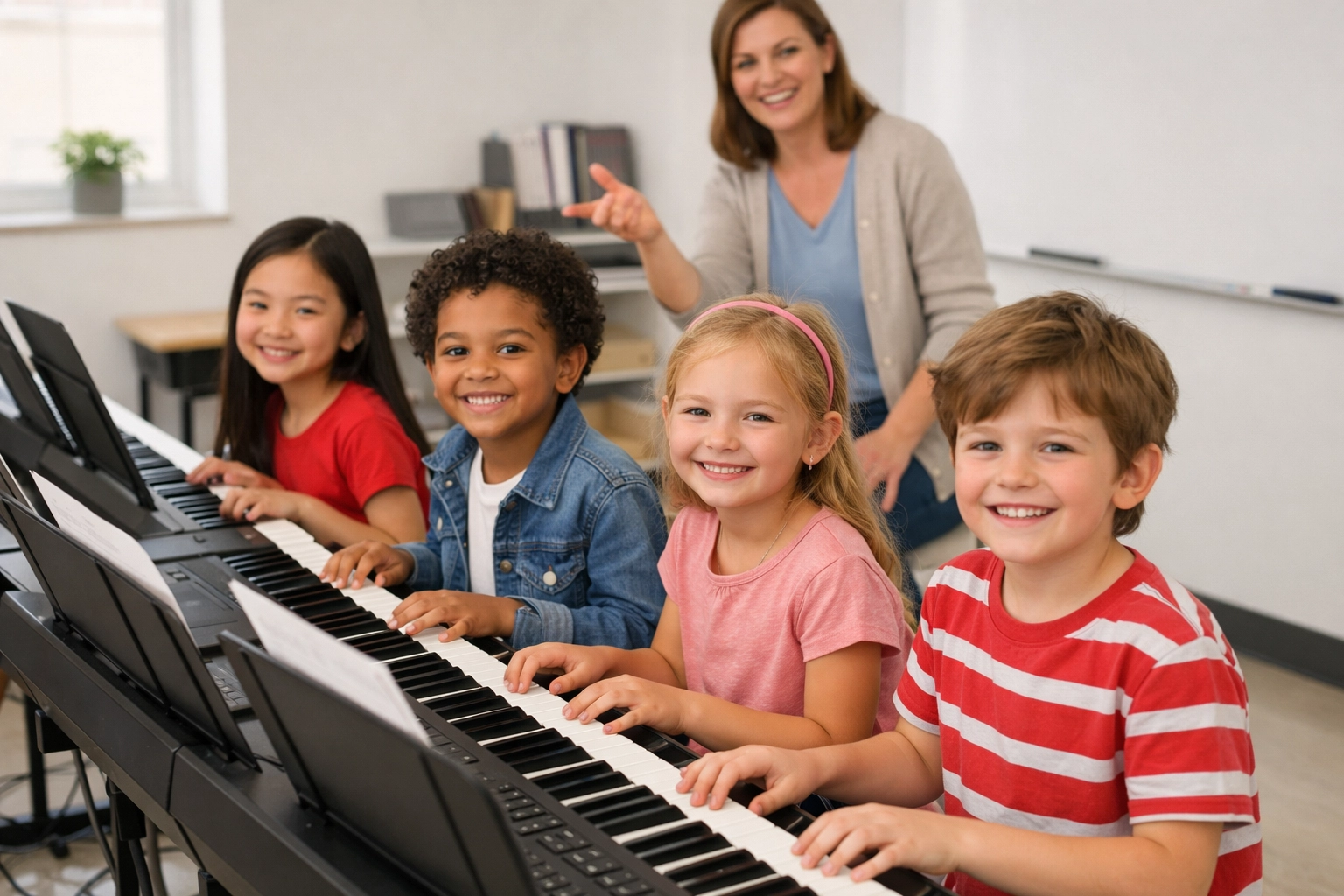
1. Kids Learn Better When They're Having Fun with Friends
Private piano lessons can feel... isolating. It's just your child, the teacher, and the metronome ticking away. For some kids, that's fine. But for most? It's a recipe for boredom.
After school music programs flip the script entirely. Instead of sitting alone at a piano bench, your child is surrounded by classmates, learning together, laughing together, and yes: making music together. This social element transforms piano from a chore into an activity they genuinely enjoy.
When kids are engaged and having fun, they practice more at home. They want to keep up with their friends. They want to nail that cool song everyone's working on. And suddenly, you're not nagging them to practice: they're actually doing it on their own.
At iPianoLab, our certified instructors build this into every session. We teach songs kids actually want to play (think popular hits, movie soundtracks, songs they hear on the radio), and we do it in a group setting where the energy stays high and the learning stays fun.
2. Peer Motivation Is a Superpower
Here's something interesting: kids often work harder to impress their peers than they do to please adults. It's just how they're wired.
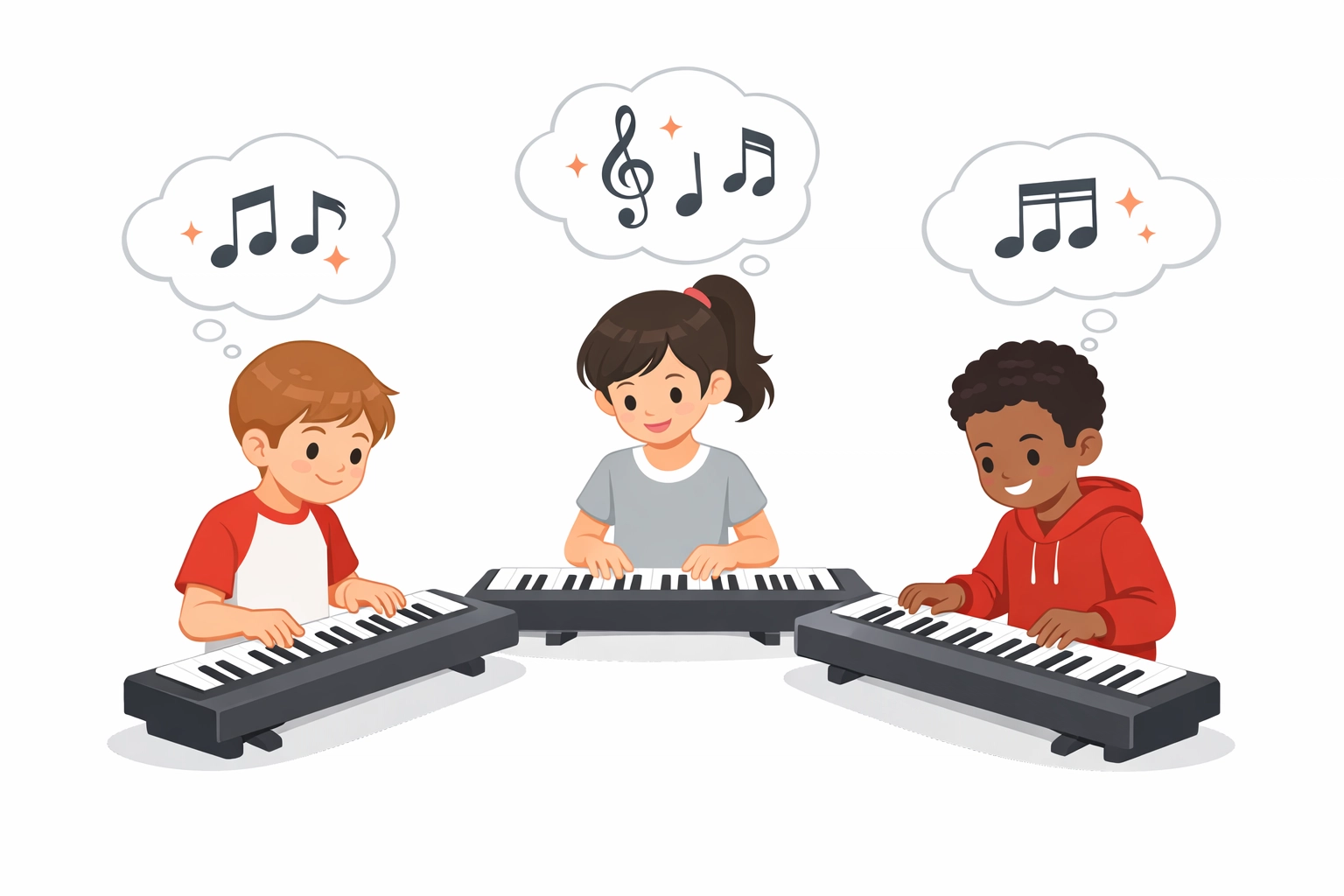
In a private lesson, your child only has the teacher to perform for. But in a group piano lesson? There's healthy competition, shared goals, and that natural drive to keep up with everyone else in the room.
This isn't about pressure: it's about positive peer influence. When your child sees their classmate nail a tricky chord progression, they think, "I can do that too." When everyone's preparing for a group performance, there's social accountability that motivates them to practice at home.
Research backs this up. Studies on music education show that students in group settings practice more frequently and demonstrate higher motivation levels compared to those in isolated, one-on-one instruction. The group dynamic creates a natural support system that keeps kids engaged week after week.
3. It's Way More Affordable (and That Matters)
Let's talk money. Private piano lessons are expensive. Depending on where you live, you're looking at anywhere from $40 to $100+ per session. Multiply that by four weeks a month, and you're easily spending $200–$400 monthly: just for one child.
After school music programs cost a fraction of that. Because multiple students share the instructor's time, the cost per child drops significantly. You're getting quality instruction from certified teachers at a price point that actually works for most families.
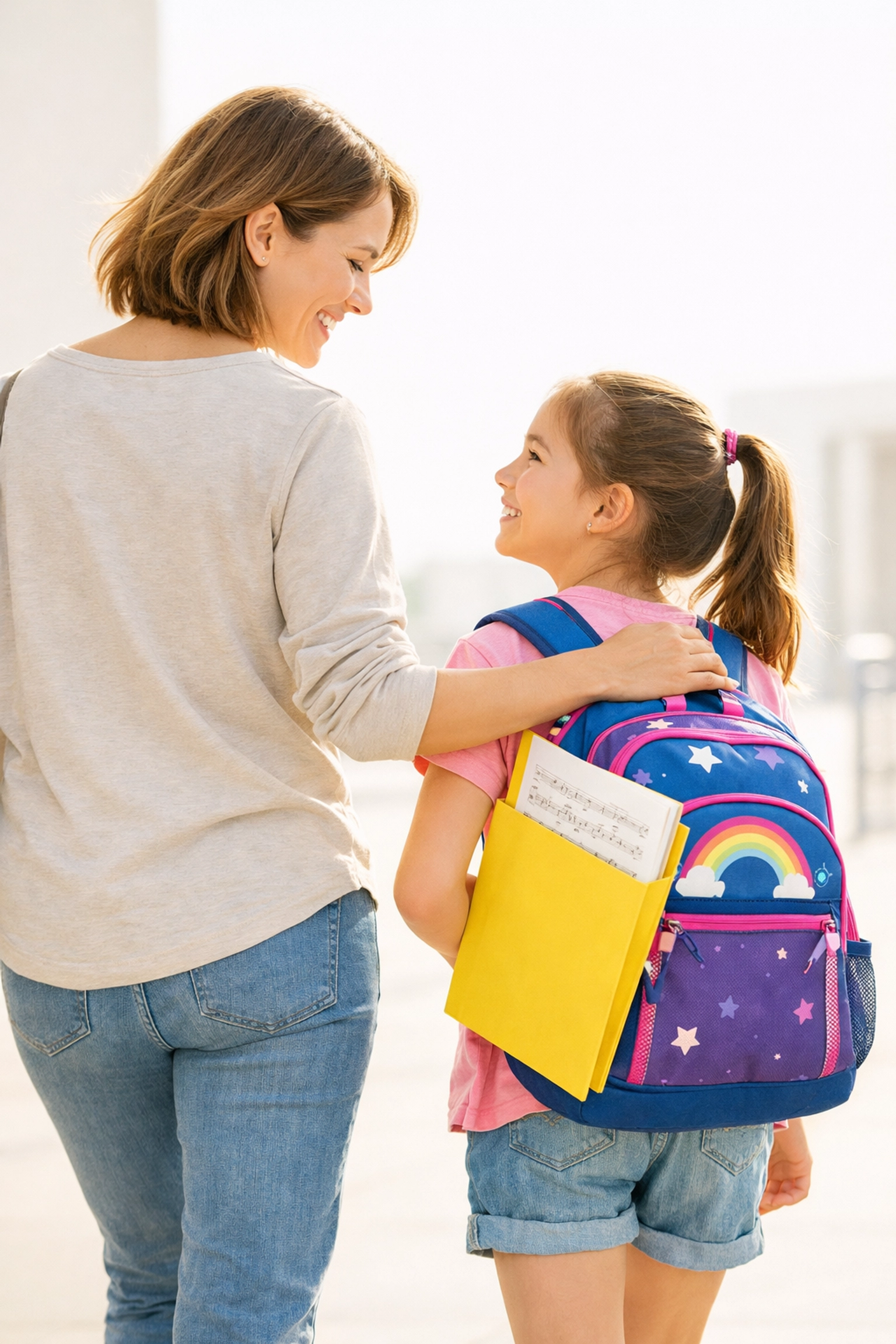
And here's the bonus: many after-school programs are already built into your child's school day or offered right after dismissal. That means no extra driving, no coordinating schedules, no rushing from work to make a 4 PM lesson across town. Your child shows up, learns, and you pick them up when you're done with work. It's convenient and budget-friendly.
At iPianoLab, we partner with schools to bring our program directly to students as part of their after-school activities. Parents love the convenience, kids love the social aspect, and schools love offering a high-quality music option without the logistical headache.
4. Performance Confidence Comes Naturally
One of the biggest hurdles in music education is stage fright. Many kids freeze when it's time to perform, even if they've practiced for weeks. Why? Because they're not used to playing in front of others.
In private lessons, performance opportunities are rare and often formal: think of the dreaded annual recital where your child plays solo in front of 50 strangers. Nerve-wracking, right?
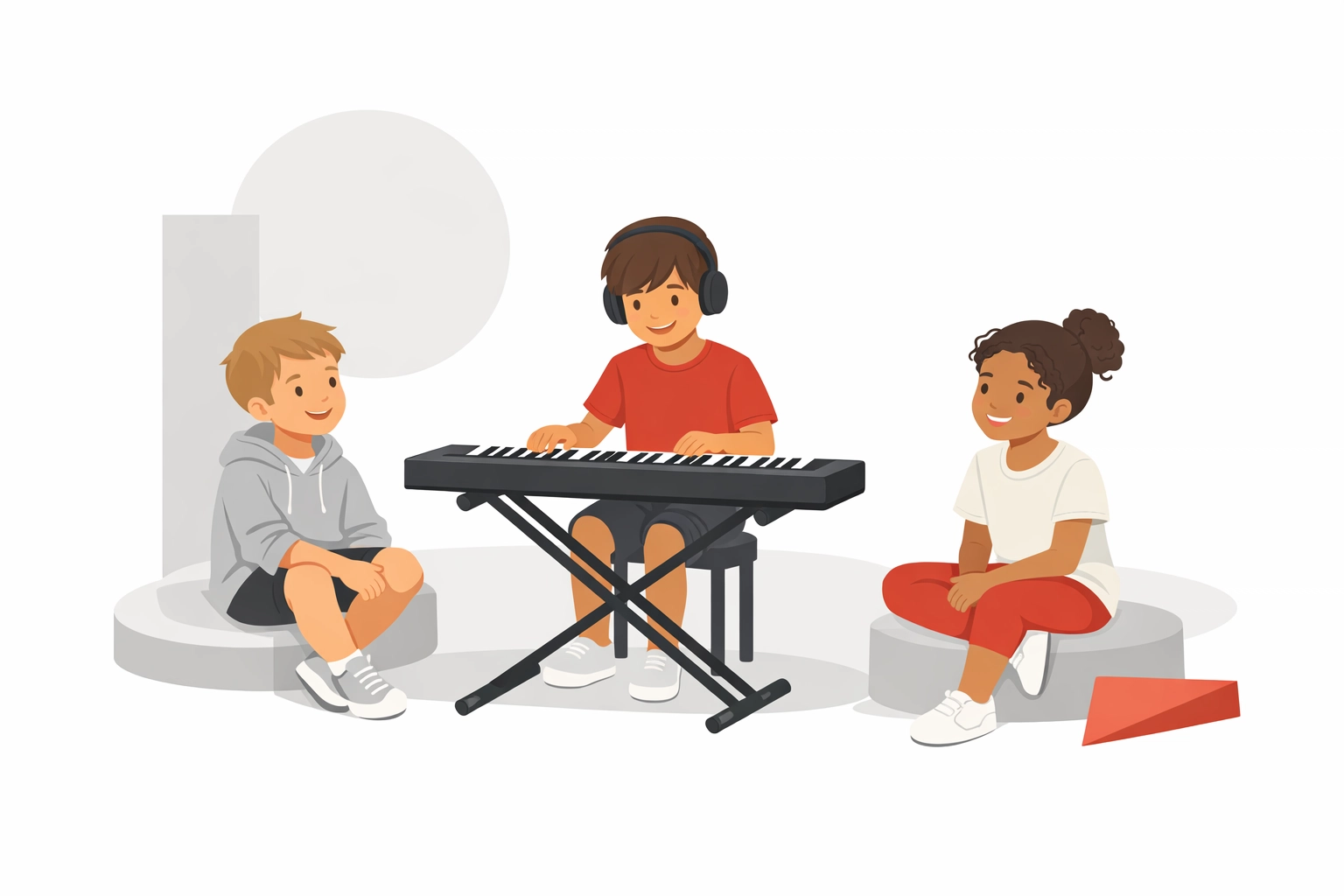
Group piano lessons build performance confidence organically. Kids play together every single week. They perform mini-showcases for each other. They collaborate on ensemble pieces where everyone has a part. The pressure is off because they're not alone on stage: they're part of a team.
This constant, low-stakes exposure to performing does wonders for confidence. By the time a bigger performance rolls around, your child has already played in front of peers dozens of times. It's no longer scary: it's just another Tuesday.
5. They Learn Skills Private Lessons Can't Teach
Here's something most parents don't realize: music isn't just about playing notes correctly. It's about listening, collaborating, timing, and adapting to what's happening around you.
In a one-on-one lesson, your child learns their part. That's it. But in an after school music program, they're learning to:
- Listen actively to what other students are playing
- Coordinate timing so the whole group stays together
- Adjust their playing to blend with the ensemble
- Support their peers when someone makes a mistake
- Problem-solve collaboratively when something doesn't sound right
These are life skills that extend far beyond the piano bench. They're the same teamwork and communication skills your child will need in school projects, sports teams, and eventually, the workplace.
And academically? The benefits are huge. Studies consistently show that kids in group music programs demonstrate improved focus, better memory, and stronger problem-solving abilities compared to their non-musical peers. The collaborative nature of group lessons amplifies these benefits even further.
So... Which Is Actually Better?
Look, we're not saying private lessons are bad. For kids who are highly advanced, preparing for competitions, or working on very specific technical challenges, one-on-one instruction has its place.
But for most kids: especially beginners just starting their piano journey: an after school music program offers way more benefits. It's more affordable, more fun, more motivating, and it teaches skills that private lessons simply can't replicate.
At iPianoLab, we've seen thousands of kids thrive in our group settings. Our certified instructors know how to keep the energy high, the learning effective, and the atmosphere supportive. We focus on popular songs kids actually want to play, we build confidence through regular group performances, and we make beginner piano lessons something your child genuinely looks forward to each week.
Ready to give it a try? Check out our after-school classes and see how group piano lessons can transform your child's relationship with music. No pressure, no stuffy recitals: just great music, great friends, and a whole lot of fun.