How to Set Up a Piano Practice Space at Home for Your Child
A good piano practice space does not need to be fancy. For a beginner, it needs to be visible, comfortable, quiet enough to focus, and easy to start using for a few minutes at a time.
That matters because most young students do not build a practice habit from willpower. They build it from a setup that makes the next step obvious: sit down, put on headphones if needed, play one small goal, and stop before practice turns into a battle.
This parent guide walks through how to set up a simple home piano practice space that supports iPianoLab-style learning: short wins, songs kids recognize, steady fundamentals, and a routine your family can actually repeat.

What does a beginner piano practice space need?
A child-friendly practice space needs five things:
- A keyboard or piano that can stay set up most of the time
- A bench or chair at a comfortable height
- Headphones if household noise or self-consciousness gets in the way
- A small place for music, notes, or lesson materials
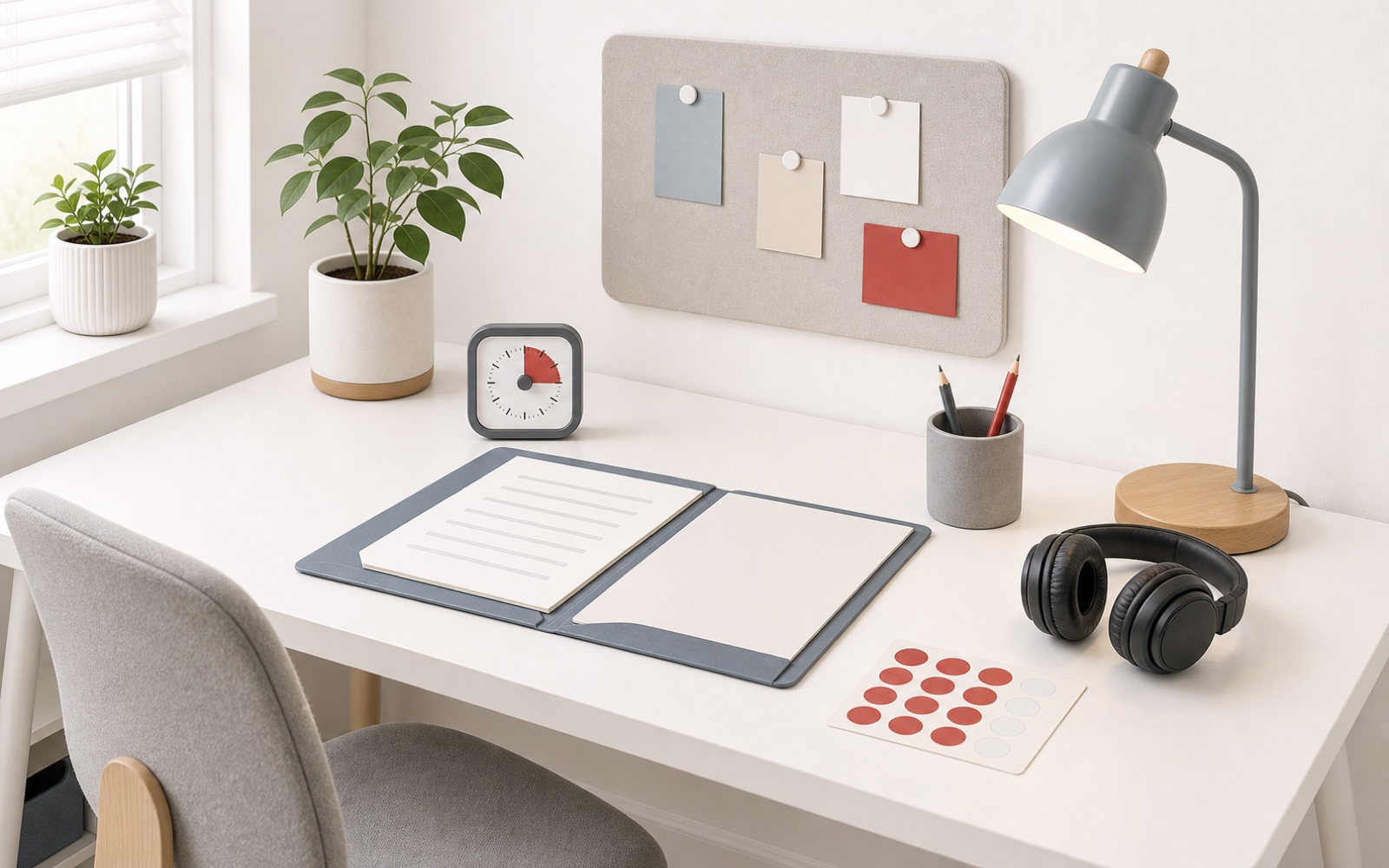
- A routine cue, such as a timer, checklist, or regular practice time
The goal is not to build a miniature studio. The goal is to remove friction. If your child has to unpack the keyboard, find the power cable, move books off the desk, and ask where the headphones are, practice already feels hard before the first note.
Keep the keyboard visible and ready
For most beginners, the best practice instrument is the one that stays available. A keyboard tucked in a closet may be safer from clutter, but it is also easier to ignore.
If you use a digital keyboard, try to keep it on a stand, desk, or sturdy table where your child can sit down without rearranging the room. A nearby outlet helps. So does a small basket for headphones, the power adapter, pencils, and current music.
If you are still choosing an instrument, start with the iPianoLab keyboard buyer's guide. For many beginners, a practical keyboard at home is enough to support early lessons and short practice sessions.
Choose a spot with fewer distractions
The right room depends on your child. Some kids practice better near the family because they like support and quick encouragement. Others focus better in a quieter corner away from siblings, television, and toys.
Watch what actually happens during the first week. If your child keeps stopping to talk, move the keyboard to a calmer spot. If your child feels isolated and avoids practice, try a more central location where a parent can stay nearby without hovering.
A good test is simple: can your child complete one short song or exercise without getting pulled into something else?
Use headphones when they help
Headphones are useful for two reasons. They reduce household noise, and they can make beginners feel less self-conscious while they are still figuring things out.
That does not mean every practice session should be silent to the rest of the family. Parents still need to hear progress sometimes. But headphones can make quick weekday practice easier, especially in apartments, shared rooms, or busy homes.
Match the seat height to your child
Comfort affects focus. If the seat is too low, shoulders creep up and hands tense. If the seat is too high, wrists collapse and the child feels awkward.
As a simple starting point, your child should sit close enough that the arms can reach the keys without stretching. The forearms should feel roughly level with the keyboard, and feet should be supported by the floor, a small stool, or a stable footrest.
Do not overcorrect posture every minute. Set up the space well, give one simple reminder, then let the lesson goal stay musical.
Make practice short enough to repeat
Many parents ask how long a child should practice piano. For a young beginner, consistency matters more than long sessions.
A practical starting target is 5 to 10 minutes on school days. That may sound short, but a focused 8-minute session repeated several times a week is usually more useful than one long session that ends with frustration.
Try a simple three-step routine:
- Warm up: play one familiar pattern or easy song.
- Lesson goal: work on the current song, rhythm, or hand pattern.
- Finish with a win: repeat the best part once and stop.
Ending with success helps your child come back the next day. Ending only when everything is perfect can make practice feel like a test.
Use a visual cue instead of repeated reminders
Parents should not have to turn every practice session into a negotiation. A visual cue can help the routine feel less personal and more predictable.
Useful cues include:
- A small timer set for 5 to 10 minutes
- A weekly practice chart with check marks or stickers
- A basket that always holds headphones and current music
- A regular time, such as after snack or before screen time
- A one-song goal written by the teacher or parent
Keep the cue simple. If the system takes longer to manage than the practice session itself, it will not last.
What if you do not know piano yourself?
You do not need to know piano to support a beginner. Your job is to help the practice space stay ready, notice effort, and keep the routine calm.
Instead of correcting notes, ask practical questions:
- "What is the one thing your teacher wanted you to try?"
- "Can you play the part you know best?"
- "Do you want headphones or should I listen?"
- "Should we set the timer for five minutes or eight?"
This keeps parents in a supportive role without turning home practice into a second lesson.
How iPianoLab supports home practice
iPianoLab is built for children who need early success, structure, and a clear next step. Students play songs they enjoy while building keyboard geography, rhythm, counting, note reading, two-hand coordination, melody, chords, and music literacy.
Families can choose the format that fits their schedule. Online piano lessons help students learn from home with teacher guidance and digital support. After-school piano classes work well when families want a structured program connected to the school day. If you are comparing the two, this guide can help: online piano lessons or after-school piano classes.
For either path, the home setup still matters. A ready keyboard and a small repeatable routine help students turn lesson momentum into steady progress.
FAQ: setting up a piano practice space for kids
Does my child need a real piano at home?
No. A beginner does not need an acoustic piano to start. A practical digital keyboard can work well for early practice, especially if it has full-size keys, a stable stand or surface, and headphones.
Where should the keyboard go?
Choose a place where the keyboard can stay set up and your child can focus. For some kids that is a quiet bedroom corner. For others it is a nearby family room spot where a parent can offer light support.
How long should beginner kids practice piano?
Start with 5 to 10 focused minutes several times a week. Short sessions are easier to repeat and often work better for beginners than occasional long sessions.
Should kids use headphones for piano practice?
Headphones can help if your child is distracted by noise or feels embarrassed while learning. Parents should still listen sometimes, but headphones are useful for making weekday practice easier.
What should parents do during practice?
Help your child start, keep the space organized, and notice effort. You do not need to correct every note. If your child is stuck, write down the question for the next lesson.
The parent takeaway
A strong home practice setup is simple: keep the keyboard ready, make the space calm, use headphones when helpful, and make practice short enough to repeat.
If your child is ready to start piano or needs a more consistent path, iPianoLab can help you choose the right next step.