Why Piano Learning Apps Are the "Healthy Screen Time" Your Child Actually Needs in 2026
![[HERO] Why Piano Learning Apps Are the](https://ipianolab.s3.us-west-2.amazonaws.com/blog/posts/17/assets/marblism/cdn.marblism.com/8BsUOe8sQ0N.webp)
If you’re a parent in 2026, you know the "screen time struggle" all too well. It’s a daily negotiation. We want our kids to have the digital skills they need for the future, but we also don't want them spending six hours a day in a "zombie stare" watching mindless videos.
The good news is that not all screen time is created equal. In fact, there is a way to turn that tablet or laptop into the most powerful educational tool in your home. By shifting the focus from passive scrolling to active creation, you can turn a potential distraction into a lifelong skill.
At iPianoLab, we’ve seen a massive shift in how families approach piano lessons for kids. We’re moving away from the dusty, high-pressure piano rooms of the past and into the era of PianoFlight: our modern, tech-driven method that makes music education feel like a reward rather than a chore.
The Secret: Active vs. Passive Screen Time
The biggest concern most parents have isn't necessarily the screen itself; it’s the passivity. When a child watches a cartoon or a "unboxing" video, their brain is mostly in receiving mode. They aren't solving problems, building motor skills, or practicing patience.
When you introduce a piano learning app or an interactive online lesson, the screen functions as a high-tech mirror. It provides immediate feedback. If your child hits a "C" instead of an "E," the screen tells them right away. This is called Active Screen Time.
Instead of zoning out, your child is:
- Developing fine motor skills and hand-eye coordination.
- Engaging in "neuroplasticity", literally building new pathways in their brain.
- Learning to decode a new language (music notation).
- Practicing focus in a world full of distractions.
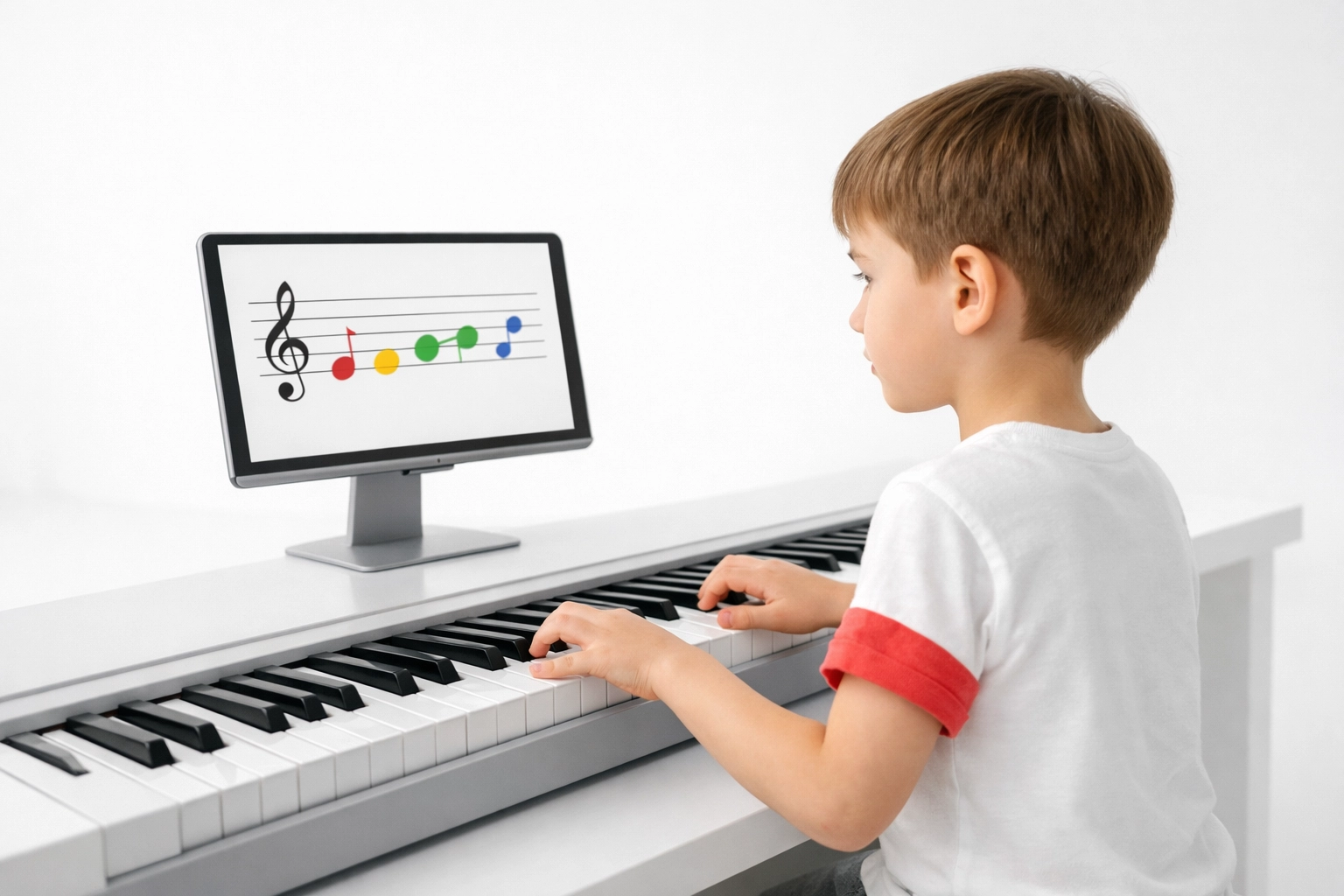
A young student sitting at a full-sized digital keyboard with their hands in the correct arched position, following a colorful, interactive music staff on a tablet mounted at eye level.
Why Traditional Lessons Felt Like Homework (And Why PianoFlight Doesn't)
We’ve all heard the stories: or maybe we lived them. The traditional piano teacher who sat with a wooden ruler, focusing on boring scales and "The Farmer in the Dell" for six months before you ever got to play a song you actually liked.
It’s no wonder so many of us quit!
At iPianoLab, we realized that the "old school" way just doesn't work for the modern kid. That’s why we developed PianoFlight. Starting this summer, PianoFlight will be our official brand name, representing the "liftoff" your child experiences when they actually enjoy their practice time.
Our approach uses the technology kids already love. We use apps, games, and online tutorials to make the learning process feel like a video game. But here's the kicker: it’s a game where the "controller" is a real musical instrument.
When your child logs into our online lessons, they aren't just looking at a teacher on a screen. They are engaging with a curriculum designed to get them playing recognizable songs: Pop, Rock, Movie Themes, and Video Game music: from day one.
The "Healthy Screen Time" Advantage
So, why is this the "healthy" choice for 2026? Let’s look at the science of how piano lessons for kids have evolved.
1. Instant Gratification Done Right
In a world of TikTok and instant results, traditional piano practice can feel too slow. Piano learning apps provide "micro-wins." Scoring points for hitting the right rhythm or unlocking a new level in a music game gives the brain a healthy dopamine hit. It rewards the effort of learning, which builds a growth mindset.
2. Physical and Digital Integration
One of the best ways to combat the "sedentary" lifestyle of screen time is to pair the digital world with a physical action. Playing the piano is a full-body workout for the brain. It requires the left and right hemispheres to communicate, and it requires physical posture and finger strength.
3. Accessible Mastery
In the past, if you lived in a busy city like NYC, finding a teacher and a space to practice was a nightmare. Now, with a simple keyboard and a tablet, your child can practice at home, in a rehearsal space, or even while traveling. It removes the barriers that used to make music "too hard" to stick with.
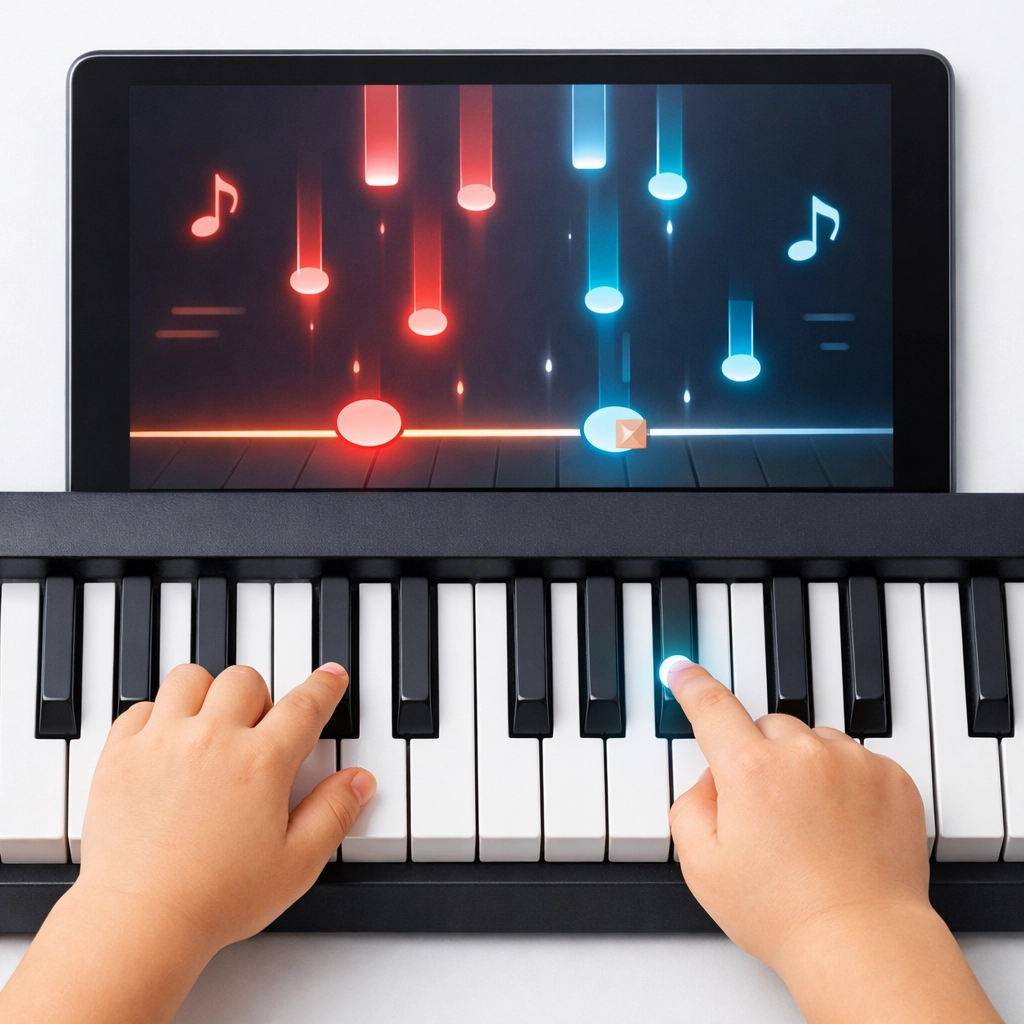
A close-up of a child's hands on a keyboard, with the "PianoFlight" app showing a scrolling 'Rhythm Hero' style game that tracks their progress in real-time.
It’s Not Just an App: It’s a Methodology
While we love apps, we know that technology alone isn't a replacement for a great mentor. That’s the iPianoLab difference. We don't just hand your kid an iPad and walk away.
Our after-school programs and summer camps feature real teachers who use the PianoFlight method to guide students. The tech is the tool, but the teacher is the coach.
Think of it like learning a sport. You can watch YouTube videos about basketball all day, but you won't get better until you get on the court with a coach who can correct your form. We use the apps to make the "drills" fun, so that when the teacher steps in, the student is already excited to show off what they’ve learned.
Why 2026 is the Best Time to Start
The technology available today is incredible. We now have apps that can "listen" to a real piano and provide 100% accurate feedback. We have VR integration that can show a child exactly where to put their fingers in a 3D space.
But with all this tech, the goal remains the same: Confidence.
When a child masters a song through PianoFlight, they aren't just becoming a "piano player." They are becoming a person who knows how to tackle a difficult task, break it into small pieces, and succeed. That is a skill that carries over into math, sports, and social relationships.
If you’re worried about your child’s screen time, don’t try to fight the technology. Use it! Switch the "passive" for the "productive."
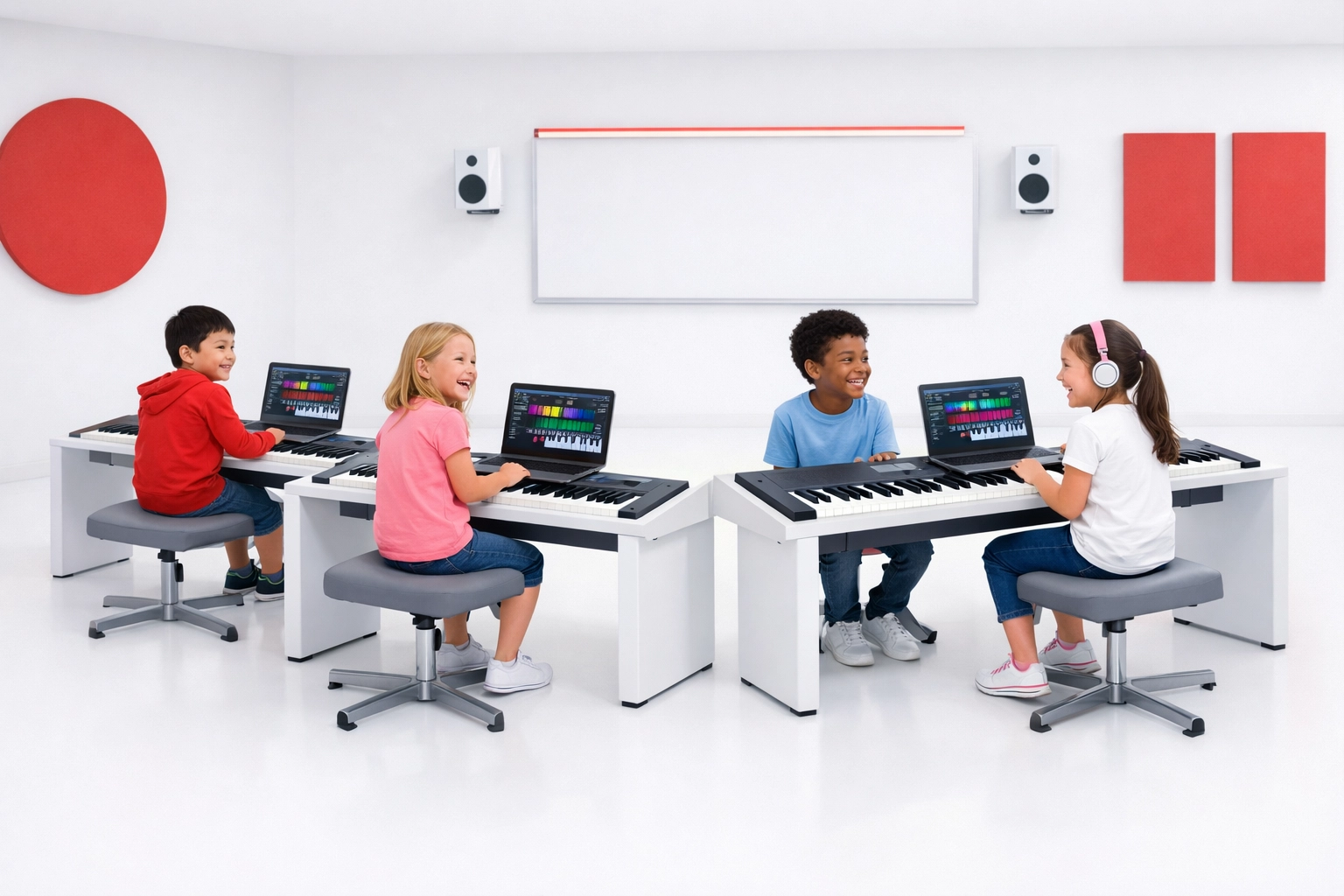
A group of kids in a pianolab classroom setting, each with their own keyboard and laptop, laughing and collaborating on a group music piece.
Getting Started: Low Pressure, High Reward
If you’re thinking, "This sounds great, but I don't even have a piano," don't worry! You don't need a $10,000 grand piano to start this journey.
In fact, we recommend starting with a simple, affordable digital keyboard. We even put together a Keyboard Buyer’s Guide to help you find exactly what you need without overspending.
The beauty of the PianoFlight method is that it’s low-stress. You can start with our online classes to see if your child catches the "music bug." If they love it (and most do!), you can then look into our local NYC programs.
The Bottom Line
Screen time doesn't have to be a battle. In 2026, we have the opportunity to give our kids the best of both worlds: the cutting-edge engagement of digital tools and the timeless, soul-enriching power of music.
Piano lessons for kids have changed for the better. By choosing a tech-forward approach like PianoFlight, you’re not just giving them something to do: you’re giving them a "super-brain," a creative outlet, and a healthy way to navigate the digital world.
Ready to see the difference for yourself? You can check out our schedule or even grab some free stuff to get a feel for how we work.
Let’s turn that screen into a stage!
Quick Links for Parents:
- Need a keyboard? Read our Guide.
- Want to see our teachers in action? Meet the Team.
- Ready to jump in? Sign up here.
- Looking for a pro space to play in the city? Check out Lenox Hill Music Studios.