Can a Child Learn Piano Without a Teacher? A Parent Guide
Yes, a child can begin learning piano without a traditional weekly teacher, especially with a structured course and a supportive adult nearby. But “learning alone” works best when it does not mean guessing alone. Young beginners still need a clear sequence, short goals, accurate demonstrations, and some way to get feedback before small mistakes become habits.
The right choice depends on your child's age, independence, attention, goals, and how much musical help is available at home. Some children thrive with a self-paced video path. Others need a live teacher from the start. Many families do best with a combination: guided online material for practice plus regular teacher check-ins.
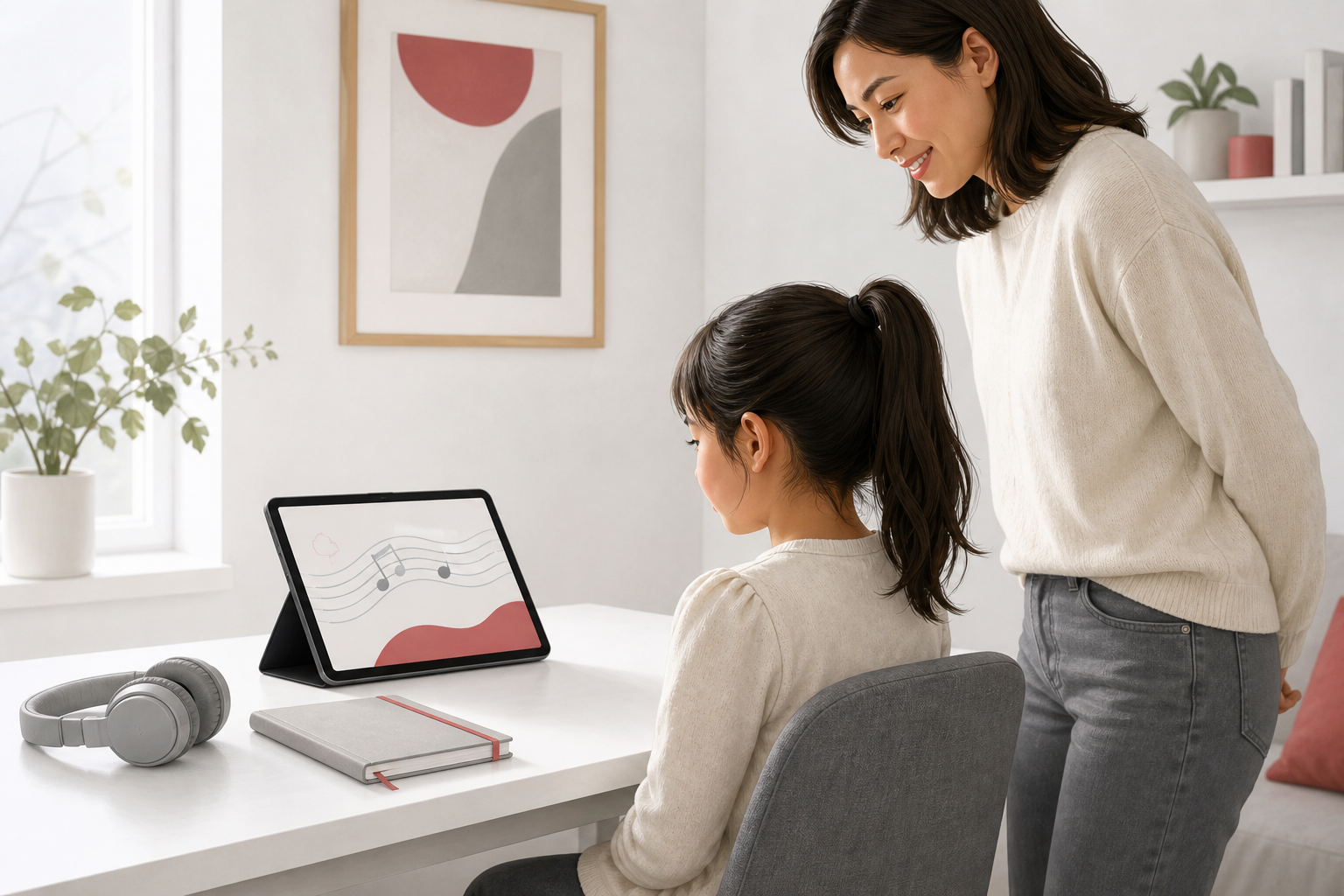
Can kids really learn piano by themselves?
Children can learn many beginner skills through careful demonstration and repetition. A well-organized course can show them where notes are, how to count simple rhythms, how to coordinate two hands, and how to build a song one small section at a time. A motivated child may enjoy replaying a lesson, moving at a comfortable speed, and practicing the same step without feeling rushed.
The challenge is that a screen or book may not notice when the child is unsure, tense, using an awkward hand position, skipping a rhythm, or practicing the wrong note repeatedly. Younger children may also have trouble deciding what to do next. Independent learning is therefore less about removing all help and more about giving the child a reliable learning system.
What a child can learn with a structured self-paced course
A beginner-friendly course can support:
- Keyboard geography: recognizing repeating note patterns and finding starting positions.
- Steady beat and rhythm: clapping, counting, and matching short rhythmic patterns.
- Simple songs: learning a melody or chord pattern in manageable pieces.
- Basic note reading: connecting written notes to locations and sounds.
- Practice habits: following a short plan and repeating a specific goal.
- Listening skills: comparing a performance with a clear demonstration.
These skills are easier to learn when lessons are ordered instead of scattered across unrelated videos. A logical path helps a child know what comes first, what to repeat, and what success looks like before moving on.
Where teacher feedback matters most
Feedback becomes especially useful when the child cannot tell whether the result is correct. A teacher can hear uneven rhythm, see inefficient movement, adjust the difficulty, and explain one idea in a different way. That quick correction can save a family from spending a week practicing a misunderstanding.
Live guidance is valuable for:
- comfortable posture and relaxed movement;
- finger choices and hand coordination;
- rhythm that looks correct on the page but does not sound steady;
- music that is too easy, too difficult, or poorly matched to the child;
- motivation after the first burst of excitement fades;
- questions a child cannot clearly describe.
A child does not need constant correction. They need enough accurate feedback to keep the learning path safe, clear, and encouraging.
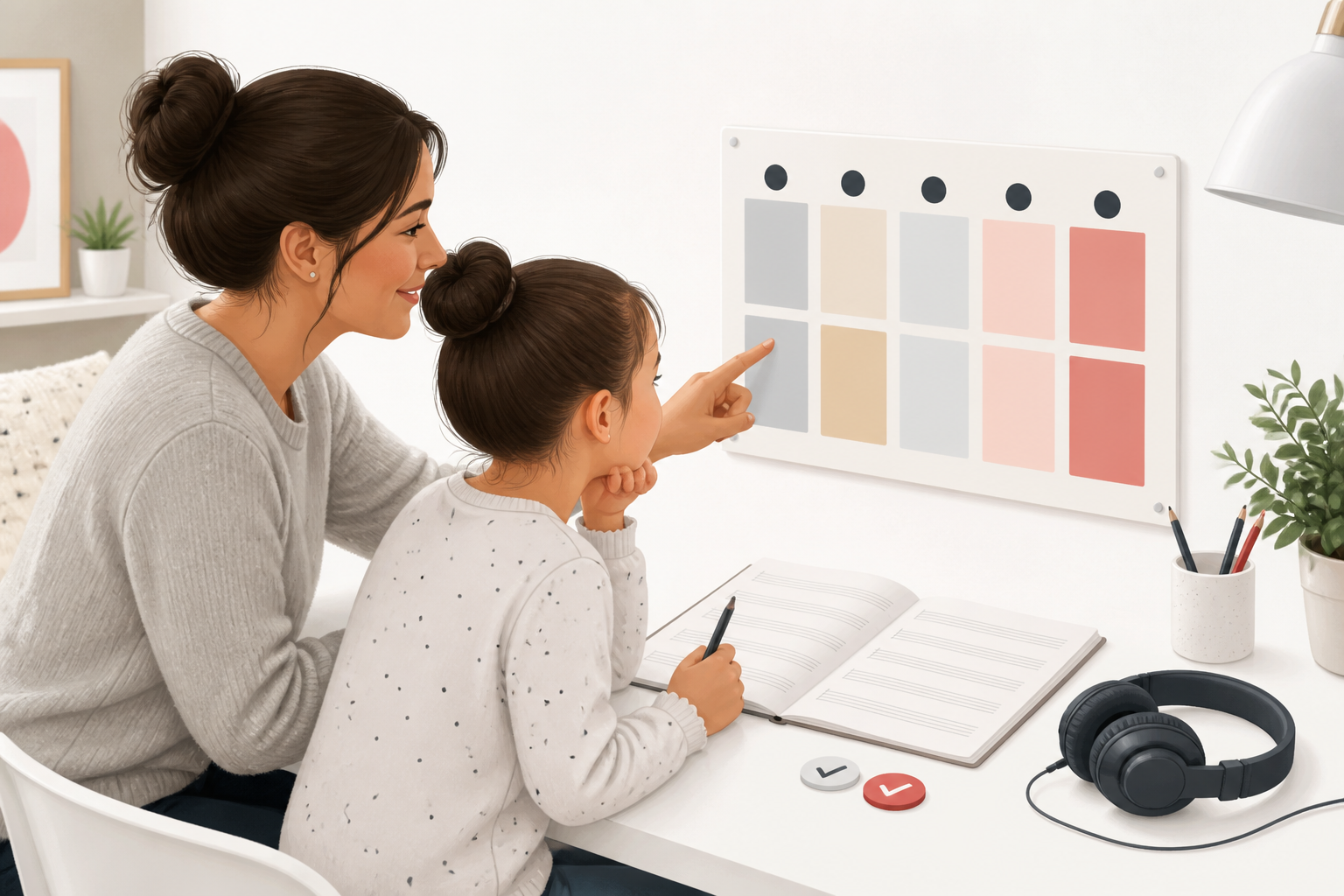
Try this two-week home-learning test
If you are unsure whether independent learning will fit your family, use a short test before making a long commitment.
1. Choose one structured source
Use one course with lessons in a clear order. Avoid mixing five apps, random videos, and several books during the test. Too many sources make it difficult to tell whether the child is progressing or simply switching activities.
2. Set a small schedule
Plan four short sessions each week. Ten focused minutes can be more useful than a long session filled with negotiation. Stop while the child still knows what went well.
3. Give one visible goal
Replace “practice piano” with a specific task: clap one rhythm twice, find three notes, or play the first line slowly. A child can work independently only when the next step is understandable.
4. Watch without taking over
A parent can help start the lesson, read the instruction, and ask the child to explain the goal. You do not need to become the piano teacher. The purpose is to keep the routine clear and notice where the child gets stuck.
5. Review the evidence
At the end of two weeks, ask: Can the child begin with little resistance? Do they remember earlier material? Can they explain what they are working on? Does the music sound more secure? If the answer is mostly yes, the format may be a good fit. If not, more guidance may make learning easier.
Self-paced, live, or blended: which path fits?
| Learning path | Often fits | Watch for |
|---|---|---|
| Self-paced course | An independent child who likes replaying lessons and has consistent adult support | Guessing, skipping steps, or practicing without feedback |
| Live lessons | A child who responds to interaction, needs accountability, or has specific questions | A pace or teaching style that does not match the child |
| Blended learning | A family that wants flexible home practice plus teacher guidance | Conflicting instructions from unrelated resources |
If your child enjoys learning at home but needs a clearer plan, compare what parents should look for in online piano lessons. Families deciding between instruments can also review piano lessons versus keyboard lessons for kids.
Signs your child would benefit from a teacher now
- Your child repeatedly asks whether something is right but cannot check it.
- Practice produces tension, pain, or persistent awkward movement.
- The child rushes ahead while important earlier skills remain uncertain.
- Every practice session depends on a parent giving the whole lesson.
- Motivation drops because the music feels disconnected or confusing.
- Your child wants to prepare for a recital, audition, exam, or other specific goal.
Needing a teacher is not a sign that independent learning failed. It simply means the child has reached a point where tailored feedback has more value than another general explanation.
How iPianoLab supports different learning styles
iPianoLab combines self-paced online learning with live teacher-led options. Children can use step-by-step video lessons and a song library at home, while families who want more guidance can choose online small-group or private lessons. The goal is to help beginners play music they enjoy while building note reading, rhythm, chords, coordination, and a clear path forward.
Explore iPianoLab online learning options, or get started with the format that fits your child.
Frequently asked questions
What age can a child learn piano independently?
There is no single age. Independent learning depends on reading ability, attention, comfort following a sequence, and adult support. Younger beginners usually need more help starting lessons and understanding practice tasks.
Can YouTube teach a child piano?
Individual videos can explain a song or skill, but random videos rarely provide a complete beginner sequence. A structured course is easier to follow and makes it less likely that important skills will be skipped.
Do parents need to play piano to help?
No. Parents can help with schedule, attention, encouragement, and clear goals without demonstrating the music. This guide explains how to support piano learning when you do not play.
Are piano apps enough for a beginner child?
An app can be useful when it offers a logical sequence, age-appropriate explanations, and meaningful practice. It may not replace feedback when a child is confused, tense, or unable to hear an error.
How long should we try self-paced learning before adding a teacher?
Two consistent weeks is enough for an initial fit check. You are not measuring mastery. You are looking for a workable routine, understanding of the next step, and small signs of progress without growing frustration.
Ready for a clear home-learning path with flexible levels of support? See iPianoLab online options.