How Can I Tell If My Child Is Making Progress in Piano Lessons?
A child is making progress in piano lessons when playing becomes a little more independent, accurate, steady, and confident over time—even if every practice session does not sound perfect. Finishing new songs is one sign, but it is not the only one. Better rhythm, easier starts, self-correction, two-hand coordination, and the ability to explain a musical idea can all show that learning is taking hold.
For parents, the most useful comparison is not your child versus another student. Compare your child with their own playing a few weeks ago. Small changes are easier to hear when you know what to notice.
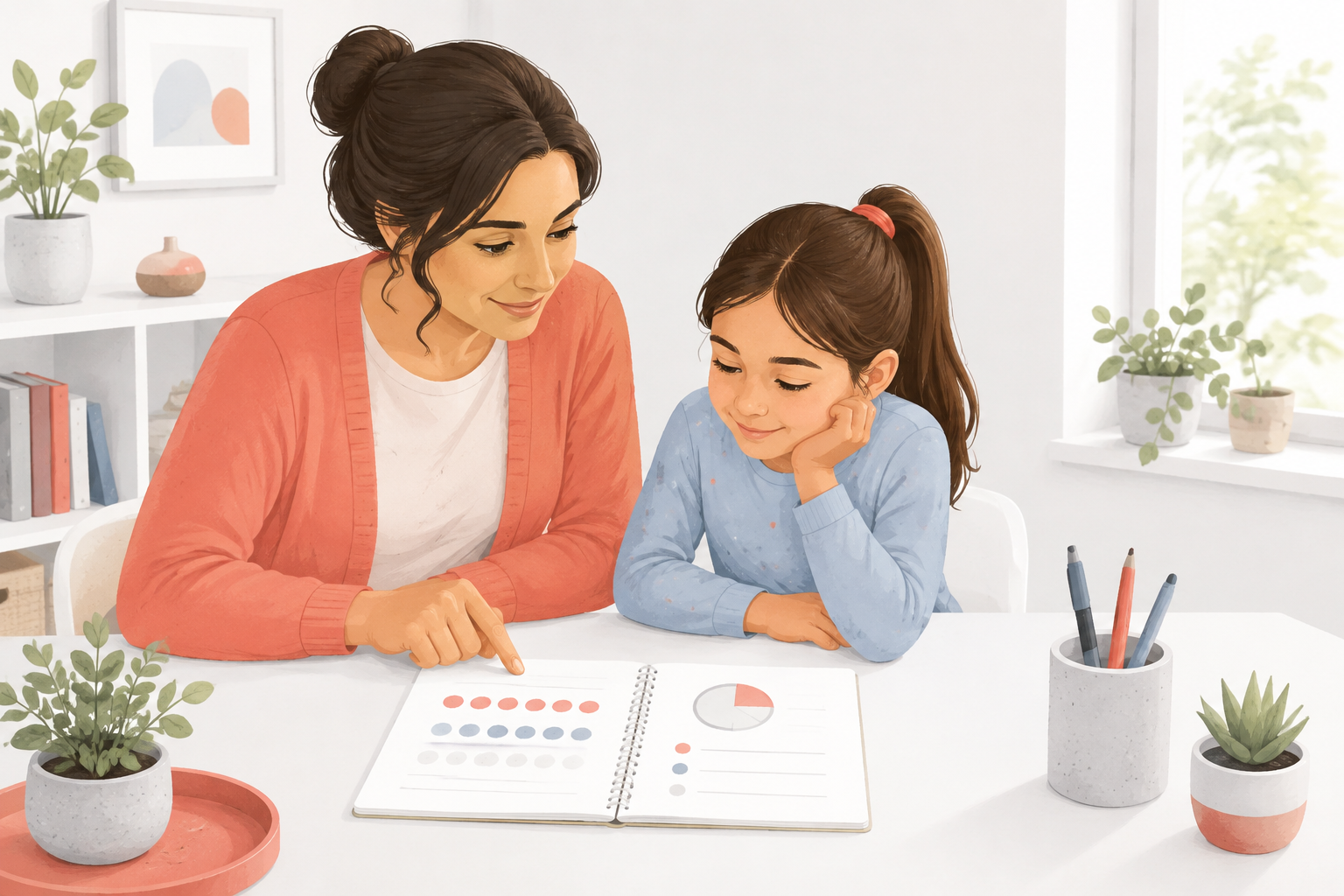
What does real piano progress look like for a child?
Beginner progress is rarely a straight line. A child may learn a short melody quickly, then spend longer developing rhythm or coordinating both hands. A familiar piece can sound easy one day and uneven the next because attention, energy, and task difficulty change.
Instead of using one performance as the test, look for a pattern across several weeks. Strong beginner lessons help children connect what they hear, see, count, and play. That growth can appear in how they begin a task, recover from a mistake, remember a pattern, or describe what they are working on.
Seven signs your child is making progress in piano lessons
1. Starting a song or exercise takes less help
At first, a child may need an adult to point to the starting place, count them in, or remind them what comes next. Progress appears when they can prepare, find a starting note or pattern, and begin with fewer prompts. The goal is growing independence, not zero support overnight.
2. The beat is becoming steadier
A steady beat is one of the clearest beginner milestones. Listen for fewer long pauses, more consistent counting, and the ability to continue through an easy passage. Playing slowly with a steady pulse usually shows more control than rushing and stopping repeatedly.
3. Your child notices and fixes some mistakes
Self-correction is a strong learning signal. A child may stop after an unexpected sound, return to the tricky spot, or try a different fingering without waiting for an adult to identify the problem. This shows that their ear, attention, and problem-solving are working together.
4. Old skills appear in a new song
Real understanding transfers. A rhythm learned in one piece may be recognized in another. A child may find a familiar pattern, use the same counting strategy, or remember how the hands move without relearning everything from the beginning. Transfer matters more than completing a worksheet once.
5. Two-hand tasks feel a little more manageable
Two-hand coordination develops gradually. Early progress may mean holding one note while the other hand plays, keeping an easy repeated pattern, or combining two short parts without losing the beat. The arrangement does not need to be advanced to show meaningful coordination.
6. Your child can explain one musical goal
Ask, “What are you working on in this part?” A useful answer might mention counting, playing more smoothly, remembering a note, or keeping one hand steady. Children do not need technical language. Being able to name the task shows that practice has a purpose.
7. Confidence and curiosity are growing
Confidence may look quiet. Your child might play a favorite section without being asked, try to work out a melody, show a family member a small win, or return to a difficult spot after a break. Curiosity and persistence are progress even before a piece is performance-ready.
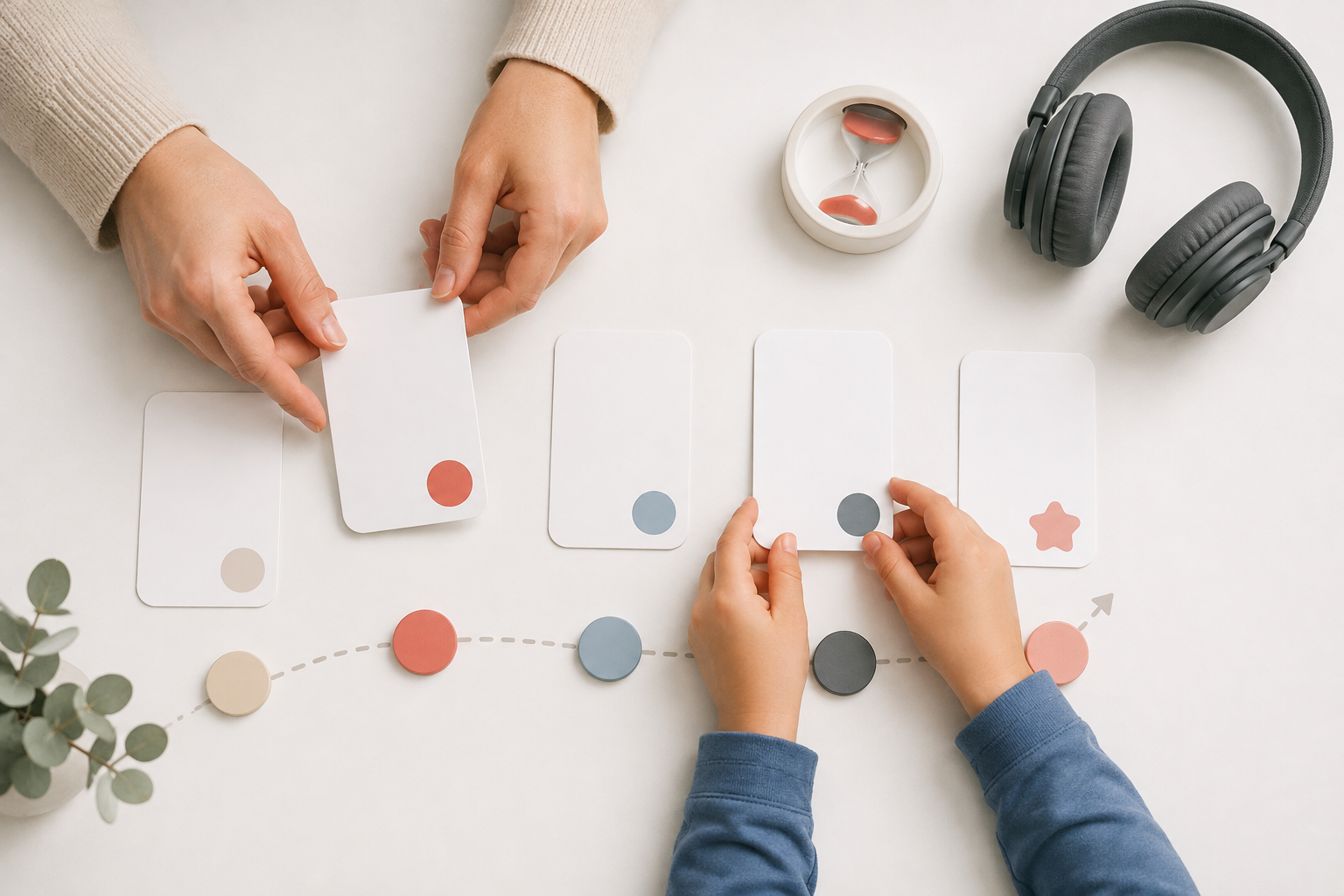
A simple monthly piano progress check for parents
You do not need a daily scorecard. Once every four weeks, choose one familiar piece or short activity and listen for the same five things. Keep the check relaxed and brief so it does not feel like an audition.
- Starting: Can my child begin with less prompting? Look for finding the place and starting after a simple count-in.
- Rhythm: Is the beat steadier than last month? Listen for fewer stops or rushed sections.
- Recovery: What happens after a mistake? Notice whether your child restarts the small section or keeps going.
- Understanding: Can my child describe the week's goal? A useful answer names one rhythm, note, pattern, or coordination task.
- Independence: How much adult help is needed? Look for one short step completed without constant reminders.
Write down one sentence about what became easier and one sentence about the next small goal. That is enough. Avoid comparing the number of finished songs from one month to the next because pieces vary in length and difficulty.
Progress can happen in different areas at different times
A child may move quickly in one area and slowly in another. That is normal. Beginner piano learning includes several connected skills:
- Keyboard geography: finding notes, groups, and distances more easily.
- Rhythm and counting: keeping a pulse and understanding note lengths.
- Note reading: connecting written symbols with sound and movement.
- Listening: noticing whether a pattern matches what the child expects.
- Coordination: asking both hands to complete different, manageable jobs.
- Practice habits: returning to a small goal with less resistance or confusion.
If you are wondering what a broader beginner sequence may include, see what a child may learn during the first year of piano lessons. Families at the very beginning can also review what to expect in the first six weeks.
What should parents do when piano progress feels slow?
Start by narrowing the problem. “Not progressing” can mean several different things: the practice goal is unclear, the music is too difficult, the weekly routine is inconsistent, the child is tired, or a specific skill needs more time. One hard week does not establish a pattern.
- Ask for one small goal. Replace “practice the song” with a task that can be heard or seen, such as keeping the beat through four measures.
- Reduce the size of the task. Work on one short section, one hand, or one rhythm before combining everything.
- Use repetition with a reason. Repeat the passage to solve one specific issue, not simply to accumulate attempts.
- Notice comfort. Stop and ask for guidance when playing causes pain or repeated physical strain.
- Share the pattern with the teacher. Describe what happens at home without turning practice into a conflict report.
If practice has become a frequent source of tension, use this guide to help your child practice without becoming the teacher.
Useful questions to ask your child's piano teacher
A clear teacher conversation can turn a vague concern into a practical plan. Try asking:
- Which skill is the main focus right now?
- What should we listen for at home this week?
- What is one reachable goal before the next lesson?
- Is the current piece meant to build reading, rhythm, coordination, or confidence?
- How much help should a parent give on this task?
- What would show that the child is ready for the next step?
You are looking for a specific explanation, not a promise that every week will be easy. If the lesson goals remain unclear over time, this parent guide to teacher fit can help you think through communication, pacing, and learning style.
How iPianoLab supports visible beginner progress
iPianoLab helps children play songs they enjoy early while building keyboard geography, rhythm, counting, note reading, two-hand coordination, melody, chords, and music literacy. The structured online curriculum can be paired with live small-group or individual guidance so families have a clear sequence and feedback.
Explore iPianoLab online learning options, or choose a beginner path for your child.
Frequently asked questions
How quickly should a child improve at piano?
There is no universal timeline. Age, lesson format, practice consistency, song difficulty, prior experience, and the skill being learned all affect the pace. Look for several small changes across a few weeks instead of expecting a fixed number of songs.
Is finishing more songs the best measure of piano progress?
No. A child can finish fewer songs while working on harder rhythm, reading, or two-hand skills. Independence, control, understanding, and the ability to apply a skill in new music are often more useful measures.
Should parents record piano practice to track progress?
A short private recording can help a family hear change over time if the child is comfortable with it. Keep it low-pressure, use it only for the family's learning purpose, and avoid turning every practice into a performance.
What if my child practices but still sounds uneven?
Uneven playing may mean the task needs to be smaller or slower. Ask the teacher which short section and skill should be the priority, then listen for improvement in that one area before combining the full piece.
Can online piano lessons show clear progress?
Yes, when the program provides a structured sequence, manageable goals, useful feedback, and a way to revisit skills. Parents should be able to tell what the child is learning now and what comes next.