Why Does My Child Play Piano Notes Unevenly?
Quick answer: a beginner may play piano notes unevenly because the child is coordinating several jobs at once: finding the keys, using the assigned fingers, reading the rhythm, and moving from one note to the next. First decide whether the unevenness is in the timing, the volume, or the accuracy. Then shrink the music to two or three notes and use a slow clap–tap–play routine.
Uneven notes do not automatically mean that a child lacks talent or has a bad sense of rhythm. A short pattern can sound bumpy when one transition is less familiar, one finger arrives late, or the child speeds up through the easy notes and waits for the hard one. Parents can help by noticing the pattern and keeping the task small while the teacher guides the physical technique.
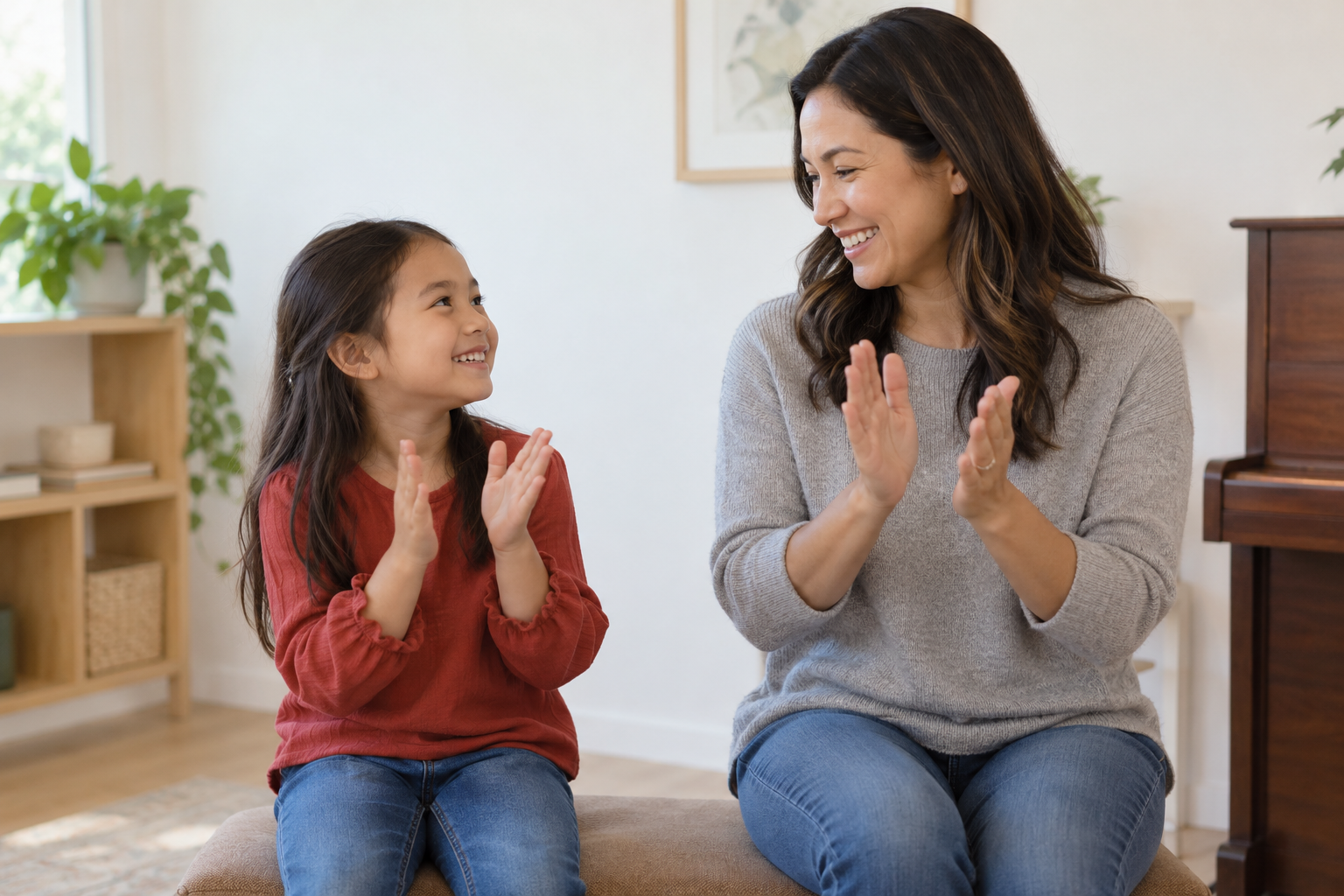
What does “uneven” mean in beginner piano playing?
Before asking a child to play more evenly, listen for what is changing. Three different problems can sound similar from across the room.
The spaces between notes are uneven
One note comes quickly, the next arrives late, and the phrase loses its steady pulse. This often happens near a finger change, hand-position move, repeated note, or unfamiliar rhythm. The child may know every note but still need time to organize the movement between them.
The notes have uneven volume
The timing may be steady while some notes sound strong and others nearly disappear. That is a touch-and-listening question rather than a rhythm question. Use the separate guide to help a child hear and shape different piano volumes, and let the teacher guide how the hand produces the sound.
The child changes or misses notes
A pause can appear because the child is searching for the next key. That is different from playing the correct keys with uneven timing. If accuracy is the main issue, start with the guide to finding the pattern behind repeated wrong notes.
Why do children play some piano notes faster than others?
Beginners often speed through what feels easy and wait before what feels uncertain. Common examples include:
- a thumb crossing or another assigned finger change;
- a jump to a new hand position;
- repeated notes that need separate, steady beginnings;
- a change from one hand to both hands;
- a bar line that the child treats like a stopping point;
- a difficult note that the child watches for in advance; or
- a practice speed that is faster than the movement is ready for.
The useful question is not “Why can’t you keep it even?” It is “Where does the spacing change?” One precise spot is much easier to practice and describe to the teacher.
How can a parent find the uneven spot?
Choose one short phrase and listen once without correcting. Then ask:
- Does the unevenness happen in the same place each time?
- Are the correct notes arriving at unequal times?
- Does the child rush before a harder note and pause on it?
- Does the pattern become steadier when played more slowly?
- Can the child clap or tap the rhythm evenly away from the piano?
- Does the problem appear only when both hands play?
If the child pauses at the end of every measure, use the more specific last-beat–first-beat routine for bar-line pauses. If the whole song keeps accelerating, the guide to helping a child stop rushing piano songs is the better starting point.
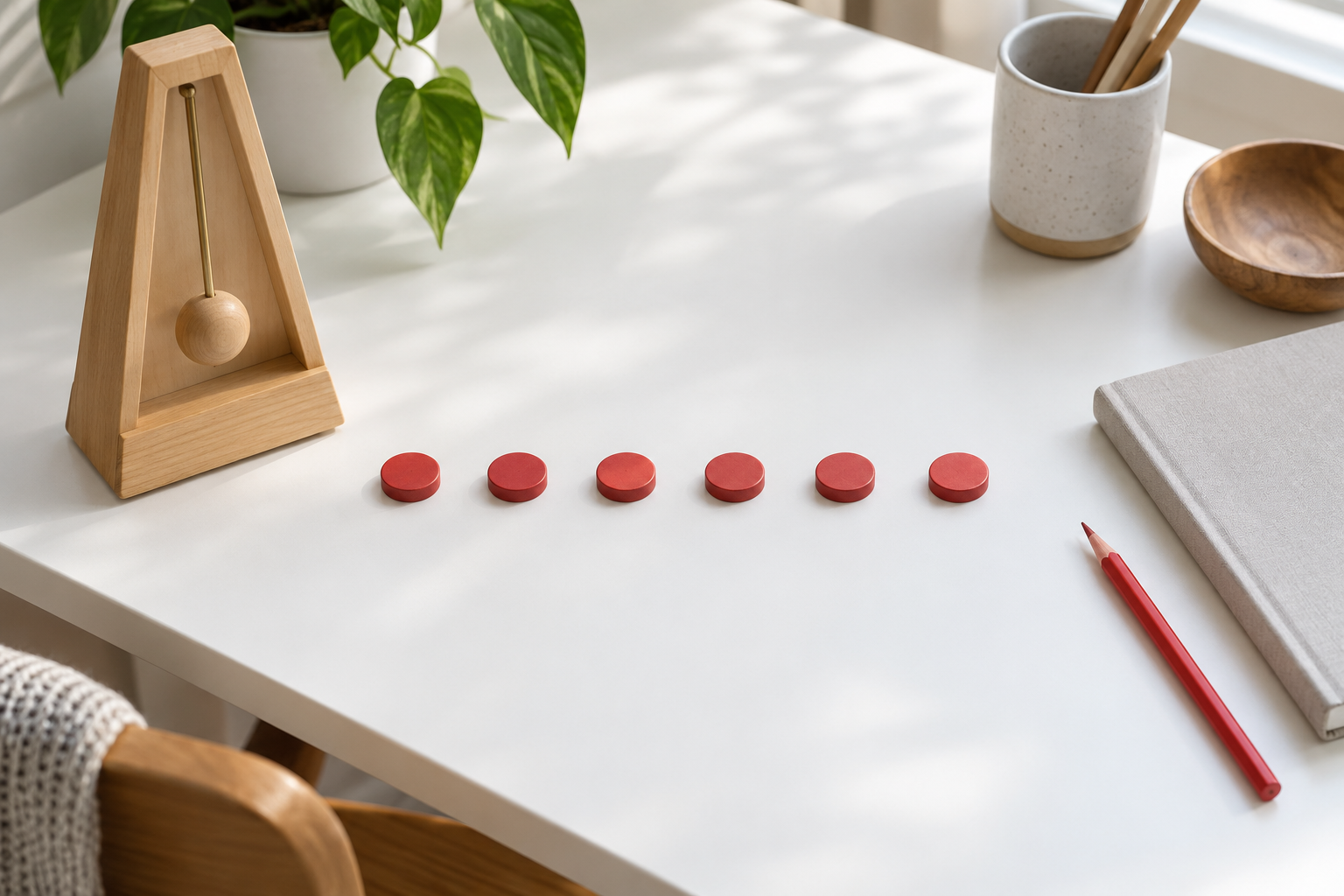
A five-minute clap–tap–play routine for uneven notes
Use two to four notes from the assigned music. Keep the routine slow, brief, and comfortable.
- Choose the smallest bumpy spot. Start with the exact two-, three-, or four-note group where the spacing changes. Do not begin at the start of the song unless the problem is there.
- Clap the rhythm. Clap the note pattern while counting in the way the teacher has assigned. Listen for equal spaces where the written rhythm calls for equal notes.
- Tap one hand. Tap the pattern on a table or closed book with the hand that will play it. Keep the movement gentle and the beat steady.
- Play one note repeatedly. On one comfortable piano note, copy the same rhythm. This removes the job of finding several keys.
- Restore the real notes. Play the tiny group slowly with the assigned fingers. Stop after one calm, even success.
- Add one neighboring note. Expand by only one note on either side. If the pattern becomes bumpy again, return to the smaller group.
A metronome can be useful only after the child can clap, tap, or play the tiny pattern with a reasonably steady internal pulse. Adding a click too early can create one more thing to chase. Follow the teacher’s guidance about when and how to use it.
Should my child practice uneven notes with dotted rhythms?
Rhythm variations can be a useful teacher-assigned tool for some patterns, but parents do not need to invent a technical drill. The safe home step is to isolate the spot, slow it down, and preserve the assigned fingering. Ask the teacher before changing the written rhythm, especially when the child is still learning how the passage should sound.
What can a parent say during uneven piano practice?
Try one neutral prompt at a time:
- “Can you show me the two notes where the spacing changes?”
- “Let’s clap that tiny rhythm once.”
- “Can we make the spaces match before we make it faster?”
- “Does it stay even when you use one comfortable note?”
- “Let’s stop after one calm version.”
- “We can mark this spot and ask your teacher.”
Avoid “just play it evenly” or repeated demands to start the whole song again. Those instructions describe the result without showing the child which transition needs attention.
When should the piano teacher take the lead?
Ask the teacher when the same notes stay uneven at a comfortable speed, the child is unsure about the fingering or written rhythm, the wrist or arm becomes rigid, the problem began after a new technique or hand position, or the child feels discomfort. Bring the exact measure or note group instead of describing the entire song as uneven.
Stop practice and seek appropriate guidance if playing causes pain, numbness, tingling, or persistent discomfort. Parents can observe the pattern, but they do not need to diagnose a physical cause.
Why even note spacing matters for beginners
Even spacing helps a listener hear the beat, recognize the phrase, and follow the child’s musical idea. It also gives the learner a stable foundation for changing dynamics, joining the hands, and eventually increasing speed. The goal is not mechanical perfection. It is a controlled pattern that the child can hear, repeat, and shape.
iPianoLab helps beginners connect songs they enjoy with rhythm, note reading, keyboard geography, coordinated movement, and confident practice. A tiny clap–tap–play reset can turn a vague “bumpy” passage into one clear next step.
Give your beginner a steadier next musical step
iPianoLab combines engaging songs with structured support for rhythm, note reading, coordination, listening, and confident home practice.
Explore iPianoLab online piano lessons, or choose a program and get started.
Frequently asked questions
Why does my child play piano notes unevenly even when the notes are correct?
The child may still be organizing the movement and timing between the correct keys. Slow down, isolate two to four notes, and check whether the same transition changes the spacing each time.
Is uneven piano playing a rhythm problem or a finger problem?
It can involve rhythm, movement, fingering, reading, or several of those jobs at once. First check whether the child can clap the written rhythm steadily. Then let the teacher evaluate the fingering and physical technique.
Should my child use a metronome to fix uneven notes?
A metronome can help after the child understands the rhythm and can produce a short steady pattern without the click. If the child is chasing or fighting the beat, return to clapping and tapping and ask the teacher for the next step.
How slowly should a child practice an uneven piano passage?
Use a speed at which the child can prepare each movement comfortably and keep the written rhythm recognizable. There is no single correct number for every beginner or song. The teacher can set a specific tempo when needed.
What if the passage is even with one hand but uneven with both hands?
The combined task may be using most of the child’s attention. If it matches the teacher’s plan, practice a very small group with each hand separately, then reconnect only a few notes at a slow, comfortable pace.