Why Does My Child Start Piano Songs Over After Every Mistake?
If your child restarts a piano song from the beginning after every mistake, the most helpful next step is to practice starting in the middle. Restarting is understandable: the opening feels familiar, while the mistake feels uncertain. But repeating the beginning again and again can make the first part strong and leave the middle and ending fragile.
The goal is not to ignore mistakes or demand a perfect play-through. It is to teach two different skills: how to repair one small spot and how to keep going when a mistake happens. This parent guide gives you a calm, practical way to build both.
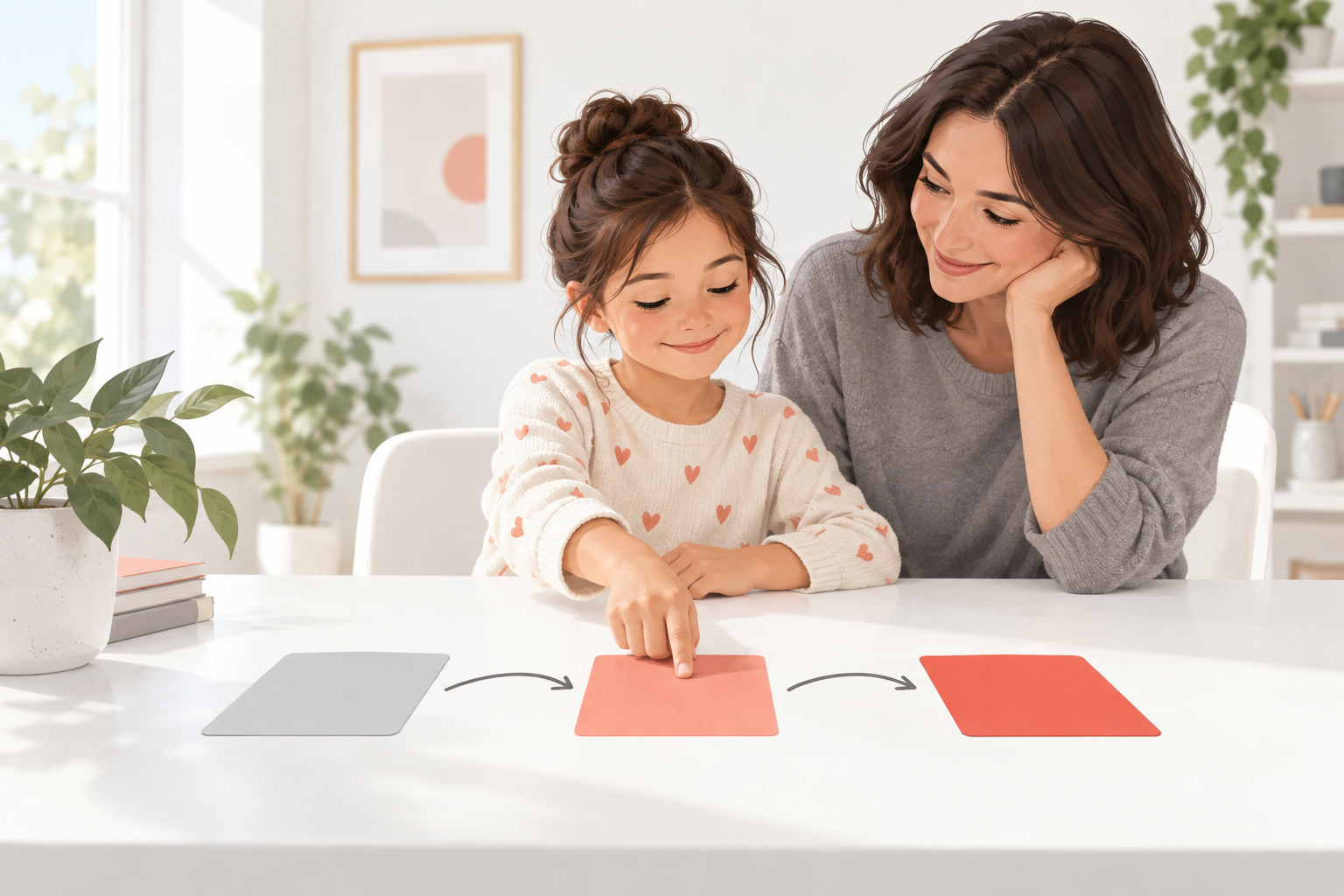
Why does a child keep starting a piano song over?
Usually, restarting is not laziness. It is a sign that the child knows how to begin but does not yet have a reliable map of the whole song. Several things may be happening:
- The beginning is the safest place. It has received the most repetitions, so returning there feels easier than solving an unfamiliar measure.
- The child does not know where else to start. A teacher may have shown the middle in class, but the child may not remember the hand position, note, chord, or rhythm that marks it.
- The practice goal feels like “play it perfectly.” One wrong note can feel like the whole attempt failed, even when the child recovered well.
- The practice section is too large. Trying to fix an entire page makes it hard to notice the exact two or three beats that need attention.
This habit matters because children also need to begin from more than one place, connect short sections, and continue after a small slip. Those are musical skills—not just recital skills. They help with lessons, home practice, memory, reading, and confidence.
Try the three-restart-point method
Choose three places in the song: the beginning, one clear spot in the middle, and the start of the final section. The teacher can help select these points. At home, ask your child to begin from each one without playing everything that came before it.
- Point one: the beginning. Play only the first short phrase, then stop on purpose.
- Point two: the middle. Find the agreed hand position or musical landmark and play one short phrase.
- Point three: near the end. Start the final section directly and play to the finish.
If the middle start feels difficult, make it smaller. The child might first name the starting hand, tap the rhythm, listen to the assigned example, or place one finger before playing. A restart point should become a familiar doorway into the music.
This also complements memorization. A child who can start only at the beginning may know the song as one long chain. A child who can start from several places has a more flexible musical map. For more context, see when memorizing piano songs helps—and what it cannot replace.
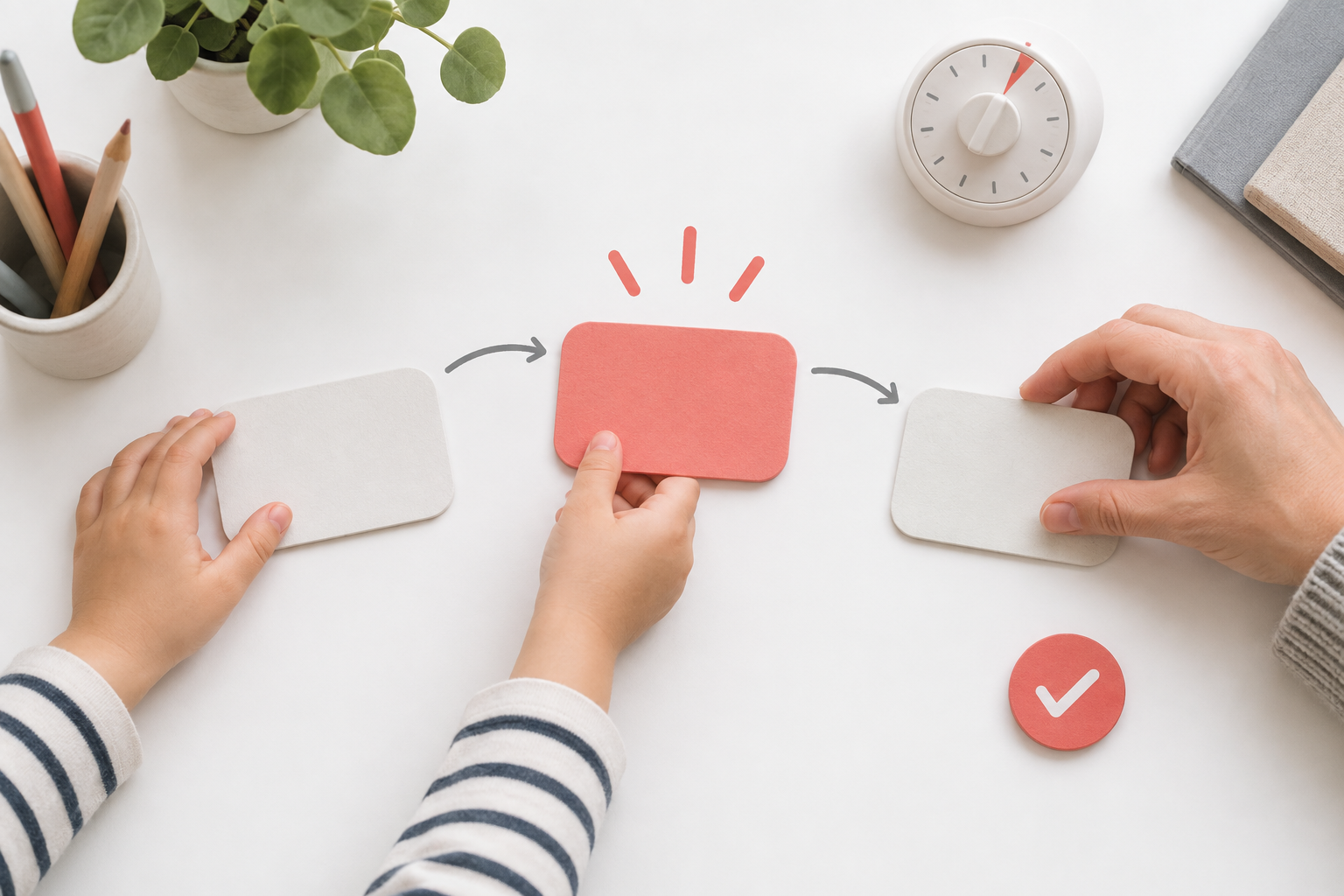
How to repair one piano mistake without replaying the whole song
When a mistake repeats, use a short repair loop:
- Stop close to the problem. Identify the smallest workable spot—often one beat, one hand movement, or one change.
- Back up just a little. Begin one small step before the mistake, not at the start of the song.
- Play through the spot slowly. Use a pace that lets the child notice what is happening.
- Connect one step after it. Finishing just beyond the difficult point teaches the child how to leave the problem area, not only how to enter it.
- Repeat a few calm times. Stop before the child becomes tense or the movement gets less accurate.
A metronome can help later, but only when the notes, movement, and rhythm are already manageable. If your child is ready to add a steady pulse, use this parent guide to beginning metronome practice.
Teach “fix mode” and “keep-going mode”
Children often get conflicting messages: stop and correct every error, but also keep the music moving. Both instructions can be right at different times. Name the mode before the child starts:
- Fix mode: stop near one known problem, work in a tiny section, and repeat deliberately.
- Keep-going mode: play a familiar section once and continue after small slips, using the next restart point if the music truly stops.
In keep-going mode, success does not mean zero mistakes. Success may mean the child noticed a slip, stayed calm, found the next beat, or resumed from the middle without returning to the opening.
A six-minute practice routine for recovery skills
- Minute 1: Find the three restart points. Point to each one and prepare the correct starting position.
- Minutes 2–3: Repair one small spot. Use fix mode and work only around the repeated mistake.
- Minutes 4–5: Connect two short sections. Begin just before the repaired spot and continue just after it.
- Minute 6: Use keep-going mode. Play one familiar section and practice recovering instead of restarting.
End with something the child can already do. A familiar pattern, rhythm, or song ending gives the practice session a clear finish and keeps one difficult spot from defining the whole experience.
What can a parent say after a piano mistake?
Short, neutral prompts work better than a stream of corrections. Try one of these:
- “Show me the nearest restart point.”
- “Can we make the practice piece smaller?”
- “Try one step before the tricky spot.”
- “This time, the goal is to keep going.”
- “What helped you recover?”
Parents do not need to diagnose every wrong note. Your role can be to protect the routine, help the child use the teacher’s plan, and notice the recovery skill. If you do not play piano yourself, this related guide explains how to support a child’s piano learning without becoming the teacher.
When should you ask the piano teacher for help?
Ask for a clearer practice plan when your child cannot identify a middle starting point, repeats the same confusion across several sessions, becomes upset as soon as an error appears, or is unsure which hand, note, rhythm, or section to practice. Useful questions include:
- Which two or three restart points should we use this week?
- What is the smallest section that needs repair?
- Should this assignment be practiced in fix mode or keep-going mode?
- What would count as progress before the next lesson?
A specific answer makes practice easier to repeat at home. You can also use these observable signs of piano-lesson progress to notice growth beyond a perfect performance.
How iPianoLab supports beginner progress
iPianoLab helps children play songs they enjoy while building keyboard geography, rhythm, counting, note reading, two-hand coordination, melody, chords, and music literacy. Small musical wins matter, but so do the practical skills that help a child continue when learning becomes less automatic.
Families can explore iPianoLab online learning or find a beginner-friendly lesson path.
Frequently asked questions
Should a child stop every time they play a wrong note?
No. During fix mode, stopping near a repeated problem can be useful. During keep-going mode, the child should practice continuing after small slips. Naming the mode before playing prevents confusion.
How many times should a child repeat a difficult piano section?
There is no single number for every child or assignment. A few focused repetitions of a very small section are usually more useful than replaying the whole song many times. Stop when attention, accuracy, or comfort begins to drop, and ask the teacher for a specific target.
What if my child cannot start in the middle of the song?
Make the restart point more concrete. The teacher may mark a section, identify a starting note or chord, record a short demonstration, or simplify the assignment. Practice only the setup at first, then add the next beat or phrase.
Does starting over mean my child has not memorized the song?
Not necessarily. A child may remember the song as one sequence that always begins at the opening. Starting from several places tests a different skill: whether the child has a flexible map of the music.
How can I help without creating a practice battle?
Choose one neutral prompt, keep the task small, and let the teacher define the musical correction. Praise a specific recovery—such as finding the middle start or continuing after a slip—rather than judging the entire performance.