What Kids Learn in the First 6 Weeks of Piano Lessons
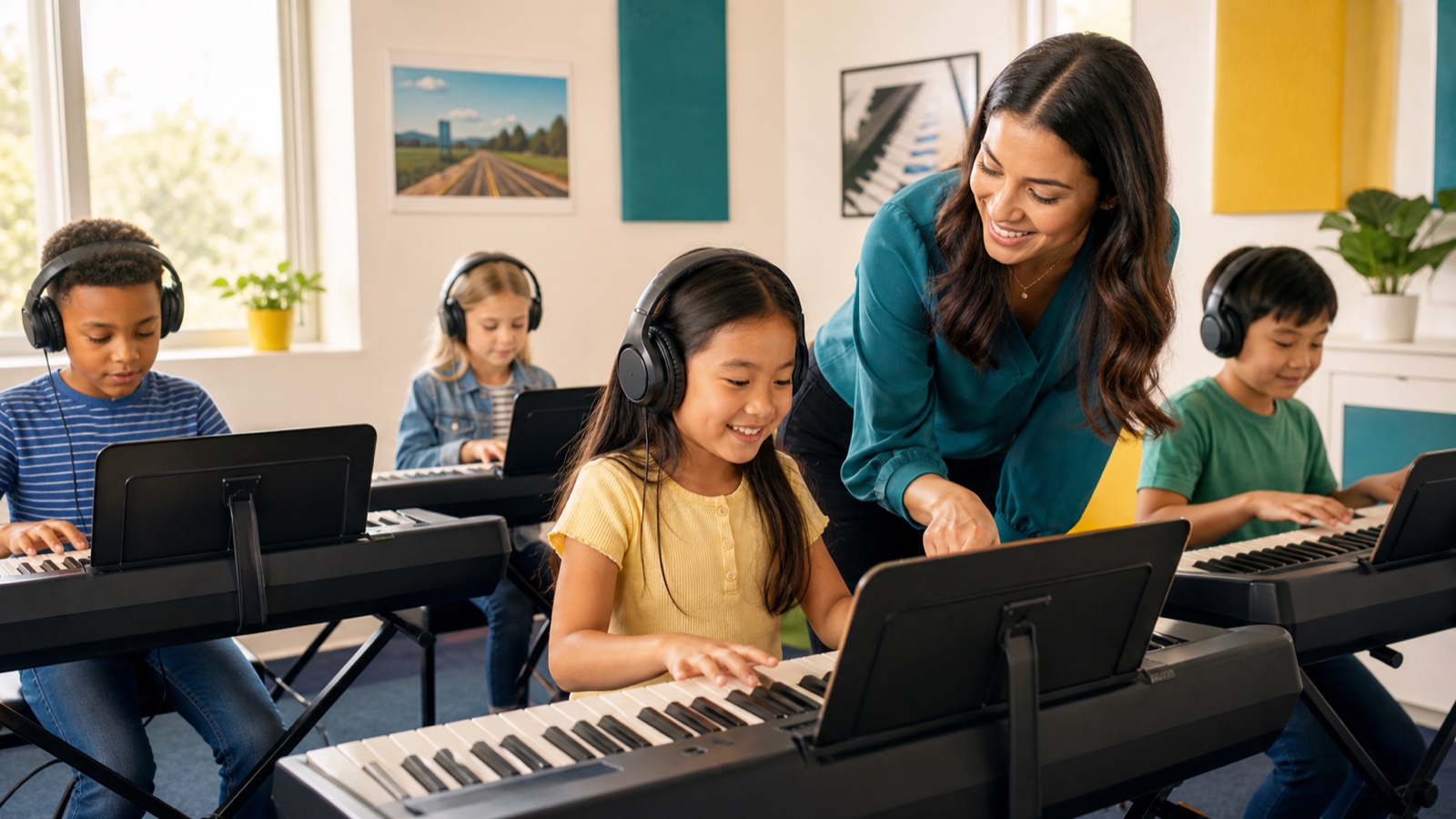
Short answer: in the first six weeks of piano lessons, most beginners should learn where notes live on the keyboard, how to keep a simple beat, how to use finger numbers, how to play short songs, and how to practice without a parent having to become the teacher. The best early lessons also build confidence, because kids are much more likely to continue when they can hear progress quickly.
That first stretch matters. A child who leaves lesson one thinking, "I can do this," has a different relationship with music than a child who spends the first month staring at symbols that do not yet feel connected to sound. iPianoLab, soon to become PianoFlight in Summer 2026, is built around early wins: students use keyboards, headphones, clear lesson goals, and songs they can recognize while they build real musical foundations.
What should happen in the first piano lesson?
The first lesson should make the keyboard feel friendly, not mysterious. A beginner does not need to master note reading on day one. They do need to understand the basic geography: groups of two black keys, groups of three black keys, high sounds, low sounds, and where their hands can start.
A strong first lesson usually includes:
- Finding patterns on the keyboard instead of guessing one key at a time.
- Learning finger numbers so instructions are easy to follow.
- Clapping or tapping a steady beat.
- Playing a very short song, pattern, or call-and-response exercise.
- Learning how to listen through headphones and follow teacher cues.
- Leaving with one small practice goal the child can repeat at home.
For parents searching "first piano lessons for kids," this is the key test: your child should come home able to show you something specific. It might be a rhythm pattern, a short melody, or a two-hand echo game. It does not need to sound like a recital piece yet. It should sound like the beginning of control.
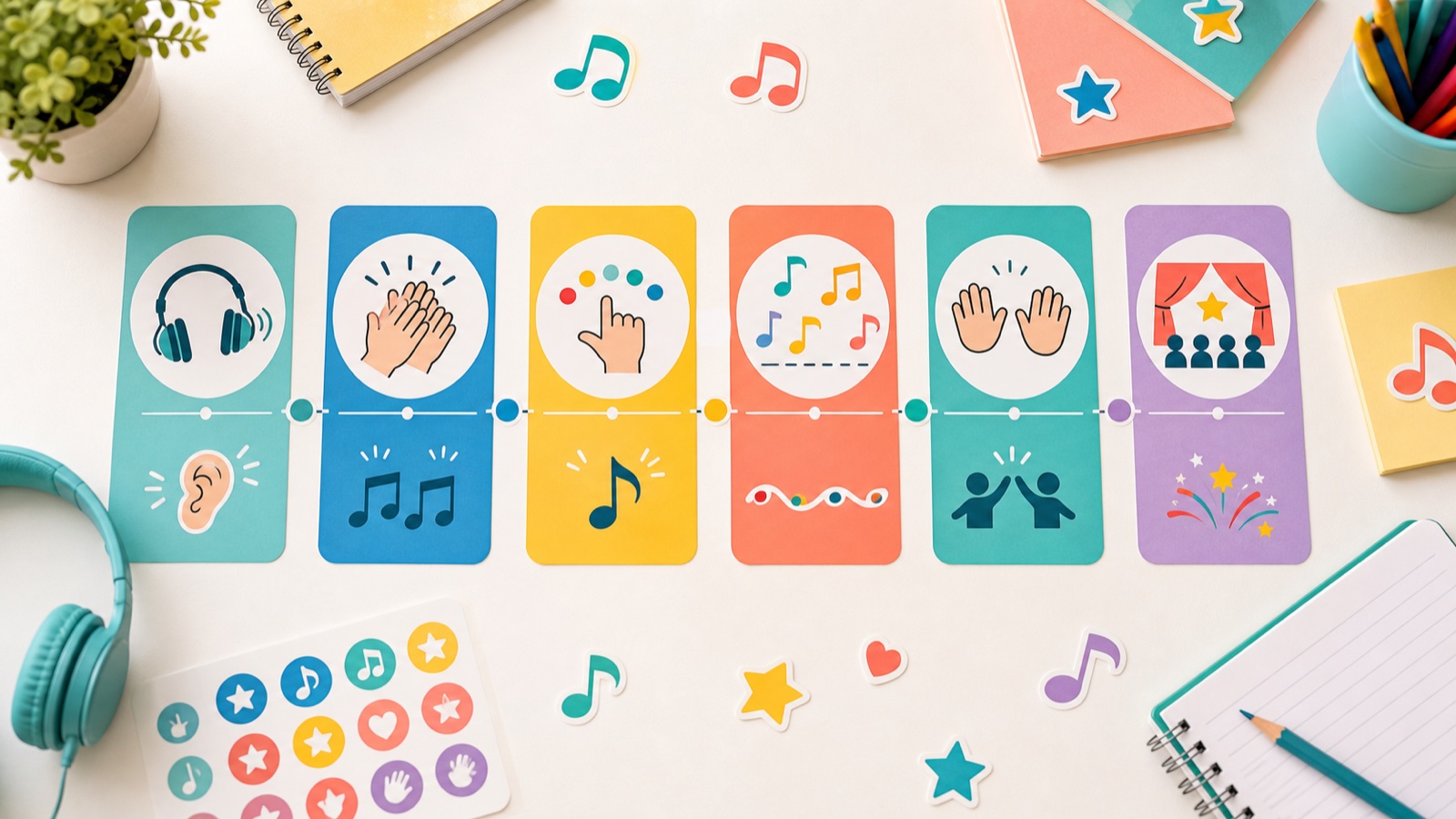
Weeks 1 and 2: keyboard geography, rhythm, and confidence
The first two weeks are about orientation. Students learn that the keyboard has patterns, that rhythm can be counted, and that music is something they can participate in right away. This is also when teachers set classroom routines: how to sit, how to listen, how to wait for a cue, and how to try again without getting embarrassed.
At iPianoLab, group keyboard lessons make this stage feel social and active. Students hear a teacher, work at their own keyboard, and learn beside classmates. That structure helps beginners because they can focus privately through headphones while still feeling the energy of a group.
By the end of the first two weeks, a child may be able to:
- Identify high and low sounds.
- Find groups of two and three black keys.
- Use finger numbers 1 through 5.
- Tap or clap a steady beat.
- Play a short pattern with one hand.
- Recognize that practice means repeating a small task, not playing perfectly.
Weeks 3 and 4: simple songs and two-hand coordination
Once the keyboard is less intimidating, students can connect patterns to songs. This is where many kids start to feel like they are "really playing piano." The goal is not speed. The goal is control: starting together, stopping together, keeping a pulse, and noticing when a sound goes up, down, or stays the same.
Two-hand coordination often begins in small steps. One hand may hold a simple note while the other plays a melody. Students might alternate hands, echo a teacher, or play a steady rhythm while listening for a cue. These early two-hand moments are important because they prepare children for later reading, chords, and accompaniment without overwhelming them too soon.
If your child is in this stage, listen for progress in these areas:
- They can restart after a mistake without melting down.
- They can keep a short rhythm steady for several measures.
- They can explain which hand or finger starts a song.
- They can play a recognizable phrase, even if it is simple.
- They are beginning to notice patterns instead of memorizing every note in isolation.
Weeks 5 and 6: practice habits, musical memory, and independence
The last part of the first six weeks is where beginner lessons should become more independent. Students still need support, but they should not need an adult to decode every instruction. They should know how to start a practice task, repeat it a few times, and notice one thing to improve.
This is why short practice routines work better than long battles. A young beginner can make real progress with focused 10- to 15-minute sessions when the assignment is clear. For a simple home structure, pair this article with our 15-minute daily piano practice plan.
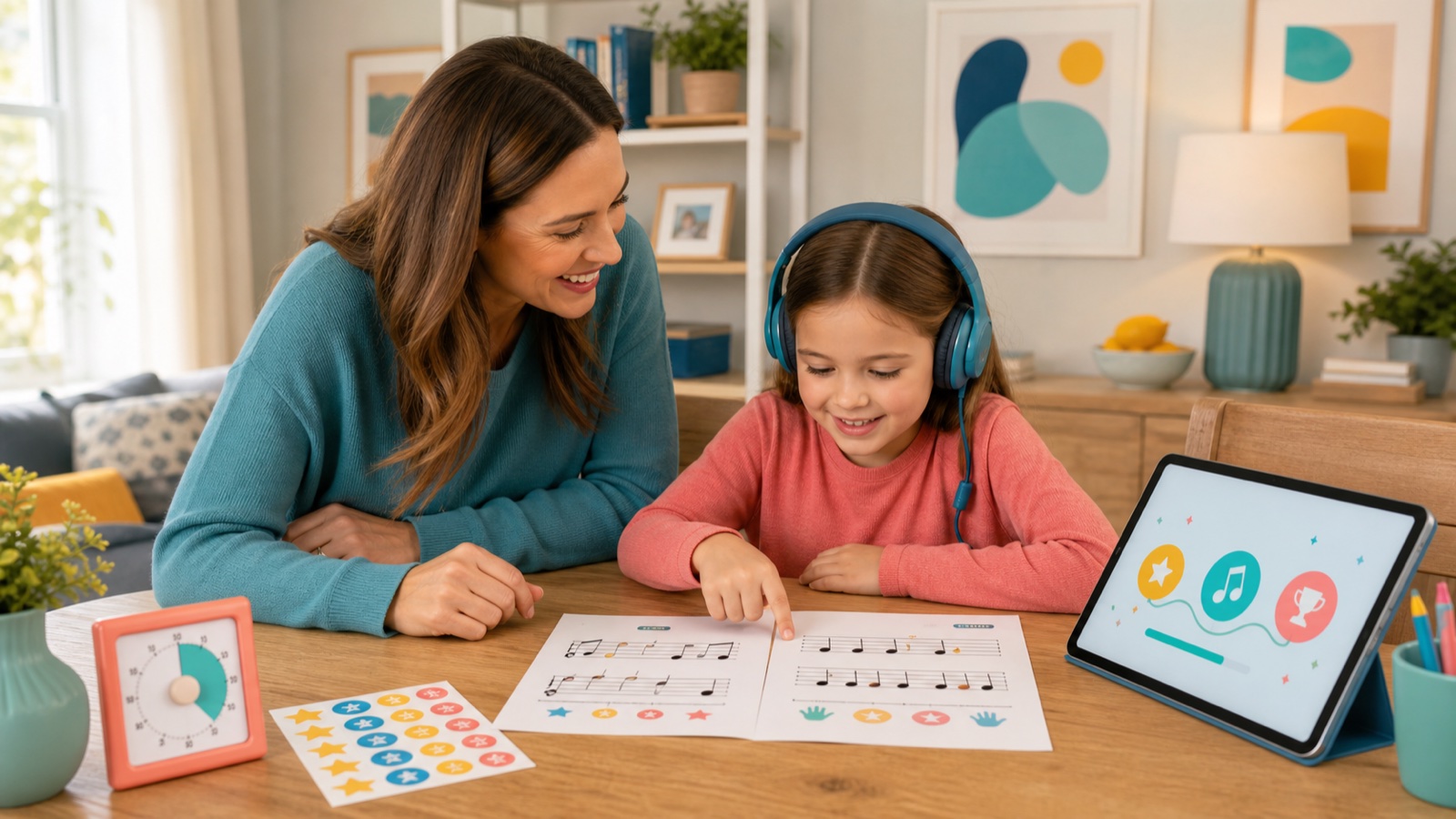
By week six, many children are ready to demonstrate a small set of skills: a song, a rhythm activity, a listening game, or a short two-hand exercise. That demonstration is valuable even when it is informal. It teaches the child, "I started something new, I practiced, and now I can show progress."
What parents should look for after six weeks
Parents often ask whether their child is "good at piano" after the first month or two. A better question is whether the child is building the behaviors that lead to long-term progress.
Look for these signals:
- Recognition: your child can find a few keyboard landmarks without guessing.
- Rhythm: your child can clap, tap, or play with a steady pulse.
- Recall: your child remembers at least one short song or pattern from class.
- Resilience: your child can try again after a mistake.
- Independence: your child can begin a simple practice task with minimal help.
- Enjoyment: your child talks about songs, classmates, teacher moments, or small wins.
None of these require a child to be naturally gifted. They require a learning environment that is structured, positive, and built for beginners.
Why group beginner piano lessons can help
Private lessons can be useful, but many new students do well in a group setting because the room feels less pressured. They see other kids learning too. They hear that mistakes are normal. They get the energy of class while still working at their own keyboard.
iPianoLab's model is especially useful for children who like social learning, school-based routines, and clear short-term goals. Classes commonly move through compact lesson levels, so families can see progress in realistic stages instead of waiting months to know whether lessons are working.
If you are comparing formats, our guide to group piano lessons vs. private lessons explains when group learning can help a child move faster and feel more motivated.
Do kids need a piano at home in the first six weeks?
A full acoustic piano is not required for most beginners. A simple digital keyboard at home can be enough to repeat class patterns, practice finger numbers, and keep songs fresh between lessons. The important part is that the keyboard is easy to access and that practice feels manageable.
If you are buying your first instrument, start with the practical basics: enough keys for beginner music, touch sensitivity if possible, a stable stand or table height, and headphones if your home is busy. Our beginner keyboard buying guide walks through what matters and what can wait.
Quick parent checklist for the first six weeks
- Ask your child to teach you one rhythm from class.
- Keep practice short enough that they can finish successfully.
- Celebrate effort and repetition, not just correct notes.
- Use the same practice time on most days when possible.
- Let the teacher handle technique details; your job is to make practice easy to start.
- Watch for confidence, focus, and willingness to try again.
FAQs about the first six weeks of piano lessons
How much should a beginner practice?
For many elementary-age beginners, 10 to 15 focused minutes is more useful than a long unfocused session. The assignment should be specific: repeat one rhythm, play one short song, or practice one hand position.
What if my child cannot read music yet?
That is normal. Early piano lessons often build listening, rhythm, keyboard patterns, and finger control before full note reading becomes comfortable. Reading matters, but it does not have to be the only measure of progress in the first weeks.
Should my child know songs after six weeks?
Most children should be able to play short songs, patterns, or recognizable musical phrases by then. The exact song depends on age, class level, practice consistency, and the curriculum.
How do I know if iPianoLab is a good fit?
If your child likes music, benefits from structure, and enjoys learning with other kids, iPianoLab is designed for that kind of early success. Review common parent questions on our FAQ page, or sign up for an available class to find the right starting point.
Ready to start?
The first six weeks should help your child feel capable, not overwhelmed. iPianoLab gives beginners a clear path from first sounds to real musical confidence, with classes built for kids, parents, and school routines.
Find an iPianoLab class and start your child's first six weeks of piano.