How to Help Your Child Practice Piano Without Becoming the Teacher
Parents do not need to be piano teachers to help a child practice well. In fact, most beginners do better when the parent stays in the role of calm coach: setting up the routine, noticing effort, and helping the next step feel clear.
The short answer: keep practice short, specific, and repeatable. A child who practices ten focused minutes with a clear goal is often better served than a child who sits at the keyboard for half an hour while everyone gets frustrated.
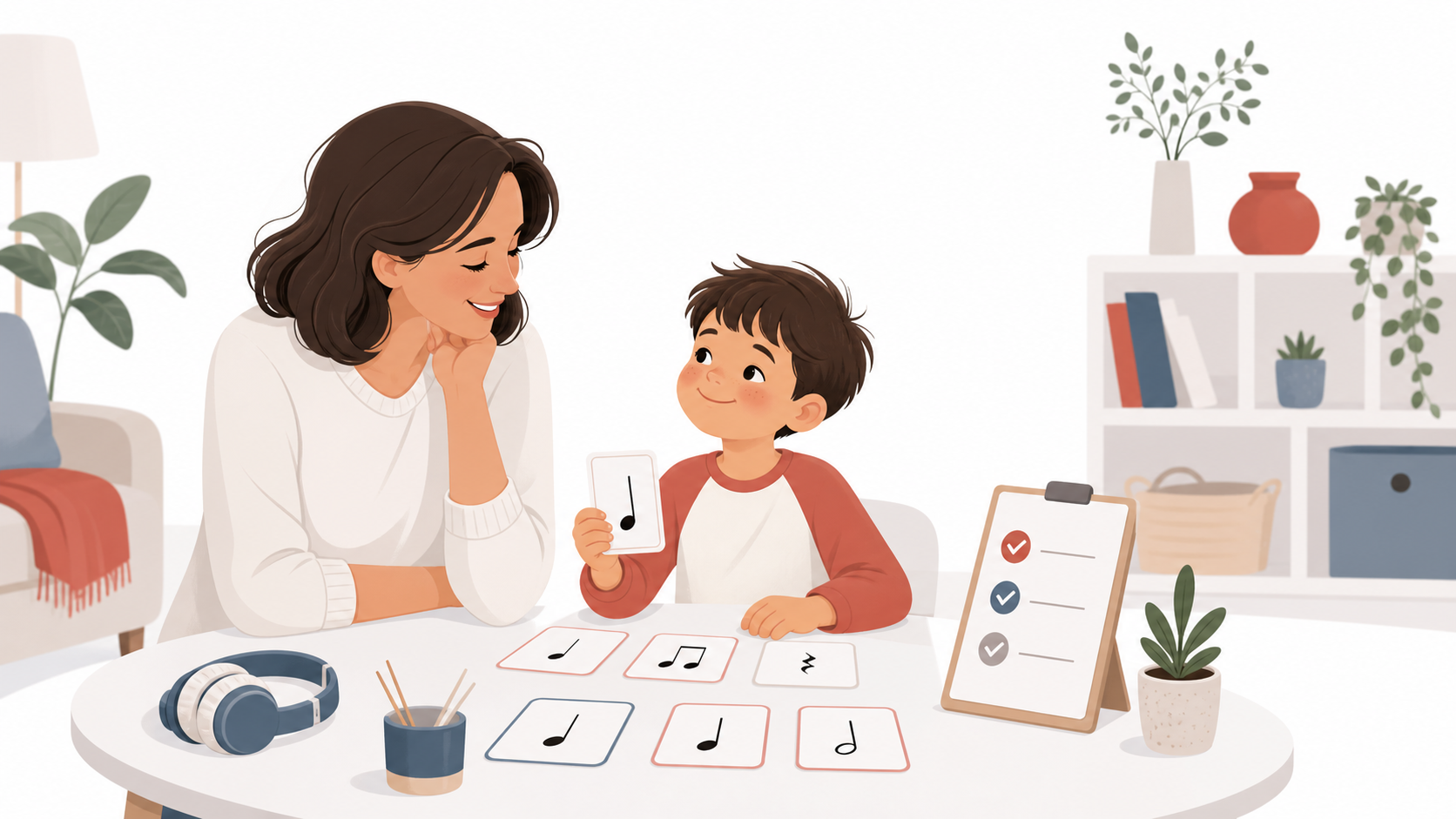
What parents should do during practice
The parent job is practical. You are helping your child start, stay with one small assignment, and finish with a win. You do not need to correct every note, explain theory, or turn the kitchen table into a music conservatory.
- Set the time: choose a predictable practice moment when your child is not already exhausted.
- Keep the goal small: one song section, one rhythm, or one hand position is enough for many beginners.
- Use the teacher's words: repeat the assignment instead of inventing a new one.
- Notice effort: praise the restart, slow try, steady counting, or careful listening.
- Stop before it collapses: end while your child can still feel capable.
If your child just received a first keyboard, start by pairing this routine with our guide to choosing the right lesson path after buying a keyboard. The practice habit works best when the next lesson step is clear.
A 10-minute beginner practice routine
For a young beginner, a short routine beats a vague command to "go practice." Use a simple three-part plan and repeat it for a week before changing it.
- Two minutes: reset the body. Sit comfortably, place the materials nearby, and take one slow breath before playing.
- Three minutes: clap or count. Practice the rhythm away from the instrument first. Counting out loud builds confidence before the notes arrive.
- Five minutes: play one small target. Repeat the assigned line, pattern, or song section slowly. If it falls apart, make the target smaller.
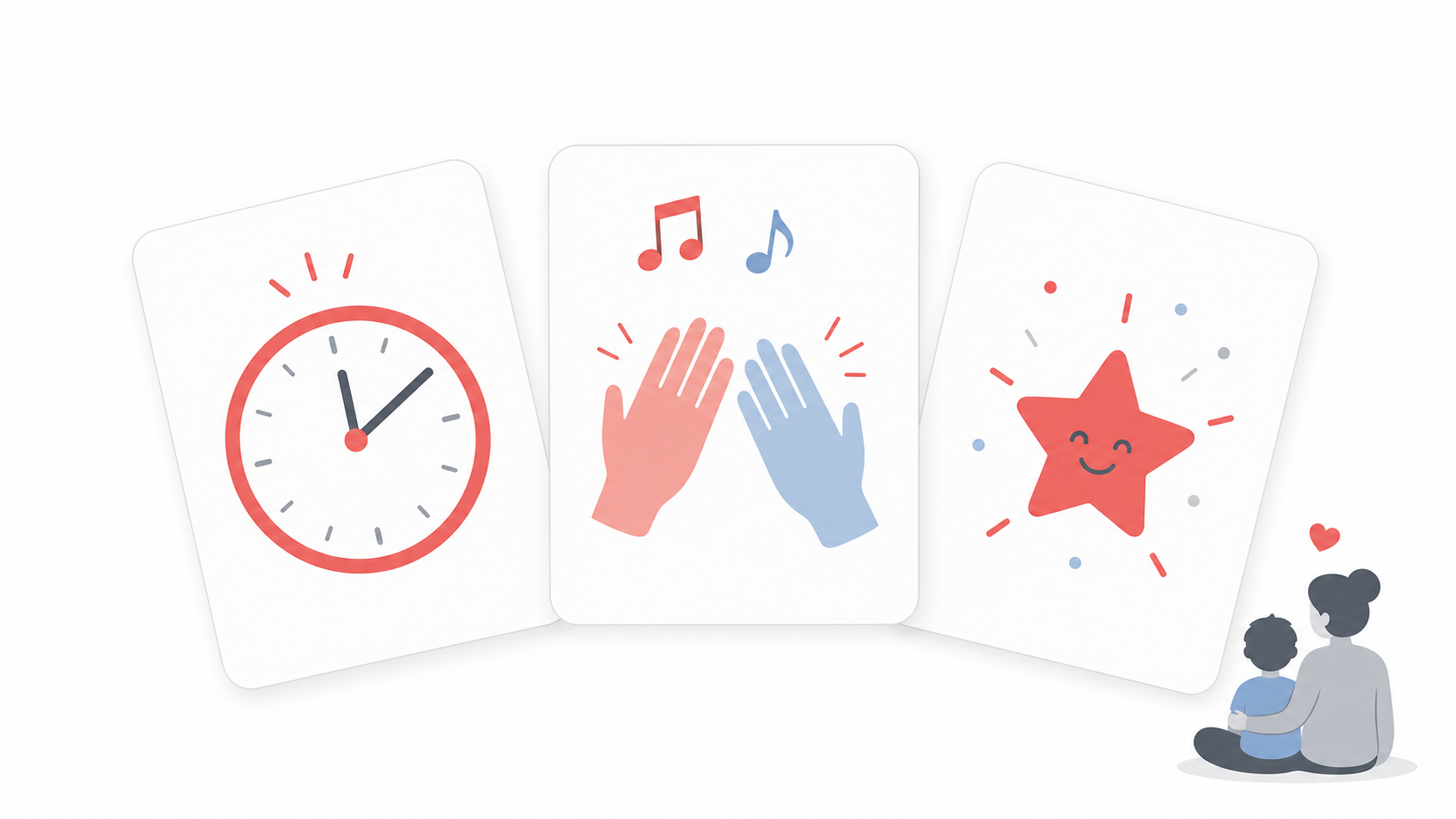
What not to do when practice gets tense
Practice pressure usually starts with good intentions. A parent wants progress, the child wants to be done, and the session turns into a negotiation. When that happens, avoid these common traps.
- Do not keep restarting from the beginning. Practice the small spot that needs help.
- Do not correct every mistake. Pick one focus, such as rhythm or steady fingers.
- Do not compare siblings or classmates. Beginners need safety before speed.
- Do not turn practice into punishment. The goal is consistency, not dread.
- Do not guess a new assignment. If the lesson note is unclear, ask the teacher for a smaller target.
A useful parent phrase is: "Let's make it easier and try once more." That keeps the focus on problem-solving instead of blame.
How to tell if practice is working
Practice is working when your child can return to music with a little more confidence. The signs may be small at first.
- Your child starts faster because the routine is familiar.
- They can clap or count a rhythm with less help.
- They recognize the part that needs the most attention.
- They recover after a mistake without melting down.
- You know what to ask the teacher before the next lesson.
Those signals matter because they protect retention. A child who feels capable is more likely to keep showing up, and a family with a practical home routine is more likely to stay with lessons long enough to see real progress.
When a parent should ask for help
If practice becomes a repeated battle, the answer is not always "try harder." It may mean the assignment is too broad, the song is too difficult, the child needs a different lesson format, or the family needs a clearer path.
These are good moments to ask for support:
- Your child cannot explain what they are supposed to practice.
- The same measure or rhythm causes frustration every day.
- Your child wants to play but avoids the assigned material.
- You are doing more teaching than encouraging.
- The schedule makes regular practice unrealistic.
At that point, compare the available lesson paths instead of letting practice carry the whole burden. iPianoLab families can look at online learning, school-based classes, and teacher-guided signup options to choose the support that fits the child and household.
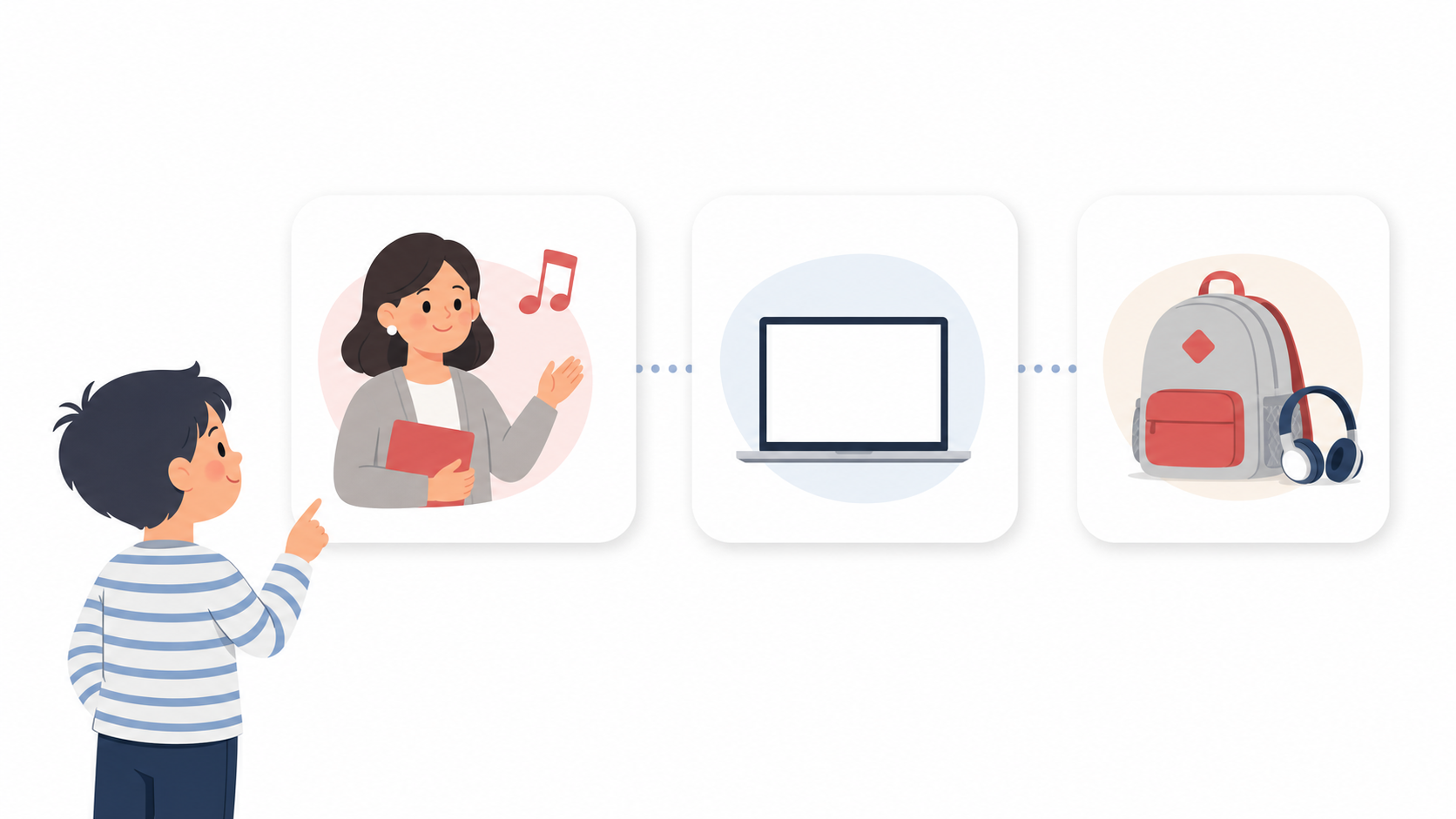
For families with limited space or noise concerns
Some families do not have a quiet practice setup at home. If you are in New York City and need a focused room for a lesson, coaching session, or music practice, Lenox Hill Music Studios offers hourly studio space in Lenox Hill / the Upper East Side. Use that only when a separate practice or coaching space is the real blocker; most children can still build the habit at home with a short, consistent routine.
How iPianoLab supports the parent role
iPianoLab is built for children and beginning students. The program helps students play music they enjoy early while building keyboard geography, rhythm, counting, note reading, two-hand coordination, melody, chords, and music literacy. Parents do not need to become music teachers; they need a clear next step and a routine that makes practice feel possible.
Explore online piano learning Find school-based classes
Parent practice checklist
- Choose a consistent practice time.
- Keep the session short for beginners.
- Use one small assignment from the teacher.
- Start with rhythm or counting before playing.
- Celebrate one clear win.
- Ask for help when the assignment is unclear or too large.
FAQ
How long should a beginner child practice piano?
Many beginners do well with about 10 focused minutes at a time. The exact length depends on age, attention span, and assignment size. Consistency matters more than long sessions.
Do parents need to know piano to help with practice?
No. Parents can help by setting the routine, reading the assignment, keeping the goal small, and encouraging steady effort. The teacher or program should handle the musical instruction.
What should I do if my child refuses to practice?
Make the goal smaller, shorten the session, and remove the pressure to play perfectly. If refusal keeps happening, ask the teacher whether the assignment, song choice, or lesson format needs adjustment.
Should practice happen every day?
A regular habit is helpful, but beginners do not need a stressful daily battle. Several short, focused sessions per week can build momentum if the child knows exactly what to do.
Ready for a clearer next step? Create an iPianoLab account and choose the lesson path that fits your child.