How Long Should a Child Practice Piano Each Day?
Quick answer: for many beginning children, 10 to 20 focused minutes is a useful starting point. A younger, tired, or easily distracted beginner may do better with two 5-to-10-minute sessions. The best length is the shortest session that completes the teacher’s specific assignment with attention, comfortable movement, and a clear musical goal.
That answer is intentionally a range, not a rule. A five-minute practice that fixes one rhythm and ends with a confident play-through can be more useful than 30 minutes of distracted repetition. The teacher’s assignment, the child’s current level, and the difficulty of today’s task matter more than matching a universal number on a chart.
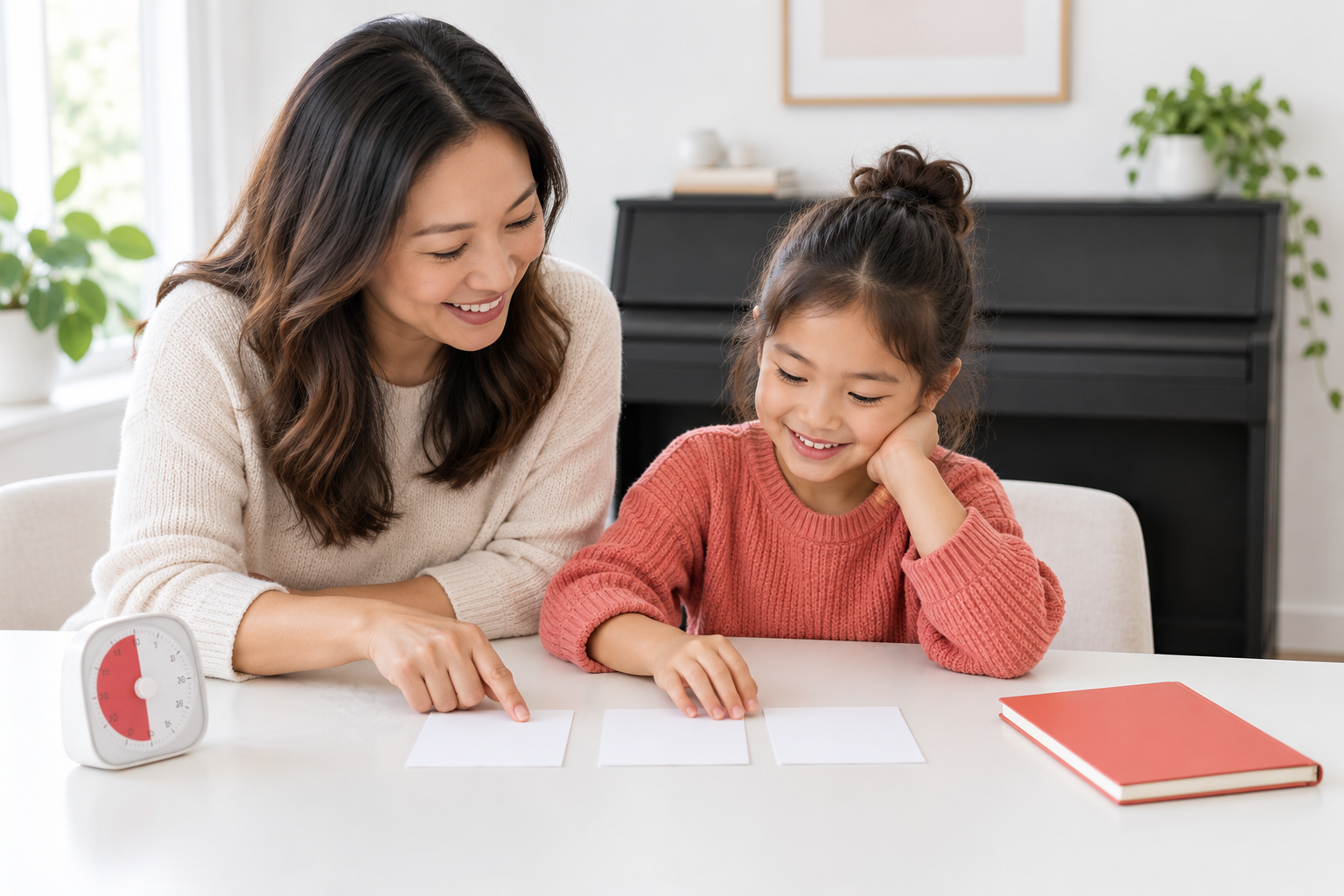
How many minutes should a child practice piano?
Use the teacher’s written assignment first. If the assignment does not include a time, begin with a short block the child can complete attentively. For many beginners, that means about 10 to 20 minutes. A brand-new student may need only five focused minutes at first; a child with several clear tasks may need a little longer or two separate blocks.
The goal is not to fill time. It is to reconnect with what happened in the lesson, improve one small part, review something already learned, and leave the child willing to return tomorrow. If the teacher asks for a different routine, follow that plan instead of a general online guideline.
| What today looks like | Useful starting structure | What counts as success |
|---|---|---|
| First weeks of lessons | One 5-to-10-minute visit | The child remembers the assignment and plays one familiar part comfortably |
| Early beginner with two or three tasks | One focused 10-to-20-minute session | Each task gets a clear attempt without rushing |
| Attention fades halfway through | Two 5-to-10-minute sessions | The second visit begins fresh instead of continuing a struggle |
| Teacher assigned a specific goal | Work until the goal is met or attention becomes unproductive | The child can describe what improved and what still needs help |
These are starting structures, not promises about progress. Two children of the same age may need different amounts of time because their assignments, experience, energy, and learning needs are different.
Why focused practice matters more than a longer timer
A timer measures presence, not learning. A child can sit at the piano for 20 minutes while repeating the same wrong note, losing the beat, or playing from beginning to end without noticing the difficult measure. A useful session has a small target and gives the child a chance to listen.
Before practice begins, ask one question: What did the teacher want us to work on? The answer might be a steady rhythm, the fingering in one measure, a left-hand pattern, or one clean transition. Name that target before starting the clock.
Short, regular contact also makes it easier to remember the lesson. One long weekend session asks the child to rebuild several days of forgotten details before improvement can begin. A smaller routine on more days creates repeated chances to recall, adjust, and succeed.
If starting practice is the hardest part, use the ideas in How to Get Your Kids to Practice Piano Without the Nagging. The daily length and the daily relationship with practice are connected: a child is more likely to return to a routine that feels clear and finishable.
A simple 15-minute piano-practice plan for beginners
This plan can shrink to 10 minutes or expand to 20. Keep the teacher’s assignment in the center and adjust the order when the teacher has given a different sequence.
- Reconnect for two minutes. Read the assignment together. Play an easy part from the last lesson or name the notes, rhythm, or finger pattern that begins today’s work.
- Focus for five minutes. Choose the smallest difficult spot—often one or two measures. Work slowly, use the assigned fingering, and stop after a few thoughtful repetitions to listen.
- Check rhythm for three minutes. Clap, tap, count, or play the rhythm at an easy speed. If counting helps, the iPianoLab guide to counting out loud while playing piano shows how to use it without turning practice into another test.
- Reconnect for three minutes. Put the improved spot back into a slightly larger phrase. Begin before the problem and continue just past it.
- Finish for two minutes. Play something familiar, improvise, or repeat the strongest part once. Name one thing that became easier and leave the next question for the teacher.
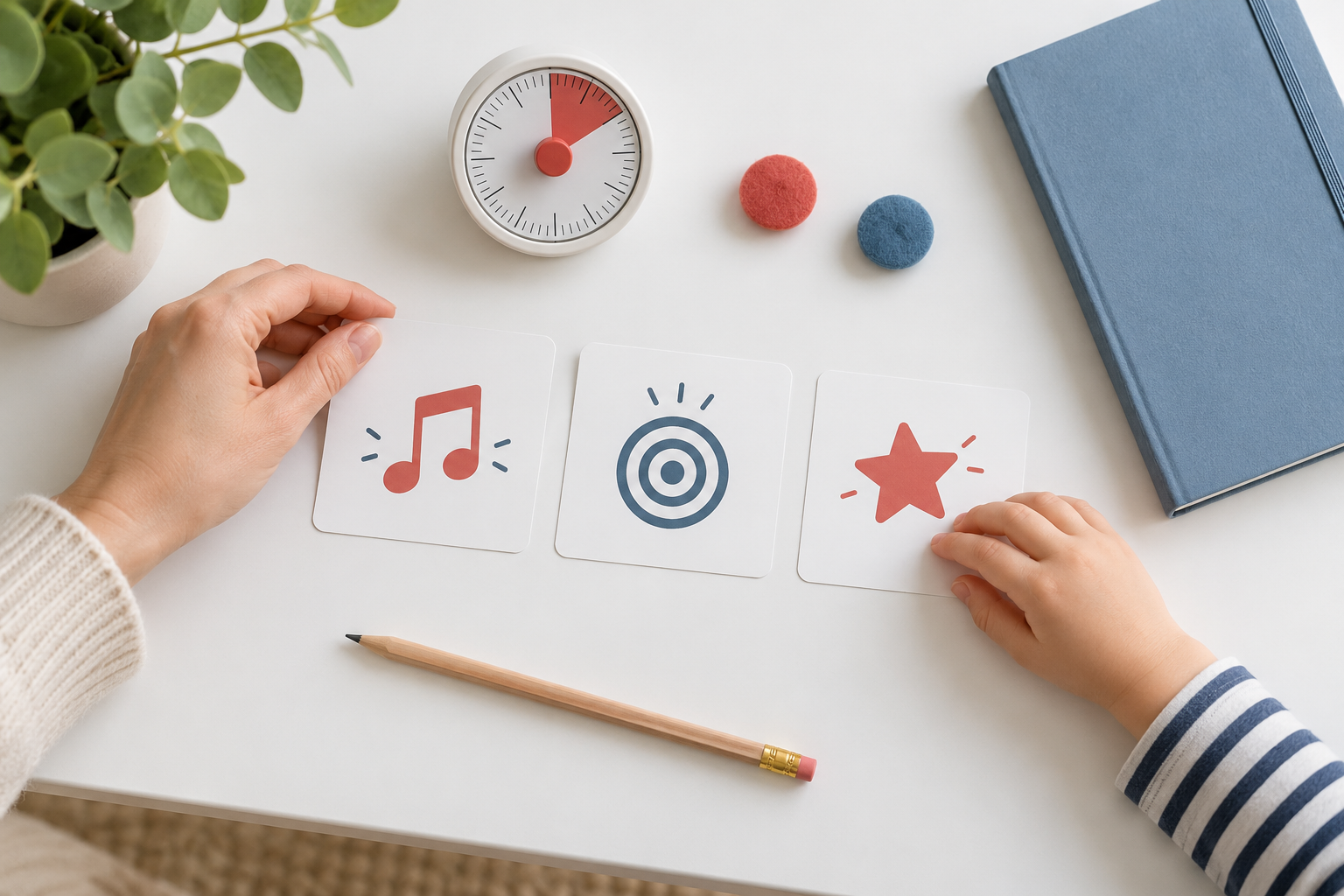
Faber Piano Adventures notes that some students may practice for 20 minutes in one sitting while others may divide that time into two 10-minute sessions. Its parent guidance also frames practice length as something that grows with the student rather than one fixed requirement for every child. See the Faber Piano Adventures parent FAQ for the full context.
When should a child split practice into two shorter sessions?
Split the session when the child starts well but loses useful attention halfway through, when the assignment contains two very different jobs, or when the family schedule has two natural openings. For example, a child might review fingerings for seven minutes before school and play the assigned song for eight minutes after homework.
Two short sessions are not a lesser version of “real” practice. They can make each visit more focused and give the child a break between learning attempts. Keep both blocks purposeful: decide what belongs in the first visit and what belongs in the second.
Good reasons to split practice
- The child can focus well for eight minutes but not for 20.
- One task is mental, such as reading or rhythm, and another is physical, such as coordinating a short passage.
- The second session can happen before fatigue and family pressure build.
- A difficult spot benefits from a fresh attempt later rather than more immediate repetition.
Do not split practice into so many tiny visits that setting up becomes the whole activity. One or two predictable sessions are usually easier for a family to remember.
How do you know when piano practice is done for the day?
Practice can end before the timer when the child has completed the assignment thoughtfully. It can also end early when continuing would only repeat a mistake or create frustration. Look for musical evidence rather than a perfect performance.
Signs the session has done useful work
- The child can explain the one thing they practiced.
- A small passage is steadier, clearer, or easier than it was at the start.
- The assigned fingering or rhythm is more consistent at a comfortable speed.
- The child can play one familiar part with control and enjoyment.
- There is a specific question to bring to the next lesson.
Signs it is time to stop or reset
- The child is repeating without listening.
- The same mistake is getting faster or more frustrated.
- Posture and movement are becoming increasingly tense.
- The child is too tired to follow one simple instruction.
- There is pain or unusual discomfort; stop rather than practice through it.
Ending calmly protects tomorrow’s practice. Write down the exact spot that became difficult and let the teacher decide whether the fingering, tempo, task size, or explanation needs to change.
What is the parent’s role during piano practice?
The parent does not need to become the piano teacher. The most useful jobs are helping practice start, reading the assignment, keeping the task small, noticing effort, and saving unresolved questions for the lesson. A parent can say, “Show me the part your teacher asked you to practice,” even without reading music.
Avoid calling out every wrong note from across the room. If the child keeps making the same mistake, pause and ask what the assignment says. The iPianoLab guide to repeating wrong piano notes explains how to reduce the problem without turning the parent into a constant corrector.
Online instruction can also make the next task easier to revisit between lessons. Families comparing home-learning options can read Are Online Piano Lessons Effective for Kids? before choosing a routine.
If your child needs a structured path that connects songs with keyboard geography, rhythm, counting, note reading, and coordination, explore iPianoLab online learning. Families ready to choose a program can also create an iPianoLab account and find the next step that fits their child.
Frequently asked questions
Is 10 minutes of piano practice enough for a beginner?
It can be. Ten focused minutes with a clear assignment may be enough for a brand-new or younger beginner, especially when the child returns on several days. Ask the teacher whether the current music needs a longer plan or a second short session.
Is 30 minutes too long for a child to practice piano?
Not automatically, but it may be too long for one uninterrupted beginner session. If attention and listening remain strong, 30 minutes can work. If quality fades, split the work or stop after the assigned goal is complete.
Should children practice piano every day?
Regular practice on several days is generally more useful than saving all the work for one long session. The exact weekly rhythm should follow the teacher’s plan and the family’s schedule. Missing one day does not require a punishing make-up session.
Should a parent use a piano-practice timer?
A timer can give a session a clear boundary, but it should not be the only definition of success. Pair it with one musical goal: a steady rhythm, a correct fingering, a clean transition, or a confident review.
What if my child finishes the assignment in five minutes?
Ask for one careful review and then let the child play something familiar or enjoyable. If the assignment is consistently finished with ease, tell the teacher. The answer may be a new challenge, not a longer timer.
What if my child refuses to practice for the recommended time?
Shrink the first goal. Ask for a five-minute visit, one assigned spot, and a positive finish. If resistance continues, discuss the routine and assignment with the teacher rather than increasing pressure at home.
How long should a child practice before a recital?
More time is not always the safest answer. Keep the teacher’s plan, use short performance run-throughs, and spend focused time on entrances, transitions, and recovery spots. Avoid exhausting repetitions on the day of the recital.