How Often Should Kids Take Piano Lessons? A Parent Guide
Most beginner kids do well with one structured piano lesson each week, plus short, low-pressure practice or online review between lessons. That weekly rhythm gives children enough time to repeat what they learned, while still giving them regular feedback from a teacher before confusion turns into frustration.
The better question is not only "how many lessons per week?" It is "what weekly rhythm will help my child keep momentum?" For many families, the answer is a weekly after-school class, online lessons with guided practice, or a flexible lesson path that adds extra support when a child needs it.
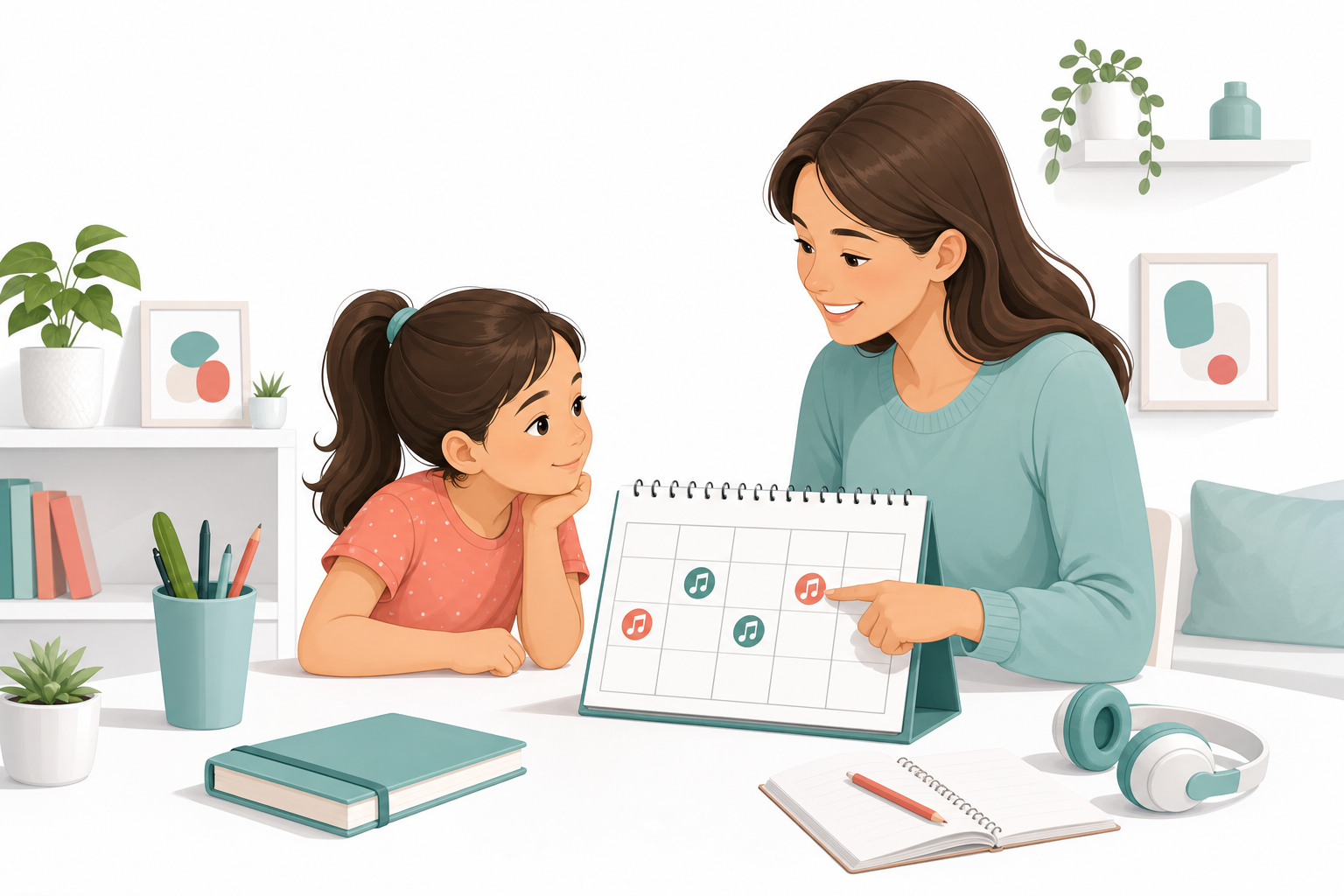
The Short Answer: Start With Once A Week
For most children, a weekly piano lesson is the right starting point. It is frequent enough to build routine, but spaced enough for a child to practice, listen, repeat, and come back with questions.
At iPianoLab, after-school classes commonly meet once weekly for one hour, and each level includes six lessons. That structure gives students a clear short-term goal: learn songs they enjoy, build fundamentals, and have visible progress for families to hear.
A weekly lesson also fits real family life. Children may have school, homework, sports, siblings, travel, and changing energy levels. A schedule that looks impressive on paper is not useful if it turns music into a fight by week three.
When Once A Week Is Enough
One lesson per week is usually enough when your child is new to piano and still building comfort with the basics. Look for these signs:
- Your child can remember at least one thing from the last lesson.
- They are willing to sit down for a short review a few times during the week.
- The lesson gives them a clear song, rhythm, or small goal to repeat.
- They leave feeling capable, not overloaded.
- You can keep the weekly lesson time consistent.
For beginners, consistency matters more than intensity. A child who takes one good weekly lesson and plays for a few short moments between lessons will often make better progress than a child who has too much instruction and no time to absorb it.
Start with the iPianoLab signup path if you are ready to compare options for your child.
When A Child May Need More Support
Some children benefit from more frequent touchpoints, but that does not always mean two full private lessons every week. Extra support can look like a shorter teacher check-in, an online review session, guided video practice, or a second class only during a focused period.
Consider adding support when:
- Your child forgets the assignment before they get home.
- Practice becomes tense because no one remembers the next step.
- Your child is preparing for a recital, audition, placement, or performance.
- They are excited and asking for more songs or harder material.
- They need a quieter one-on-one path before joining a group comfortably.
If your child wants more music but your family schedule is already full, an online option can be the better next step. It gives students more ways to review concepts without adding another commute or after-school pickup.
How Much Practice Should Happen Between Lessons?
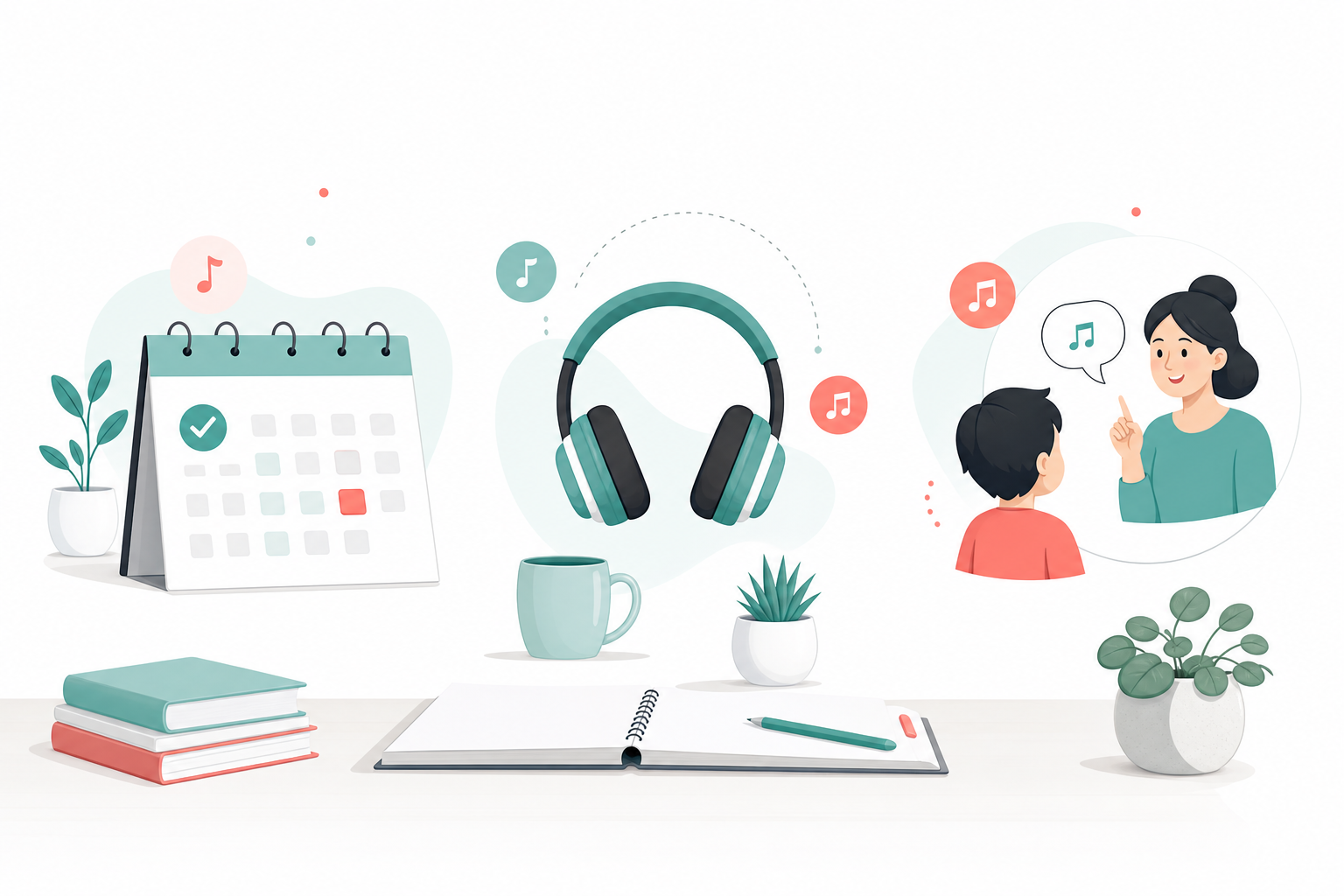
For young beginners, short and repeatable beats long and dramatic. A five- to ten-minute review can be useful when it has a clear purpose: play the assigned song, clap a rhythm, name a few keys, count out loud, or repeat one small section slowly.
Try this simple beginner rhythm:
- One weekly lesson or class.
- Two or three short review moments at home.
- One "show me" moment where your child plays something for a parent.
- One flexible online or teacher-supported review when needed.
That is enough for many beginners. As students get older, more independent, or more serious, practice can grow. The important thing is that practice still feels specific. "Practice piano" is vague; "play the chorus twice slowly and count out loud" is much easier for a child to do.
After-School, Online, Or Private: Which Rhythm Fits?
Different families need different lesson rhythms. The right format should match your child's temperament and your family's schedule.
- After-school classes work well when your child likes group energy, classmates, and a predictable weekly routine. Explore iPianoLab after-school classes.
- Online lessons and learning work well when your family needs flexibility or your child learns best at home with guided support. Explore iPianoLab online learning.
- One-on-one support can help when a child needs extra confidence, catch-up time, or focused help with a specific goal. Ask about the right lesson path.
New York City families who need a quiet place for extra practice, coaching, or audition preparation can also review Lenox Hill Music Studios for hourly studio space on the Upper East Side. That is most relevant when the barrier is practice space rather than lesson format.
A Simple Decision Checklist
Use this checklist before increasing lesson frequency:
- Is the current lesson clear? If your child does not know what to practice, first fix the assignment.
- Is practice too long? Shorter, more focused practice may solve the problem without adding lessons.
- Is your child bored or overwhelmed? Bored students may need more challenge; overwhelmed students may need a simpler path.
- Is the goal temporary? A recital or audition may justify extra support for a few weeks.
- Is the format right? Some kids need group energy; others need quiet one-on-one help or online flexibility.
Frequently Asked Questions
Is one piano lesson a week enough for a beginner child?
Usually, yes. One weekly lesson is a practical starting rhythm for most beginners when the child also has a few short review moments between lessons. If your child needs more help, add support gradually instead of overloading the schedule.
Should my child take two piano lessons per week?
Two lessons per week can help when a child is highly motivated, preparing for a performance, or needs extra reinforcement. It is not required for every beginner. Many families do better with one lesson plus guided online review or short home practice.
How long should kids practice piano between lessons?
Young beginners often do best with five to ten focused minutes at a time. The goal is not to fill a timer; it is to repeat the right thing clearly enough that the next lesson can build on it.
What if my child forgets everything between lessons?
That usually means the between-lesson plan needs to be simpler. Ask for one song, one rhythm, or one small skill to review. Online support can also help children remember the next step without waiting a full week.
The iPianoLab Approach
iPianoLab is built for children who need early musical success and a clear path forward. Students play songs they enjoy while building keyboard geography, rhythm, counting, note reading, melody, chords, two-hand coordination, and music literacy over time.
The right lesson frequency should make your child feel capable, not rushed. Start with a steady weekly rhythm, watch how your child responds, and add support when it solves a real problem.
Choose your child's iPianoLab path, or compare after-school classes and online piano learning.