Live Online Piano Lessons vs. Video Lessons for Kids: Which Fits Your Family?
Live online piano lessons are usually the better fit when a child needs real-time feedback, a regular appointment, and help adjusting the next step. Self-paced video lessons fit families that need maximum schedule flexibility and children who are comfortable repeating short instructions independently. Many beginners benefit from a blend: a teacher helps with pacing and technique, while a video library makes review easier between lessons.
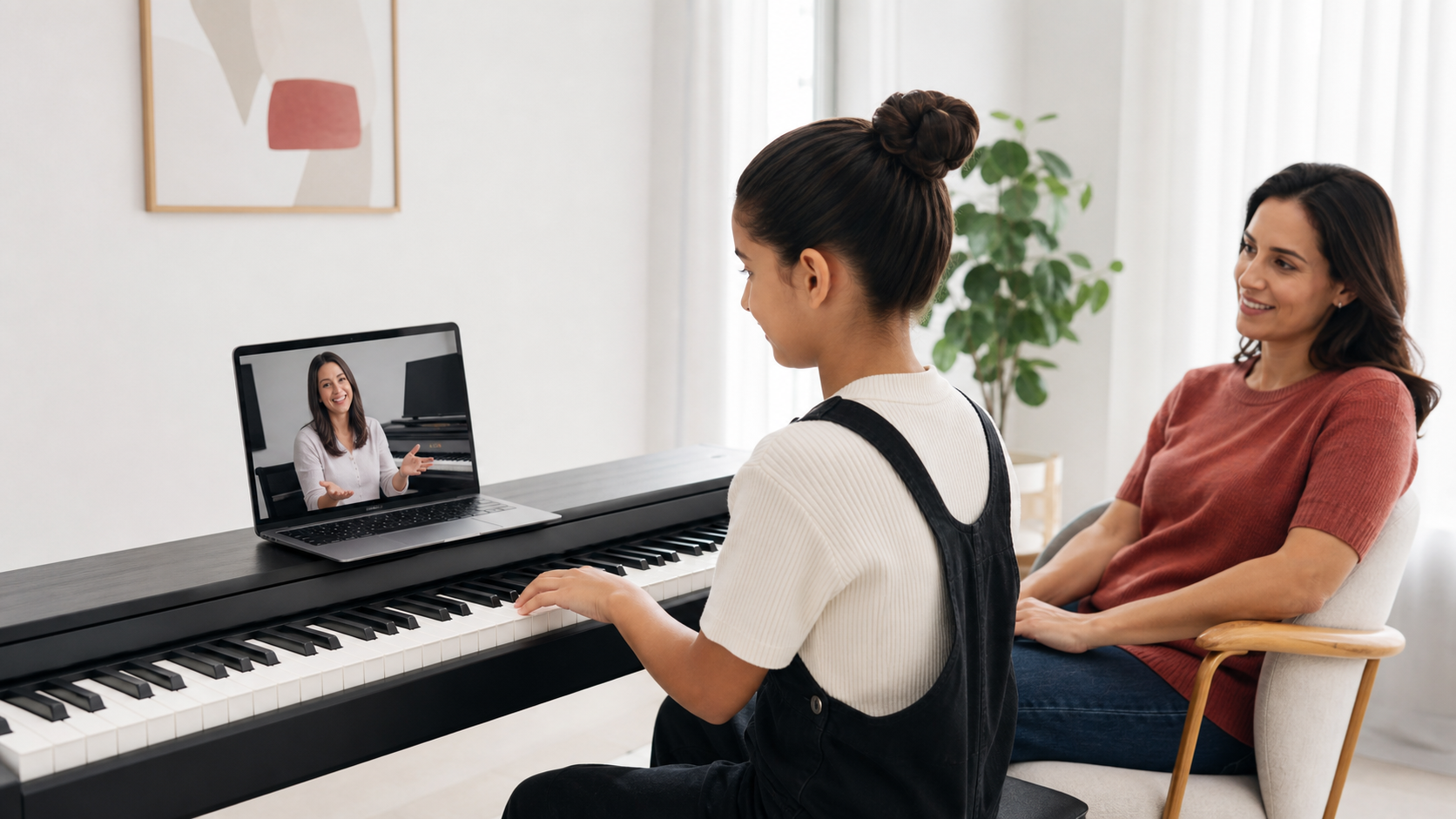
Parents comparing online piano lessons often find two very different services under the same label. One is a scheduled lesson with a teacher on a video call. The other is a library of recorded lessons a child can follow at any time. Both can teach useful skills, but they solve different problems.
The right choice depends less on which format sounds more advanced and more on how your child responds to feedback, routines, repetition, and independent work. Use this guide to compare the two options before you enroll.
Live online lessons vs. video lessons at a glance
| What to compare | Live online lesson | Self-paced video lesson |
|---|---|---|
| Feedback | A teacher can respond during the lesson | The child or parent checks progress independently |
| Schedule | A recurring appointment | Available when the family is ready |
| Pacing | The teacher can slow down, repeat, or adjust | The child pauses and repeats the recording |
| Accountability | Built into the next meeting | Depends more on the home routine |
| Best fit | Children who benefit from interaction and guidance | Children who enjoy independent, flexible repetition |
What is a live online piano lesson?
A live online lesson connects the student and teacher at a scheduled time. The teacher can listen, watch how the child approaches a task, ask questions, and decide what to change next. Depending on the program, the lesson may be private or in a small group.
Live instruction is especially useful when a beginner cannot yet tell why something feels difficult. A teacher may notice that the starting position is unclear, the rhythm needs to be spoken first, or the task should be divided between the hands. That response can keep one confusing moment from turning into a week of guessing.
Live online lessons may fit your child if:
- your child responds well when an adult asks a question and waits for the answer;
- practice often stalls because the next step is unclear;
- a regular appointment helps your family protect lesson time;
- your child enjoys learning with a teacher or other students;
- you want someone else to guide pacing and adjust assignments; or
- your child needs encouragement after a mistake.
What is a self-paced video piano lesson?
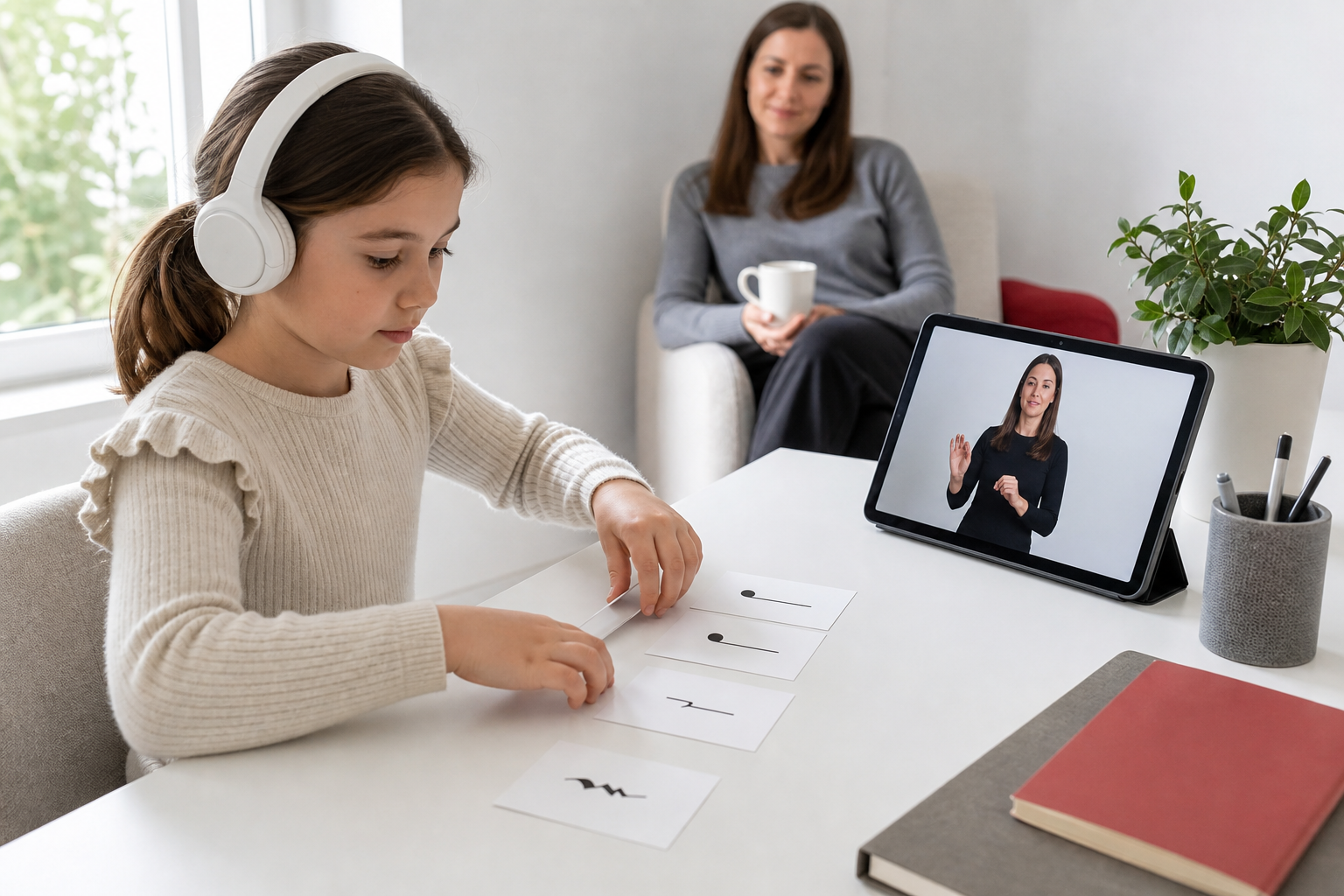
A self-paced video lesson is recorded in advance. The child can start when it fits the family schedule, pause the explanation, replay a demonstration, and return to an earlier lesson when needed.
That flexibility can be valuable for busy families, but it works best when the lesson is short enough to follow and the child knows what to do after the video ends. The parent does not need to become the piano teacher, but someone may need to protect the routine, open the lesson, and help the child begin.
Self-paced video lessons may fit your child if:
- your weekly schedule changes often;
- your child likes to pause and repeat instructions privately;
- short independent activities already work well at home;
- your child can return to a task without immediate feedback;
- you want an accessible way to review material between lessons; or
- the family needs to test a learning routine before adding a recurring appointment.
Which format is more effective for a beginner?
Neither format is automatically more effective for every child. A live lesson can provide excellent feedback, but it still needs a workable home setup and some repetition between meetings. A video library can explain a skill clearly, but it cannot notice when the child misunderstood the instruction.
For a beginner, effectiveness usually comes from four things:
- A clear next action: the child knows exactly what to try.
- Music early in the process: fundamentals connect to something the child can play.
- Repeatable practice: the task is short enough to revisit.
- Useful feedback: someone or something helps the child recognize what changed.
Ask how each program handles those four needs. The answer will tell you more than the word online.
When a blended approach makes sense
A family does not always have to choose only one format. Live instruction and recorded lessons can do different jobs. A teacher can set the pace, answer questions, and adapt the work. A video library can make review available on the exact day a child needs it.
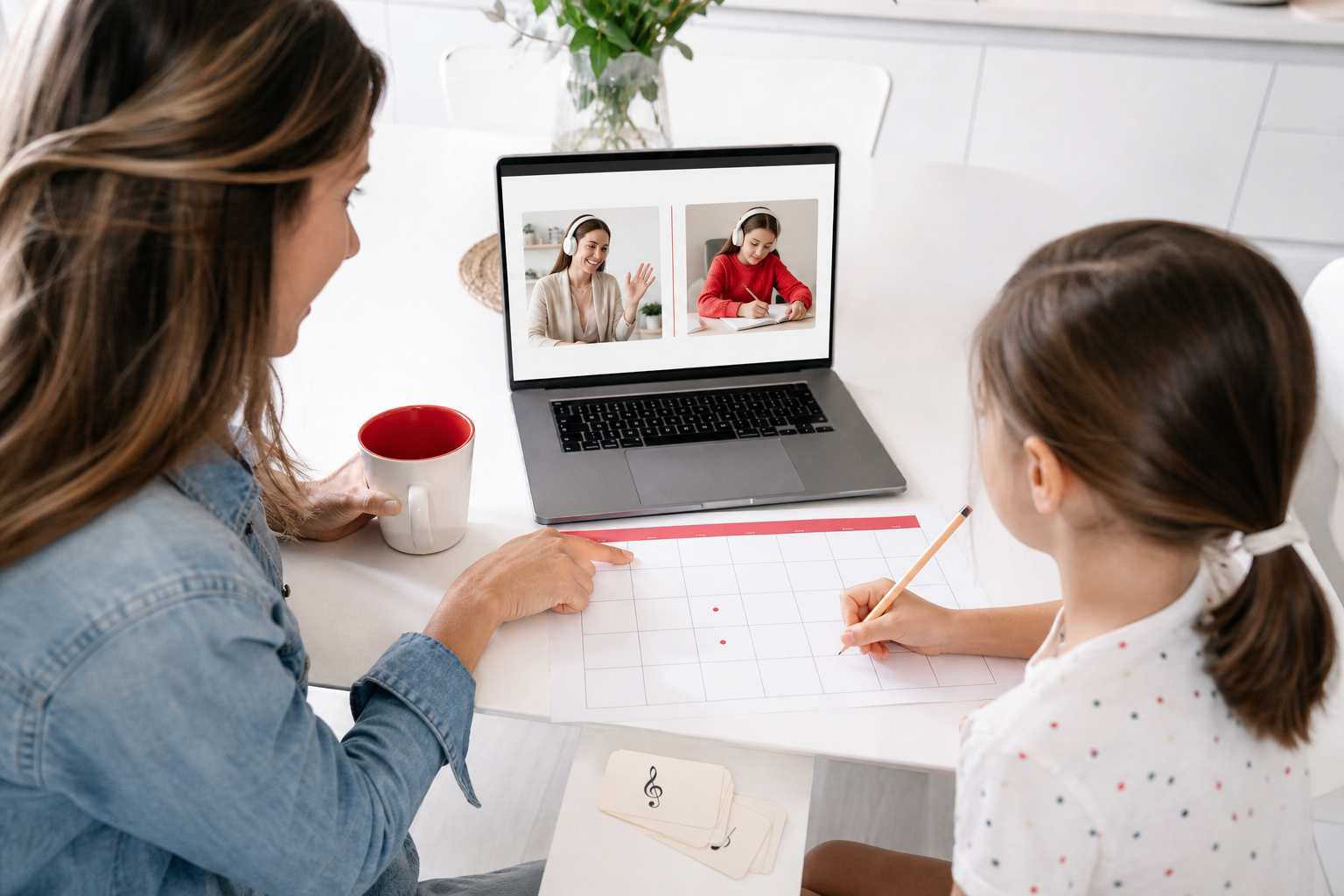
iPianoLab currently offers live small-group lessons, live private lessons, and a self-paced video library. The live options include video-library access, so families can use recorded support between meetings. You can compare the current formats on the online piano learning page.
A five-question family fit check
- Does my child ask for help quickly? Frequent uncertainty may point toward live feedback.
- Can we protect one recurring time? If yes, a scheduled lesson may create useful momentum. If not, video may be easier to sustain.
- Will my child replay a short explanation? If replay feels natural, self-paced learning may work well.
- How much direction can I provide? Choose a format that does not quietly turn the parent into the instructor.
- What happens after a difficult week? Look for a path that helps the child restart without shame or confusion.
What you need for either online format
Start with a keyboard or piano, a stable device position, a reliable internet connection for live lessons, and headphones only when they do not prevent the teacher from hearing what matters. The camera should show the child comfortably and, for live feedback, give the teacher a useful view of the playing area.
Keep the first routine simple: open the lesson, check the starting task, play for a short focused period, and name what to return to next time. For more setup help, see the online piano lesson setup guide for families.
Frequently asked questions
Are live online piano lessons good for young beginners?
They can be, especially when the lesson uses short activities, clear demonstrations, and age-appropriate interaction. The child still needs a comfortable setup and a realistic attention span for the chosen lesson length.
Can children learn piano from videos alone?
Some children can make useful progress with well-sequenced videos and a dependable practice routine. Others need live feedback to correct misunderstandings or stay engaged. Watch whether the child can turn the video instruction into playing without repeated parent reteaching.
How often should a child use recorded piano lessons?
Short, repeatable sessions are usually easier to sustain than one long catch-up session. Use the program’s sequence and your child’s attention as guides. If the child is only watching and not playing, shorten the lesson and make the next action more specific.
Can we switch formats later?
Ask the provider before enrolling. A child’s needs may change as confidence, independence, and family schedules change. A useful program should make the current options and next step clear.
Do parents need piano experience?
No. Parents can support the schedule, setup, and first step without teaching the musical material. If the program regularly depends on the parent to explain the lesson again, the child may need clearer instruction or more live support.
Choose the support your child will actually use
The best online piano lesson format is not the one with the most features. It is the one your family can sustain and your child can turn into music. Choose live instruction for responsive feedback and a dependable meeting point, self-paced video for flexible repetition, or a blend when your child would benefit from both.
Ready to compare the iPianoLab paths? Review the current live small-group, private, and video-library options, then choose the level of feedback and flexibility that fits your family.