Should You Put Letter Stickers on Piano Keys for Kids?
For most young beginners, covering every piano key with letter stickers is not the best long-term learning plan. A small, temporary cue can sometimes reduce frustration at the beginning, but children also need to learn the keyboard's repeating pattern and find notes without reading a label on every key.
The useful question is not simply whether stickers are good or bad. It is: What problem is the label solving, and how will the child stop needing it? This guide gives parents a practical answer, a short fade-out plan, and alternatives that build real keyboard confidence.
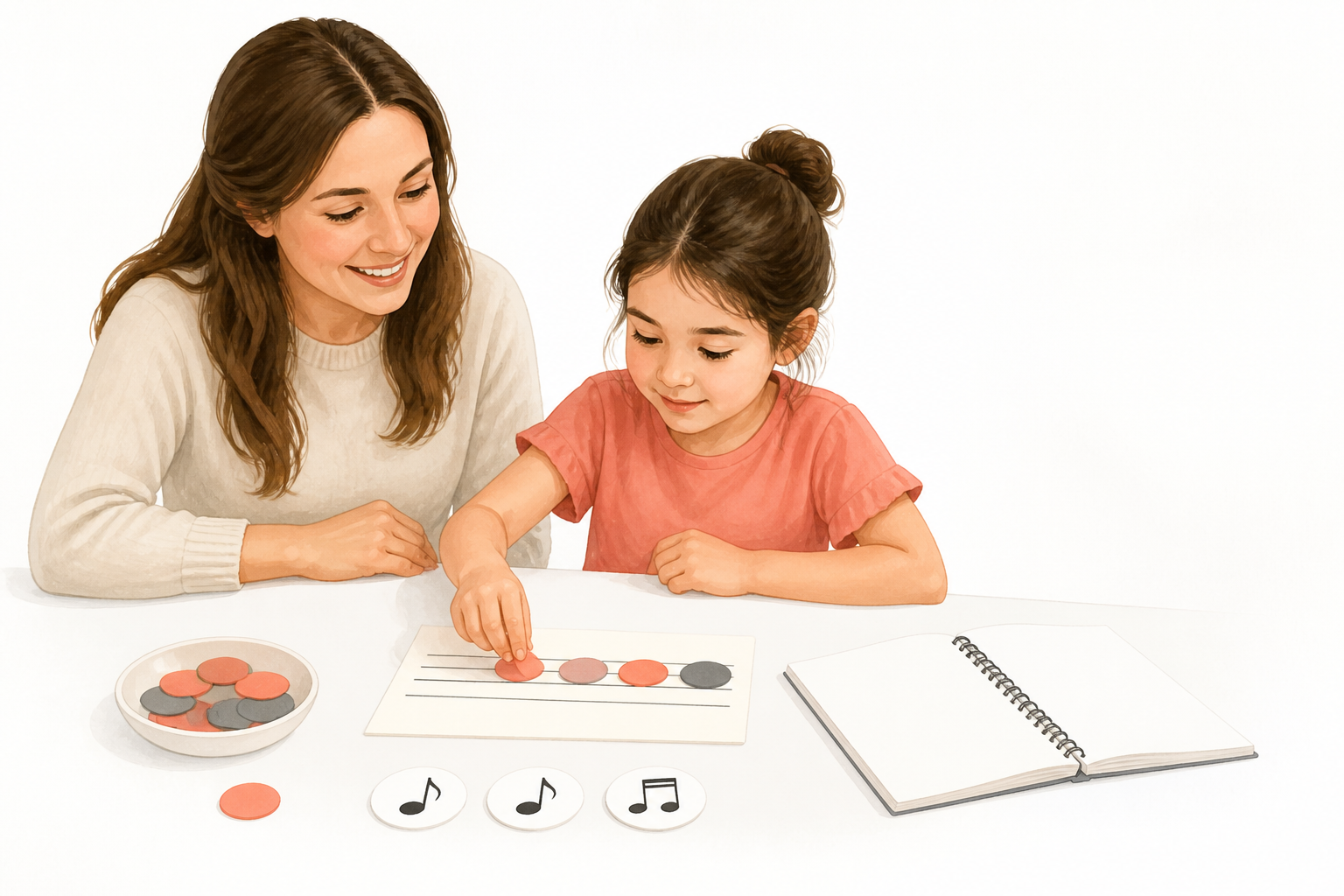
Are piano key stickers good for children?
They can be useful as a short-term prompt, especially when a beginner is overwhelmed by a new keyboard or needs one clear starting point. They become less helpful when a child looks only for printed letters instead of noticing the black-key groups, listening, counting, and building a mental map of the instrument.
A healthy beginner lesson should connect several skills: keyboard geography, rhythm, listening, note reading, finger coordination, and music the child enjoys. A label can support one tiny part of that process. It should not replace the process.
When temporary piano key labels may help
A teacher might use a limited visual marker for a specific reason. Examples include:
- Marking one home note. A removable dot near middle C can help a new student orient to a starting position.
- Reducing first-day overload. One or two cues may let a nervous child begin playing a pattern before learning the whole keyboard map.
- Supporting a short practice task. A temporary marker can remind a child where a particular exercise begins.
- Creating an accessible bridge. Some learners benefit from a visual prompt while the teacher also teaches the underlying pattern and gradually removes the support.
The common thread is that the cue is limited, purposeful, and temporary. It helps the child take the next step without becoming the only way to play.
When piano key stickers start getting in the way
Labels may be slowing learning when a child:
- searches for a printed letter before every note;
- cannot find the same note on an unlabeled keyboard;
- ignores the repeating groups of two and three black keys;
- looks down so constantly that rhythm and musical flow stop;
- matches letters without connecting them to written music or sound;
- becomes anxious when a sticker falls off or the keyboard changes.
These signs do not mean the child is failing. They mean the support has done its job—or is solving the wrong problem—and the teaching plan should change.
Why keyboard geography matters more than printed letters
The piano keyboard is not a row of unrelated keys. Its visual map repeats. Children can use the black-key groups as landmarks: C sits just to the left of a group of two black keys, while F sits just to the left of a group of three. Once a child sees that pattern, the same note name becomes findable across the keyboard.
This is more flexible than memorizing one sticker. It helps a student move to another octave, use a different keyboard, and understand why notes repeat. If your family is still choosing an instrument, the iPianoLab keyboard buyer's guide can help you focus on a practical beginner setup instead of adding more labels and accessories than your child needs.
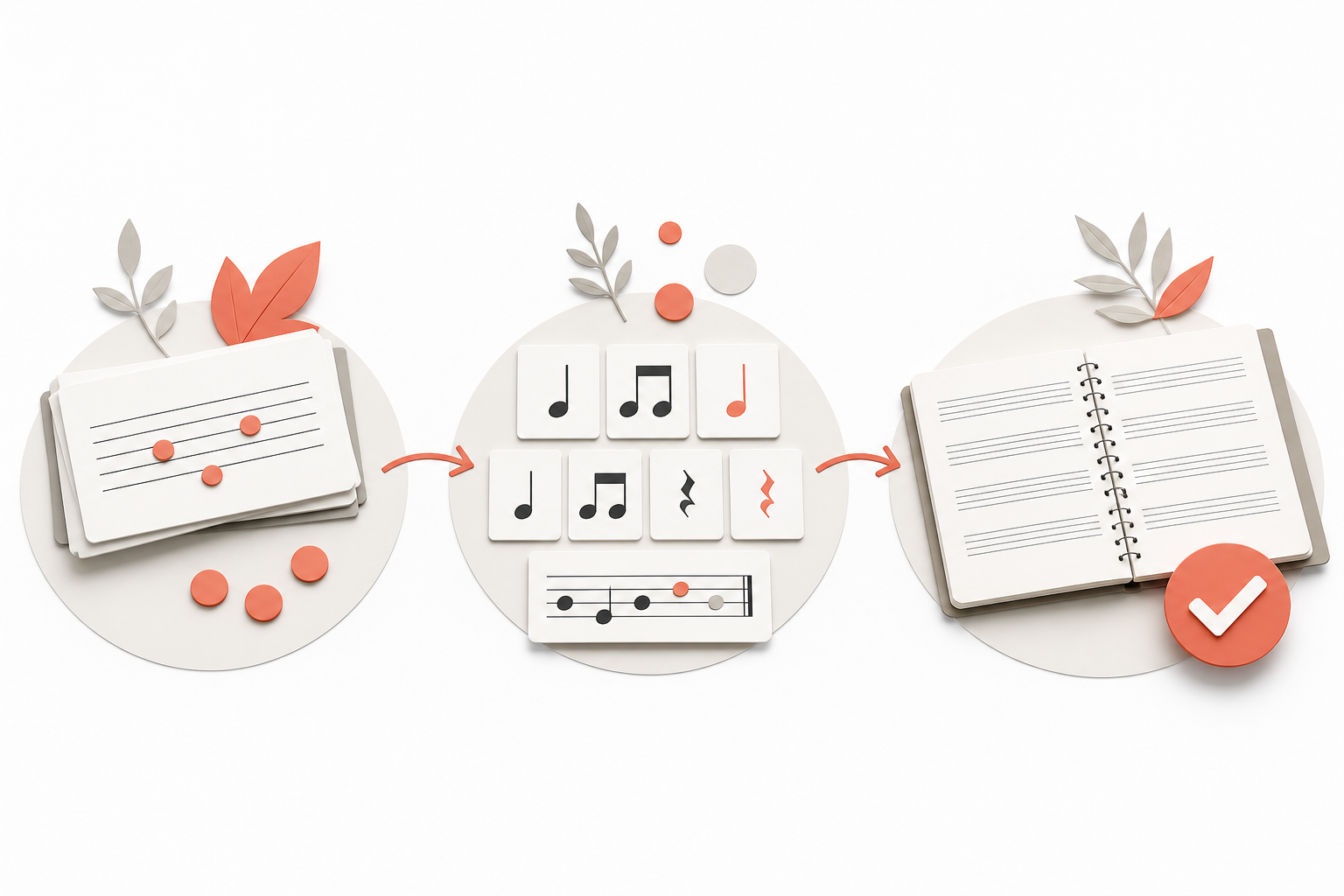
A simple three-step plan to fade out key stickers
Step 1: Keep only the cue that solves today's problem
If every white key is labeled, remove most of the labels. Keep one clear starting marker or the few notes used in the current assignment. Ask the teacher which cue is actually needed so home practice matches the lesson.
Step 2: Pair the cue with a pattern
Each time the child uses the marker, also name the nearby black-key group or another stable landmark. For example: “Find the group of two, then look just to its left.” The goal is to make the sticker a reminder of a pattern—not a substitute for it.
Step 3: Remove the last cue during an easy task
Do not wait until the music is difficult. Remove the final marker while the child plays a familiar warm-up, short song, or note-finding game. If confusion returns, briefly restore one cue, simplify the task, and try again. Independent note finding usually grows through repeated small successes rather than one dramatic test.
Alternatives to labeling every piano key
Parents can support note finding without turning the keyboard into a page of letters:
- Black-key-group games: ask the child to point to every group of two, then every group of three.
- One-note hunts: choose C, D, or F and find every example of that note across the keyboard.
- Short call-and-response patterns: the teacher or parent taps a rhythm, and the child echoes it on one or two notes.
- Moveable markers: use a removable token during a single activity, then put it away.
- Teacher-made visual cues: follow the exact cue system used in lessons so the child is not juggling competing home and class systems.
These activities build the same early confidence that stickers promise, while keeping attention on patterns, listening, movement, and musical understanding.
What should parents ask the piano teacher?
If your child already uses labels, ask three questions:
- What specific skill is this label supporting?
- What should my child notice in addition to the label?
- What will tell us the cue is ready to come off?
A clear answer should connect the visual support to a skill and a next step. You can also review whether children need to read music before starting piano lessons and what a child can learn during the first year for a fuller picture of beginner progress.
How iPianoLab approaches beginner confidence
iPianoLab helps beginners play songs early while building keyboard geography, rhythm, counting, note reading, two-hand coordination, melody, chords, and music literacy. The goal is early success with a clear path toward independence—not permanent dependence on a shortcut.
Families can explore iPianoLab online learning, learn about school programs, or find a beginner-friendly next step.
Frequently asked questions
Should I label all 88 piano keys?
Usually no. Repeating a full set of labels can create visual clutter and encourage letter-by-letter searching. If a cue is needed, use the smallest number of temporary markers that solves the current learning problem.
Do piano key stickers damage a keyboard?
Adhesive products vary. Some can leave residue or affect a finish, especially after heat, age, or repeated removal. Check the keyboard maker's care guidance before applying anything. A removable, non-adhesive marker used only during practice may be safer.
Are colored piano key stickers better than letter stickers?
Color can be a helpful temporary cue, but it can create the same dependency if a child only follows color. Pair any color with the note's sound, name, written position, and keyboard landmark, then fade the color as the child gains confidence.
What if my child refuses to practice without the stickers?
Make the task easier before removing the cue. Use a familiar song, keep the session short, and remove only one or two labels at a time. Ask the teacher to coordinate the change so the child gets the same message at home and in lessons.
Can a child start piano before knowing note names?
Yes. Beginners can start with listening, rhythm, movement, keyboard patterns, and simple songs while note knowledge grows. Note reading matters, but it does not need to be complete before the first lesson.
Ready for a beginner plan that builds confidence and real musical skills? Start with iPianoLab.