Piano Lessons for Kids Near Me: A Parent Search Guide
Searching for "piano lessons for kids near me" usually means your family is ready for a practical next step. You are not only looking for a teacher. You are trying to find a lesson option your child will enjoy, your schedule can support, and your household can keep going after the first burst of excitement.
The short answer: the best kids piano lesson nearby is the one that gives a beginner clear early wins, a predictable schedule, parent-friendly practice guidance, and a path into the right format: after-school class, online learning, private lesson, or a local program at a convenient site.
What should parents compare first?
Start with fit, not distance alone. A nearby lesson can still fail if the class is too advanced, the practice plan is unclear, or the schedule creates a weekly battle. For a beginner, the right program should make the first month feel possible.
- Beginner structure: ask what brand-new students learn in the first few lessons.
- Teacher support: look for patient instruction, clear communication, and child-friendly pacing.
- Practice expectations: families need short, specific assignments, not vague pressure to "practice more."
- Format fit: compare school classes, online lessons, private lessons, and local group programs honestly.
- Logistics: the best option is one your family can actually attend consistently.
If your child already has a keyboard at home, this is also the moment to connect equipment research to a lesson path. The iPianoLab guide to choosing a lesson path after buying a keyboard can help you decide what to do next.
Choose the lesson format before choosing the provider
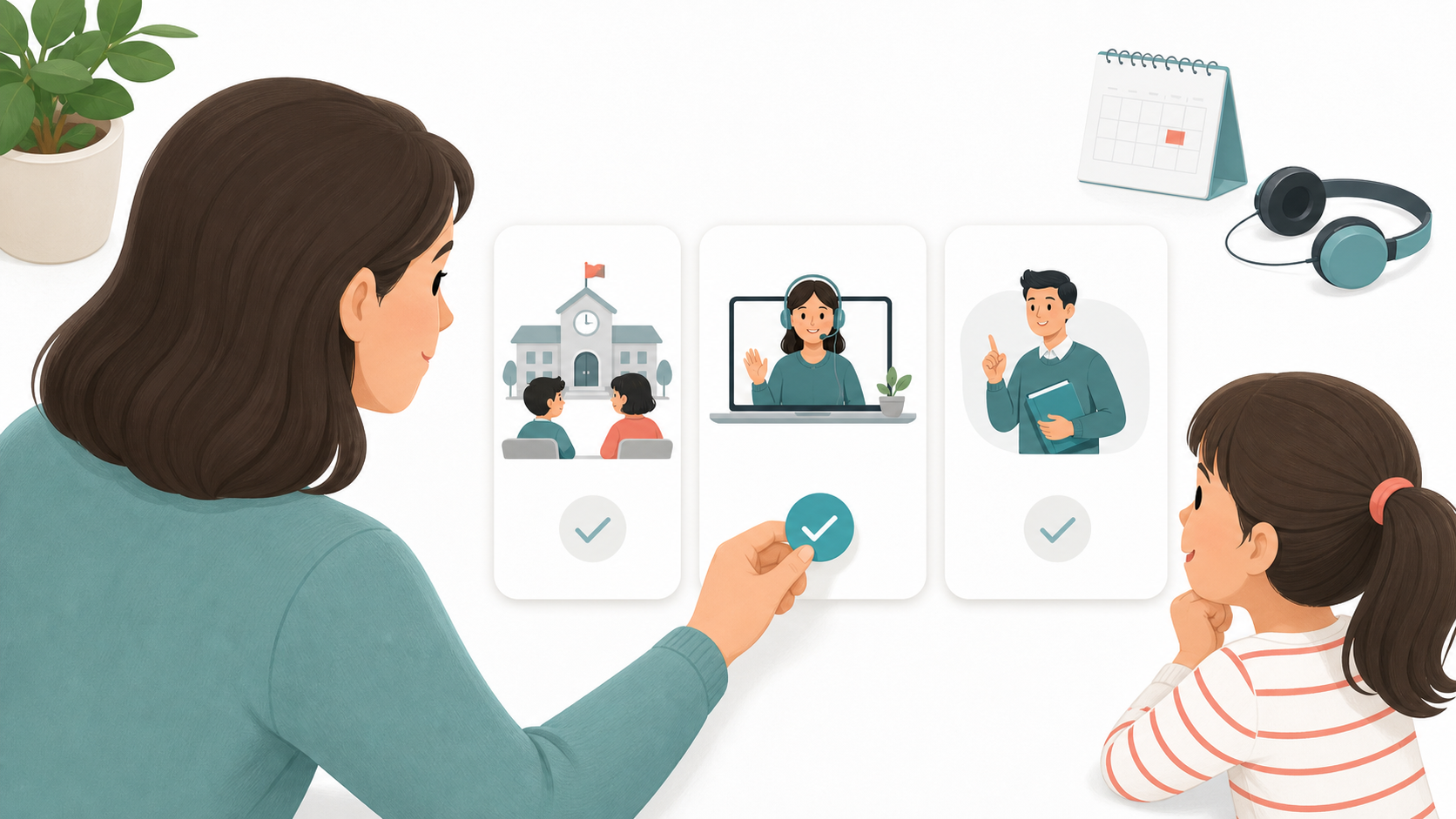
Parents often compare piano programs as if every option is the same. They are not. A child who loves being around other kids may do well in a structured group class. A child with a packed sports schedule may need online support. A child preparing for a specific goal may need a private lesson.
After-school piano classes
After-school piano can be a strong fit when convenience matters. The class becomes part of the school-week rhythm, and children learn alongside peers. For iPianoLab families, the school class route is for parents and students looking for available after-school class options.
Online piano learning
Online piano can work well when travel, siblings, camp schedules, or location make in-person lessons harder to maintain. The strongest online option still needs clear goals, simple assignments, and a keyboard available at home. Families can review iPianoLab's online piano learning path when flexibility is the main need.
Private or local in-person lessons
Private lessons can help students who need individual pacing, a quieter learning environment, or a specific teacher relationship. In New York City, iPianoLab also has a local NYC lesson and class path for families comparing group classes, camps, and private options.
Questions to ask a nearby piano program
Use these questions before you sign up or choose a teacher. Good answers should sound specific and calm, not vague or overly complicated.
- What does a brand-new beginner do in the first lesson or class?
- How do you teach rhythm, note reading, keyboard geography, and two-hand coordination?
- How much practice do you expect between lessons?
- What materials, keyboard access, or home setup does my child need?
- How do parents know what to practice without becoming the teacher?
- How do you help children who feel shy, distracted, frustrated, or nervous?
- What is the next step after the first few lessons?
These questions matter because early piano success is not only about talent. It is about clarity. A child should leave with one small musical goal they understand, and a parent should know how to support that goal at home.
How iPianoLab helps beginners start
iPianoLab is built for children and beginning students. Students play songs they enjoy early, then build fundamentals such as keyboard geography, rhythm, counting, note reading, melody, chords, two-hand coordination, and music literacy. The goal is early confidence with real musical progress underneath it.
Families can compare the main next steps here:
- Sign up for iPianoLab when you are ready to create an account and choose an available path.
- Find a school class when your family is looking for student after-school options.
- Explore online piano when schedule flexibility matters most.
- Meet the teacher team when instructor fit is your biggest question.
Local does not always mean better
A nearby lesson is valuable when it reduces friction and helps your child attend consistently. But distance should not outrank the learning experience. A program five minutes away can still be a poor fit if your child is overwhelmed or the assignments are unclear. A slightly less convenient option may work better if it gives your child structure, confidence, and a reason to keep playing.
For many beginners, the best test is simple: after the first few sessions, can your child show you one thing they learned? Can they find where to start? Do they understand the practice goal? Do you know what to help with at home?
When practice space is the real issue
Most young beginners can practice at home with a suitable starter keyboard and a short routine. In New York City, some families, teachers, or older students may occasionally need a quiet room for a coaching, rehearsal, audition, or focused lesson. When that is the real blocker, Lenox Hill Music Studios lists hourly studio space on the Upper East Side. Use a room when it solves a practical problem; do not let room rental become another obstacle if home practice is working.
FAQ: piano lessons for kids near me
What should I look for in piano lessons for kids near me?
Look for a beginner-friendly structure, patient teachers, clear practice guidance, a realistic schedule, and a format your child can sustain. The closest option is not always the best option.
Are group piano classes good for beginners?
They can be very effective when the class is organized. Group classes can give children peer energy and confidence while still teaching real skills such as rhythm, notes, counting, and keyboard geography.
Are online piano lessons good for kids?
Online piano can work well when the child has a keyboard at home and the program provides clear goals. It is especially useful for families that need schedule flexibility or do not have a nearby class that fits.
Does my child need a piano before starting lessons?
A full acoustic piano is not required for most beginners. A practical home keyboard can support short practice between classes or lessons. If you are unsure what to buy, start with iPianoLab's keyboard buyer's guide.
How do I know if a local piano program is working?
After a few lessons, your child should be able to show small signs of progress: finding notes more confidently, clapping a rhythm, playing a short pattern, or explaining what to practice next. Progress should feel steady, not pressured.
Ready to compare your next step? Create an iPianoLab account, check after-school class options, or review online piano learning.