Piano Lessons for Kids Who Have Trouble Focusing: A Parent Guide
If your child has trouble sitting still, remembering instructions, or staying with one task for very long, piano lessons can still be a good fit. The key is choosing a beginner program that teaches in short, clear steps instead of expecting a child to focus like an adult.
Some parents search for piano lessons for kids with ADHD. Others simply have a child who is active, distractible, impulsive, or slow to settle after school. Either way, the practical question is the same: what kind of lesson structure helps a child feel successful enough to keep trying?
At iPianoLab, becoming PianoFlight in Summer 2026, beginners play songs they enjoy early, then build fundamentals such as rhythm, counting, keyboard geography, note reading, two-hand coordination, melody, chords, and music literacy around those early wins.
Find a beginner-friendly piano program
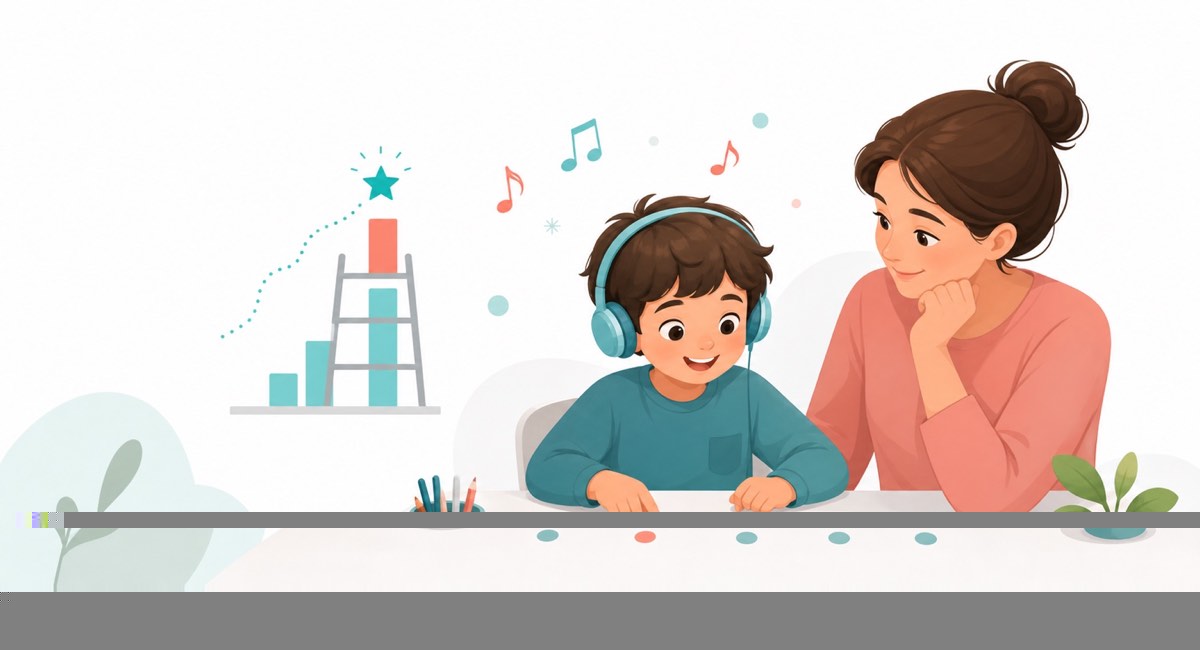
Can a child who has trouble focusing learn piano?
Yes. A child does not need perfect attention to begin piano. In fact, music can be useful because it gives children immediate feedback: they clap a rhythm, hear a pattern, try a short phrase, and notice what changed.
The mistake is assuming focus must come first. For many beginners, focus grows because the lesson is concrete. A child can see the keys, hear the beat, move their hands, and feel the success of finishing a small musical step.
What makes piano harder for distracted beginners?
Piano asks a child to coordinate several skills at once. They may need to listen, count, remember left and right, watch symbols, control their hands, and wait for a turn. That is a lot for a young beginner, especially after a long school day.
When lessons move too quickly or assignments are vague, children who struggle with focus may shut down, rush, or avoid practice. That does not mean they cannot learn. It usually means the task needs to be smaller and more repeatable.
What parents should look for in a focus-friendly piano program
A good beginner program should make success visible. Look for structure that helps children understand what to do next without relying on long explanations.
- Short musical goals instead of long practice lectures
- Rhythm activities that let children move and listen
- Clear class routines so students know what comes next
- Early songs or patterns that sound rewarding quickly
- Teacher cues that are simple, calm, and consistent
- Practice assignments parents can understand at home
- A path for building confidence before adding complexity
Group lessons can work well for some children because the rhythm of the room keeps the class moving. Private lessons can work well when a child needs a slower pace or more individual support. The best format depends on the child, the teacher, and the routine.
How iPianoLab supports focus without pressure
iPianoLab is designed for beginning students, including children who need music to feel approachable right away. Instead of starting with abstract theory, students experience short musical wins and then connect those wins to real skills.
That matters for focus. A child is more likely to stay engaged when the lesson has a pattern: listen, try, repeat, improve, and celebrate one clear step. Over time, those steps can build patience, memory, rhythm, and coordination.
In school-based classes, students commonly meet once weekly for one hour, with levels organized into six lessons. Families can review class logistics in the iPianoLab FAQ, explore school program options, or compare online piano lessons if home scheduling is easier.
What should home practice look like?
For kids who have trouble focusing, home practice should be short enough to start without a fight. Five focused minutes can be more useful than twenty unfocused minutes.
Try this parent-friendly routine:
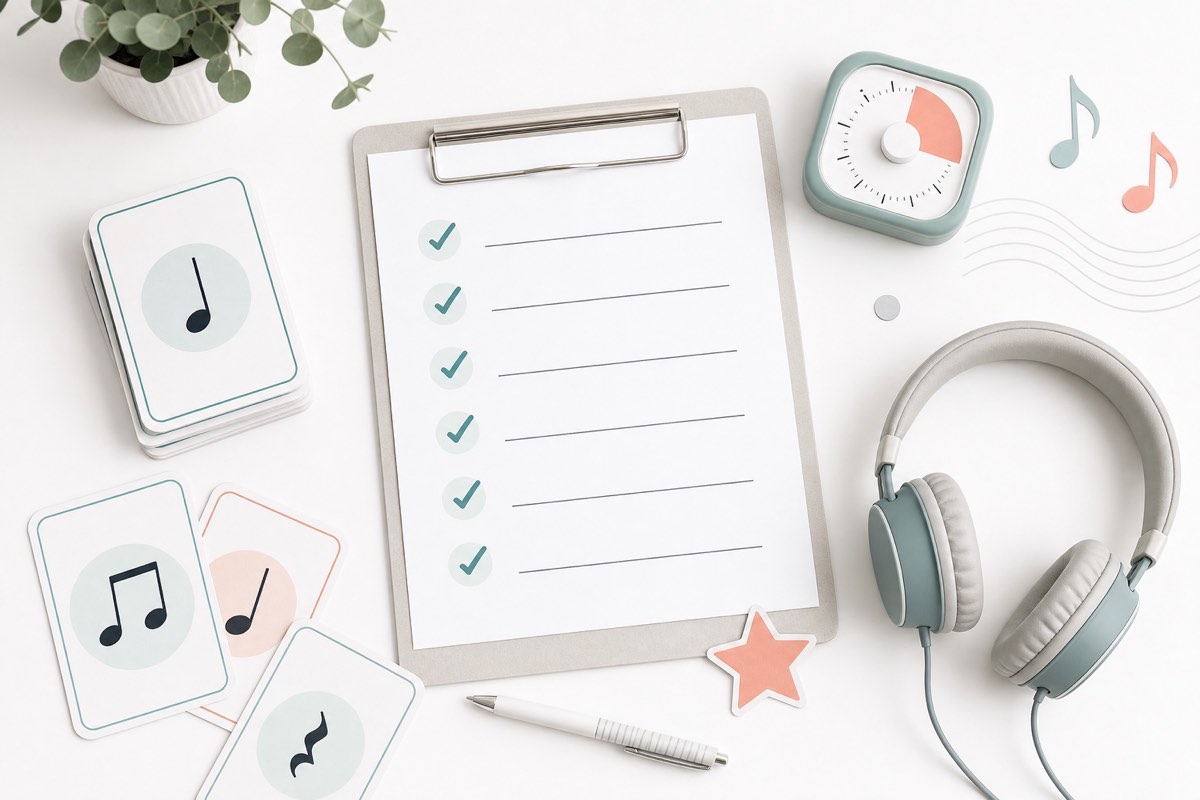
- Begin with the same cue each time, such as headphones on or music cards out.
- Pick one tiny task: a rhythm, a hand position, or one short song section.
- Repeat it two or three times slowly.
- Name one thing that improved.
- Stop before practice turns into an argument.
Parents do not need to become piano teachers. Your job is to protect the routine, keep the goal small, and help your child notice progress.
When should parents talk to the teacher?
Talk to the teacher early if your child is consistently overwhelmed, does not remember what to practice, rushes through every activity, or avoids the instrument completely. A small adjustment may help: a shorter assignment, a visual cue, a slower tempo, or a different practice order.
If your child has an ADHD diagnosis, an IEP, a 504 plan, or specific classroom supports, share only what feels relevant and useful. Piano teachers do not need private medical details, but they can often support a child better when they know what kind of cues, pacing, or structure helps.
Signs the lesson format is working
- Your child can start one short task with less resistance.
- They remember a rhythm, hand cue, or song pattern from class.
- They recover from a mistake without quitting immediately.
- They can show you one thing they learned, even if it is small.
- They leave class feeling proud instead of defeated.
Those are real signs of progress. Beginner piano is not only about finished songs; it is also about learning how to listen, repeat, wait, adjust, and try again.
FAQ: Piano Lessons and Focus
Are piano lessons good for kids with ADHD?
Piano lessons can be a good fit for many kids with ADHD when the teacher uses short instructions, clear routines, movement, rhythm, and early wins. Lessons should support the child rather than rely on pressure or long attention spans.
Should my child take group or private lessons?
Some children focus better in a lively group with peer energy. Others need private pacing. For beginners, the most important factor is not the label; it is whether the lesson is structured, encouraging, and easy to practice at home.
How long should a distracted beginner practice?
Start small. Five to ten focused minutes is often enough for a young beginner when the assignment is specific. Consistency matters more than long sessions.
What if my child cannot sit still at the piano?
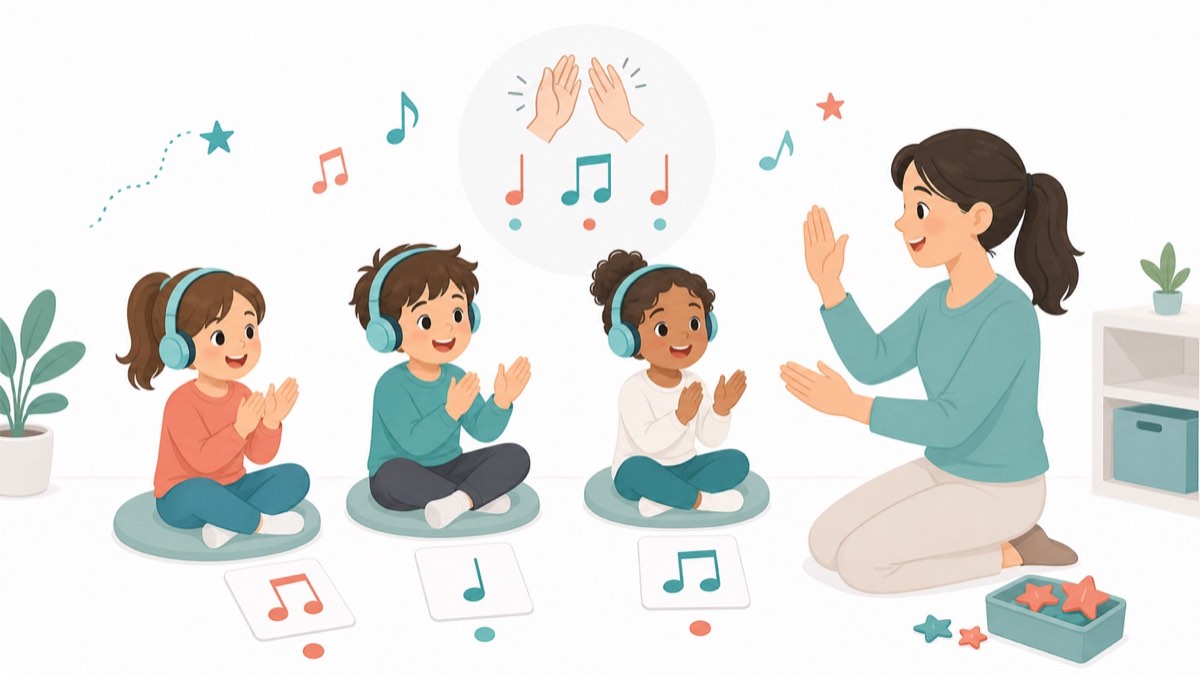
Look for a program that uses rhythm, clapping, listening, movement, and short activities. Many children learn better when the lesson gives them appropriate ways to move instead of asking them to stay frozen.
Ready to Find a Supportive Beginner Path?
iPianoLab is becoming PianoFlight in Summer 2026, with the same programs and team under a new name. If your child is curious about music but needs lessons that feel clear, active, and confidence-building, start with the current signup options or compare online piano lesson formats for your family schedule.