Piano Lessons vs. Apps for Kids: What Parents Should Know
Parents usually do not ask this question because they are trying to avoid lessons. They ask because they want to make a smart first move: Should my child start with a piano app, or do they need a real teacher?
The honest answer is that apps can be useful, but they solve a different problem than lessons. An app can make practice feel easy to start. A teacher-guided piano program helps a child understand what they are doing, fix mistakes before they become habits, and stay encouraged when the music gets harder.
If your child is brand-new to piano, the best choice is usually not “app or teacher forever.” It is choosing the right mix for the first few weeks so your child builds confidence instead of frustration.
Quick Answer: Are Piano Apps Enough for Kids?
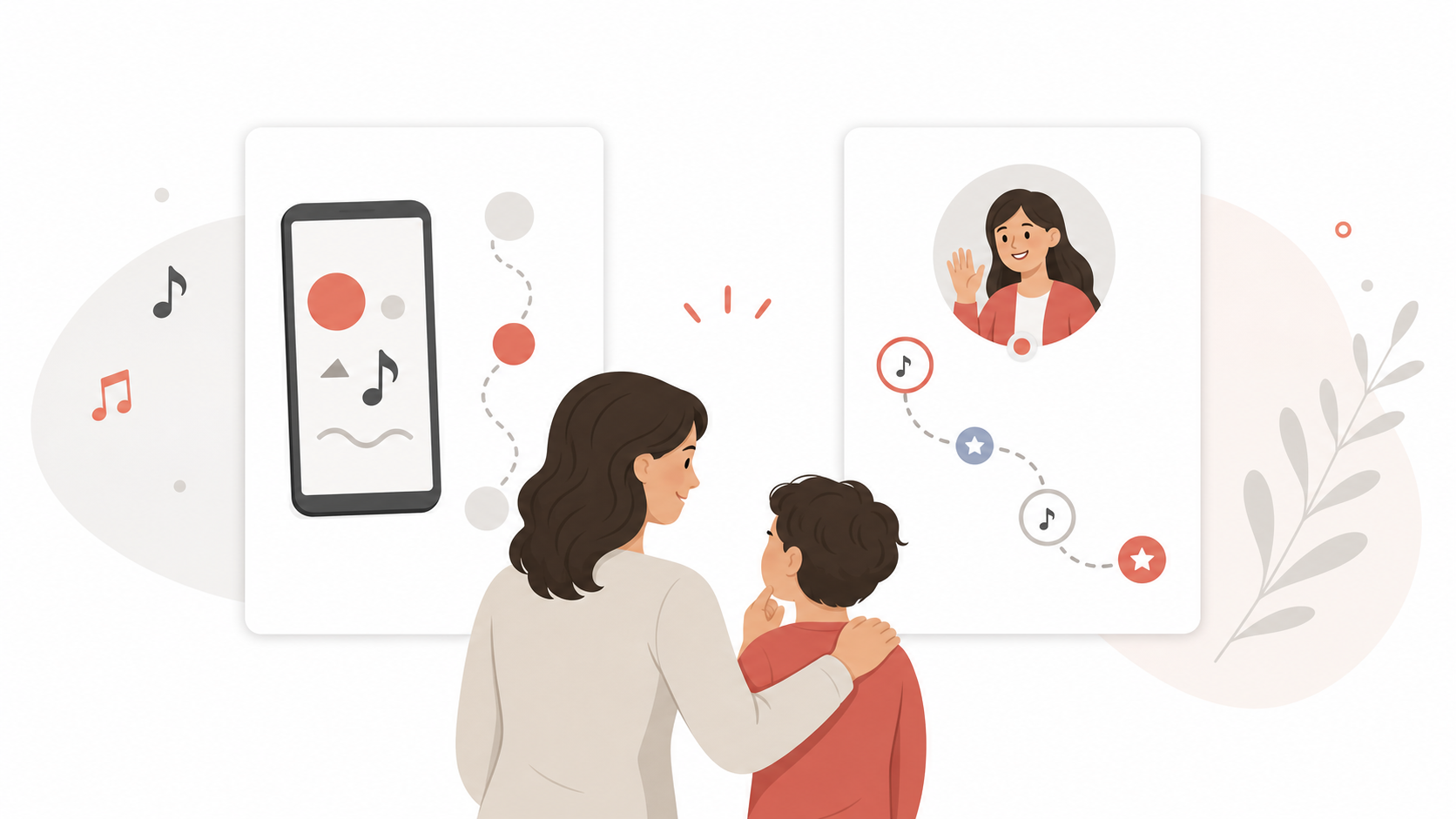
For most beginners, a piano app is not enough by itself. Apps can help with repetition, note recognition, rhythm games, and short practice reminders. But beginners also need someone to notice posture, hand shape, timing, attention, confidence, song choice, and whether the child actually understands the skill behind the screen prompt.
That is where a teacher-guided path matters. iPianoLab is built around early success: children play songs they recognize while gradually building rhythm, counting, keyboard geography, note reading, two-hand coordination, melody, chords, and music literacy. As iPianoLab becomes PianoFlight in Summer 2026, the approach stays the same: same programs, same team, same beginner-friendly way to help kids feel successful early.
What Apps Do Well
A good learning app can be a helpful side tool, especially for a child who likes badges, short challenges, and visual feedback. It can make a keyboard feel less intimidating and give a parent something simple to open between lessons.
- Fast starts: a child can tap in and try something right away.
- Short repetition: apps can make flashcard-style practice feel lighter.
- Low-pressure exploration: kids can try sounds, patterns, or note games without feeling watched.
- Practice reminders: a clear prompt can help families remember to sit down for a few minutes.
Those are real benefits. The problem starts when the app becomes the whole lesson plan.
Where Apps Usually Fall Short
Most piano apps are best at checking whether a note happened. They are less reliable at understanding how a child is learning. A beginner may be pressing the right key with tense hands, guessing instead of reading, rushing through rhythm, or avoiding the part that feels confusing.
Parents often notice the gap as one of these patterns:
- The child can follow the app, but cannot explain what the notes or rhythm mean.
- The child repeats one easy song and avoids anything new.
- The app says “correct,” but the playing still sounds uneven.
- Practice turns into screen time instead of musical growth.
- The child gets stuck and the parent is not sure how to help.
What Teacher-Guided Lessons Add
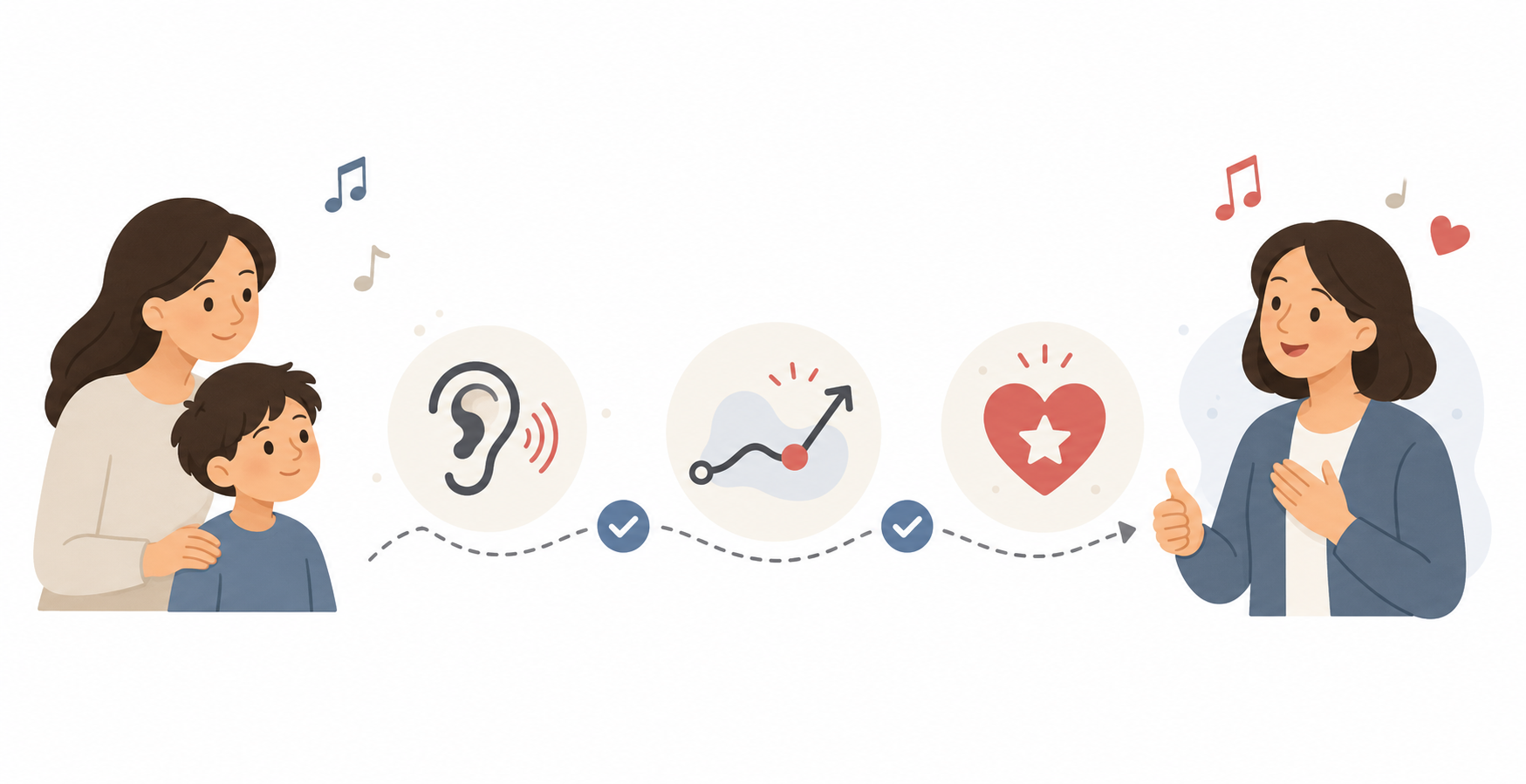
A strong beginner teacher does more than assign songs. The teacher reads the child in real time and adjusts the lesson so the next step is challenging but still possible.
- Corrections before habits form: timing, finger use, hand position, and counting can be coached early.
- Song choice that fits the child: a good program keeps motivation high without skipping fundamentals.
- Accountability without pressure: children often practice better when they know a real person will hear them.
- Parent clarity: families know what to practice, how long to practice, and what progress should look like.
- Confidence: a teacher can turn “I can’t do this” into a smaller step the child can actually complete.
That teacher-guided support can happen in different formats. Some families choose online piano lessons. Others prefer a school-based path through after-school piano classes. Some start with the broader signup flow and choose the best option from there.
A Practical Parent Rule
Use an app for practice support, not as the only teacher. If the app makes your child more willing to sit down at the keyboard, that is useful. If it is the only source of feedback, most beginners will eventually need more structure.
- Use the app for five-minute review, note games, and low-pressure repetition.
- Use lessons for new skills, rhythm, two-hand coordination, musical understanding, and feedback.
- Use parent observation to watch for confidence, frustration, and whether practice feels sustainable.
When an App May Be a Good First Step
An app can be a reasonable short-term starting point if your child is curious, your family is still deciding whether piano will stick, or you just bought a keyboard and want a gentle first week. If that is your situation, pair the app with a clear next checkpoint.
- Does my child still want to play when the app is closed?
- Can they keep a steady beat, or are they guessing quickly?
- Do they understand high and low notes, finger numbers, or simple rhythm?
- Are they proud of a song they can play for someone else?
- Do I know what they should practice next?
When to Move From an App to Lessons
Move toward lessons when your child shows interest but needs structure. That is the sweet spot: they are curious enough to learn, and a teacher can help that curiosity become skill.
- Your child repeats short songs or patterns on their own.
- They ask for help when something sounds wrong.
- They enjoy showing a parent, sibling, or friend what they learned.
- They get frustrated by “almost” getting it and need a coach to break it down.
- You want practice to feel less random and more guided.
What About Online Lessons?
Online lessons can be a strong middle ground for busy families. They keep the teacher feedback that apps cannot provide while removing commute time. The key is making sure the setup is simple: a reliable internet connection, a keyboard or piano, a comfortable camera angle, and a practice plan the parent understands.
If you are still choosing an instrument, start with the keyboard buyer’s guide. If your child already has a keyboard and you need a first-week structure, read the first-week piano plan.
When the Problem Is Space, Not Instruction
Sometimes the issue is not whether an app or teacher is better. It is that home is noisy, crowded, or hard to use for focused practice. For New York City families who need a quiet room for practice, coaching, recording, or a lesson setup, Lenox Hill Music Studios is a relevant local option near the Upper East Side. For most families outside NYC, the same principle applies: choose a practice spot where your child can hear clearly and focus for a short, successful session.
How to Choose This Week
If your child is brand-new, keep the decision simple. You do not need a perfect forever plan. You need the next step that makes piano feel possible.
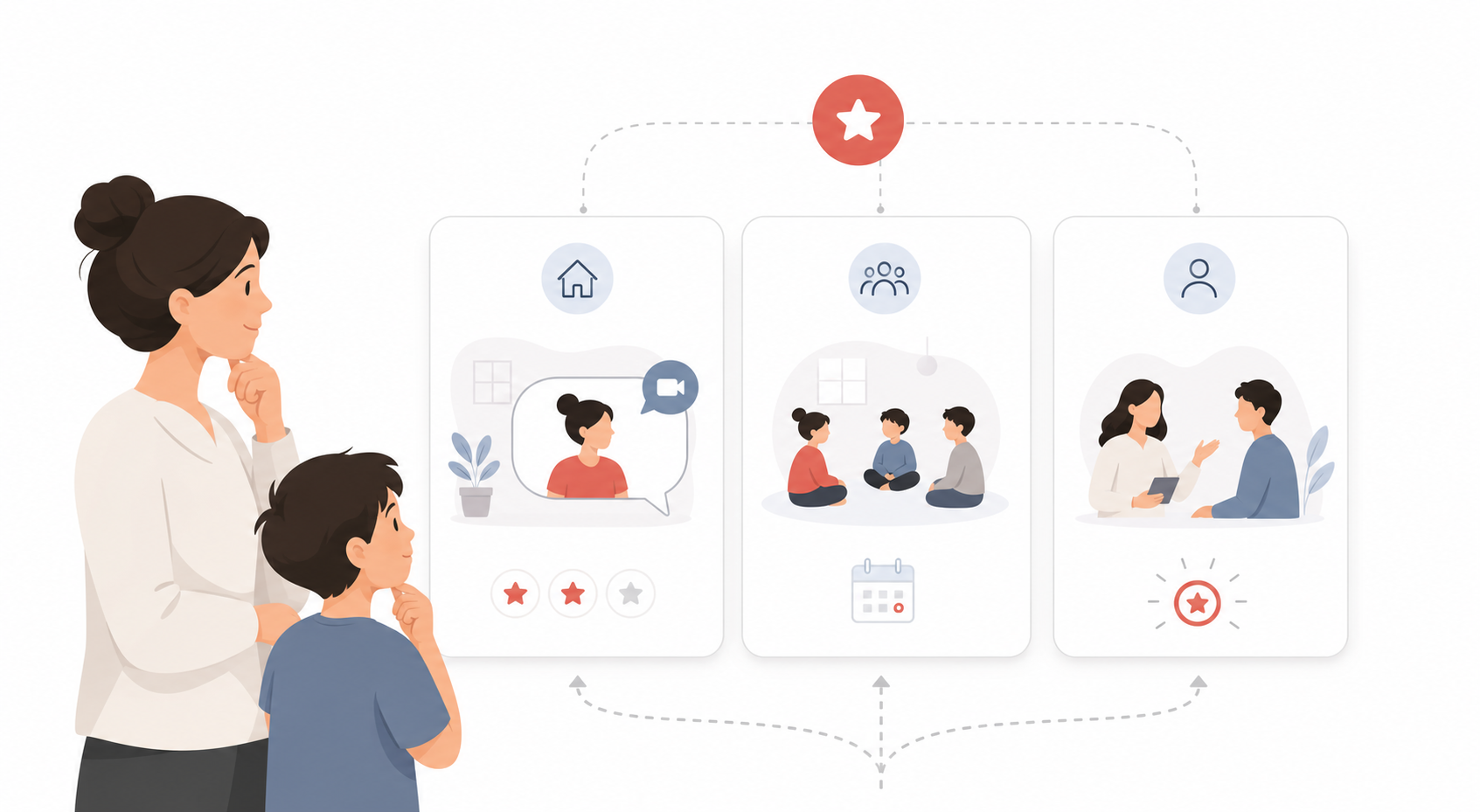
- If your child is only curious: try a short app activity or a simple first-week plan.
- If your child wants help learning songs: choose teacher-guided lessons.
- If your schedule is tight: compare online lessons first.
- If your school offers a class: after-school group learning can be motivating and social.
- If your child gets discouraged quickly: prioritize a teacher who can break skills into small wins.
FAQ
Can my child learn piano only from an app?
Some children can learn simple patterns from an app, but most beginners need teacher feedback to build rhythm, technique, reading, and confidence. Apps are best used as support, not the whole plan.
Are online piano lessons better than apps?
Online lessons usually provide more useful feedback than apps because a teacher can listen, correct, and adjust the lesson. Apps can still be helpful for short practice between lessons.
What age is best for teacher-guided piano lessons?
Readiness matters more than one exact age. A child who can follow short directions, stay engaged for a brief activity, and enjoy repeating a song or rhythm may be ready for a beginner-friendly lesson path.
Should we try an app before signing up?
That can be fine if you set a checkpoint. Use the app to test interest, then move to lessons if your child wants to keep going or starts getting stuck.
What is the best next step for iPianoLab families?
Start with signup if you want help choosing a path, choose online lessons if schedule flexibility matters, or use school classes when your child’s school has an available program.
The Bottom Line
Piano apps can make music feel approachable, and that matters. But children usually keep progressing when they have real feedback, clear next steps, and someone who knows how to turn a mistake into a smaller success.
If your child is showing interest, do not wait until the app stops working. Give them a guided path while the motivation is fresh.
Start with iPianoLab signup and choose the beginner-friendly lesson path that fits your family.