Your Child Has a Keyboard. Now What? A First-Week Piano Plan
If you just bought your child's first keyboard, the next question is usually not "What song should they master today?" It is simpler: how do you help the first week feel successful enough that your child wants to come back tomorrow?
A good first week should build confidence, rhythm, routine, and curiosity. It does not need long practice sessions or a perfect instrument. It needs a child-friendly plan, a few repeatable wins, and a clear next step into lessons when your family is ready.
Short Answer for Parents
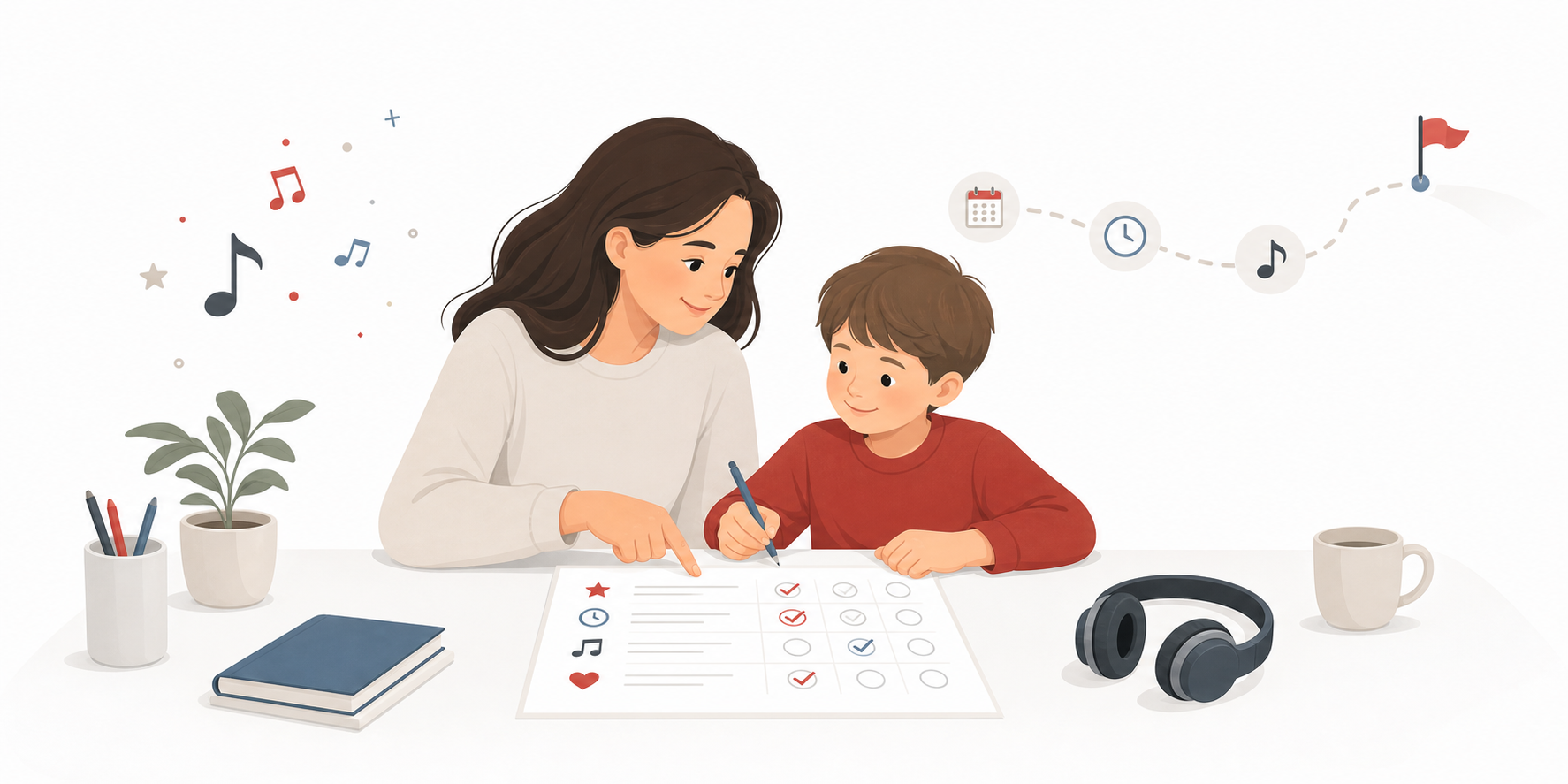
For the first week, aim for 10 to 15 minutes at a time, three to five times during the week. Keep the goal small: listen, count, find patterns, play a tiny musical idea, and stop while your child still feels good. If the keyboard is a 61-key beginner model, that is fine for starting. You can compare instrument choices in our 61-key vs. 88-key keyboard guide.
Day 1: Make the Keyboard Easy to Use
Before your child plays, set up the space so practice does not feel like a production. Put the keyboard where it can stay plugged in, keep headphones nearby if the room is shared, and make sure the bench or chair lets your child sit comfortably with relaxed shoulders.
- Keep the keyboard visible instead of packed away.
- Use a chair height that keeps arms relaxed.
- Put headphones, charger, and music materials in one spot.
- Choose one short practice window that will be easy to repeat.
Day 2: Listen Before Playing
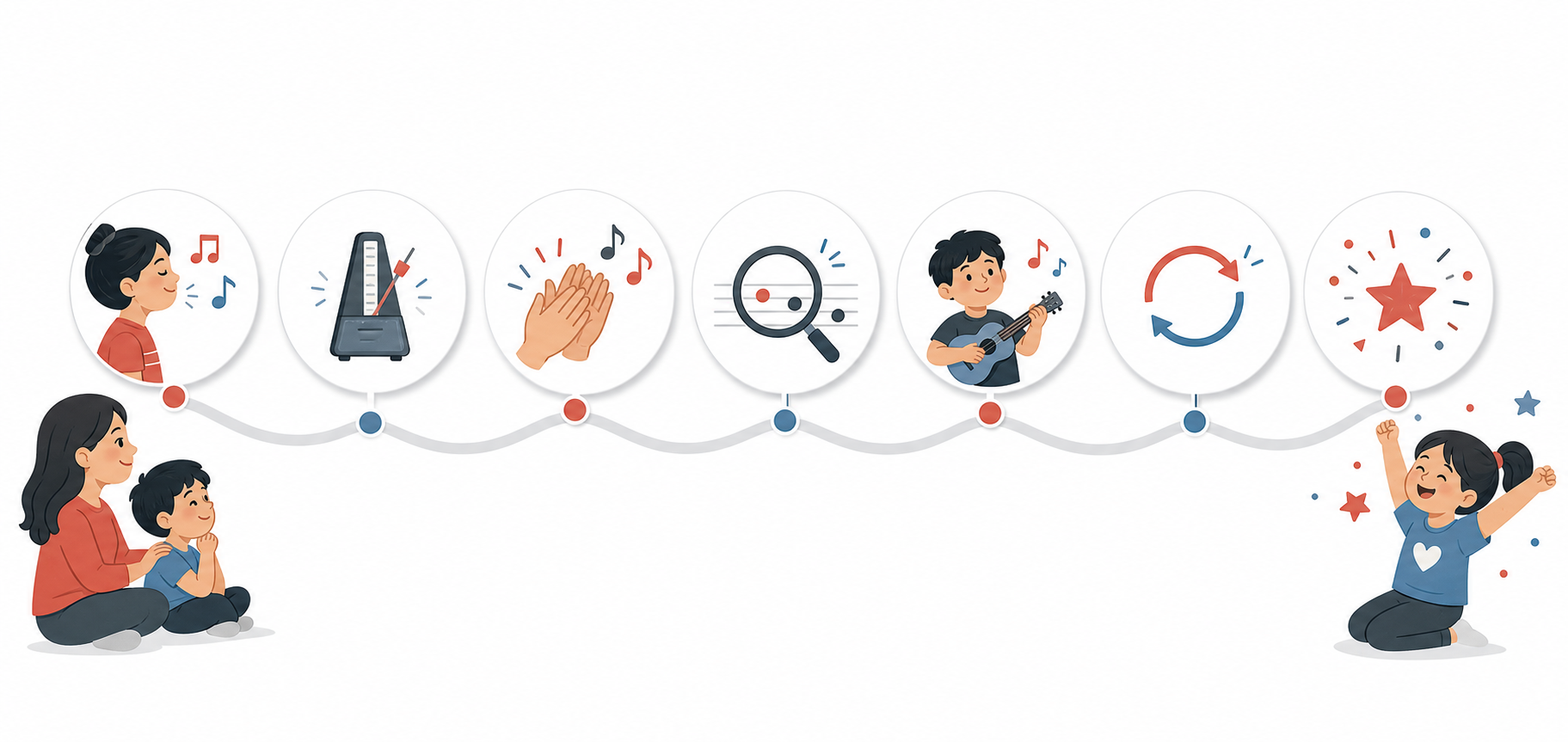
Kids learn faster when the sound has meaning. Start with a song, rhythm, or short melody your child likes. Tap the beat together, count out loud, or clap the rhythm before touching the keys. This makes the keyboard feel connected to music, not just finger drills.
At iPianoLab, beginners play recognizable music early, then build fundamentals such as rhythm, counting, note reading, two-hand coordination, melody, and chords around that success.
Ready for a beginner-friendly next step?
iPianoLab helps kids turn a first keyboard into real progress through school classes, online lessons, and a structured beginner curriculum.
Day 3: Find Patterns Instead of Memorizing Everything
Young beginners do not need a lecture about the full keyboard. Start with simple patterns: high sounds and low sounds, repeated notes, groups of notes that move up or down, and rhythm patterns they can say before they play.
If your child gets frustrated, make the task smaller. One hand can play a short pattern while the parent counts. Then switch roles: the parent claps while the child plays. The point is to make the keyboard feel predictable.
Day 4: Try a Two-Minute Repeat
Repetition works best when it feels achievable. Pick one small pattern or song fragment and repeat it for two minutes. Then stop, even if it is improving. Ending before fatigue keeps the next practice session easier.
If practice tends to become a negotiation at home, use the ideas in How to Help Your Child Practice Piano Without Battles. A short, calm routine beats one long, tense session.
Day 5: Add One Lesson Path
By the middle of the first week, many parents can tell whether their child is curious, hesitant, or ready for more structure. That is the time to choose a next step, not to overload the child with more apps, books, and random videos.
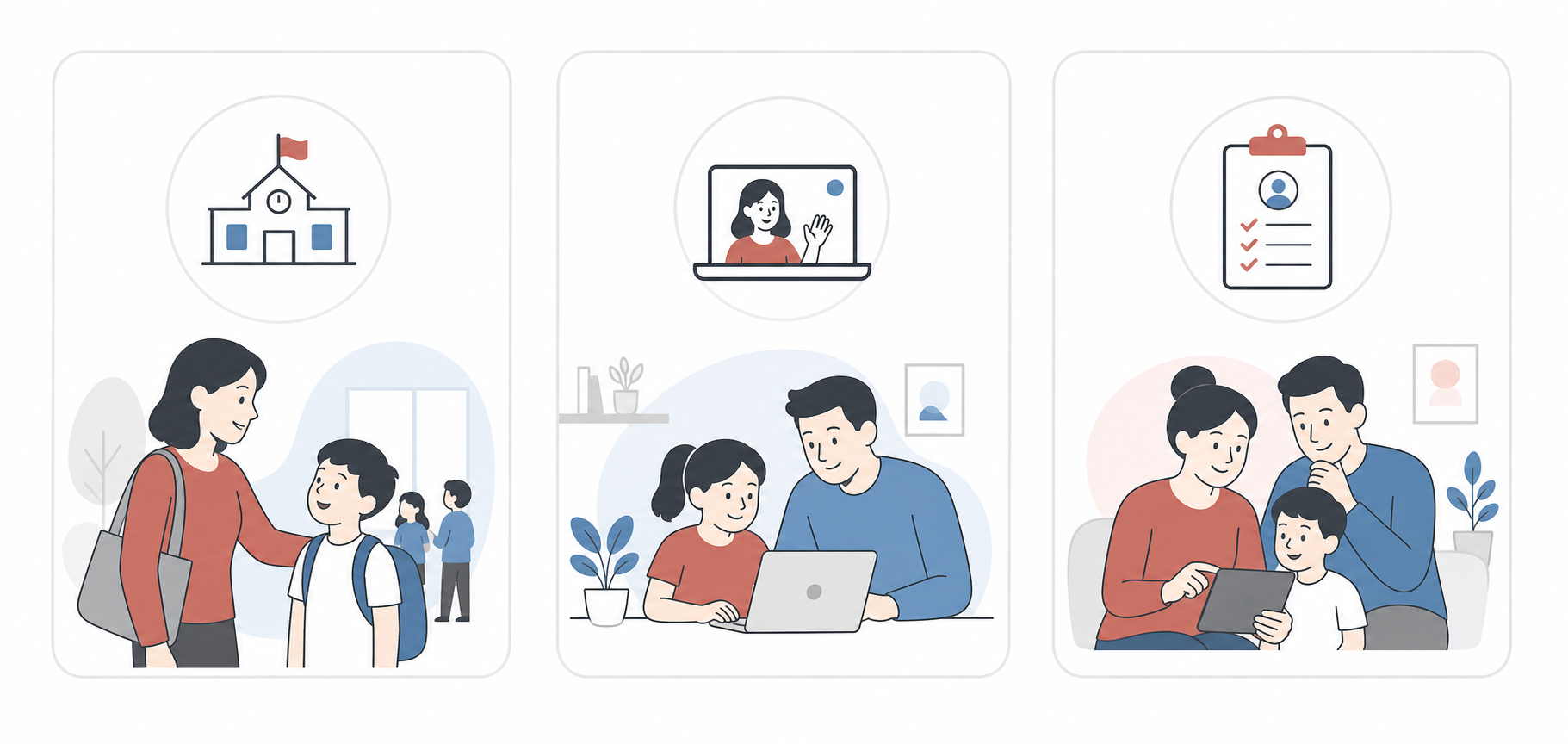
- Choose school classes if your child does well with a weekly routine and enjoys learning with peers.
- Choose online lessons if your family needs flexibility or wants to begin from home.
- Choose a signup conversation if you are not sure which path fits your child yet.
Day 6: Look for Readiness Signs
Your child does not need to be naturally musical to start lessons. Look for practical signs instead:
- They come back to the keyboard without being forced.
- They can copy a short rhythm or pattern.
- They enjoy recognizable songs, even simple ones.
- They can focus for a short lesson-sized window.
- They are willing to try again after a mistake.
If you want a broader view of what comes next, read First 6 Weeks of Piano Lessons for Kids.
Day 7: Choose the Next Step While Motivation Is Fresh
The best time to move from "we bought a keyboard" to "we are learning piano" is while the keyboard still feels new and exciting. A structured program can turn that early interest into steady progress, especially when the lessons are built for beginners rather than adapted from adult methods.
iPianoLab is becoming PianoFlight in Summer 2026, with the same programs, same team, and the same beginner-friendly approach. Families can keep using iPianoLab as a practical starting point for school classes, online lessons, and early musical confidence.
First-Week FAQ
How long should my child practice in the first week?
Start with 10 to 15 minutes. Short sessions help kids finish with confidence and make it easier to practice again.
Is a 61-key keyboard enough for first piano lessons?
Yes, for many beginners. A 61-key keyboard can be a practical first instrument while your child builds rhythm, note awareness, coordination, and routine.
Should we start with online lessons or an after-school class?
Choose the path that your family can repeat consistently. Online lessons can be flexible at home. School classes can help kids build routine and learn with peers.
What if my child only wants to play songs they know?
That can be a strength. Familiar songs can motivate beginners while teachers build the fundamentals underneath: counting, reading, coordination, and musical patterns.
Turn the first week into real progress
Find the iPianoLab path that fits your child, whether that is a school class, online lesson, or help choosing the right beginner option.