How to Help Your Child Practice Piano Without Battles
Beginner piano practice works best when it feels small enough to start, clear enough to repeat, and positive enough that a child is willing to come back tomorrow. For most families, the goal is not a perfect 30-minute practice session. The first goal is a calm routine your child can actually keep.
If practice has started turning into reminders, resistance, or end-of-day arguments, that does not mean your child is not musical. It usually means the routine needs to be simpler. A short plan, a predictable cue, and one achievable musical win can make home practice feel less like a chore and more like part of the week.
At iPianoLab, students play songs they enjoy early, then connect those songs to rhythm, counting, keyboard geography, note reading, two-hand coordination, melody, chords, and music literacy. iPianoLab is becoming PianoFlight in Summer 2026 with the same programs and team, and the practical advice for families remains the same: make music feel doable first.
What is the best way to help a child practice piano?
The best way to help a child practice piano is to make practice short, specific, and repeatable. Choose the same general time of day, remove distractions, set one tiny goal, and stop while the child still has a little energy left. For many beginners, 10 focused minutes is more useful than a long session that ends in frustration.
Parents do not need to become piano teachers at home. Your job is to protect the routine, notice effort, and help your child start. The teacher or program should provide the musical sequence, the next song, and the skill focus.
A 10-minute piano practice routine for beginners
Use this as a starting point. If your child is very young, tired, or new to lessons, shorten each step. If your child is engaged, you can repeat one section, but do not turn every good practice into a longer assignment.
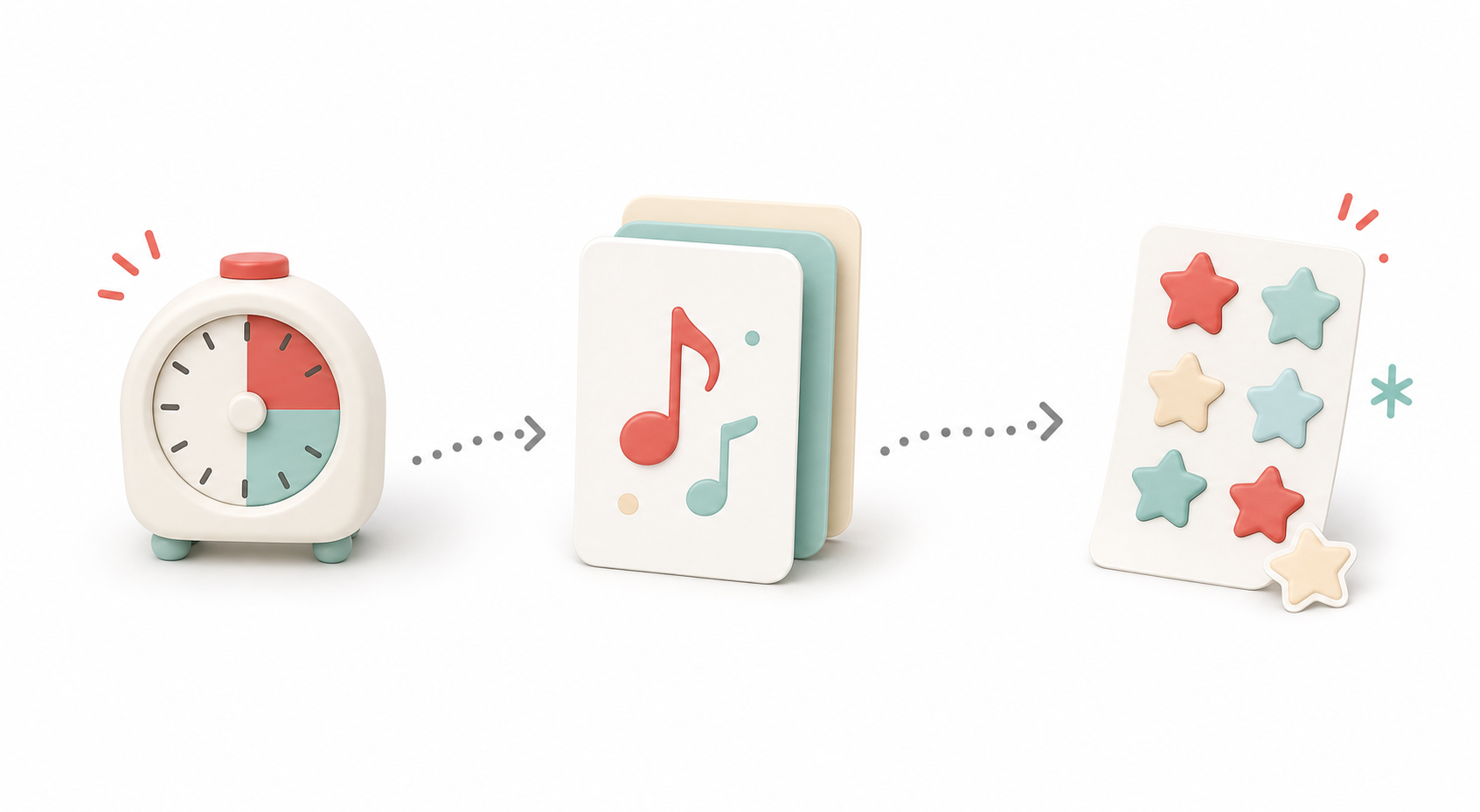
- Minute 1: Settle in. Put away unrelated screens, sit comfortably, and name the one song or skill for the day.
- Minutes 2-3: Warm up with something easy. Let your child play a familiar pattern, rhythm, or short section they already know.
- Minutes 4-7: Try one small challenge. Work on a tricky measure, a left-hand pattern, a rhythm count, or a slow two-hand attempt.
- Minutes 8-9: Play the favorite part. End with a song, sound, or section that feels rewarding.
- Minute 10: Name the win. Say what got better and what the next practice will start with.
What should parents say during practice?
Practice gets harder when every comment sounds like correction. Try prompts that keep the child moving without turning the session into a test:
- "Show me the part you know best first."
- "Let's try that slowly once."
- "Which hand feels easier today?"
- "Play just the first two notes and stop."
- "What changed from the first try to the second try?"
Those prompts are useful because they lower the emotional temperature. They also teach children that practice is not about proving they already know everything. It is about finding one small improvement.
How often should kids practice piano?
Most beginners do better with short practice several times a week than with one long practice session. Three to five short sessions can be enough to keep skills familiar between lessons, especially when the child is still building confidence and hand coordination.
Exact practice expectations should come from your child's teacher or program, because age, lesson format, song difficulty, and attention span all matter. The parent-friendly rule is simple: make the routine repeatable before making it longer.
How to avoid practice battles
If practice is becoming a fight, start by changing the setup instead of blaming motivation. A child may resist because the task is too vague, the session is too long, the room is distracting, or the first step feels too difficult.
Try these practical adjustments:
- Use a visible finish line. A timer can help when it is used gently: "We are doing 10 calm minutes," not "You are trapped until this ends."
- Start with a win. Let your child play an easy section before asking for the new challenge.
- Keep the instrument ready. If setup takes too long, practice feels bigger than it is. The guide to setting up a piano practice space at home can help.
- Use headphones when appropriate. Many kids are more willing to try when the whole house is not listening to every mistake.
- Avoid correcting everything. Pick one focus for the day. Leave the rest for the next lesson.
What if my child says piano is too hard?
"Too hard" often means the child cannot see the next small step. Instead of answering with a lecture, shrink the task. Ask for one hand, one measure, one rhythm clap, or one slow try. When the step is small enough, the child can feel progress again.
This is where a structured beginner program matters. iPianoLab students are not expected to figure out the path alone. They play songs they enjoy early, then build the fundamentals underneath those songs. Parents can read more about early progress in what to expect during the first six weeks of piano lessons.
Parent checklist for calmer piano practice
Before the next practice session, check these five things:
- Is the keyboard or piano ready without extra setup?
- Does your child know exactly what to start with?
- Is the practice goal small enough to finish today?
- Can you praise effort without taking over the lesson?
- Is there a clear next step from the teacher or program?
If you are still choosing an instrument, the First Time Keyboard Buyer's Guide explains what beginner families need. If your child needs more support between classes, online piano learning can help keep the routine moving at home. For school-based enrichment, the after-school piano program page explains how iPianoLab classes are structured.
FAQ: kids piano practice
Should parents sit with kids during piano practice?
For young beginners, it often helps if a parent is nearby at the start. You do not need to coach every note. Help your child begin, keep the routine calm, and step back when they can continue independently.
Is 10 minutes of piano practice enough?
For many beginners, 10 focused minutes is a useful starting point. As confidence grows, the teacher may recommend longer or more frequent practice. Consistency matters more than forcing a long session too early.
What should I do if my child refuses to practice?
Make the task smaller and check the timing. A tired child may need a shorter session, a familiar warmup, or a different practice time. If refusal continues, ask the teacher which single skill should be the home focus that week.
Do kids need a keyboard at home?
A home keyboard is strongly recommended because short, repeatable practice is much easier when the instrument is available. For school classes, iPianoLab provides keyboards and headphones during class, but home access helps between lessons. The FAQ covers common parent questions about materials and practice.
Ready to make piano practice easier?
The best practice routine is the one your child can repeat without dread. Keep it short, make the first step obvious, and let lessons guide the musical path. With the right structure, practice becomes less about pressure and more about small wins that add up.