Does My Child Need to Read Music Before Piano Lessons?
No. Children do not need to read music before they start piano lessons. In a strong beginner program, note reading grows from listening, rhythm, keyboard patterns, short songs, and teacher guidance.
That answer can be reassuring for parents. Many families wait because they assume a child must already recognize notes, understand the staff, or read fluently from a book. For most beginners, that is not the starting line. It is one of the skills lessons are meant to build.
At iPianoLab, becoming PianoFlight in Summer 2026, students play songs they enjoy early, then build fundamentals such as rhythm, counting, keyboard geography, note reading, two-hand coordination, melody, chords, and music literacy.
Start a beginner-friendly piano path
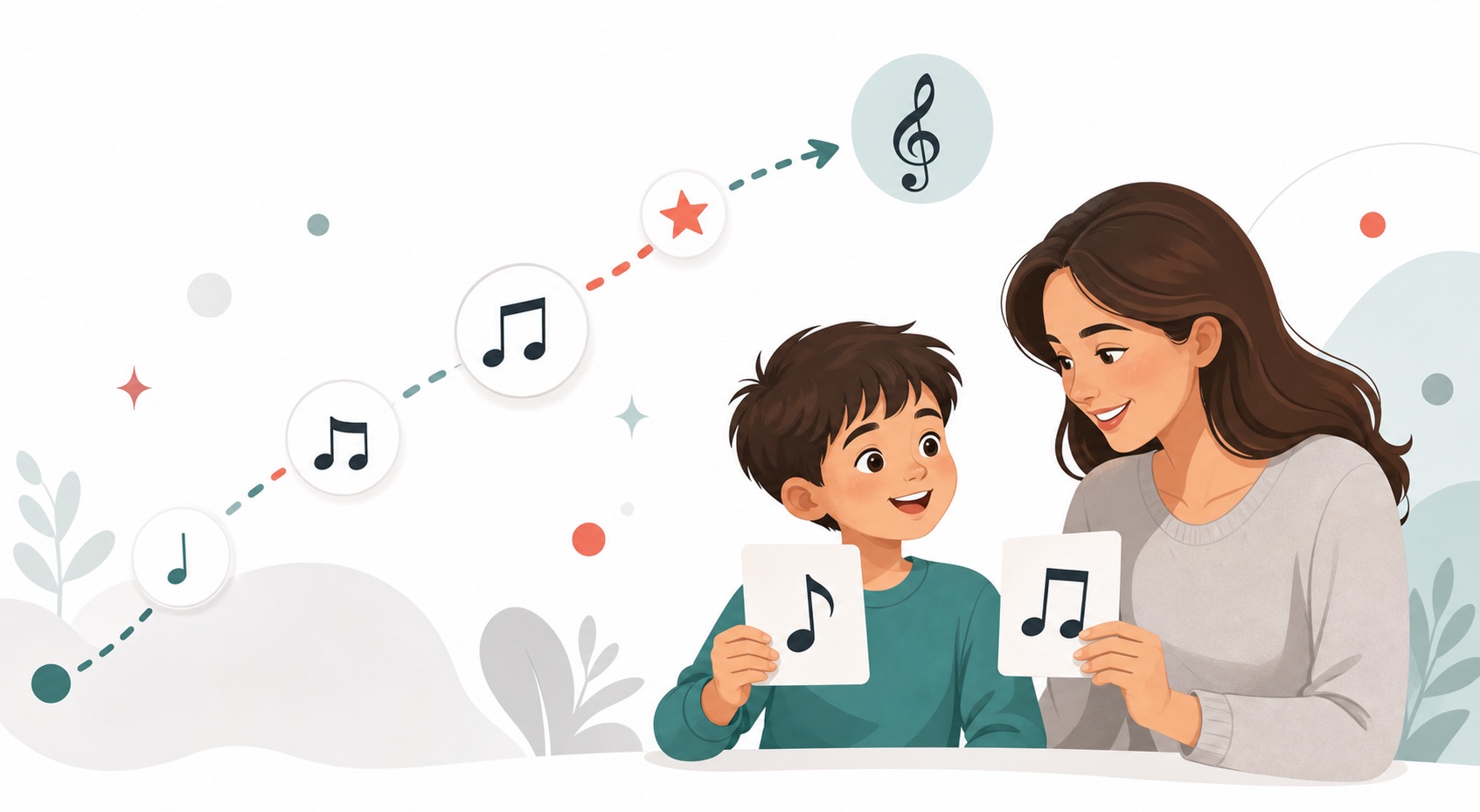
What should children know before starting piano?
A child does not need to know how to read music, name every note, or understand music theory before the first lesson. The more useful readiness signs are simpler:
- They can listen to a short instruction.
- They can try a small task more than once.
- They enjoy music, songs, rhythm, or movement.
- They can follow a teacher or parent cue for a few minutes.
- They are willing to make mistakes while learning.
Those skills give a teacher something to build on. Formal note reading can come later, once the child has a reason to care about what the symbols mean.
Why piano lessons should not start with reading alone
Music reading matters, but it is easier when children already understand that music has sound, beat, direction, and shape. If a first lesson is only symbols on a page, a beginner may feel like piano is a school worksheet instead of an instrument.
A better first step is to help the child experience music physically and aurally. They can clap a steady beat, copy a short pattern, find high and low sounds, or play a simple melody by following the teacher. Those experiences make the printed notes meaningful later.
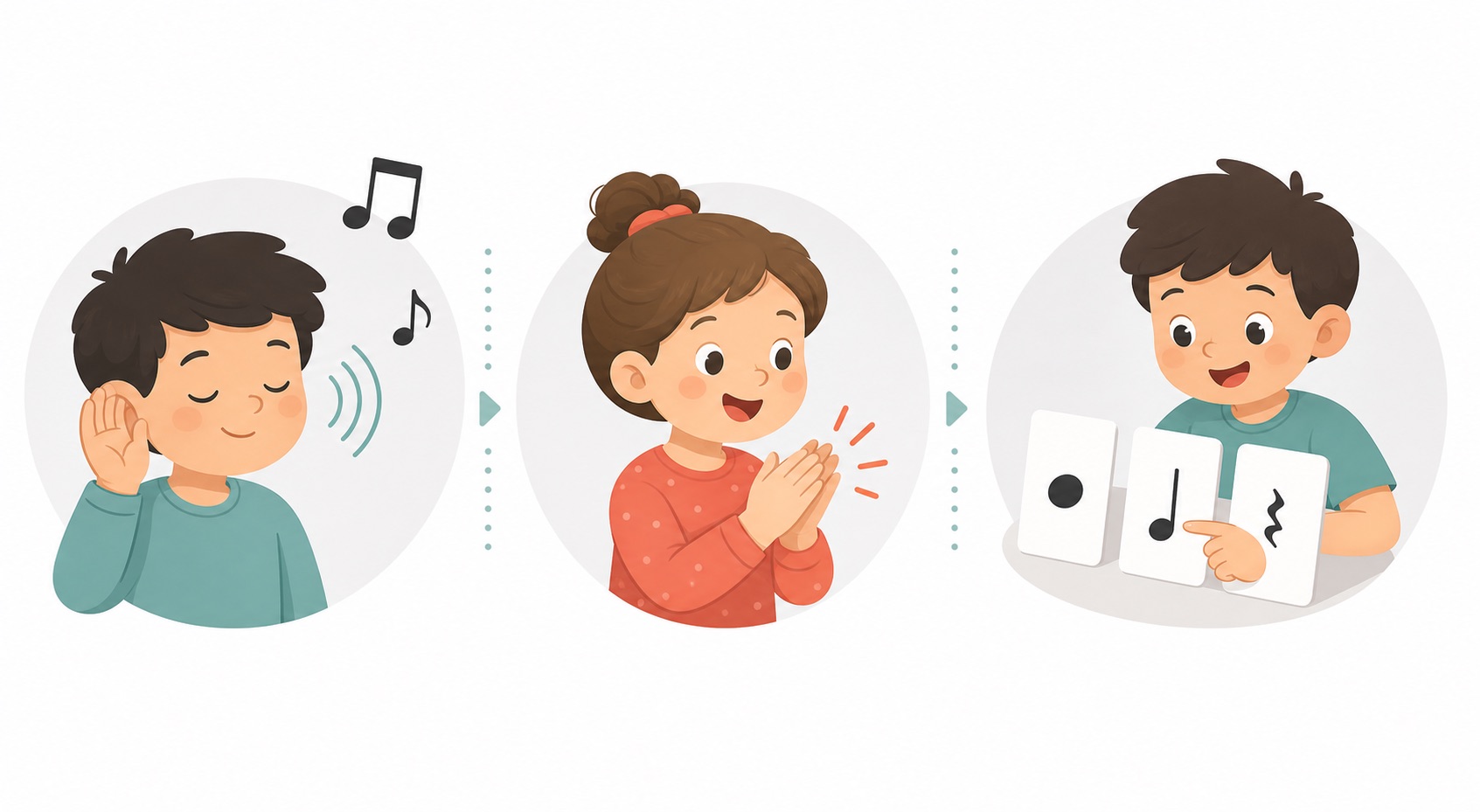
How note reading develops in beginner piano lessons
Good note reading usually develops in layers. A child may first learn that notes can move up, down, or repeat. Then they begin connecting those visual shapes to keys, fingers, rhythm, and sound.
A beginner-friendly path might look like this:
- Hear and copy a short musical pattern.
- Count or clap the rhythm away from the instrument.
- Find the starting place with teacher support.
- Play the pattern slowly.
- See how that pattern appears on the page.
- Try the same idea in a new song.
That sequence helps children read with understanding instead of guessing from note to note.
What if my child is still learning to read words?
Many young piano students are still developing reading fluency in school. That does not automatically mean they are too young for piano. Music reading is visual and pattern-based, and beginner lessons can use listening, imitation, movement, and simple symbols while literacy skills grow.
The key is pacing. A child who is not ready for dense notation may still be ready for short songs, rhythm games, teacher-led patterns, and small musical wins.
Do children need to know the alphabet first?
Knowing the letters A through G is helpful, but it is not the whole skill. Piano students also learn that the keyboard has repeating patterns, notes move by steps and skips, rhythm gives notes their timing, and hands work together gradually.
If a child can recognize a few letters, follow patterns, and listen carefully, a teacher can introduce the musical alphabet in context. The lesson does not have to begin with memorization.
How iPianoLab makes early reading feel approachable
iPianoLab is built around early success. Students are introduced to songs and patterns they can use right away, while teachers connect those wins to real fundamentals. That balance matters because children are more likely to keep learning when they feel capable from the start.
For families, this means the first goal is not perfect sight-reading. The first goal is a child who can listen, count, try, repeat, and understand a little more each week.
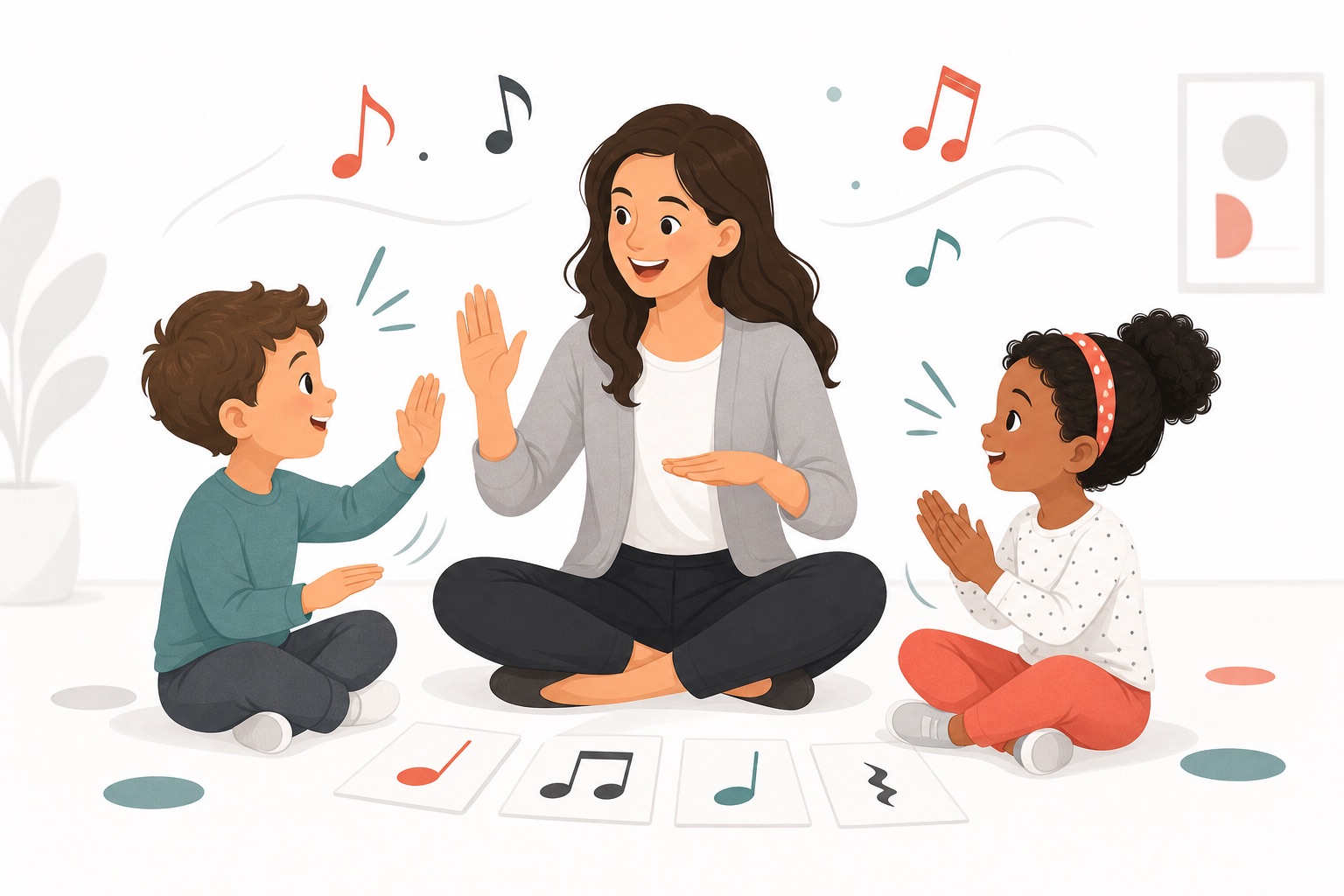
How parents can help at home
Parents do not need to teach note reading from scratch. The most useful support is a simple, repeatable routine that keeps music familiar between lessons.
- Ask your child to show one pattern or song from class.
- Keep practice short enough to start easily.
- Clap or count the rhythm together before playing.
- Use teacher assignments instead of adding extra theory drills.
- Celebrate effort, listening, and trying again.
If your family needs a beginner instrument for home practice, the keyboard buyer's guide can help you choose a practical setup without overbuying.
When should parents ask for more reading support?
Ask the teacher for guidance if your child consistently does not know where to start, cannot tell what to practice, or feels anxious every time music appears on the page. That does not mean piano is failing. It may mean the reading step needs to be smaller.
Helpful questions include:
- What note-reading skill is my child working on right now?
- Should we practice rhythm, note names, or keyboard patterns this week?
- How much reading should my child be able to do independently at this level?
- What is the next small win we should watch for?
Best lesson formats for new readers
Different families need different starting points. After-school piano classes can work well for children who learn with routine, peer energy, and teacher-led structure. Online piano lessons can work well when families need a consistent option at home.
If you are not sure where your child fits, the iPianoLab FAQ is a good place to compare common parent questions, or you can start from the signup page and choose the option that matches your schedule.
FAQ: Reading music before piano lessons
Can a child start piano without reading music?
Yes. A beginner can start with listening, rhythm, keyboard patterns, teacher modeling, and short songs. Note reading can be introduced gradually as part of the lesson path.
Should I teach my child notes before lessons begin?
You do not have to. It is usually more helpful to keep your child excited about music and let the teacher introduce notes in a structured way.
Is reading music harder than playing by ear?
They are different skills. Strong beginners benefit from both listening and reading. Listening helps children understand what they are trying to play, and reading helps them become more independent over time.
What if my child guesses notes instead of reading them?
That is common early on. A teacher can slow the task down, connect notes to patterns, and help the child notice direction, rhythm, and starting points instead of guessing.
Will iPianoLab teach real note reading?
Yes. iPianoLab builds music literacy as part of a broader beginner path that also includes songs, rhythm, counting, keyboard geography, coordination, and confidence.
The takeaway for parents
Your child does not need to read music before piano lessons. They need a program that knows how to introduce reading at the right time, in the right size, and with enough musical success to keep them engaged.
If your child is curious about piano, do not wait for perfect readiness. Start with a beginner-friendly path and let note reading grow from real music.