Should Kids Count Out Loud While Playing Piano?
Quick answer: counting out loud can help beginner pianists keep a steady beat, hold long notes for their full value, and notice where a rhythm changes. It is a practice tool, not a rule for every song or every repetition. If your child’s teacher has assigned a particular counting method, use that exact method and keep the musical spot very small.
Many children can clap a rhythm or find the correct keys, then feel overloaded when they try to speak and play at the same time. That is normal. A five-minute say–tap–play routine lets the voice, beat, and hands meet one layer at a time instead of turning counting into another performance test.
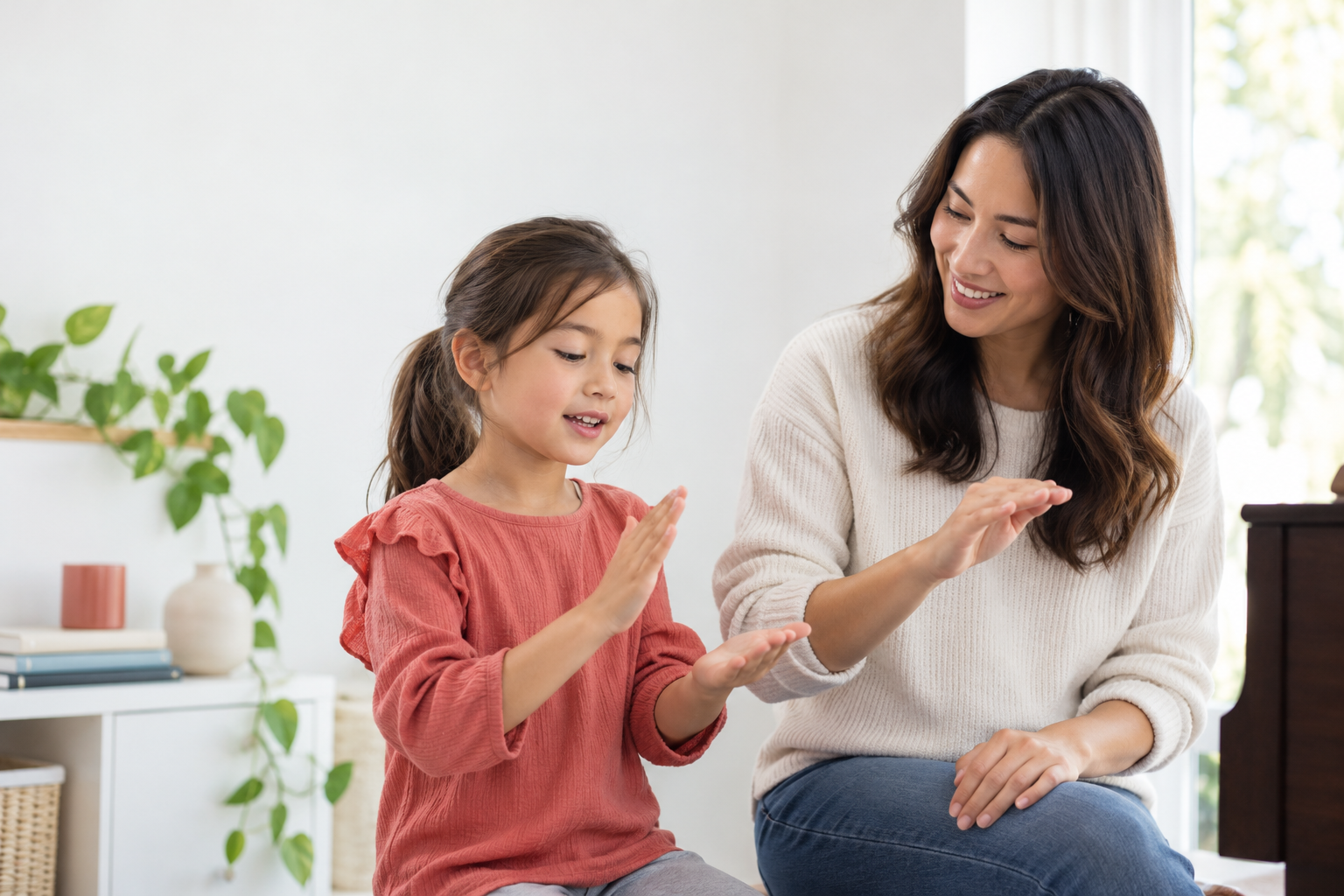
Should beginner piano students count out loud?
Often, yes—especially while learning a rhythm. Saying the beat makes time audible. A child can hear whether the count keeps moving, whether a long note ends too soon, or whether a pause has appeared between notes. Silent counting can work later, but a beginner’s internal count may stop the moment note reading or hand movement becomes difficult.
That does not mean every child should chant numbers through every song. Teachers use several valid systems, including numbers, rhythm words, syllables, clapping, tapping, movement, and imitation. Some music also needs a different spoken pattern than a simple “one, two, three, four.” Follow the teacher’s language rather than adding a second system at home.
| What you hear | What may be happening | Helpful next step |
|---|---|---|
| The count speeds up with the hands | The child is following finger motion instead of a steady beat | Say and tap the count without playing |
| The count stops at a hard note | Note finding is using all the available attention | Use one comfortable note or a two-note spot |
| Long notes end before the next count | The child knows the symbol but is not feeling its duration | Keep tapping while the sound is held |
| The child plays correctly but the voice lags | Speaking may be the newest coordination layer | Alternate one counted try with one listening try |
Why is it hard to count out loud and play piano at the same time?
A beginner may be reading notes, finding keys, remembering fingering, moving two hands, listening, and watching the next symbol. Adding the voice creates one more timed action. Difficulty counting aloud does not automatically mean the child lacks rhythm. It often means the task has too many layers at once.
The child is trying to count after playing
The count should organize the movement, but beginners sometimes wait for a finger to land and then say the number. The voice becomes a report instead of a pulse. Move away from the piano, tap a steady beat, and speak at the same moment as each tap.
The note names and beat numbers are competing
If the child is saying letter names while finding notes, switching immediately to beat numbers can feel confusing. Separate the jobs. First locate the notes silently. Then practice the rhythm on a tabletop. Combine them only after each layer is clear.
The practice spot is too long
A full line may contain repeated notes, skips, rests, hand changes, and a difficult ending. Choose one measure or even two beats. A short successful loop teaches more than a long count that falls apart halfway through.
The counting words do not match the assignment
A teacher may want numbers, subdivisions, rhythm syllables, or spoken words that fit the piece. Ask for the exact count when the assignment is unclear. Parents do not need to invent a system or teach unfamiliar notation.
What should parents listen for?
Listen to the relationship between the voice and the beat, not the volume or confidence of the counting.
- Continuity: does the count keep moving through a difficult note or rest?
- Alignment: do the voice, tap, and note begin together?
- Duration: does a held note continue until the next beat arrives?
- Tempo: does the count stay calm instead of speeding toward familiar notes?
- Recovery: can the child restart from the small practice spot without returning to the beginning?
If the notes are correct but the rhythm is not, use the separate iPianoLab guide to separate note finding from rhythm practice. If silence disappears from the count, review how to keep the beat moving through written rests. A metronome can help later, but the parent guide to using a metronome with children explains why a click should not replace understanding the rhythm.
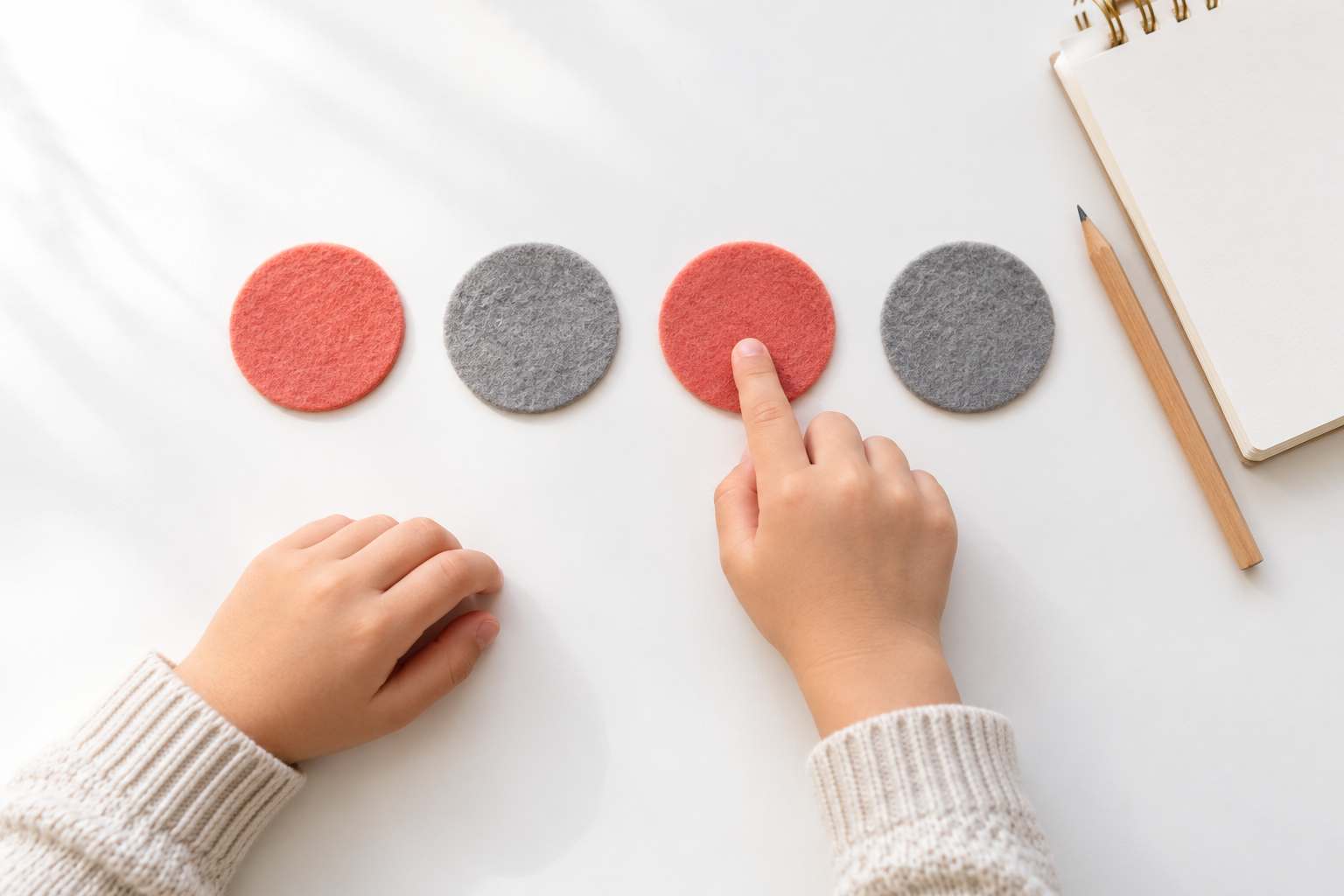
A five-minute say–tap–play routine
Choose one short spot from the child’s current assignment and use the teacher’s counting words. If the teacher has not assigned a count, use this routine only as a listening exercise and save the exact notation question for the next lesson.
- Say for one minute. Point to four felt circles or tap four steady beats on the table while the child says the assigned count. Keep the pace slow enough for an easy conversation.
- Tap for one minute. The child taps the rhythm of the practice spot while the spoken beat continues. If the voice stops, return to the simpler steady tap.
- Play one note for one minute. Use one comfortable key and play the rhythm on that single note while counting. This removes note finding from the task.
- Restore the assigned notes for one minute. Put the real notes back into the smallest possible spot. Stop if the child begins guessing or tensing.
- Listen once for one minute. Play the same spot without speaking. Ask, “Did the beat feel the same?” The goal is to carry the steady pulse into the music, not to depend on counting forever.
If the child can say and tap but cannot count while playing, that is still useful information. Keep the successful layer, write down the exact measure, and let the teacher decide whether to simplify the notes, change the words, or use another rhythm tool.
Should children count every time they practice piano?
No. Count when it solves a specific problem: an uneven beat, a missed rest, a shortened long note, a rushed measure, or a rhythm that changes. Then play again without speaking and listen for the same steadiness.
Children also need repetitions devoted to sound, phrasing, dynamics, movement, reading, and enjoyment. Counting is one lens. If it becomes the only thing a child hears, the musical goal can disappear.
Is counting out loud better than using a metronome?
They do different jobs. Counting names a child’s place inside the measure and can make note lengths easier to understand. A metronome supplies an outside pulse but does not explain which beat the child is on or what the rhythm means.
For a new rhythm, the simplest order is often: say it, tap it, play it, then add a slow click if the teacher recommends one. Asking a child to count, read, coordinate both hands, and follow a metronome all at once can create more confusion than clarity.
What should parents avoid?
- Do not shout numbers over the child’s playing or speed up to pull them forward.
- Do not change the teacher’s counting system because another method looks easier online.
- Do not demand counting through an entire song when one measure is the actual problem.
- Do not treat a quiet or hesitant voice as defiance. Speaking and playing is a coordination skill.
- Do not add a metronome, both hands, pedal, and counting in the same new attempt.
Useful parent language is specific and calm: “Can the count keep going while we tap this measure?” “Which beat is the long note holding through?” or “Should we save this spot for your teacher?”
When should the piano teacher take the lead?
Ask the teacher when the child does not know which words to say, the written rhythm is unfamiliar, counting repeatedly makes the music less steady, or the same measure remains confusing after a few small attempts. Bring the exact page and measure. A precise question is more useful than saying the whole song has a rhythm problem.
Also step back if counting regularly causes frustration, embarrassment, breath-holding, or physical tension. The teacher may use movement, imitation, rhythm syllables, backing tracks, or another sequence that fits the child better.
Why spoken counting can build independent practice
A visible finger can copy a motion without understanding when it should happen. A spoken count gives the child a portable way to organize time. Used briefly and correctly, it helps the child notice the beat, check a rhythm, and return to the assignment with less guessing.
iPianoLab helps beginners connect songs they enjoy with rhythm, counting, keyboard geography, note reading, two-hand coordination, melody, chords, and music literacy through a structured learning sequence. The purpose of each tool is the same: give the child a clear next step and a musical reason to use it.
Build rhythm confidence with a clear beginner path
Choose a learning option that connects listening, counting, reading, and playing through short musical steps and supportive guidance.
Explore iPianoLab online piano learning, or choose an iPianoLab program for your child.
Frequently asked questions
Why do piano teachers ask students to count out loud?
Speaking makes the beat audible. It can reveal where a child speeds up, stops, shortens a long note, or loses track of the measure. The teacher can then correct a specific rhythm instead of guessing what the child is feeling internally.
Is it okay to count silently while playing piano?
Yes, once the beat is reliable. For a new or difficult rhythm, counting aloud is easier for the child and teacher to check. After the rhythm becomes steady, the child can transfer the count inward and listen to the musical result.
What if my child cannot count and play at the same time?
Separate the layers. Say and tap first, then play the rhythm on one comfortable note, and finally restore the assigned notes. If combining the layers still causes confusion, save the exact spot for the teacher.
Should a parent count for the child?
A parent can model one slow round or tap a quiet steady beat, but the child needs a chance to produce the count. Avoid getting louder or dragging the child through the music. The goal is independence, not dependence on a parent’s voice.
Does counting out loud help with long notes and rests?
It can. The continuing count gives a child something active to follow while a note is held or the music is silent. Keep the teacher’s assigned counting words and practice only a short spot.
When can my child stop counting out loud?
When the rhythm remains steady and clear without the voice. Try one counted repetition, then one silent listening repetition. Return to spoken counting when a new rhythm or difficult measure needs it again.