Should Kids Practice Piano Scales? A Parent Guide
Yes—children can benefit from practicing piano scales, but beginners rarely need long, repetitive scale drills. A short five-finger pattern or one easy scale can help a child notice how notes relate, coordinate the hands, and move more comfortably through songs. The exercise should fit the student's level and connect to music they are actually learning.
For a young beginner, the goal is not speed or perfection. It is an even sound, relaxed movement, a steady pulse, and growing awareness of musical patterns. Two or three focused minutes may be enough. If scale practice causes tension, confusion, or a daily argument, the assignment needs to be simplified.
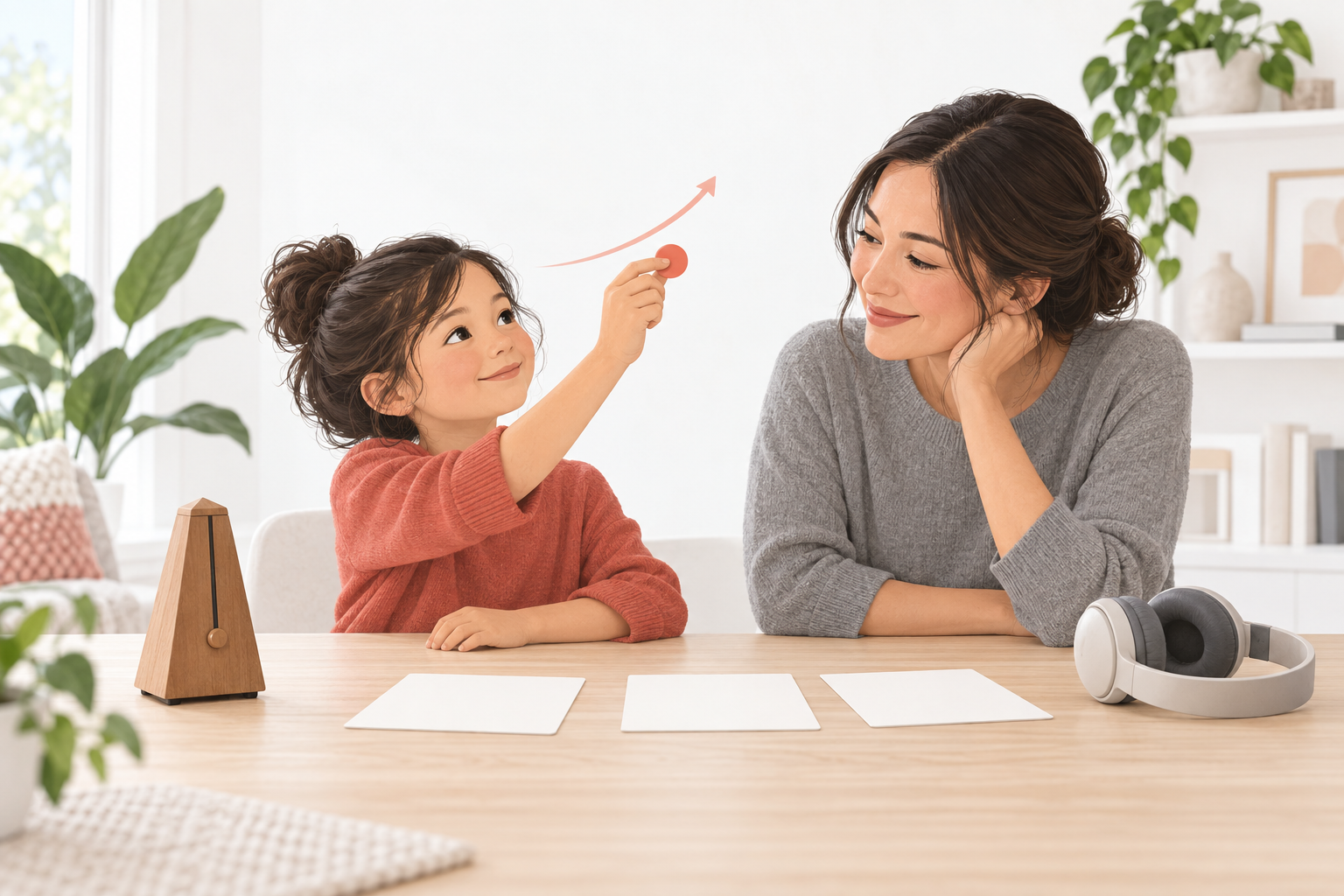
Why do piano teachers give kids scales?
A scale is a sequence of notes that moves step by step. Children hear and use pieces of that sequence in melodies, chords, and familiar song patterns. Practicing a scale in a small, thoughtful way gives a beginner one place to work on skills that appear throughout music.
Appropriate scale practice can help children develop:
- Keyboard geography: understanding how notes repeat and how nearby notes relate;
- Finger coordination: moving several fingers in an organized sequence;
- An even sound: listening for notes that are not suddenly too loud, soft, early, or late;
- A steady pulse: keeping the pattern moving without rushing through an easy spot;
- Pattern recognition: noticing shapes that later appear inside songs and chords; and
- Practice independence: repeating one clear task and checking how it sounds.
Scales are a tool, not the whole lesson. A balanced beginner program should also include songs, rhythm, listening, note reading, chords, creativity, and two-hand coordination. The guide to chords and note reading explains why children do best when these skills grow together.
When should a child start practicing piano scales?
There is no single age. A child is ready when the exercise makes sense at their current level. Many beginners start with a five-finger pattern before attempting a full scale. That smaller pattern lets them keep one finger on each nearby note and focus on listening, shape, and control.
A teacher may introduce a short scale pattern when a child can:
- find a reliable starting place;
- use a relaxed, rounded hand without squeezing;
- play several nearby notes in order;
- listen for an even sound;
- repeat a brief pattern without losing the direction; and
- understand what a successful attempt should sound or feel like.
A full one-octave scale adds a new coordination challenge because the hand must reposition smoothly. The teacher should demonstrate that movement rather than asking a child to guess from a fingering chart. Starting smaller is not falling behind. It lets the child build the motion correctly before adding range or speed.
Five-finger patterns or full scales: which is better for beginners?
For many young beginners, five-finger patterns are the better first step. They are short, easy to remember, and useful for hearing whether each finger plays with similar control. A child can move the same pattern higher or lower, play it with one hand at a time, and connect it to a simple song.
Full scales become useful when the student is ready to move beyond one hand position. They introduce the idea that a musical pattern can continue across a wider range. The best choice is the one the child can play with relaxed movement and understand—not the one that looks more advanced.
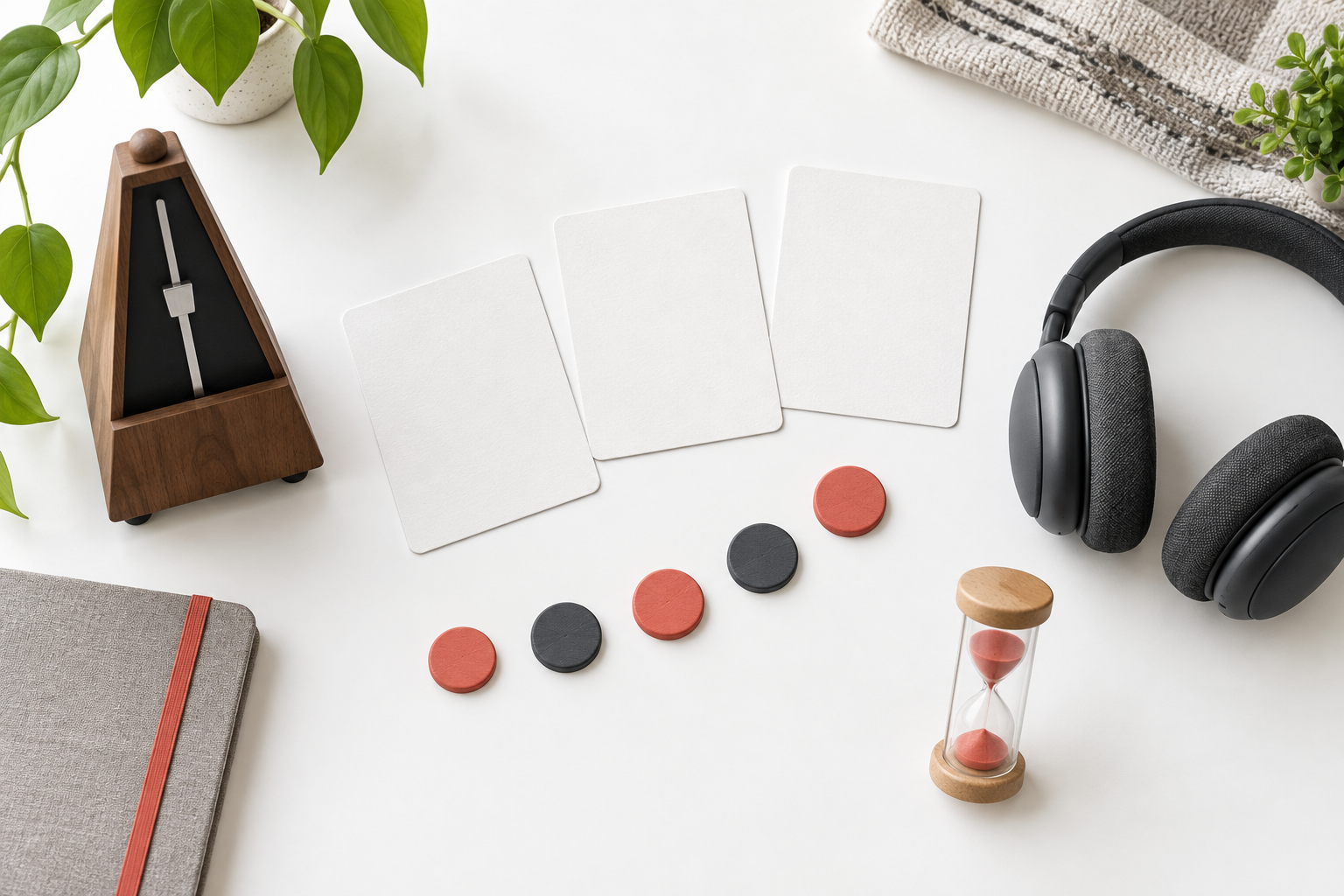
A simple two-minute scale routine for kids
Use the teacher's assigned notes and fingering. The routine below is a way to organize the practice, not a substitute for the teacher's musical directions.
- Prepare: Find the starting note, place the hand comfortably, and name the one thing to listen for—such as an even sound.
- Play slowly: Play the pattern once at a pace that allows every note to feel intentional.
- Check: Ask one useful question: Did the notes stay even? Did the hand feel relaxed? Did the pattern keep moving?
- Repeat once: Make one small improvement, then play the pattern one more time.
- Use it in music: Finish with a song, chord, or short melody that uses a related pattern when the lesson provides one.
This can take two or three minutes. The important part is the feedback loop: prepare, play, listen, adjust, and connect the exercise to music. If your child is also learning to use a steady beat, see when kids should practice with a metronome. Do not add the metronome until the notes and movement are already comfortable.
How long should children practice scales?
For a beginner, a few focused minutes are usually more useful than a long drill. Scale time should be a small part of the full practice session. The child still needs time to play songs, review the lesson, work on rhythm, and finish with something that feels musical.
Watch the quality of attention rather than the clock. Stop or simplify when the hand becomes tense, the same mistake repeats without understanding, or the child is no longer listening. Add time only when the student has a clear reason, such as learning a new key, improving an uneven passage, or preparing a specific assignment.
Parents can support the routine without becoming the piano teacher. Remind the child of the one assigned goal, keep the start easy, and let the teacher correct fingering or technique. This parent practice guide offers a useful boundary.
What if my child hates practicing scales?
First, find the actual problem. “I hate scales” can mean the assignment is too long, the fingering is unclear, the child is trying to play too fast, or the exercise feels disconnected from music.
Make the task smaller
Use one hand, one direction, or one five-finger pattern. A child who cannot yet play the motion calmly does not benefit from repeating it ten times.
Choose one listening goal
Do not ask for perfect notes, fingering, rhythm, volume, posture, and speed all at once. Pick the next most useful target. “Can you make the notes sound even?” is clearer than “Play it better.”
Connect the pattern to a song
Ask the teacher where the same notes or shape appear in current music. Children are more likely to understand why an exercise matters when they can hear its use.
Remove speed as the goal
Fast scale playing is not the starting point. Speed grows from a pattern that is already relaxed, accurate, and familiar. Rushing usually hides the skill the child is supposed to build.
Ask for a demonstration
If the child cannot remember the movement, request a short demonstration or a clearly marked assignment. Repeated guessing can turn a manageable skill into frustration.
How iPianoLab builds technique through music
iPianoLab helps children and beginning students play songs they enjoy early, then builds keyboard geography, rhythm, counting, note reading, two-hand coordination, melody, chords, and music literacy through a structured multi-level path. Technical exercises are most useful when children understand how they support real music.
Explore iPianoLab online learning for a flexible beginner path, or choose an iPianoLab program for your child.
Frequently asked questions
Do beginner piano students need to learn scales?
They can benefit from scales, but the exercise should match their level. Many beginners start with short five-finger patterns before learning a full one-octave scale.
What is the best first piano scale for a child?
The best first scale is the one the teacher can connect to the child's current hand position, song, or learning goal. Simplicity, relaxed movement, and understanding matter more than choosing a supposedly impressive scale.
Should children practice scales every day?
Not necessarily. A teacher may assign a brief daily pattern, while another week may focus on rhythm or a song. Follow the current assignment and prioritize consistent, attentive practice over an arbitrary streak.
Should kids use a metronome for scales?
Only after the child can find the notes and play the movement comfortably. A slow metronome can support steadiness, but adding it too early can increase tension or split attention.
Are scales supposed to be fast?
No. Beginners should first aim for accurate notes, relaxed movement, and an even sound. Speed is a later result, not the first measure of success.
Ready for a structured, beginner-friendly next step? Find an iPianoLab program.