Should Kids Practice Piano With a Metronome? A Parent Guide
Yes, a metronome can help children practice piano—but it works best after a child can already clap, count, or play a short passage with a reasonably steady beat. The click is a tool for checking timing, not a test a beginner has to pass. Start with a tiny, familiar task and stop if the child is spending more effort chasing the click than making music.
For many beginners, rhythm develops first through movement, counting, teacher guidance, and songs. A metronome becomes useful when it supports those skills. Used too early or for an entire practice session, it can add one more demand to a task that is already asking a child to read, listen, move both hands, and remember what comes next.
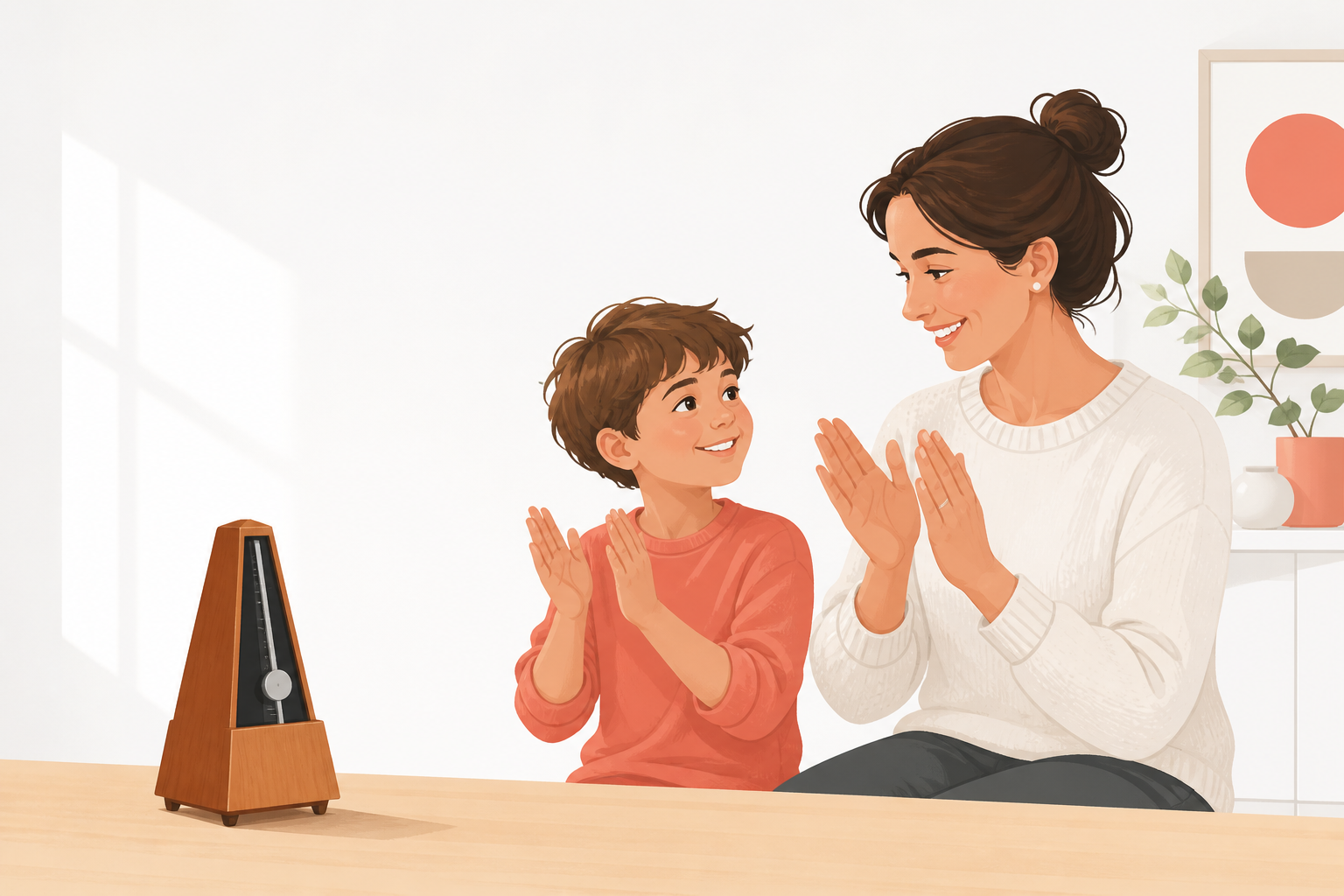
What does a metronome help a child learn?
A metronome makes a steady pulse audible. Each click arrives at an even interval, so a student can compare their playing with a consistent beat. That can help reveal where a child speeds up through an easy section, slows down before a difficult note, or pauses between measures.
The steady pulse is not the same as the rhythm of the music. The pulse is the regular underlying beat. Rhythm is the pattern of long and short sounds that fits around that beat. A child may understand a rhythm when clapping it but still need time to coordinate the same pattern on the instrument.
A useful metronome activity should therefore have one clear purpose: keep four beats even, hold a short repeated pattern steady, or connect two familiar measures without rushing. It should not be used to make every new piece faster.
Five signs your child may be ready to use a metronome
- Your child can clap or tap with a steady count. Try four or eight slow beats without the instrument. If the pulse stays fairly even, there is a foundation to connect with the click.
- The passage is already familiar. The child knows the notes, fingering, or hand pattern well enough that the metronome is not competing with first-time learning.
- Your child can play a small section without repeated stops. A two-measure phrase is enough. The goal is control over a manageable piece of music, not a full-song performance.
- Your child understands what the click represents. They can explain that each click marks an even beat rather than a signal to strike any random note.
- The teacher has given a specific reason to use it. A clear instruction such as “keep this left-hand pattern steady” is more helpful than a general command to “practice with the metronome.”
If several of these signs are missing, build the beat away from the keyboard first. March, sway, tap a tabletop, speak the count, or clap the rhythm. Those activities reduce the number of things the child has to coordinate at once.
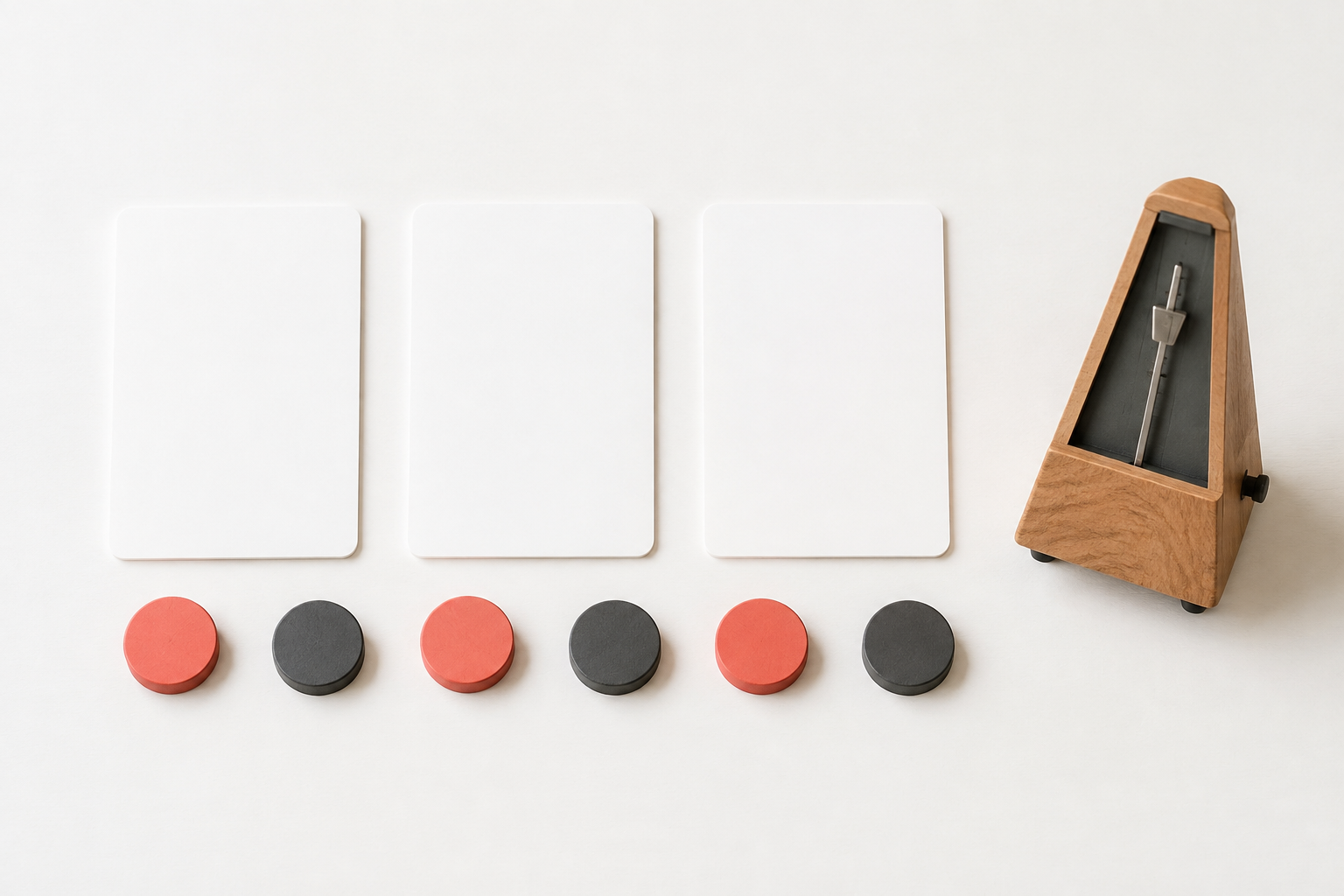
A simple first metronome routine for kids
Keep the first attempt short—about two or three minutes—and use material the child already knows. The teacher may recommend a particular setting or passage. If not, focus on a comfortable, clearly countable pulse rather than a target speed.
Step 1: Hear and move with the beat
Start the metronome and listen for several clicks without playing. Tap one finger, pat both knees, or clap once with each click. Count aloud if that helps. This separates listening from instrument coordination.
Step 2: Clap the passage rhythm
Keep the click going and clap or speak the rhythm of one short phrase. If the pattern falls apart, turn off the metronome, review the rhythm slowly, and try again. The click should confirm understanding, not replace it.
Step 3: Play a tiny familiar section
Choose one hand or a two-measure section that already feels comfortable. Listen for the click before beginning, count in, and play. One clean attempt is more useful than repeating a confusing attempt ten times.
Step 4: Name what happened
Ask one neutral question: “Where did the click feel easy to follow?” or “Which spot made the beat harder to keep?” This turns the activity into information. Avoid asking whether the child “passed.”
Step 5: Stop while the task is still clear
Turn the metronome off and play the phrase once more with the same steady feeling. The goal is for the child to carry the pulse into the music, not to become dependent on a device for every repetition.
Should a metronome be used for the whole piano practice session?
Usually not. Beginner practice often includes several different jobs: learning notes, understanding a rhythm, coordinating hands, listening for tone, reviewing a familiar song, and trying something creative. A continuous click can be useful for one timing goal and distracting for another.
A simple practice session might begin without a metronome, use it briefly for one steady-beat section, and then return to playing without it. Families looking for a sustainable weekly rhythm can also use this guide to choose realistic piano practice days.
What if the metronome makes practice harder?
Difficulty does not automatically mean a child lacks rhythm. It may mean the task has too many moving parts. Use the problem you hear to choose the next adjustment.
- The child rushes ahead of the click: stop playing and return to tapping or clapping. Make sure the pulse can be felt before adding notes.
- The child keeps stopping to wait for the click: reduce the task to one beat or one measure and count aloud before playing.
- The notes are correct but the hands feel tense: turn the device off. Slow practice should feel controlled, not physically strained.
- The child becomes upset or fixated on mistakes: end the metronome portion and finish with a comfortable song or activity. Share the pattern with the teacher.
- The easy section is steady but the hard section is not: the passage may need separate note, fingering, or hand work before timing is checked.
If the whole practice routine has become a struggle, read how to support piano practice without becoming the teacher. A clear, small goal usually helps more than adding another rule.
Questions to ask your child's piano teacher
- Which passage should we use with the metronome?
- Should my child clap, count, play one hand, or play both hands?
- What should one successful attempt sound or feel like?
- How long should we use the click during one practice session?
- When should we stop and return to slower work without it?
These questions keep the home task connected to the lesson goal. They also help parents avoid choosing a speed or exercise that does not fit the child's current skill.
How iPianoLab builds rhythm into beginner learning
iPianoLab helps children play songs they enjoy early while building keyboard geography, rhythm, counting, note reading, two-hand coordination, melody, chords, and music literacy. The structured online curriculum can be paired with live small-group or individual guidance, giving families both a clear sequence and teacher feedback.
Explore iPianoLab online learning options, or choose a beginner path for your child.
Frequently asked questions
What age should a child start using a metronome?
There is no single age. Readiness depends more on whether the child can feel a steady beat, follow a simple count, and play a short familiar passage without frequent stops. The teacher can decide when the extra timing cue will help.
Do beginner piano students need to own a metronome?
Not necessarily. Ask the teacher before buying anything. The lesson materials or device a family already uses may provide an appropriate click when the skill is introduced.
Should a child always practice slowly with a metronome?
Slow practice can make details easier to control, but “slow” still needs to feel understandable and steady. If the clicks are so far apart that the child loses the pulse, or if playing remains tense, pause and ask the teacher for a better starting task.
Can a metronome fix rhythm problems?
It can reveal uneven timing and support a pulse, but it does not teach every part of rhythm by itself. Counting, clapping, movement, listening, and smaller practice sections may be needed first.
What if my child can keep the beat while clapping but not while playing?
That is common when instrument coordination adds difficulty. Try one hand, fewer notes, or a shorter phrase. If the beat still disappears, review the passage without the metronome and bring the exact problem to the teacher.