The Secret to Keeping Kids Motivated: Why Reward Systems Work for Piano Practice
![[HERO] The Secret to Keeping Kids Motivated: Why Reward Systems Work for Piano Practice](https://ipianolab.s3.us-west-2.amazonaws.com/blog/posts/14/assets/marblism/cdn.marblism.com/l8vr9vXTw5o.webp)
Preview: Discover why positive reinforcement is the game-changer for your child's piano journey and how to build a practice habit that sticks.
Let’s be honest: the "practice talk" can sometimes feel like a daily negotiation. You know piano is great for your child’s brain, their confidence, and their creativity. But from their perspective, sitting down to work through a tricky scale or a stubborn measure of music can feel like a chore, especially when the latest video game or a sunny backyard is calling their name.
The good news is that you don’t have to be the "practice police." At iPianoLab, we’ve spent years watching thousands of students go from hesitant beginners to confident players. We’ve seen that the secret isn’t more nagging; it’s about building a bridge between effort and enjoyment.
That’s where reward systems come in. While we are moving toward an exciting future as PianoFlight, our core mission remains the same: making music education the most fun and rewarding part of a child’s day.
In this post, we’re going to dive into why reward systems actually work for beginner piano lessons and how you can set up a simple, stress-free system at home today.
The Science of Why Rewards Work
It might feel like "bribery" at first, but in the world of psychology, we call it positive reinforcement. When a child is just starting piano lessons for kids, the reward of playing a complex sonata is months or years away. Their brains aren't quite wired to value that long-term "intrinsic" reward yet.
When a child completes a task and receives a small, immediate reward, their brain releases dopamine. This creates a positive association with the piano. Instead of thinking, "Oh no, practice time," their brain starts to think, "Hey, if I finish this, something good happens!"
Research shows that for piano practice motivation, the most effective systems:
- Make progress visible and measurable.
- Celebrate "small wins" consistently.
- Provide immediate feedback.
By using rewards, you aren't just giving them a sticker; you are literally helping their brain wire itself to enjoy the process of learning.
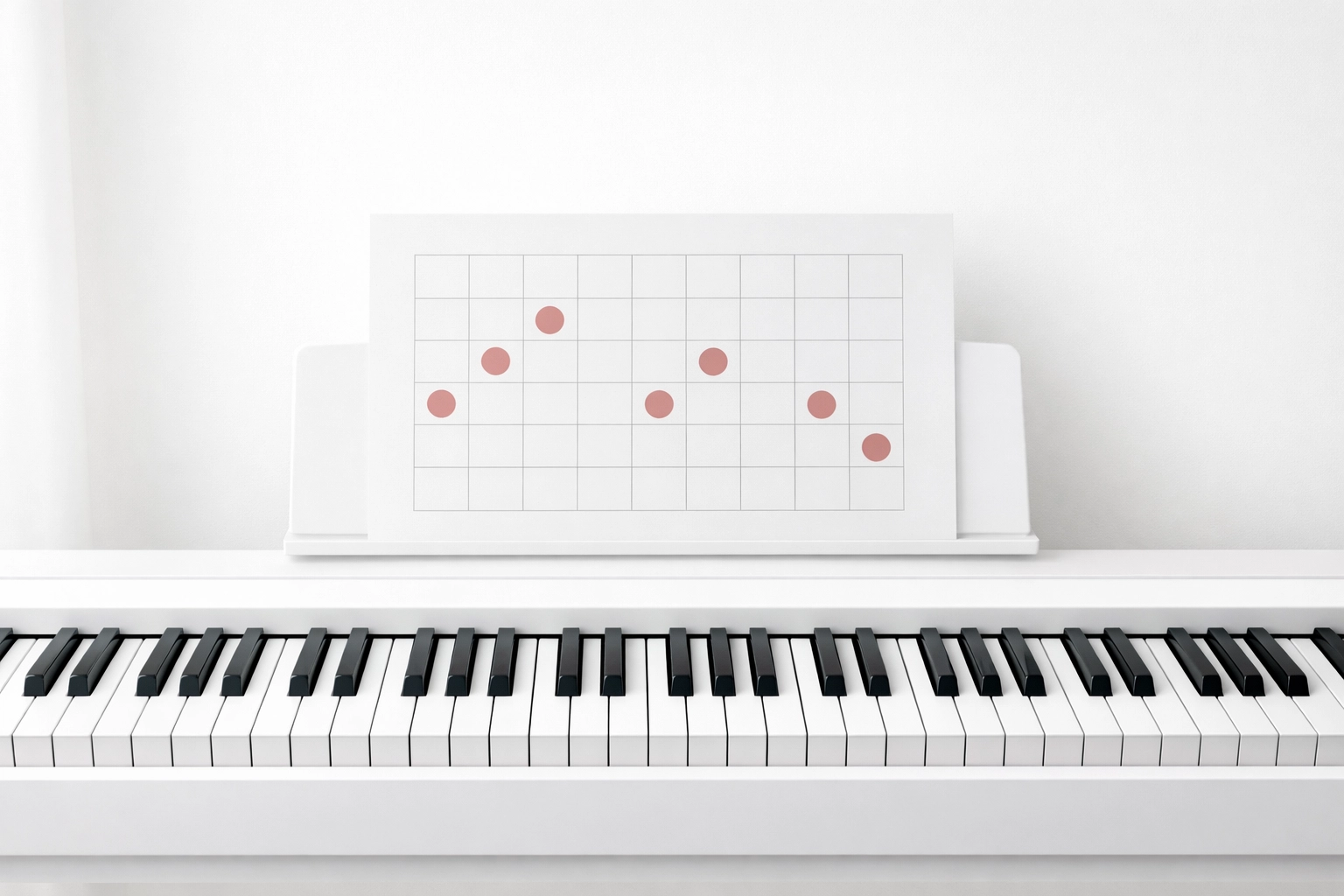
A simple progress chart on a piano, showing colorful stickers for completed practice days.
Designing Your Practice Reward System
You don’t need to spend a fortune or create a complex spreadsheet to make this work. In fact, minimalist is better! Here are a few ways to structure a system that keeps the focus on beginner piano lessons without the stress.
1. The Sticker Chart (A Classic for a Reason)
For younger kids, never underestimate the power of a shiny sticker. Create a simple grid. Every time they complete 15 minutes of focused practice, they get a sticker. After five stickers, they get a slightly bigger reward, like choosing what’s for dinner or 20 minutes of extra screen time.
2. The "Practice Penny" Jar
This is a favorite among iPianoLab parents. Get two clear jars. Fill one with pennies (or marbles, or colorful beads). Every time your child practices a specific song or finishes a lesson module, move a penny to the "Success Jar." When the Success Jar is full, the whole family goes out for ice cream. This makes the progress visual and tactile.
3. Social Incentives
Kids love to show off what they’ve learned. Sometimes the best reward isn’t a "thing," but an experience. "If you finish your practice today, we’ll FaceTime Grandma so you can play your new song for her." This builds social connection and reinforces that music is meant to be shared.
If you’re looking for a space where your child can see other kids playing and feel that social spark, check out the rehearsal spaces at Lenox Hill Music Studios. Seeing other musicians in action is a huge motivator!
Moving from "Bribes" to Real Motivation
A common worry for parents is: "Will they only play if I give them a treat?"
It’s a fair question. The goal is to use extrinsic rewards (stickers, treats) as a "starter motor" to get the engine running. As your child gets better at the piano, the music itself starts to become the reward. They’ll realize, "Wait, I can play the theme to Star Wars now! This is cool!"
At iPianoLab, we help this transition by using a proprietary method that focuses on songs kids actually love. Whether they learn piano at home through our online portal or join one of our after-school clubs, we keep the music current and engaging.
We are evolving into PianoFlight, which we believe is the future of music education. By combining real teachers with interactive games and tutorials, we make the learning process feel less like "school" and more like "play."
Quality Over Quantity: The Golden Rule
One pitfall of reward systems is rewarding "clock-watching." If the reward is only for sitting at the piano for 20 minutes, your child might just stare at the keys until the timer dings.
Instead, try rewarding specific goals. For example:
- "You get a sticker once you can play the first four measures without any pauses."
- "Once you finish the 'C Major Scale' level in the iPianoLab portal, we’ll do a movie night."
This teaches them that piano practice motivation is about mastery, not just "putting in the time." If you're wondering how to start without the conflict, our guide on how to get your kids to practice without nagging is a great resource.
Setting Up Your Practice Space for Success
Sometimes the "reward" is simply having a space that feels inviting. If the keyboard is tucked away in a dark, cold basement, no amount of stickers will make them want to go there.
Keep the keyboard in a high-traffic area where the family hangs out. Ensure they have a comfortable bench and good lighting. If you’re still in the market for an instrument, don’t feel pressured to buy a $5,000 grand piano. A solid digital keyboard is perfect for beginners. Check out our Keyboard Buyer's Guide for budget-friendly recommendations that won't break the bank.
The iPianoLab Difference
We aren't just another app. While we love technology and use it to make learning fun, we believe in the power of real teachers. Our instructors guide students through our unique curriculum, ensuring they develop proper technique while having a blast.
Whether your child is attending our NYC programs or taking online lessons from across the country, we emphasize positive reinforcement at every step.
As we transition to PianoFlight, we are doubling down on this "fun-first" philosophy. We want every child to feel like a rockstar from day one. You can see our current locations and school programs here to find a keyboard club near you.
Summary of Quick Reward Tips:
- Keep it visual: Use charts, jars, or progress bars.
- Keep it immediate: Small rewards for daily wins.
- Focus on goals: Reward a learned song, not just a timer.
- Make it social: Performances for family are powerful rewards.
- Stay positive: If they have a bad day, just reset for tomorrow. No pressure!
Final Thoughts
At the end of the day, the best reward is the look on your child's face when they finally master a song they love. Reward systems are just the scaffolding that helps them reach that height.
Remember, this is a journey, not a race. Some weeks will be full of stickers and songs, and other weeks might be a bit slower. That’s totally okay. The fact that you’re looking for ways to support them shows you’re already doing a great job.
Ready to start their musical adventure? You can sign up to join the iPianoLab family. Let's make this the year your child falls in love with the piano!