Yuma Piano Lessons for Kids: A Parent Guide to Starting Strong
Short answer: the best Yuma piano lesson path for a beginner is the one your child can attend consistently, understand quickly, and keep practicing between lessons. For most families, that means comparing schedule fit, beginner support, class format, home practice needs, and the next step after the first six weeks.
If you are searching for piano lessons for kids in Yuma, you are probably not only looking for a teacher. You are trying to answer a practical parent question: Will this help my child enjoy music enough to keep going? A strong beginner program should make that first step feel clear, friendly, and repeatable.
What Yuma parents should look for first
Beginner piano lessons work best when the program is designed for children who are new to the keyboard. That sounds obvious, but it matters. A child who feels behind in the first lesson may decide piano is not for them before they have a fair chance to succeed.
As you compare options in Yuma, start with these questions:
- Is the program beginner-friendly? Your child should not need prior note reading, theory, or two-hand coordination to begin.
- Is there a clear routine? Weekly lessons, simple practice assignments, and a predictable class structure make progress easier.
- Will my child play real songs early? Early musical wins help children connect piano with something they enjoy.
- Are materials and setup clear? Parents should know whether books, music, keyboards, headphones, or online access are included.
- What happens after the first level? A good program should make the next step clear before the first burst of enthusiasm fades.
iPianoLab is built around that kind of beginner path. Students start by playing songs they enjoy, then build rhythm, counting, keyboard geography, note reading, two-hand coordination, melody, and chords step by step.
Should your child start in a group class, online, or one-on-one?
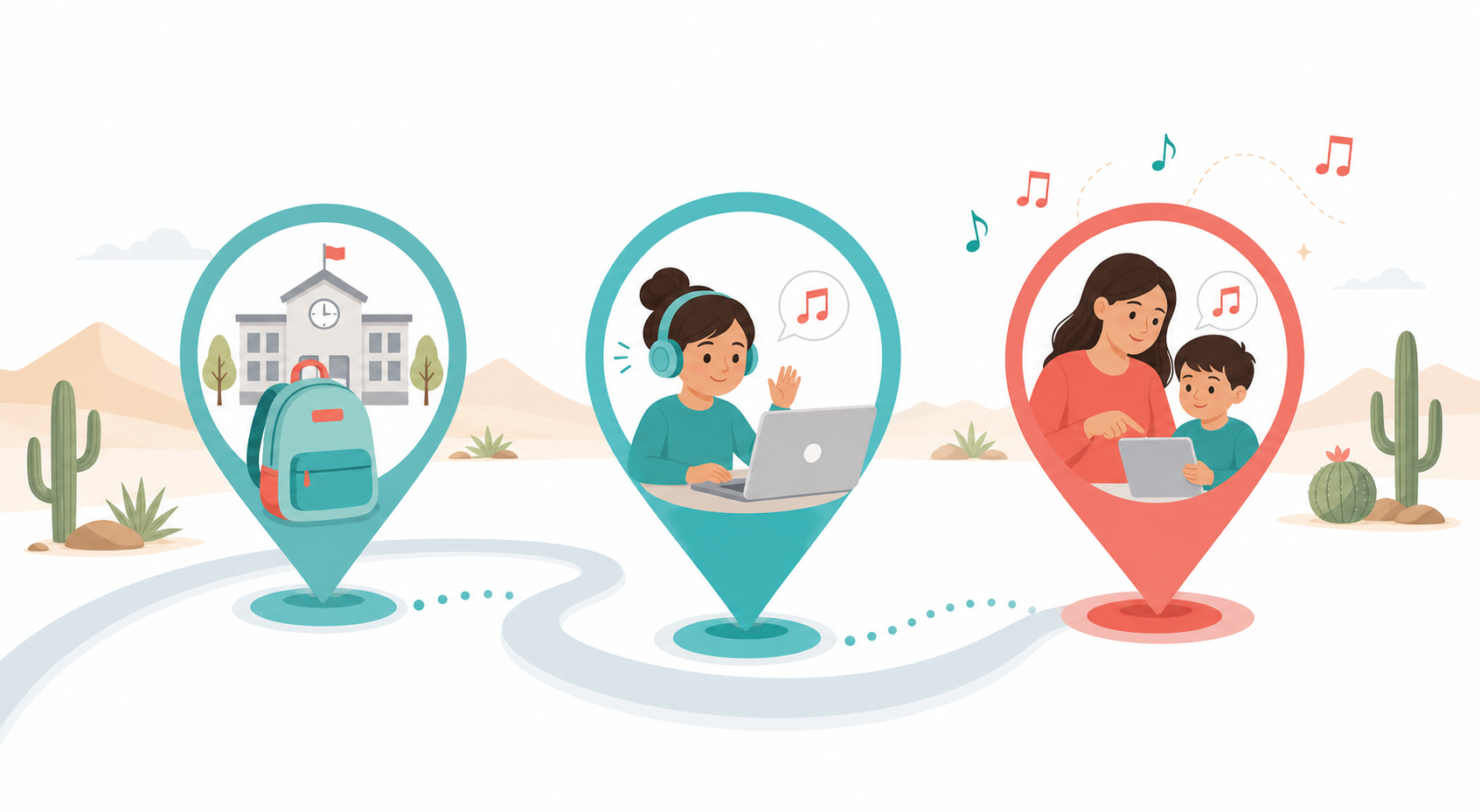
There is no single best format for every Yuma family. The right choice depends on your child's attention, your weekly schedule, and how much support your child needs to feel successful.
Group piano classes
Group classes can be a strong fit for children who enjoy learning with other kids. A class routine can make piano feel social and normal, especially when the program is designed for beginners. iPianoLab's school-based path is parent/student-facing through the school class signup page, where families can look for current class options.
Online piano lessons
Online learning can help busy families avoid travel time while still giving children a structured path. iPianoLab's online piano learning option is useful for families who want home convenience, video support, and a beginner-friendly sequence.
Private or one-on-one support
Some children need more individual attention. Private support can be helpful when a child gets frustrated quickly, has a specific goal, or needs feedback that is harder to deliver in a group. It can also be a good follow-up once a child has started and you can see what kind of coaching helps them most.
What should a first beginner piano level include?
A beginner level should do more than fill lesson time. It should help your child build confidence through a sequence they can understand.
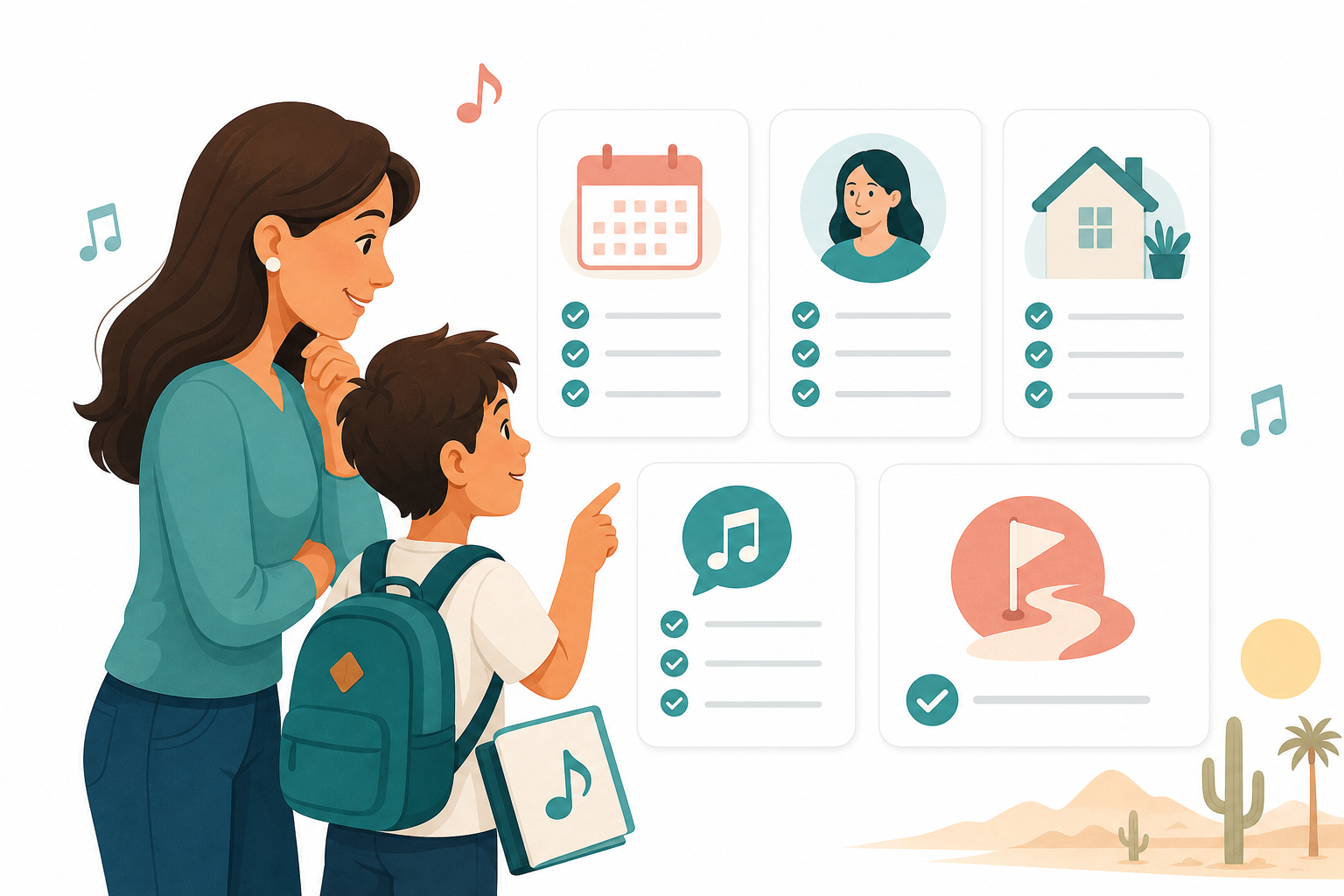
Look for a first level that includes:
- keyboard geography, so your child knows where notes are located;
- basic rhythm and counting;
- simple songs your child can recognize or enjoy;
- teacher guidance that keeps the child from feeling stuck;
- materials or videos that make practice easier between lessons;
- a next-level path after the first six lessons or class cycle.
The iPianoLab FAQ explains that levels include six lessons and that school classes commonly meet once weekly for one hour. It also notes that school classes provide keyboards, headphones, books, music, and learning materials for class. Parents can review current details on the iPianoLab FAQ.
What does your child need at home?
Your child does not need a full acoustic piano to begin. A home practice setup should be simple enough that your child can use it often. The iPianoLab FAQ recommends having a keyboard instrument at home for practice and points parents toward a starter keyboard path for beginners.
If you are deciding what to buy first, read Best 61-Key Keyboards for Beginner Piano Students. If you already have a keyboard and are deciding what lesson path fits next, read After Buying a Keyboard: Which Piano Lesson Path Fits Your Child?.
Find the right beginner path for your child
iPianoLab helps children start with songs they enjoy, then build the fundamentals that make piano feel possible.
Start iPianoLab signup Find school-based classes Explore online learning
A simple decision guide for Yuma families
Use this quick guide if you are comparing piano lessons now.
- If your child likes learning with classmates: start by checking school-based group class options.
- If your family schedule is tight: consider online learning so piano can happen from home.
- If your child needs extra confidence: choose a path with clear teacher guidance and a low-pressure first level.
- If your child already has a keyboard: connect that home practice setup to a structured lesson path.
- If your child is unsure: choose a beginner path that creates a quick early win instead of overwhelming them with theory.
Common mistakes when choosing kids piano lessons
Choosing only by price
Price matters, but the cheapest option is not always the best value if your child does not understand what to practice or loses interest quickly. Compare what the program includes and whether the format supports your child between lessons.
Starting with too much pressure
Many children need music to feel approachable before it feels serious. A beginner path should build discipline, but it should also give children enough success to want the next lesson.
Ignoring the family schedule
A great lesson that your family cannot attend consistently will not work for long. Choose a format that fits your real week, including school pickups, sports, homework, dinner, and practice time.
Buying too much gear too soon
A practical starter keyboard and a clear practice habit are usually more important than a major instrument purchase at the beginning. Upgrade later when your child's commitment and needs are clearer.
FAQ: Yuma piano lessons for kids
What age is best to start piano lessons?
Many children can begin when they are ready to follow a short routine, listen to directions, and enjoy simple songs. Readiness matters more than a perfect age. A beginner-friendly class can help younger students build confidence without pressure.
Do Yuma families need a keyboard at home?
A keyboard at home is strongly recommended for practice. For school-based classes, iPianoLab's FAQ says students do not need to bring a keyboard to school because class equipment is provided, but home practice is still useful.
Are group piano classes good for beginners?
Yes, when the class is designed for beginners. Group classes can add structure, social energy, and a regular weekly routine. The key is making sure the program starts at a true beginner level.
Can online piano lessons work for kids?
Online lessons can work well when they include a clear sequence, real guidance, and practice support between sessions. They are especially useful for families who need a home-based option.
How should I choose between school classes and online lessons?
Choose the path your child can use consistently. School classes may be easier if your child is already in that routine. Online learning may be better if your family needs schedule flexibility or home convenience.
Ready to help your child start piano?
Choose a beginner path that fits your child's confidence, your family's schedule, and the way practice will actually happen at home.
Start signup Find school class options Explore online learning