7 Mistakes You’re Making with Traditional Piano Lessons (And Why the PianoFlight Method Gets Faster Results)
![[HERO] 7 Mistakes You’re Making with Traditional Piano Lessons (And Why the PianoFlight Method Gets Faster Results)](https://ipianolab.s3.us-west-2.amazonaws.com/blog/posts/19/assets/marblism/cdn.marblism.com/JkNE1RY5CZg.webp)
Let’s be honest: we’ve all seen the movie scene where a child sits stiffly on a piano bench, staring at a metronome while a stern teacher taps a wooden ruler on the lid. It’s the "Old School" way, heavy on the "old," light on the "cool."
If you’re looking into beginner piano lessons for your child, you’ve probably realized that the world has changed, but a lot of music education is still stuck in 1954. At iPianoLab (which, exciting news, is officially transitioning to our new name, PianoFlight, this summer!), we think it’s time for a reality check.
The good news? Learning piano doesn't have to be a grind. In fact, if your child is struggling or bored, it’s probably not their fault, it’s the method. Here are the 7 biggest mistakes people make with traditional piano lessons and how we’re doing things differently to get faster, funner (yes, we’re making that a word) results.
1. Starting with "Mary Had a Little Lamb"
Traditional lessons often insist on a "chronological" approach to music history. This means your seven-year-old is forced to master nursery rhymes and 18th-century minuets before they’re allowed to touch anything written in this decade.
The Mistake: Expecting a kid who loves Imagine Dragons or Taylor Swift to get excited about "Hot Cross Buns."
The PianoFlight Way: We start with the hits. We believe if a student loves the song, they’ll love the practice. Our method teaches the same core skills: rhythm, finger placement, and melody: using songs they actually hear on the radio. When a kid realizes they can play the hook to their favorite pop song in the first week, they’re hooked for life.
2. Treating Theory Like a Boring History Lecture
Don't get us wrong; music theory is important. But traditional methods often front-load hours of dry, abstract concepts before the student even gets to make a satisfying sound. It’s like being forced to learn the physics of internal combustion before you’re allowed to drive a car.
The Mistake: Making music feel like extra homework.
The PianoFlight Way: We integrate theory into playing. We call it "stealth learning." They learn about chords because they’re playing them in a rock song. They learn about time signatures because they’re trying to catch a beat. It’s practical, it’s immediate, and it actually sticks.
3. The "Acoustic Piano or Bust" Myth
We hear it all the time: "Should I buy a $5,000 upright piano before my child starts lessons?" The answer is a hard no. Traditional teachers often insist on acoustic pianos from day one, citing "key weight" and "action." While that matters for concert pianists, it’s a massive barrier to entry for a beginner.
The Mistake: Dropping thousands of dollars (and losing half your living room) on an instrument your child might not stick with.
The PianoFlight Way: We love keyboards! In fact, we encourage them. A modern digital keyboard is affordable, takes up zero space, and: best of all: has a headphone jack. If you're stressed about which one to get, check out our keyboard buyers guide for low-stress, budget-friendly recommendations. We want to get your child playing, not put you in debt.
4. Ignoring the "Social" in Music
Traditional lessons are usually a one-on-one affair in a quiet room. For some kids, that’s fine. For most kids, it’s isolating and a little bit intimidating. Music is, at its heart, a social language.
The Mistake: Removing the fun, collaborative element of music-making.
The PianoFlight Way: We specialize in afterschool music programs and group settings. There is a specific kind of magic that happens when kids learn together. They feed off each other's energy, they lose their "performance anxiety," and they realize that piano is a "team sport" just as much as soccer or basketball.
5. The "Ruler on the Knuckles" Discipline
Okay, maybe teachers don't use rulers anymore, but the "professor" vibe is still very much alive. Many traditional lessons focus heavily on "do it right or do it again," which can turn a creative outlet into a high-pressure chore.
The Mistake: Focusing on perfection over progress.
The PianoFlight Way: Our instructors are more like coaches than professors. We focus on mentorship and encouragement. If a student misses a note but is having a blast and keeping the rhythm, that’s a win! We build confidence first. Once the confidence is there, the technical perfection follows naturally. You can meet some of our amazing mentors on our teachers page.
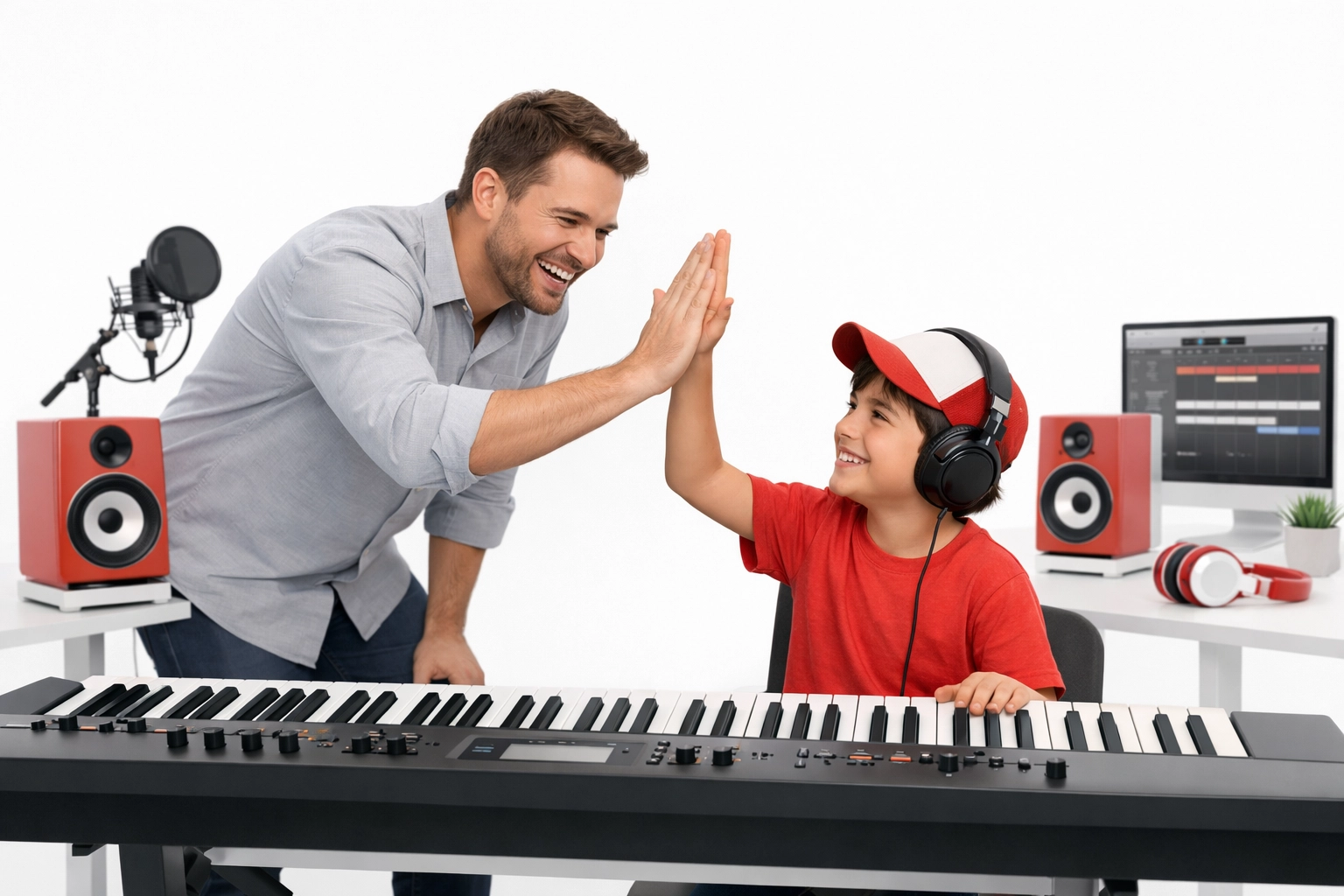
6. Not Using Modern Tools (The "Analog" Trap)
We live in an age of incredible technology, yet many piano lessons haven't changed since the invention of the lightbulb. If your child is using an iPad for school but a dusty 40-year-old book for piano, there’s a massive "engagement gap."
The Mistake: Avoiding technology in the name of "tradition."
The PianoFlight Way: While we use real teachers (not robots!), we embrace tech. We use online lesson videos, interactive tutorials, and gamified practice tools that speak your child’s language. It makes the time between lessons more productive and: you guessed it: way more fun. For a taste of how we make things easy, grab some of our free stuff to see the difference.
7. Over-complicating the Path to "Winning"
In traditional lessons, "success" is often defined by a recital six months away. That’s a long time for a kid to wait for a "win." Without small victories, many students quit before they ever reach the big ones.
The Mistake: Setting goals that are too far in the future.
The PianoFlight Way: We break everything down into "micro-wins." Every class is designed so the student leaves feeling like they’ve mastered something new. Whether it’s a new three-chord progression or the intro to a movie theme, we want them to feel like "I can do this!" every single time they sit down.
Why the Transition to PianoFlight?
You might notice we’re talking a lot about "PianoFlight" lately. As iPianoLab grows, we wanted a name that reflected what we actually do: helping kids "take off" with their musical journey. We aren't just a "lab" where you study; we’re a launchpad.
Whether you’re looking for classes in NYC or joining our online community, our goal is the same: to remove the "boring" from beginner piano lessons. We even partner with prestigious institutions like Lenox Hill Music Studios to ensure our students have access to the best musical environments possible.
Ready to Ditch the "Old School" Grind?
If you’ve been hesitant to start your child in piano because you’re worried about the nagging, the cost, or the boredom: we hear you. It doesn’t have to be that way.
The PianoFlight method (currently iPianoLab) is designed for the modern kid and the busy parent. We keep it low-stress, high-energy, and incredibly effective.
The good news is, you're just one click away from a totally different experience.
Check out our FAQ to see how we handle scheduling and setups, or if you're ready to see the results for yourself, you can enroll your child today.
Let’s turn those "piano chores" into "piano parties." See you at the keys!