Can Kids Learn Piano on a Keyboard? A Parent Guide
If your child is excited about music but your family has a keyboard instead of an acoustic piano, you are not behind. For many beginners, a good keyboard is a practical first step into piano lessons.
The short answer: yes, kids can learn piano on a keyboard, especially at the beginner stage. What matters most is not whether the instrument is called a piano or a keyboard. What matters is whether your child has enough keys to play beginner songs, a comfortable setup, regular teacher-guided practice, and a clear next step when they are ready for more.
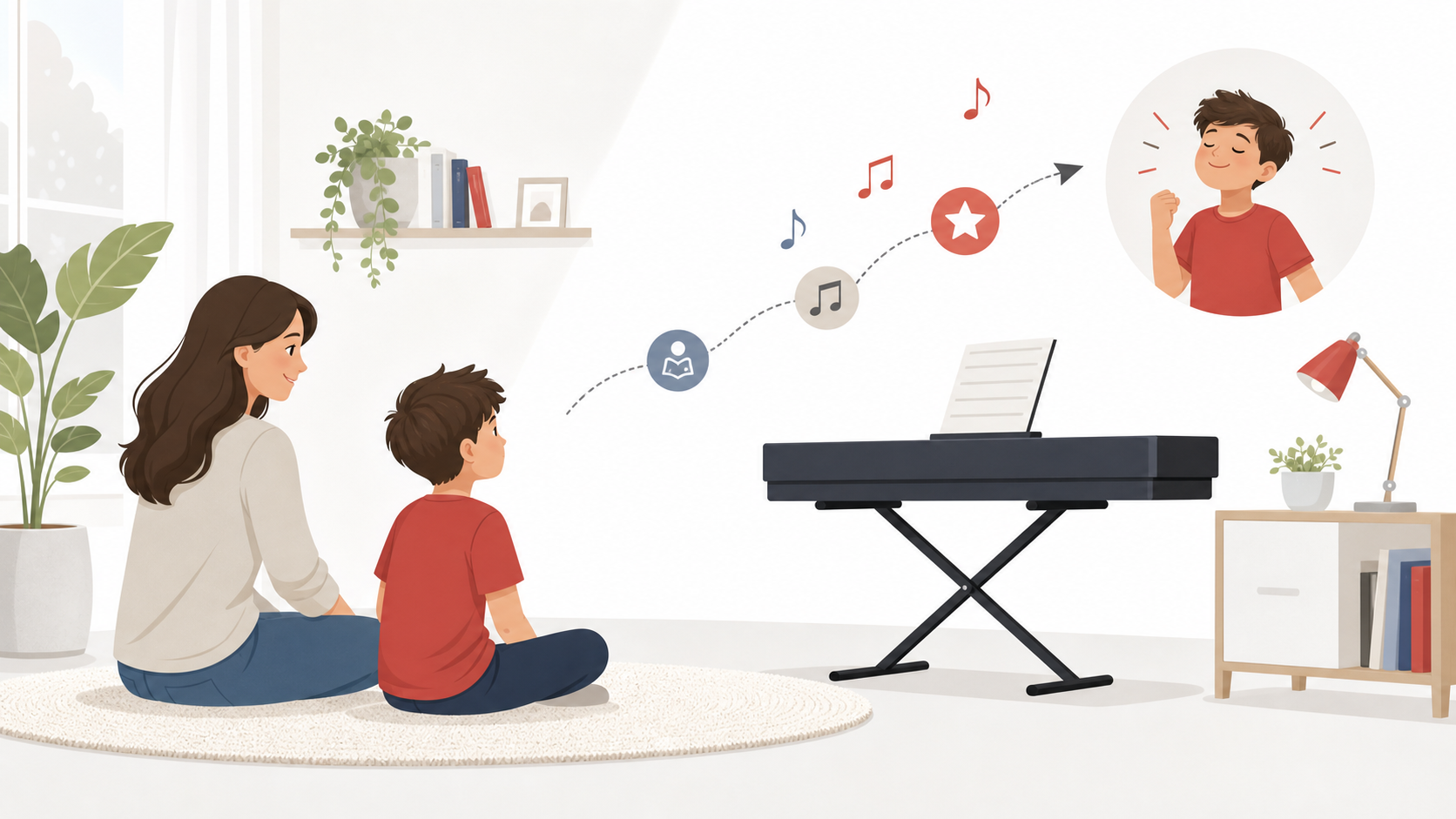
Can a child start piano lessons on a keyboard?
Yes. A child can start piano lessons on a keyboard if the setup is stable, the keys are large enough for normal finger placement, the child can hear themselves clearly, and the lessons match the instrument they have. A 61-key keyboard can often work for early beginner songs and skill-building, while an 88-key weighted keyboard or acoustic piano may become useful later as the music gets more advanced.
Why a keyboard can work for beginners
Beginner piano is about more than owning the biggest instrument in the room. Early students are learning how to find notes, keep a steady beat, use finger numbers, follow rhythm patterns, coordinate two hands, and build confidence through songs they can actually play.
A keyboard can support those goals when it gives your child a clear, repeatable place to practice. It is also easier for many families to fit into a bedroom, apartment, shared space, or school-year routine.
That is why the better question is not, "Is this a real piano?" The better question is, "Can my child use this instrument consistently while learning the right skills?"
What the keyboard needs to have
You do not need to buy a concert-level instrument before your child starts. But a beginner keyboard should make lessons easier, not harder.
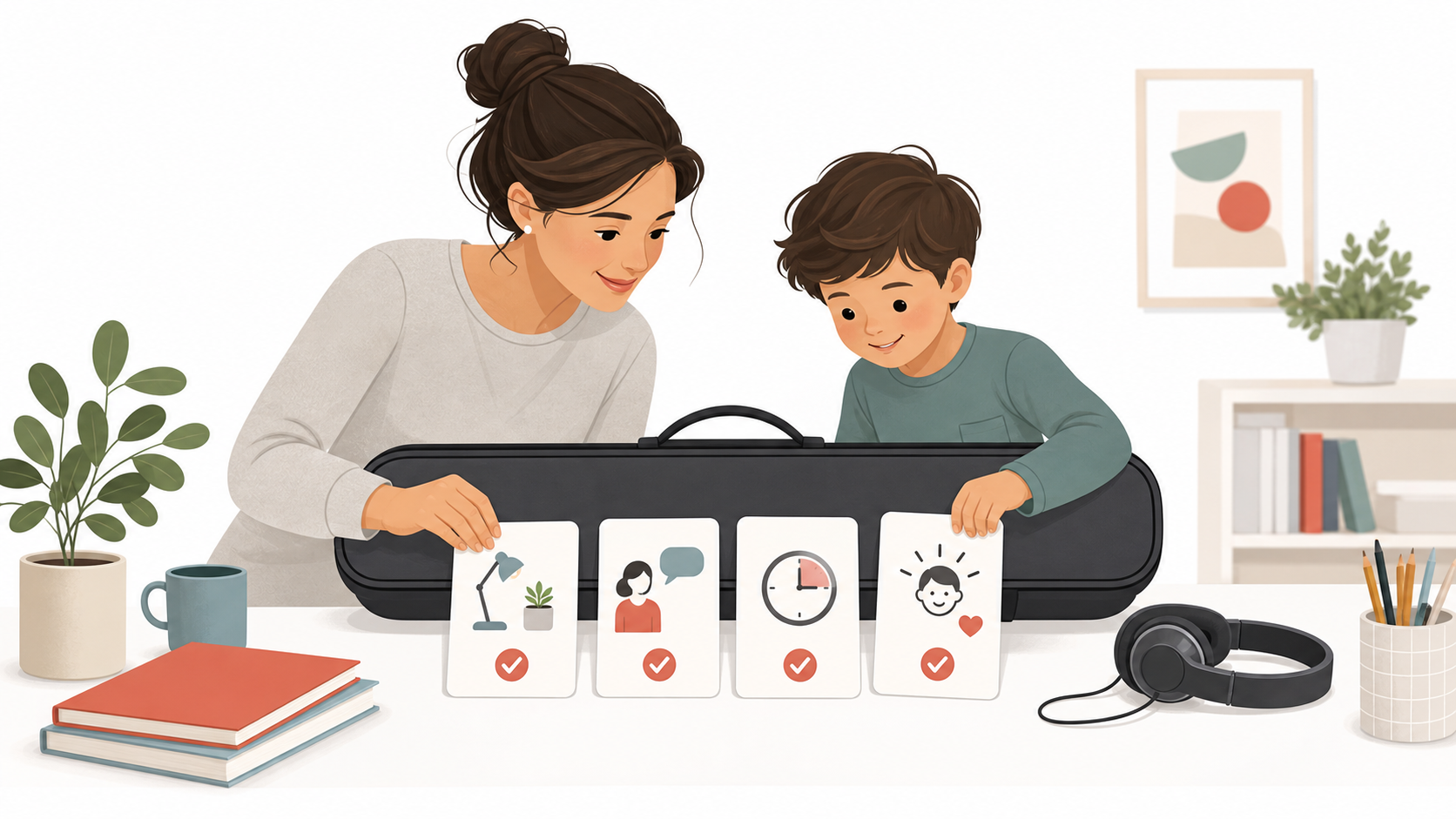
Look for these basics:
- Full-size keys so finger placement feels normal.
- At least 61 keys for most early beginner music.
- A stable stand or table height so wrists and shoulders stay relaxed.
- A bench or chair at the right height so your child can sit comfortably.
- Headphones or volume control if practice needs to stay quiet.
- A simple sound setting that feels like piano, not a distracting effects menu.
If you are still choosing an instrument, start with our keyboard buyer's guide and the 61-key vs. 88-key keyboard guide. If the keyboard is already in your home, use this article to decide how to turn it into a real lesson path.
When a 61-key keyboard is enough
A 61-key keyboard can be enough when your child is just beginning, especially if the lessons focus on early songs, rhythm, counting, keyboard geography, note reading, simple chords, and two-hand coordination.
It is usually enough when:
- your child is in the first stage of lessons,
- the teacher or program knows the student is using a keyboard,
- practice assignments stay in the beginner range,
- your child can sit comfortably and play without wobbling, and
- the keyboard keeps your family practicing instead of waiting for a bigger purchase.
It may be time to upgrade later if your child needs more range, weighted keys, pedal work, stronger dynamics, or music that regularly moves beyond the available keys. That upgrade decision can wait until the lesson path proves your child is engaged.
What matters more than the instrument
The biggest beginner risk is not starting on a keyboard. It is starting without structure.
Kids need a next step that tells them what to do at the instrument. Otherwise the keyboard becomes another object in the house: exciting for a week, then confusing.
A strong beginner plan includes:
- short practice goals your child understands,
- songs that feel playable early,
- teacher feedback or a structured curriculum,
- a way to build rhythm and counting without rushing,
- clear parent expectations, and
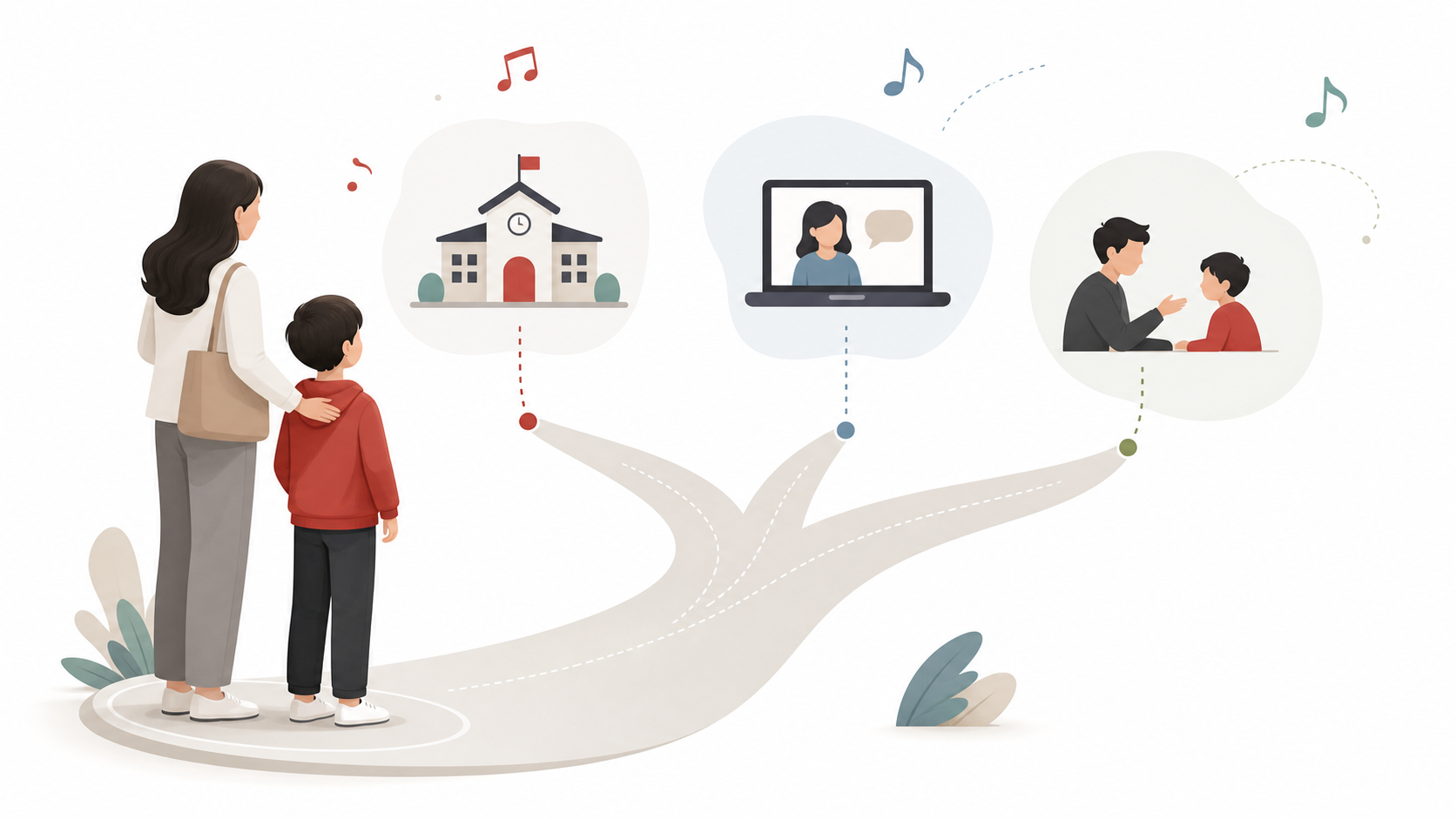
- a path from home practice into lessons, online learning, or school classes.
If your family just bought a keyboard, read which piano lesson path fits your child after buying a keyboard. If the instrument is brand new, our first-week piano plan can help you keep the first few days focused.
How to choose the right lesson path
The best lesson format depends on your child's age, schedule, confidence, and practice environment. A keyboard can support more than one path.
| Family situation | Good next step | Why it works |
|---|---|---|
| Child wants teacher interaction and a weekly routine | Group class or private lesson path | Teacher feedback keeps the keyboard from becoming guesswork. |
| Family schedule changes often | Online learning | Flexible access helps practice continue around travel, camps, or busy weeks. |
| Child learns well with peers | After-school class where available | A shared routine can make beginner music feel social and normal. |
| Keyboard is new and the child is exploring | Short first-week plan plus guided signup | Early success protects interest before frustration sets in. |
Common parent worries
Will a keyboard teach bad habits?
A keyboard does not automatically create bad habits. Poor posture, random practice, and assignments that do not match the instrument are bigger issues. Use a stable setup, keep the child at a comfortable height, and choose lessons that teach fundamentals deliberately.
Do kids need weighted keys right away?
Weighted keys are useful, especially as students advance, but many beginners can start without them. The first priority is building rhythm, note reading, keyboard geography, finger awareness, and confidence. If your child keeps progressing, a teacher can help you decide when an upgrade makes sense.
Is a toy keyboard enough?
A toy keyboard is usually not a good long-term lesson instrument. It may help a child explore sounds, but lessons are easier when the keys are full size and the instrument has enough range for beginner music.
What if the keyboard is in a noisy apartment?
Headphones, a regular practice time, and a small clear corner can help. For NYC families near Lenox Hill or the Upper East Side whose real challenge is finding a quiet room for practice, lessons, coaching, or a small music session, Lenox Hill Music Studios lists hourly studio space in the neighborhood.
How iPianoLab helps keyboard beginners
iPianoLab is built for children and beginning students. Students play songs they enjoy early, then build fundamentals such as keyboard geography, rhythm, counting, note reading, two-hand coordination, melody, chords, and music literacy.
That makes it a practical fit for families starting with a keyboard. The goal is to help the child feel capable before music feels intimidating.
- Sign up for iPianoLab if your child is ready to begin.
- Explore online learning if your family needs flexibility.
- Find school classes if you want an after-school group class where available.
Ready to turn the keyboard into a lesson plan?
Start with the iPianoLab path that fits your family: signup, online learning, or school-based classes.
FAQ: learning piano on a keyboard
Can a child learn piano on a 61-key keyboard?
Yes, many beginners can start on a 61-key keyboard when the lessons are designed for early skills and the child has full-size keys, a stable setup, and clear assignments.
When should we upgrade from a keyboard to a piano?
Consider upgrading when your child is practicing consistently and needs weighted keys, more range, pedal work, or more expressive control. A teacher can help you decide when the upgrade will actually support progress.
Can online piano lessons work with a keyboard?
Yes. Online piano learning can work with a keyboard when the student can see the lesson clearly, hear the instrument, and follow short assignments. It is especially useful when family schedules are unpredictable.
Should we wait to start lessons until we buy a better instrument?
Usually, no. If your child has a usable beginner keyboard now, starting with a clear lesson path can be better than waiting. Upgrade later if your child keeps progressing and needs more from the instrument.
The takeaway
A keyboard can be a real beginning. Give your child full-size keys, a stable setup, short practice goals, and teacher-guided next steps. Then watch whether interest turns into routine.
iPianoLab is becoming PianoFlight in Summer 2026 with the same programs, same team, and the same beginner-friendly approach. Whether your child starts online, in a school class, or through signup, the goal is the same: make piano approachable enough that early success can happen.