Group Piano Lessons for Kids: When They Work Best
Group piano lessons can be a strong fit for many beginner kids because the class gives them more than instruction. They hear other students try, notice that everyone is learning one step at a time, and get used to playing music in a low-pressure setting.
The best group piano class is not a crowded lecture. It should still feel personal, organized, and beginner-friendly. A child should know what to do next, get real teacher attention, and leave class with a small musical win they can repeat at home.
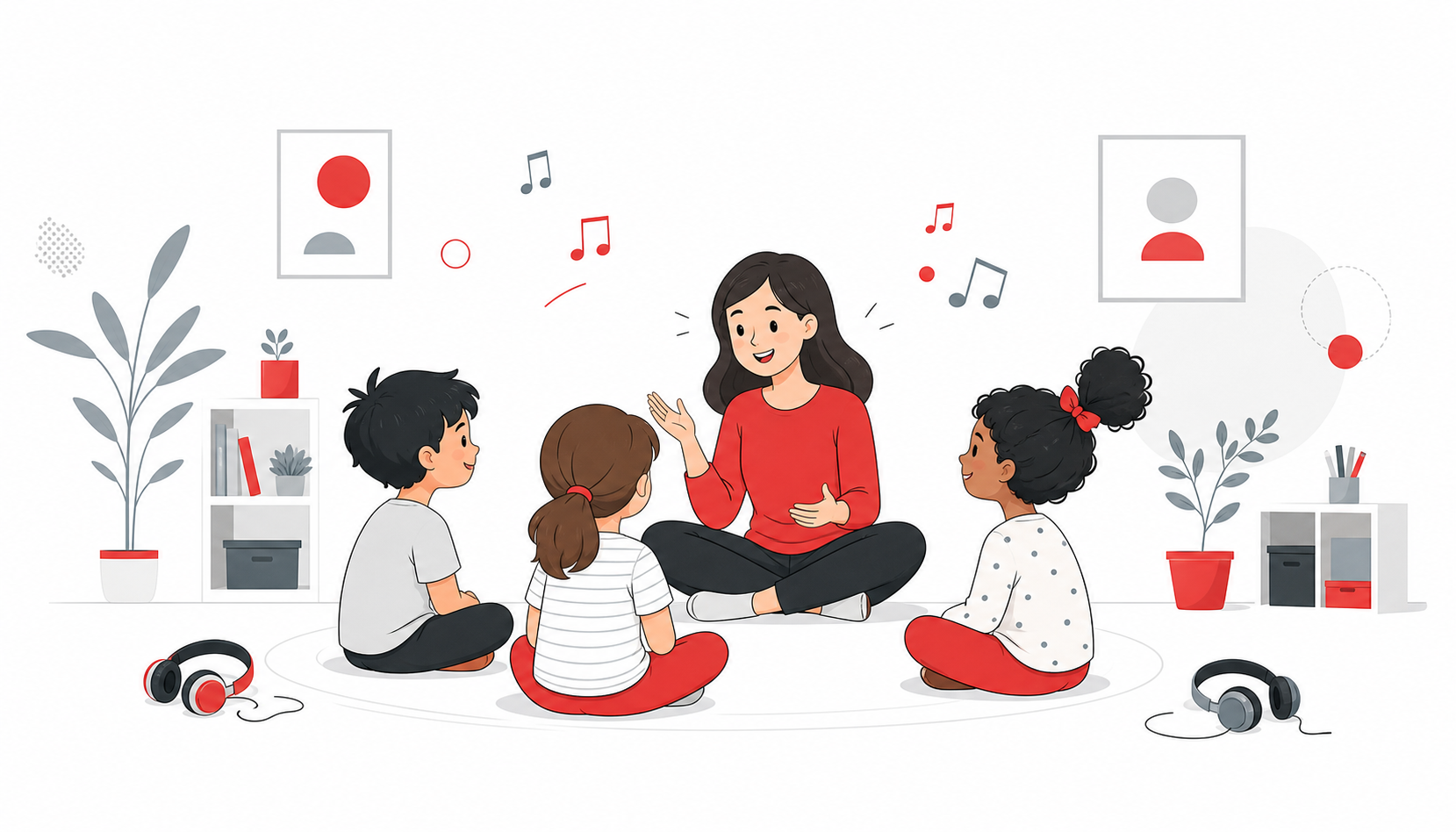
Quick answer: when are group piano lessons best for kids?
Group piano lessons usually work best for kids who are new to piano, comfortable learning near other children, and motivated by a class routine. They are especially useful when the program is built for beginners instead of simply placing several private students in one room.
A good small group class helps children practice rhythm, keyboard geography, listening, counting, note reading, and simple two-hand coordination while staying engaged through songs and teacher-guided activities.
Why group piano lessons can help beginners
Many children relax when they see classmates making the same beginner mistakes. That matters. Piano can feel lonely if a child thinks everyone else already understands it. In a group class, students hear that learning music is a process, not a performance test.
Group lessons can also build steady classroom habits. Children wait their turn, listen for cues, follow a teacher's rhythm, and learn how to start again when something is not perfect. Those habits support music learning and school readiness at the same time.
Four signs your child may do well in a group piano class
1. Your child enjoys learning around other kids. They do not need to be outgoing, but they should be able to participate in a shared activity with teacher support.
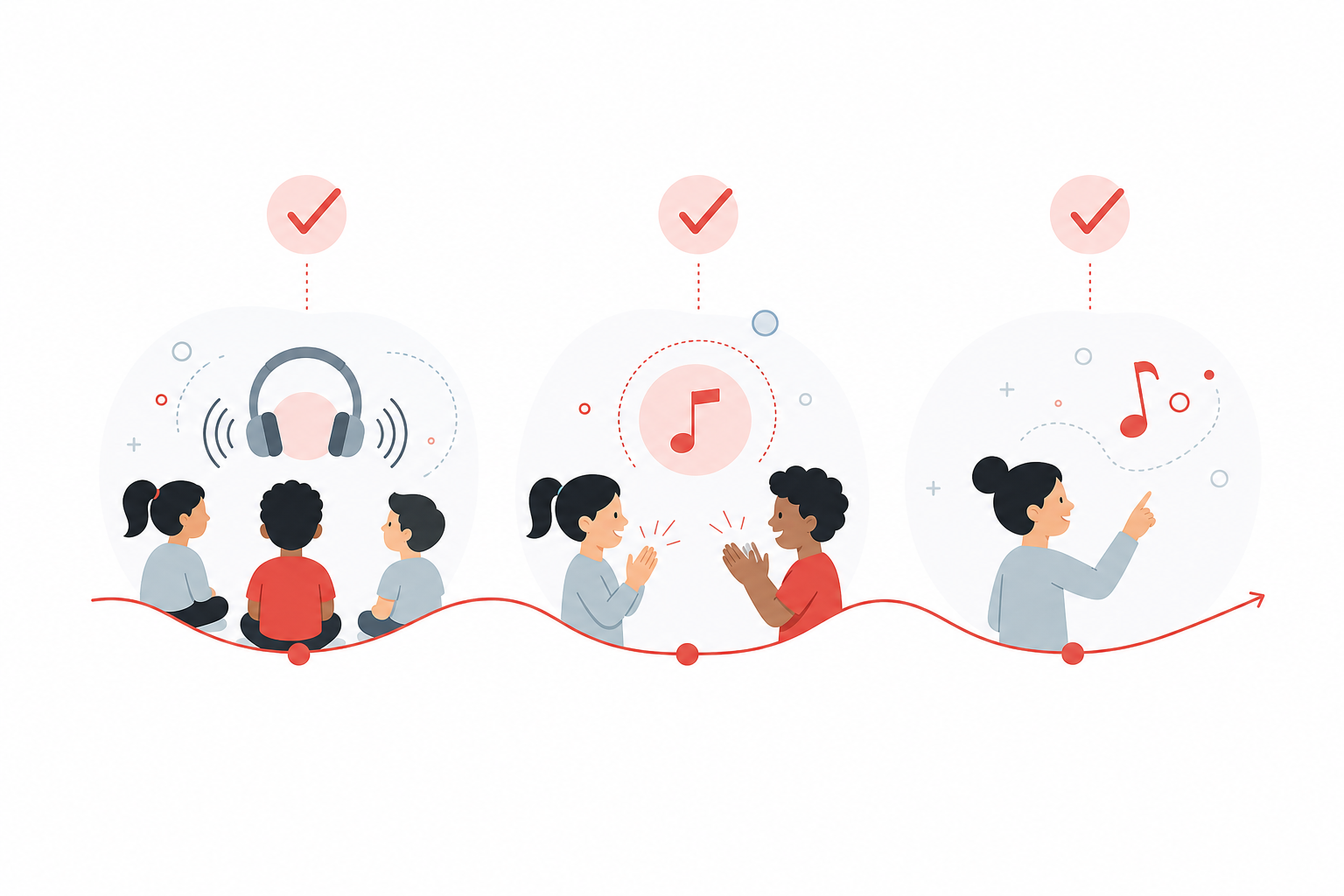
2. Your child is a beginner or early-level student. Group lessons are often strongest when students are building the same foundations: note names, rhythm, counting, finger numbers, short songs, and simple practice habits.
3. Your child benefits from routine. A weekly class can make piano feel like a normal part of the school week instead of another thing parents have to negotiate at home.
4. Your child likes small wins. The right class should let students play recognizable musical moments early, even while they are still building fundamentals.
When private piano lessons may be a better fit
Group lessons are not the right answer for every child. Private lessons may be better if a student needs highly individualized pacing, is preparing for a specific audition or exam, has a very uneven skill profile, or becomes overwhelmed by group settings.
Private support can also help when a child is moving beyond beginner materials and needs detailed work on technique, interpretation, or a specific repertoire goal. Some families use group lessons first, then add private lessons later when the student is ready for more focused coaching.
What parents should ask before choosing a group piano class
- Is the class designed specifically for beginners?
- How does the teacher give individual attention inside the group?
- Will students use headphones, keyboards, books, or online materials?
- How will parents know what to practice at home?
- Does the class teach rhythm, note reading, counting, and two-hand coordination?
- What happens if a student misses a class or needs extra help?
These questions matter because group lessons should still feel structured. A class can be fun without being loose, and it can be social without losing musical progress.
How iPianoLab uses group learning
iPianoLab is built around helping children play songs they enjoy early while building real fundamentals over time. In after-school classes, students can learn in a familiar school setting. In online small group lessons, families can keep a class routine even when travel is difficult.
If your family is comparing options, start with the format that best matches your schedule and your child's temperament:
- After-school iPianoLab classes for families looking for a school-week routine.
- Online iPianoLab lessons for families who want small group or private support from home.
- Our Teachers if teacher fit and experience are your main questions.
- Sign up for iPianoLab when you are ready to choose the best available option for your child.
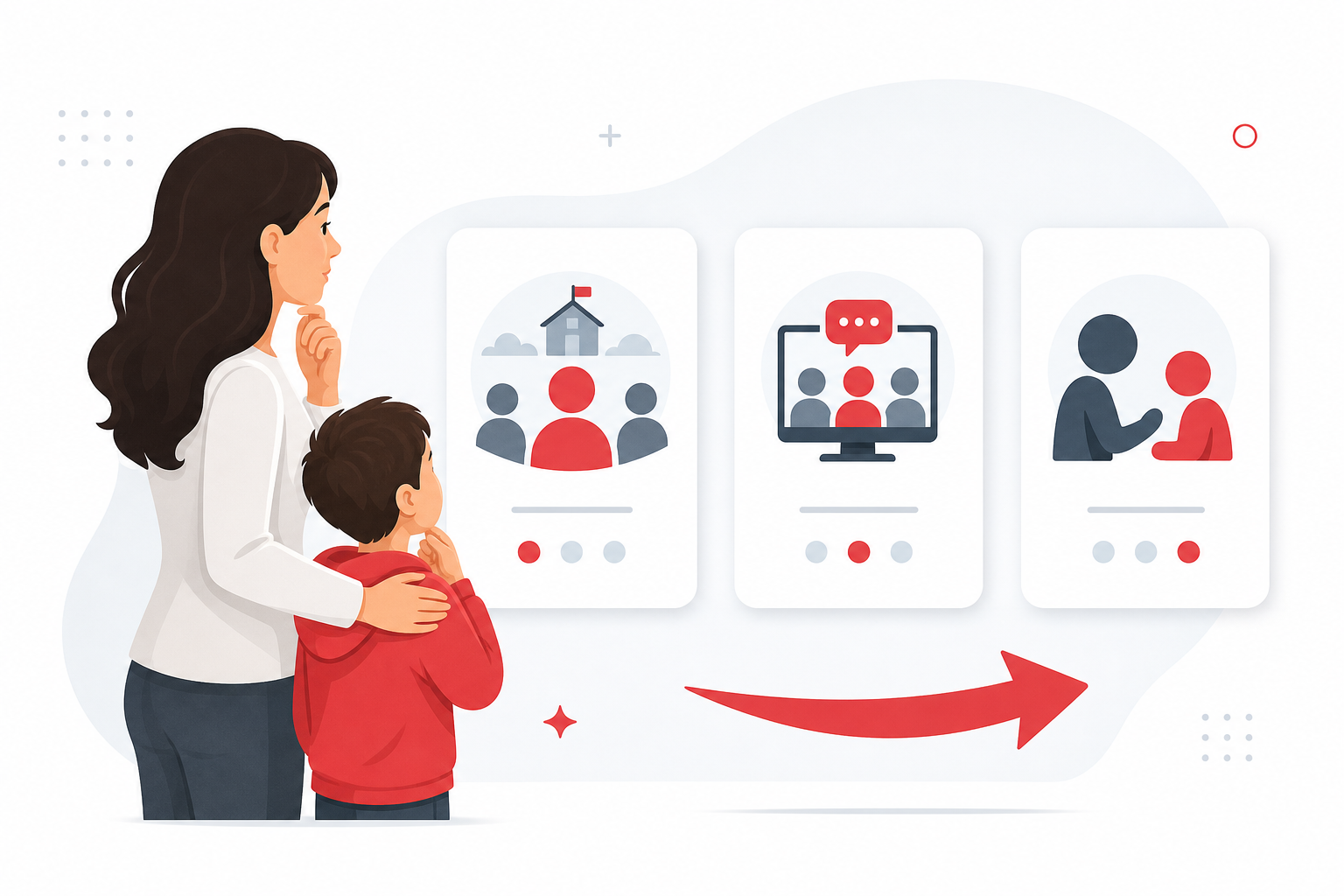
A simple parent decision guide
Choose a group piano class if your child is a beginner, likes a class routine, and may gain confidence from learning alongside other students.
Choose private lessons if your child needs very focused attention, is working on a specific goal, or gets distracted or anxious in group settings.
Choose online lessons if your family needs scheduling flexibility or wants to keep piano consistent from home.
If you are still unsure, look at what your child needs most right now: confidence, consistency, individual attention, or convenience. That answer usually points to the right first step.
FAQ: group piano lessons for kids
Are group piano lessons good for beginners?
Yes, group piano lessons can be good for beginners when the class is intentionally designed for new students. The teacher should give clear instructions, repeat core skills, and make sure each child has a chance to play and understand the lesson.
Will my child get enough attention in a group class?
That depends on the program. A strong group class still includes teacher check-ins, clear practice goals, and activities that let each student participate. Parents should ask how individual support works inside the class.
Are group lessons better than private lessons?
They are better for some children and not for others. Group lessons can build confidence, routine, and motivation. Private lessons can provide deeper individualized attention. The right choice depends on the child's age, confidence, goals, and learning style.
What should my child practice after a group piano lesson?
Keep practice short and specific. Ask your child to repeat the song, rhythm, or keyboard pattern from class instead of trying to cover everything. If practice becomes tense, this guide may help: How to Help Your Child Practice Piano Without Battles.
What if my child is not ready for two-hand playing yet?
That is normal for beginners. Two-hand coordination develops in steps. Parents can use this guide to understand the signs of readiness: When Is Your Child Ready to Play Piano With Two Hands?.
Ready to find the right piano lesson format?
iPianoLab offers beginner-friendly piano learning through after-school classes, online lessons, and private options. We are also becoming PianoFlight in Summer 2026 with the same programs, same team, and the same confidence-building approach for new piano students.
Sign up for iPianoLab to get started, or compare after-school classes and online lessons to choose the format that fits your family best.