When Is Your Child Ready to Play Piano With Two Hands?
Two-hand piano playing is one of the milestones parents notice first. It looks like a big leap: one hand has a melody, the other hand has a rhythm, chord, bass note, or pattern, and the child has to keep everything moving at the same time.
For beginners, the question is not whether two-hand playing is impressive. The better question is whether the child has enough foundation to try it without turning music into frustration. A child is usually ready to begin two-hand piano work when they can keep a steady beat, find basic keyboard positions, follow a short pattern, and recover from a mistake without stopping the whole session.
At iPianoLab, students play songs they enjoy early, then build the skills underneath those songs: keyboard geography, rhythm, counting, note reading, two-hand coordination, melody, chords, and music literacy. iPianoLab is becoming PianoFlight in Summer 2026 with the same programs and team, so the teaching goal stays the same: make each next step feel clear, musical, and doable.
Find a beginner-friendly piano class
What does two-hand piano playing mean for a beginner?
For a new student, two-hand piano playing does not always mean a full, polished arrangement. It may start with one hand holding a long note while the other hand plays a short pattern. It may mean tapping a steady beat with one hand while the other hand plays two or three notes. It may mean alternating hands before both hands play together.
That matters because beginners need coordination in layers. If the first two-hand assignment is too hard, a child may feel like they suddenly cannot play. A good beginner program breaks the skill into reachable steps so the student can feel progress before the music becomes complex.
Signs your child may be ready to start two-hand piano
Every child develops at a different pace, but these signs usually mean a beginner is ready to try simple two-hand work:
- They can keep a basic steady beat. Two-hand playing depends on timing. If the beat disappears, both hands feel harder.
- They can find familiar notes or hand positions without starting over every time. Keyboard geography gives the child a stable place to begin.
- They can play a short pattern with one hand several times. Repetition builds the confidence needed to add the other hand.
- They can listen to a teacher cue and make one adjustment. Two-hand playing often improves through small corrections, not big lectures.
- They can tolerate a few slow tries. Coordination takes patience. A child does not need perfection, but they do need a little willingness to repeat.
If only one or two signs are present, that is not a problem. It simply means the teacher may keep building rhythm, note-finding, and one-hand confidence before asking for more.
How teachers build two-hand coordination
Good two-hand teaching usually moves from simple to layered. The goal is to help the child understand what each hand is doing before both hands have to work at once.
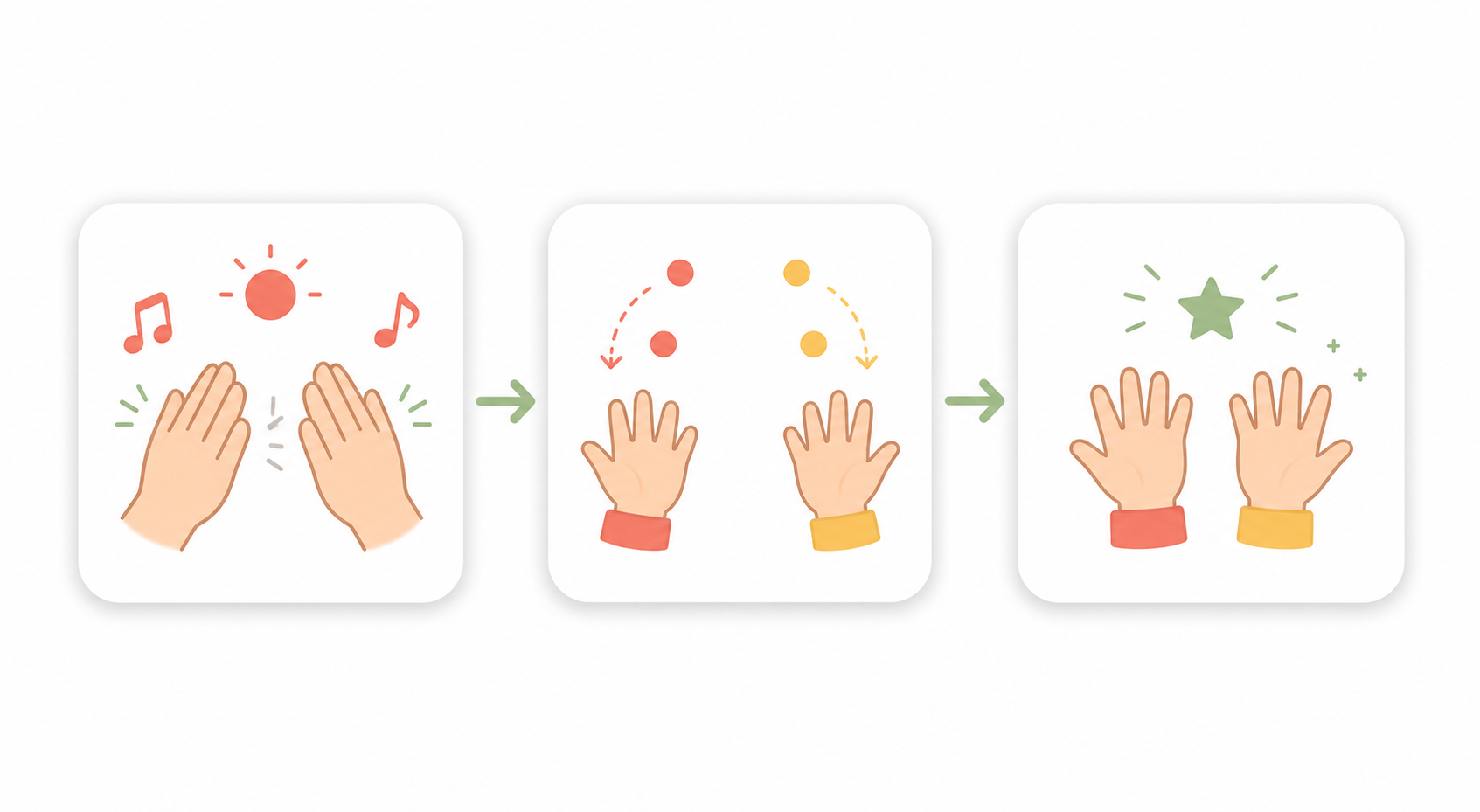
A common teaching sequence looks like this:
- Clap or tap the rhythm first. The student feels the timing before adding notes.
- Play each hand by itself. The child learns the job of the right hand and the job of the left hand separately.
- Alternate hands. This teaches attention-shifting without requiring both hands at the same time.
- Try one tiny hands-together moment. The first goal may be just two beats, one measure, or one repeated pattern.
- Slow down before speeding up. A slower successful try teaches more than a fast scramble.
This is why iPianoLab starts with music students enjoy and then connects that music to the fundamentals. Children are more willing to work through coordination when the exercise has a musical reason.
What parents can do at home
Parents do not need to teach two-hand piano at home. In fact, too much correction can make the skill feel bigger than it is. The parent role is to protect the routine, help the child start, and keep the assignment small.
Try these support moves:
- Ask your child to show the easiest part first.
- Let them play one hand alone before trying both hands.
- Use slow tempo as a tool, not as a criticism.
- Praise a specific improvement, such as steadier counting or a cleaner hand change.
- Stop after a small win instead of turning every success into a longer session.
If home practice has been tense, start with the guide to helping your child practice piano without battles. If the instrument setup is the issue, the home piano practice space guide can help make practice easier to begin.
When two-hand playing is not ready yet
It is normal for a child to need more time before two-hand playing feels comfortable. A student may not be ready if they lose the beat immediately, cannot find the starting notes, becomes upset after every mistake, or can only play the piece when an adult talks them through each move.
Those are not failure signs. They are teaching signals. The next best step may be rhythm games, one-hand review, easier songs, shorter assignments, or a slower tempo. A strong beginner program should adjust the path so the child keeps building confidence.
Parent checklist: is my child ready for two hands?
Before expecting hands-together playing at home, check these questions:
- Can my child keep a simple beat for a short section?
- Can they find the starting place without a long reset?
- Can they play one hand alone with some consistency?
- Can they try slowly without feeling embarrassed?
- Do they know what the teacher wants them to practice this week?
If the answer is mostly yes, your child may be ready for simple two-hand patterns. If the answer is mostly no, keep the goal smaller. Read more about early progress in what parents should expect during the first six weeks of piano lessons.
How iPianoLab helps beginners make the leap
iPianoLab is designed for beginning students who need music to feel successful early. In after-school classes, students commonly meet once a week for one hour, with keyboards, headphones, books, music, and learning materials provided in class. Online learning and video tutorials help students keep moving between lessons.
For parents comparing options, the most important question is not whether a program mentions two-hand playing. It is whether the program has a clear sequence for getting there. Students need songs they like, teacher guidance, rhythm support, keyboard confidence, and enough structure that progress does not depend on parents becoming the teacher at home.
If your child is ready to start or restart piano, you can sign up for iPianoLab, explore online piano learning, or learn about school-based group classes for students.
FAQ: two-hand piano for kids
At what age should kids play piano with two hands?
There is no single age. Some children are ready for simple two-hand patterns quickly, while others need more rhythm, note-finding, or confidence first. Readiness depends more on coordination and attention than age alone.
Should beginners learn one hand first or both hands together?
Most beginners benefit from learning each hand separately first, then combining a very small section. That gives the child a clearer job for each hand and reduces frustration.
How long does it take a child to play with both hands?
Many beginners can try simple two-hand moments within the first weeks or months, depending on age, practice routine, lesson format, and song difficulty. Full two-hand independence takes longer and should build gradually.
What if my child can play one hand but freezes with both hands?
Make the task smaller. Try one hand alone, then alternate hands, then combine only one beat or one short pattern. If freezing continues, ask the teacher which rhythm or hand position should be the focus that week.
Does my child need a keyboard at home to build two-hand coordination?
A home keyboard is strongly recommended because coordination improves with short, repeatable practice. For school classes, iPianoLab provides keyboards and headphones in class, and the First Time Keyboard Buyer's Guide can help families choose a simple home instrument.