Should Parents Sit In on Piano Lessons? A Practical Guide
Should a parent stay in the room during a child’s piano lesson? Sometimes. For a young or nervous beginner, a calm parent can make the first few lessons feel safer and help the family remember what to practice. For another child, the same parent presence can make it harder to focus, take small risks, or build an independent relationship with the teacher.
The best answer depends on your child, the lesson format, and the teacher or program’s policy. The goal is not to watch every minute. It is to give your child the right amount of support while helping them become a confident music learner.
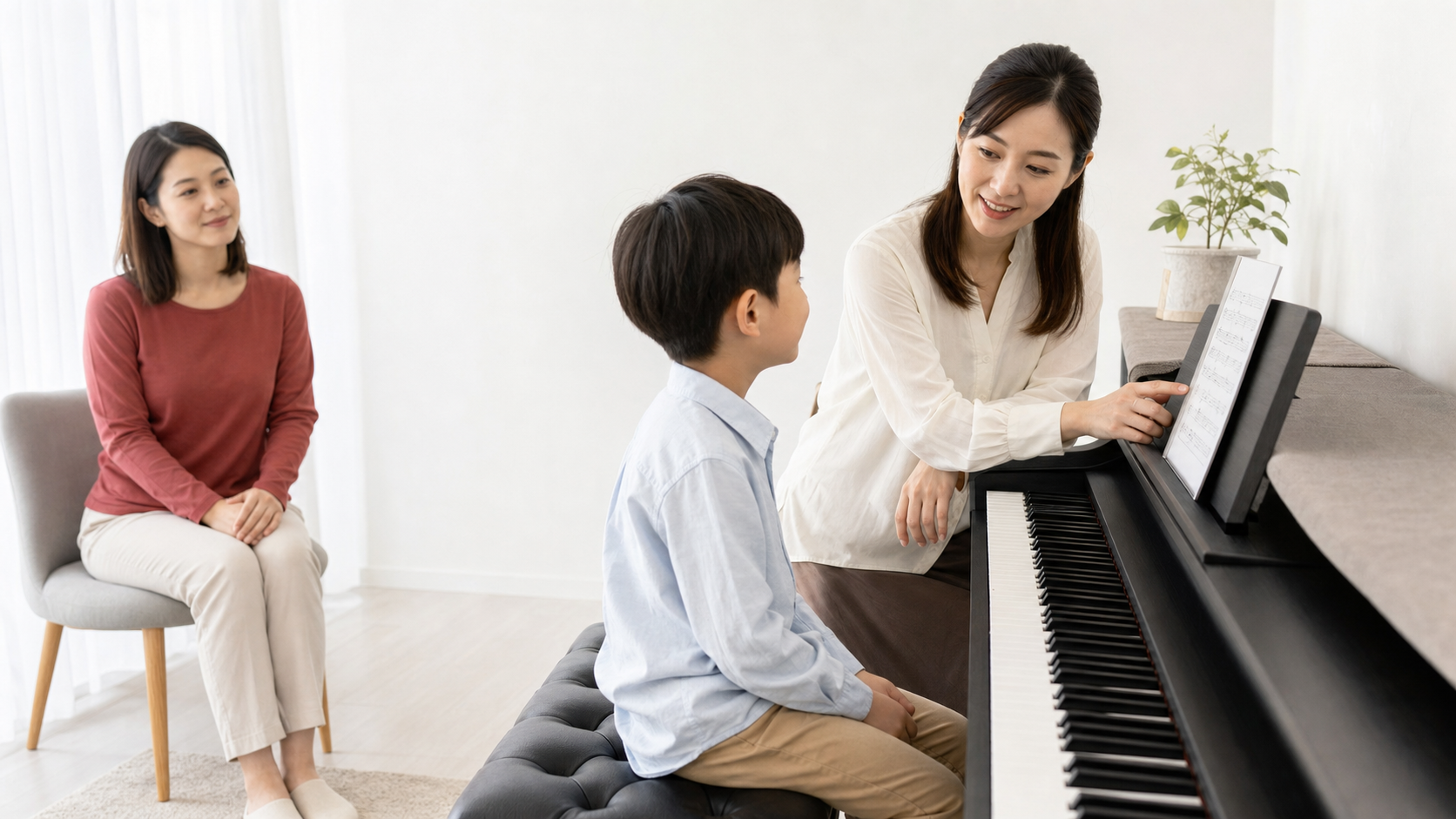
Should Parents Watch Piano Lessons?
Parents can watch when the teacher or program allows it and when their presence helps the child learn. A useful parent sits quietly, lets the teacher lead, and saves questions for the end. If the child keeps checking the parent’s face, asks the parent for every answer, or becomes more self-conscious, stepping out may create a better lesson.
There is no single age when every parent should stop observing. A five-year-old who is new to structured activities may benefit from a familiar adult nearby. An older beginner may prefer privacy from the start. Watch the learning behavior, not only the birthday.
If you are comparing programs, ask iPianoLab which beginner path fits your child.
When Sitting In Can Help
Parent observation is most useful when it removes uncertainty without taking over the lesson. It may help when:
- Your child is very young or anxious in a new setting.
- The teacher wants you to hear the exact practice directions.
- Your child needs help remembering a short routine between lessons.
- You are learning how to support practice without reteaching the material.
- The lesson includes a new setup, book, online tool, or home assignment.
In these situations, the parent’s job is to listen for the next step. You do not need to correct notes, answer for your child, or keep a running score of mistakes. A short note such as “clap the rhythm, then play the first four measures” is more useful than trying to remember every detail.
When A Child May Learn Better Without A Parent In The Room
Some children become more focused when the lesson belongs to them. They may ask the teacher better questions, try again after a mistake, or play more freely when they are not waiting for a parent’s reaction.
Consider giving the lesson more space if your child:
- Looks at you before answering the teacher.
- Asks you to fix every mistake.
- Becomes embarrassed when learning something slowly.
- Argues with you about directions during the lesson.
- Participates more fully when you step away.
Stepping out is not withdrawing support. It can be a deliberate way to help your child build trust, independence, and the ability to recover from small mistakes.
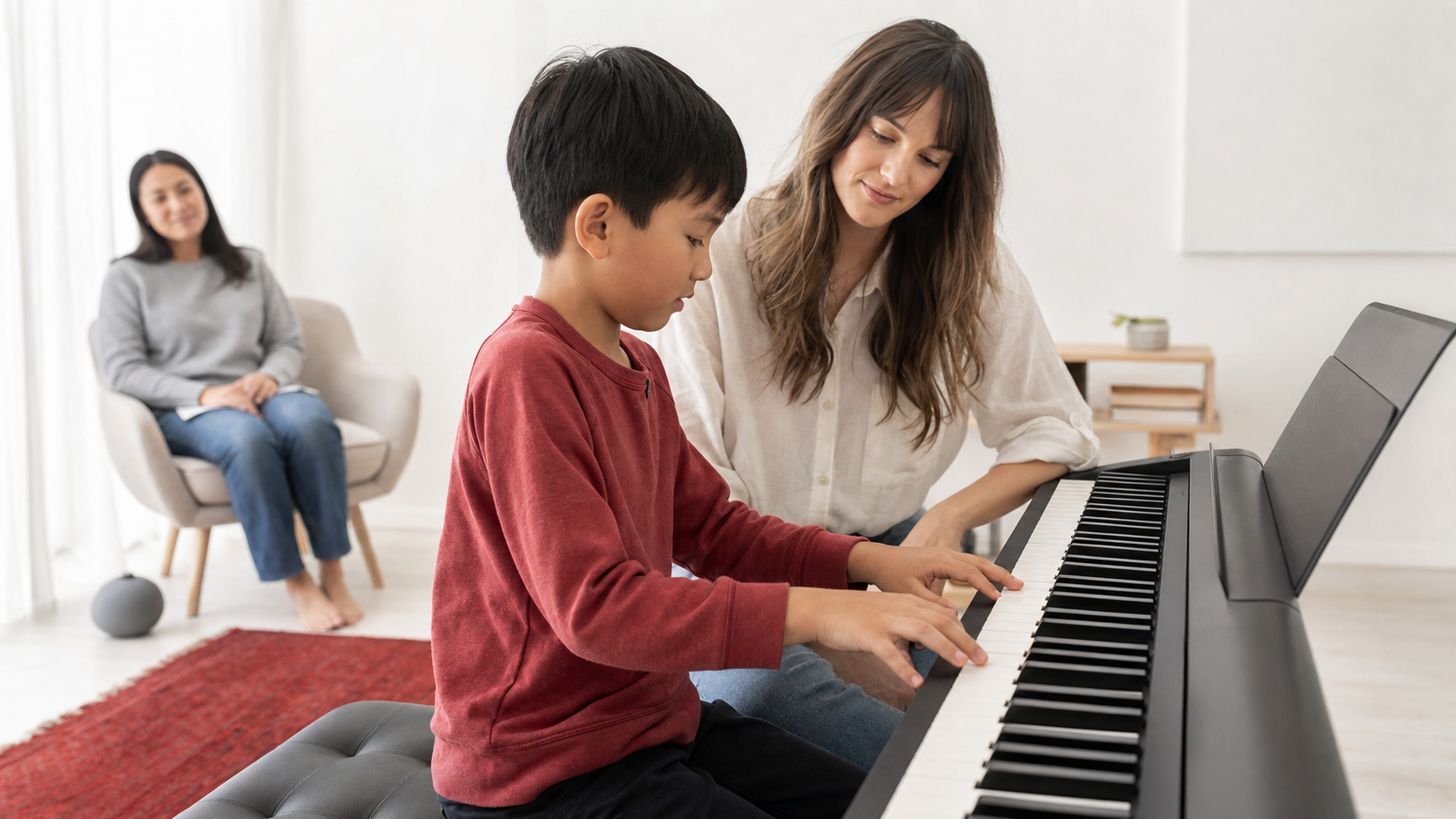
How To Sit In Without Taking Over
If you do observe, think of yourself as a quiet assistant to the routine, not a second teacher. These habits keep the lesson centered on the child:
- Let the teacher answer first. Give your child time to think instead of filling every pause.
- Keep your expression neutral and encouraging. A raised eyebrow can feel like a correction even when you say nothing.
- Write down only the next practice steps. Capture the small repeatable task, not every mistake.
- Ask questions at the end. This protects the flow of the lesson.
- Use the teacher’s language at home. Repeating the same cue is easier for a beginner than hearing a second explanation.
At home, your most valuable support is usually the routine: help your child start, protect a short practice window, and notice effort. The guide on helping your child practice without becoming the teacher gives a simple way to do that.
What About After-School Group Piano Classes?
Group classes are different from private lessons. The teacher is managing the whole class, transitions, instruments, headphones, books, and the pace of several learners. A parent in the room may not be part of the normal class structure, so follow the school and program’s observation rules.
You can still stay connected without watching the full class. Ask your child to show you one rhythm, song section, or new idea afterward. Review any teacher note. Keep home practice short enough that the child can repeat the class win without turning the evening into another lesson.
Find an iPianoLab after-school piano class if your child benefits from a weekly school-based routine with classmates.
What About Online Piano Learning?
Online learning gives parents more visibility, but being nearby does not mean you need to coach every step. A young beginner may need help opening the lesson, adjusting headphones, or finding the right page. Once the activity begins, give the child room to listen and try.
Use a simple pattern: set up, step back, then check in. If your child gets stuck, help them replay the direction before explaining it yourself. That keeps the learning path consistent and builds problem-solving skills.
Explore iPianoLab online learning for a flexible home option that families can revisit between sessions.
A Three-Lesson Test For Parents
If you are unsure whether to stay or step out, try a short, teacher-approved comparison instead of making a permanent rule.
- Lesson one: observe quietly and note how often your child looks to you instead of the teacher.
- Lesson two: sit farther away or leave for part of the lesson, if the teacher agrees.
- Lesson three: use the arrangement that produced better attention, questions, and willingness to try again.
After each lesson, ask the teacher one focused question: “Did my presence help my child learn today?” Ask your child a separate question: “What helped you feel ready to try?” Those answers are more useful than assuming that more observation always means more support.
Parent Observation FAQ
Should parents sit in on the first piano lesson?
It can be helpful for a young or nervous beginner if the teacher allows it. Stay quiet, let the teacher lead, and focus on the child’s comfort and practice directions.
Can a parent distract a child during piano lessons?
Yes. A child may look for approval, ask the parent to answer, or become self-conscious. If that happens, try sitting farther away or stepping out with the teacher’s agreement.
How can parents know what to practice if they do not watch?
Ask for a short recap, assignment note, marked page, or one priority for the week. You need the next repeatable step, not a complete replay of the lesson.
Should parents correct piano mistakes at home?
Help with the routine before correcting the music. Encourage your child to replay the teacher’s direction, slow down, or try the short assigned section again. If the assignment is unclear, ask the teacher or program.
What if my child wants me to stay?
Start with reassurance and a gradual plan. You might stay for the opening minutes, move farther away, or return for the recap. The goal is to build comfort without making parent presence the only way your child can learn.
Choose The Support Level That Builds Confidence
A helpful parent does not need to hear every note. Your child needs a clear learning path, a teacher they can trust, and home support that protects practice without taking ownership away from them.
Observe when it helps. Step back when independence grows. Keep checking what produces better attention, confidence, and willingness to continue.
Choose your child’s iPianoLab path, compare after-school classes, or begin with online piano learning.