Group vs. Private Piano Lessons for Kids: Which Is Better?
Group piano lessons and private piano lessons can both work well for children. The better choice depends on how your child learns, what kind of support keeps them engaged, your weekly schedule, and the skills they are ready to build next.
For many beginners, a group setting makes music social and low-pressure. A private lesson offers more individual attention and flexible pacing. Some children begin in one format and move to the other as their confidence, goals, or schedule changes.
This guide gives parents a practical way to compare both options without assuming that one format is always best.
Group vs. private piano lessons: the short answer
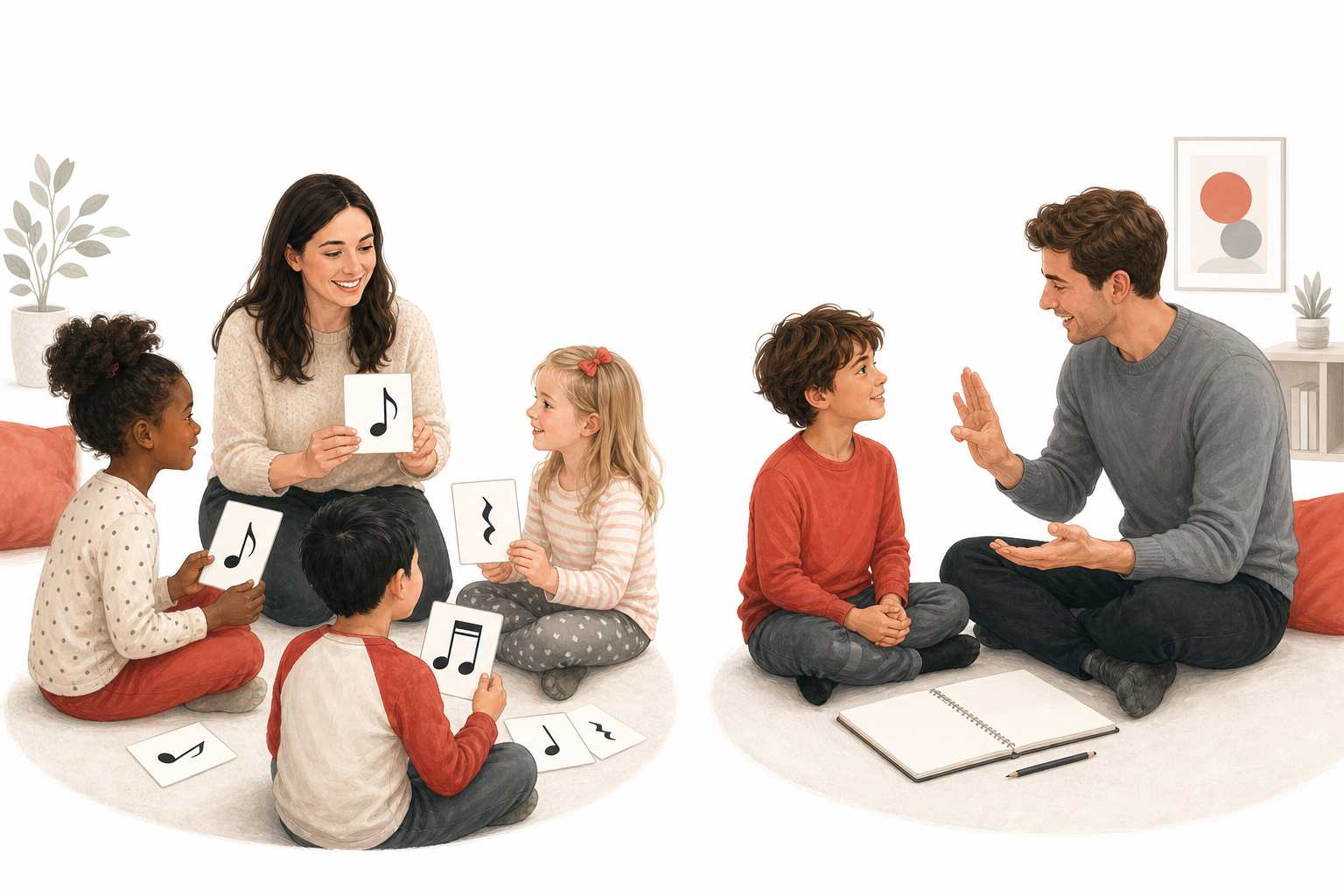
Choose group piano lessons when your child enjoys learning with peers, benefits from shared energy, can follow a class routine, and is motivated by games, songs, and group milestones.
Choose private piano lessons when your child needs a highly personalized pace, has a specific goal, benefits from fewer distractions, or needs the teacher to adapt each activity in the moment.
If you are still unsure, focus on the next six lessons rather than trying to choose a permanent path. A short, defined learning period gives you enough time to notice whether your child is participating, practicing, and making progress.
What happens in group piano lessons?
In a well-structured beginner group, children learn core skills together. That may include keyboard geography, rhythm, counting, note reading, melody, chords, listening, and playing with both hands. The teacher leads a shared sequence while giving students brief individual help as needed.
Group lessons can be especially appealing to children who like:
- Seeing other beginners work through the same challenge
- Learning through songs, games, and turn-taking
- Playing for classmates in a friendly setting
- Having a predictable class routine
- Feeling part of a team
At iPianoLab, after-school classes commonly meet once a week for one hour. Students work through a structured curriculum, and schools or classes provide the keyboards, headphones, books, music, and learning materials used during class.
What happens in private piano lessons?
Private lessons give one student the teacher's full attention for the lesson period. The teacher can slow down, move ahead, repeat an activity, adjust the explanation, or spend more time on a specific musical goal.
Private lessons may be a strong fit when a child:
- Needs a quieter learning environment
- Moves much faster or slower than a typical group pace
- Wants help preparing a particular song or performance
- Responds best to direct, individual feedback
- Needs lesson activities adapted frequently
Private does not automatically mean more serious, and group does not mean less rigorous. The useful question is whether the format helps your child stay engaged while building real musical skills.
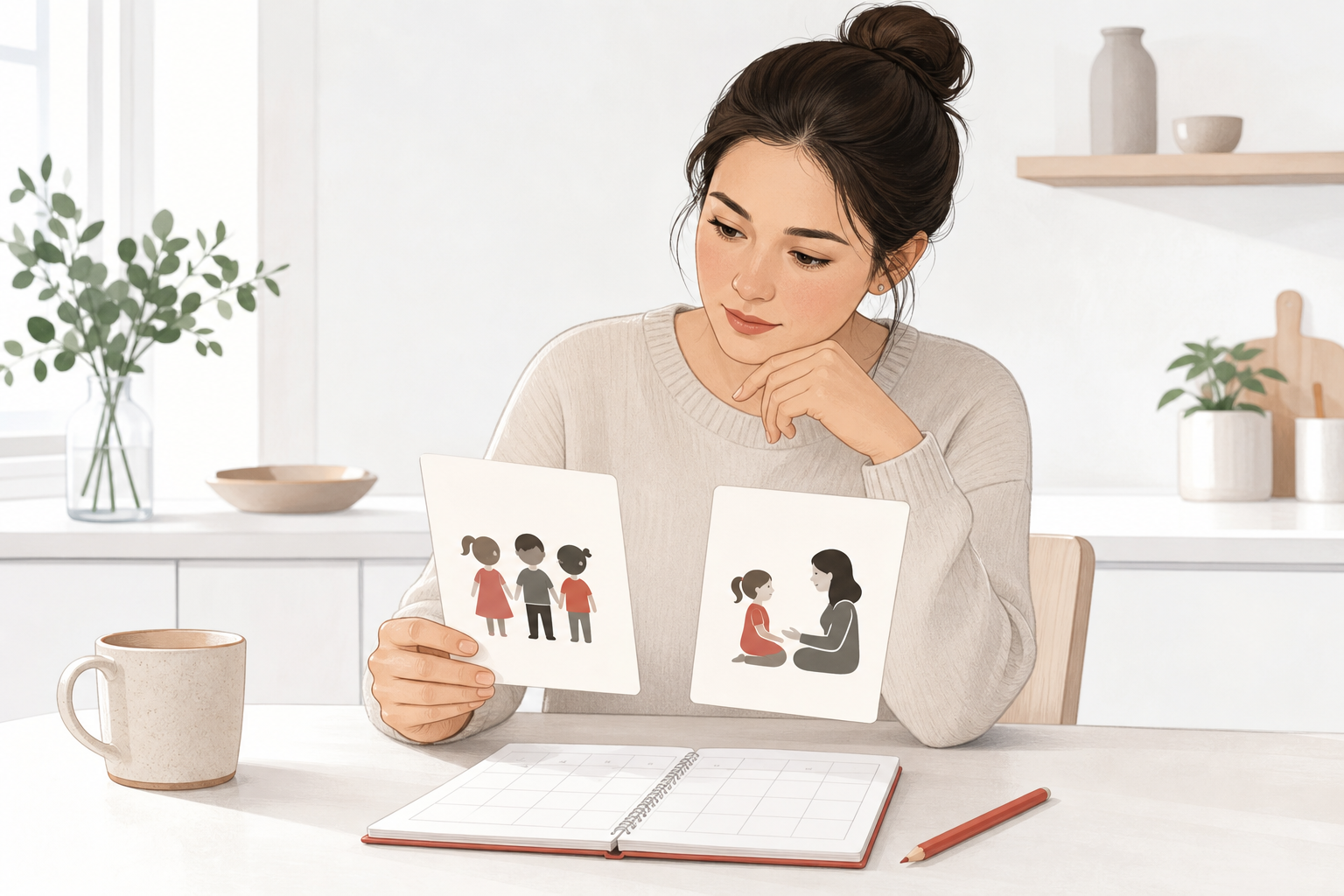
Group and private piano lessons compared
| Decision factor | Group lessons | Private lessons |
|---|---|---|
| Lesson pace | Shared sequence with some individual help | Adjusted closely to one student |
| Social experience | Peer energy, turn-taking, and shared milestones | One-to-one relationship with the teacher |
| Feedback | Teacher feedback within the class flow | Frequent individual feedback throughout the lesson |
| Flexibility | Follows the group's schedule and curriculum | Can adapt more quickly to changing goals |
| Best for | Children energized by peers and shared activities | Children who need focused pacing or a specific plan |
Five questions to help you choose
1. Does your child gain energy from other children?
A child who enjoys joining classroom activities may practice more willingly after a positive group experience. A child who becomes overwhelmed or distracted in groups may show more confidence in a quieter one-to-one setting.
2. How much individual help does your child need?
All beginners need feedback. The question is how frequently your child needs the activity changed, repeated, or explained in a different way. If that happens often, private instruction may make the lesson flow more comfortably.
3. What is the main goal right now?
For a brand-new student, the goal may simply be to enjoy playing recognizable songs while learning the basics. A group can support that early momentum. A child preparing for an audition, recital, or specific piece may benefit from a more focused private plan.
4. Which schedule can your family keep consistently?
A strong program only helps when your child can attend. Compare the actual day, time, travel, online setup, and home-practice expectations. The sustainable option usually beats the theoretically perfect one.
5. What does your child want to try?
Children do not need to make the final decision alone, but their reaction matters. Explain both choices in simple terms: “Would you rather learn with a small group, or have a teacher work with just you?” Their answer can reveal what feels encouraging or intimidating.
Signs the current lesson format is working
Look beyond whether every practice session is cheerful. A good fit usually shows up through a pattern of small signals:
- Your child can describe something learned in the lesson
- They know what to practice next
- The assignment feels challenging but possible
- They are willing to return the following week
- The teacher can explain the child's current goal
- Progress appears in rhythm, coordination, reading, confidence, or musical independence
If your child is repeatedly lost, bored, anxious, or unable to explain the next step, ask the teacher what can be adjusted before assuming the child should stop piano altogether.
Can a child switch between group and private lessons?
Yes. Lesson format is not a lifelong commitment. A beginner may start in a group, build confidence and basic skills, then move to private lessons for a specific goal. Another child may begin privately and later enjoy the motivation and listening skills that come from learning with peers.
A switch may be worth considering when:
- The child consistently needs a different pace from the group
- A performance or advanced goal requires focused coaching
- The private format feels isolating and the child wants peers
- The family's schedule changes
- The teacher recommends a different environment based on observed learning needs
What about online piano lessons?
Online learning is another format decision, not a separate measure of quality. Families may choose live online group instruction, live private support, self-paced video lessons, or a blend. The right option depends on feedback needs, schedule, practice support, and how independently the child can follow instructions.
For a detailed comparison, read our guide to live online piano lessons versus video lessons for kids. You can also review current online piano learning options.
Questions to ask before enrolling
- How many students are in the group?
- How does the teacher help a student who needs a different pace?
- What skills should my child build in the first six lessons?
- What materials are provided?
- What practice routine is expected at home?
- Can we change formats later if the fit is not right?
- How will the teacher communicate progress?
You may also want our broader checklist of 12 questions to ask when choosing piano lessons for your child.
Frequently asked questions
Are group piano lessons worth it?
Group piano lessons can be worth it when the class has a clear curriculum, appropriate group size, reliable equipment, and a teacher who can keep students participating while noticing individual needs. They are especially useful for children motivated by peers and shared activities.
Are private piano lessons better than group lessons?
Private lessons are not universally better. They provide more individualized pacing and feedback, while group lessons add peer motivation, listening, and shared learning. The better format is the one that matches the child's needs and can be sustained consistently.
What age is best for group piano lessons?
Readiness matters more than one exact age. A child should be able to follow short directions, participate in a routine, take turns, and stay engaged for the class structure. Ask the program how it groups students and supports new beginners.
Can beginners start with private lessons?
Yes. Private lessons can work well for a complete beginner, especially when the child needs a quieter environment or highly personalized instruction. Prior music experience is not required to begin.
Choose the next six lessons, not the next six years
The most useful decision is often the smallest one: choose the format that appears to fit now, set a few observable goals, and review the experience after six lessons. You are looking for engagement, clear next steps, growing skills, and a child who feels capable of continuing.
Explore iPianoLab programs and choose a starting path for your child. If you would like to understand the people behind the program first, meet the iPianoLab teachers.