How to Choose Piano Lessons for Your Child: 12 Questions to Ask
The best piano lessons are not simply the ones with the most impressive teacher biography or the closest address. They are the lessons your child can enjoy, understand, and continue—supported by a format, schedule, practice plan, and communication style that fit your family.
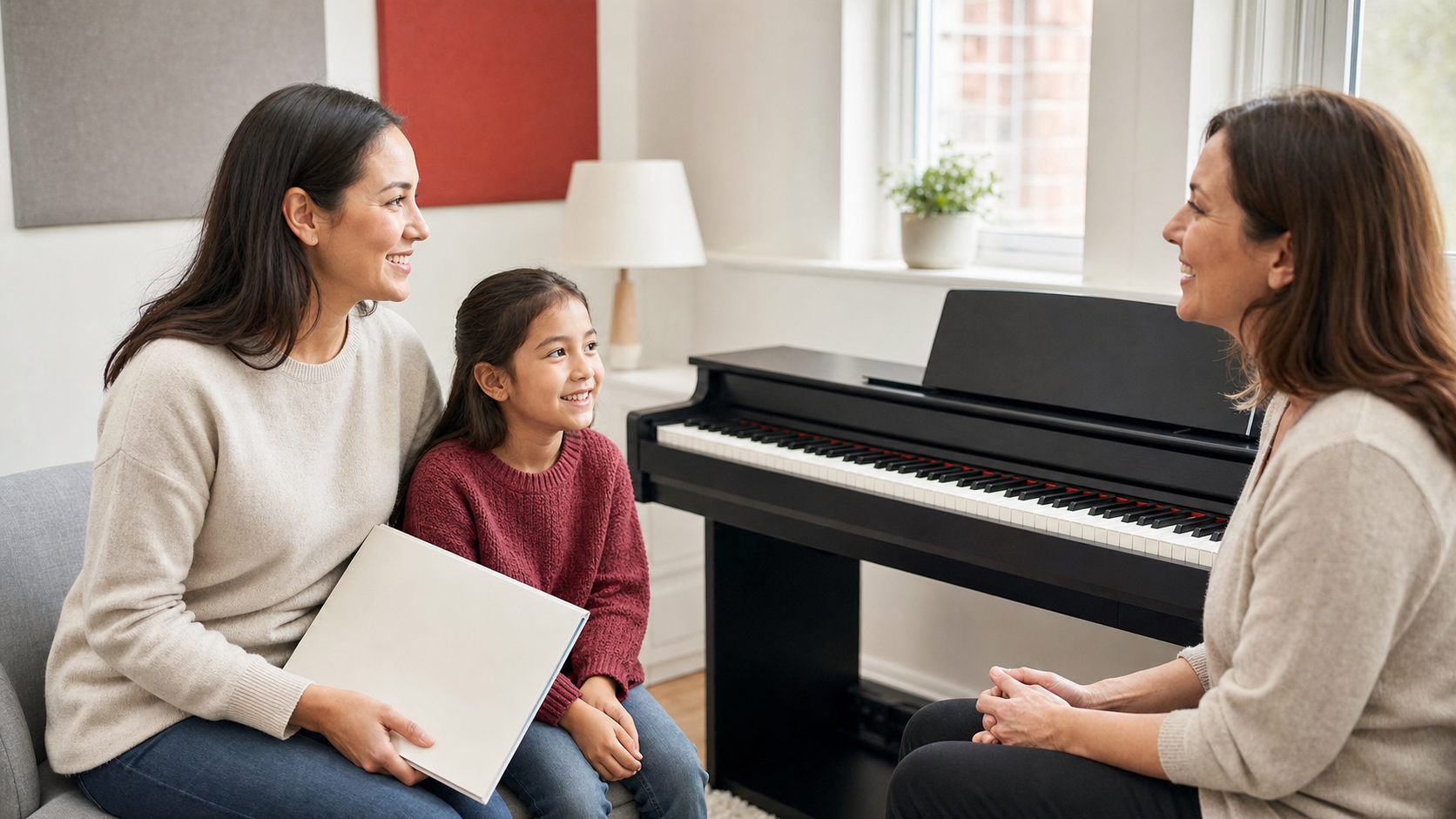
Before you enroll, ask the program or teacher the 12 questions below. The answers will help you compare private lessons, after-school group classes, and online learning without getting distracted by vague promises. You will also leave with a clearer picture of what your child’s first weeks should feel like.
What should parents look for in piano lessons?
Look for a learning path that matches your child’s current attention, confidence, musical interests, and need for structure. Then confirm that the lesson schedule, home-practice expectations, materials, progress updates, and policies are workable for your family. A strong program should be able to explain what beginners learn first and how adults will know whether the fit is working.
Ready to compare iPianoLab options? View signup paths.
If you are still deciding whether the timing is right, start with iPianoLab’s piano lesson readiness guide. Readiness matters more than choosing one universally “perfect” age.
1. What will my child learn in the first six lessons?
A useful answer should be specific enough to picture. For a beginner, that may include keyboard geography, steady beat, counting, simple note patterns, basic reading, melody, chords, or two-hand coordination. The exact sequence can vary, but “we meet your child where they are” should be followed by a real learning plan.
Ask what a small first milestone looks like. It might be playing a short song with a steady rhythm, finding notes independently, or following a simple practice routine. Early success should build confidence while still developing real musical skills.
2. How do you keep beginner piano lessons engaging?
Children are more likely to continue when lessons connect technique to music they can recognize and enjoy. Ask how the teacher balances songs, games, movement, repetition, reading, and focused skill work. “Fun” should not mean random activity; it should make the next musical step easier to attempt.
At iPianoLab, the method is designed to help beginners play music they enjoy early, then build fundamentals around that success. You can read more about why song-based piano lessons help early confidence.
3. Is the format right for my child: group, private, or online?
| Format | May be a good fit when your child... | Ask about... |
|---|---|---|
| After-school group class | Enjoys peers, learns through shared energy, and benefits from a consistent school-week routine | Class size, individual guidance, keyboards and headphones, and how different learning speeds are supported |
| Private lesson | Needs highly individualized pacing, has a specific goal, or prefers a quieter one-to-one setting | Teacher fit, lesson length, parent communication, and expectations between lessons |
| Online learning | Needs flexible access, likes video guidance, or learns well with family-supported independent practice | Lesson sequence, device and keyboard setup, feedback, and how progress stays organized |
No format wins for every child. The best option is the one that gives your beginner enough support to succeed and enough ownership to stay interested.

4. What does a typical lesson or class look like?
Ask for the basic rhythm of a normal session. How much time goes to playing, explanation, rhythm, reading, review, and a new challenge? Does the teacher demonstrate, invite the child to copy, and then let the child try independently? A clear answer helps you judge whether the pace suits your child.
Also ask how the plan changes when a child is confused, restless, or already knows the material. Flexibility should have a purpose: keeping the student moving toward the same core skills through a different path.
5. What practice will be expected at home?
For beginners, a short routine that actually happens is usually more useful than an ambitious plan that creates conflict. Ask how often your child should practice, how long a session should last, and exactly what the child should do first. The answer should match the student’s age and lesson format.
Parents should also know their role. Are you expected to supervise, remind, listen, track a checklist, or simply make the instrument available? If home practice often becomes tense, use this guide to support practice without becoming the teacher.
6. How will I know my child is making progress?
Progress is more than finishing pages. A beginner may be improving when they find notes faster, keep a steadier beat, recover from a mistake, coordinate two hands, recognize patterns, or start practice with less help. Ask how those gains are observed and shared with families.
Find out when the first review point occurs. iPianoLab levels are structured as six lessons, which gives families a natural moment to look at confidence, skills, and next steps. For a broader timeline, see what parents can expect in the first six weeks.
7. How do you support different learning needs?
Children differ in attention, sensory comfort, reading pace, communication, movement needs, and confidence. Ask what the teacher does when a student needs more visual demonstration, fewer verbal directions, a quieter setup, a movement break, or extra repetition.
The goal is not to label a child during an enrollment conversation. It is to learn whether the environment can respond respectfully. iPianoLab’s Inclusive Instruction Policy outlines its commitment to accessible instruction.
8. Who provides the keyboard, headphones, music, and materials?
Clarify what is available during the lesson and what your family needs at home. iPianoLab after-school classes commonly provide keyboards, headphones, books, music, and class learning materials. Students are encouraged to have a keyboard at home for practice.
If you are buying an instrument, do not assume you need the largest or most expensive option on day one. Use the 61-key versus 88-key beginner keyboard guide after you confirm the program’s current requirements.
9. How are parents kept informed?
Ask who communicates schedule details, learning updates, needed materials, and concerns. In a school-based program, also find out whether communication comes from the instructor, local program, school partner, or an account portal. You should know where to look before an urgent question appears.
Good communication does not require a long report after every class. It does require a reliable path for knowing what your child is working on and what to do next.
10. What happens if my child misses a lesson or wants to change formats?
Policies vary, so ask before paying. Confirm how absences, makeups, schedule changes, withdrawals, and transfers are handled for the exact program you are considering. Do not rely on a general answer that may apply to a different location or lesson type.
Also ask what happens if the child likes music but the current format is not working. A switch from group to private, from private to online support, or from a longer session to a shorter routine can sometimes preserve motivation.
11. Can my child try the experience before we make a long commitment?
A short class visit, trial activity, conversation, or clearly bounded first level can reveal how your child responds to the teacher, room, pace, and practice expectation. Availability and terms vary, so ask what the current program offers rather than assuming a free trial.
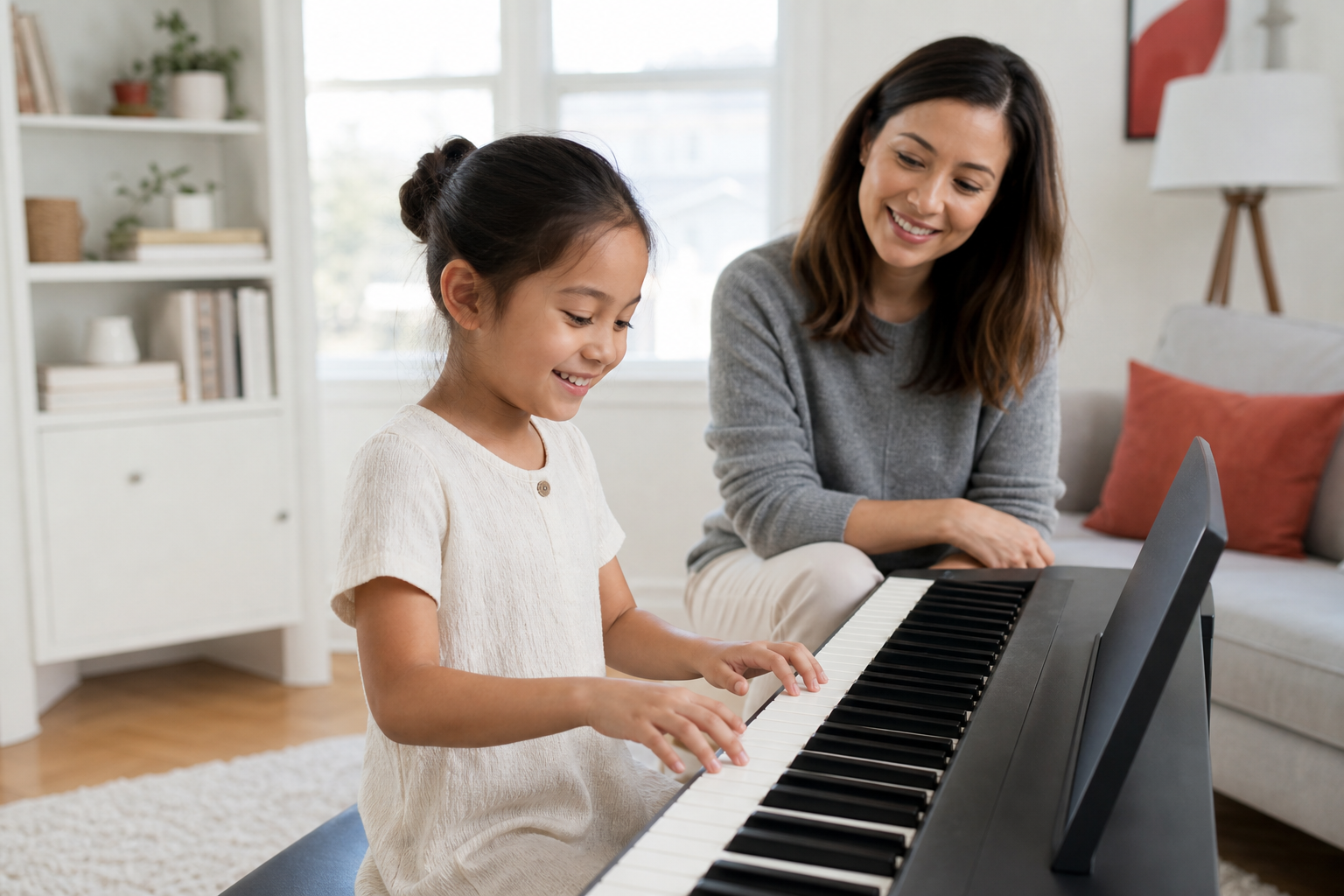
12. What is the next step if the program is a fit?
The enrollment path should be easy to explain. Ask which class or program matches your child, where the schedule and current availability appear, what you need to complete, and when you should expect confirmation. If the next step remains vague, pause before paying.
For current iPianoLab options, you can view signup paths, check the school-class route for families, or explore online piano learning.
A quick piano lesson comparison checklist
- The program explains what beginners learn first.
- The format matches your child’s comfort, attention, and motivation.
- Practice expectations are realistic for your family.
- Materials and home-equipment needs are clear.
- Progress is defined in skills, not only pages or time enrolled.
- Parent communication has a reliable channel.
- Absence, schedule, payment, and withdrawal policies are available before enrollment.
- Your child leaves the first interaction interested in trying again.
Frequently asked questions
Should I choose a piano teacher based on credentials?
Training and experience matter, but they are only part of fit. Ask how the teacher works with beginners, explains the first learning sequence, adapts to children, communicates with parents, and supports practice between lessons.
Are group piano lessons good for beginners?
They can be. Group lessons may help children learn through shared energy, routine, and peer encouragement. Ask how each student receives guidance, how keyboards and headphones are used, and how the teacher supports different learning speeds.
Are online piano lessons good for children?
Online learning can work well for children who benefit from flexible access and a clear lesson sequence, especially when a parent helps establish the routine. Confirm the required setup, feedback model, and progress path before enrolling.
How long should I try piano lessons before deciding whether they fit?
Use a defined first checkpoint instead of judging one difficult day. Six lessons can provide a useful early view of comfort, routine, and progress, but the right review point depends on the program. Ask what signs the teacher expects families to see.
What if my child likes music but not the teacher or class?
Treat that as a fit question, not proof that your child should quit music. Ask whether a different teacher, format, pace, song choice, class environment, or practice approach would better support the child.
Choose the path your child can keep using
The right piano lesson decision should feel clear on three levels: your child understands what will happen, your family can support the routine, and the program can explain how beginners make progress. Use the questions above, compare answers, and choose the path that makes a second lesson feel inviting.
Ready to compare current options? Find an iPianoLab signup path, review school-based classes for families, or start with online learning.