Song-Based Piano Lessons for Kids: Why Early Wins Matter
Many children are more willing to practice piano when the first step sounds like music, not like a worksheet. That does not mean lessons should skip fundamentals. It means a good beginner program uses songs children enjoy as the doorway into rhythm, listening, counting, keyboard geography, note reading, and confidence.
The short answer: song-based piano lessons help kids connect effort with a result they can hear. When a child recognizes a pattern, claps the beat, or plays a short musical phrase, the lesson feels useful right away. That early win can make the next skill easier to attempt.
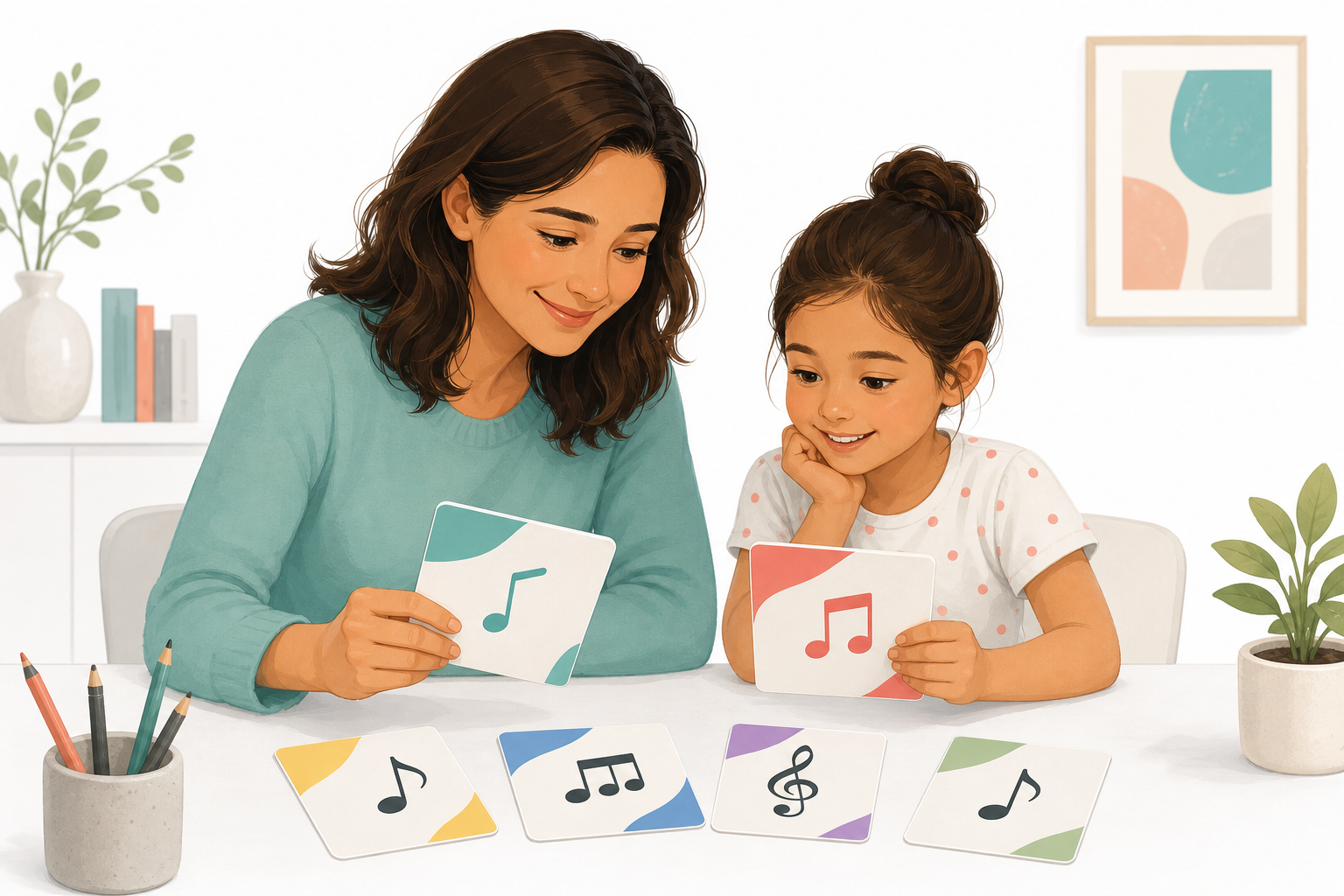
What are song-based piano lessons?
Song-based piano lessons use real musical goals early in the learning process. A teacher may start with a simple melody, rhythm pattern, familiar tune, or short arrangement, then connect that musical moment to the skill underneath it.
For a beginner, the song may be short. It may use one hand at first. It may focus on a repeated rhythm or a small note pattern. The point is not to pretend the child has mastered piano overnight. The point is to help the child hear progress while learning how music works.
A strong song-based lesson still teaches fundamentals. It simply gives those fundamentals a clear reason to exist.
Why early musical wins help kids continue
Children often decide whether they are "good at piano" long before they understand how much repetition the instrument requires. If the first lessons feel confusing, silent, or overly technical, a beginner may assume piano is not for them. If the first lessons create one clear musical win, the child has something to hold onto.
Early wins can help because they:
- Show the child that effort can turn into a sound they recognize.
- Make repetition feel purposeful instead of random.
- Give parents a simple way to notice progress at home.
- Help shy or hesitant students feel less exposed.
- Give active students a clear target for attention.
- Connect confidence with real musical skill.
That confidence matters for retention. A child who feels capable is more likely to return to class, try the next song, and accept correction without feeling defeated.
How songs teach real piano skills
A song is not just a reward at the end of the lesson. In a well-designed beginner class, the song is the container for the skill. One short phrase can teach steady beat, note direction, finger control, listening, memory, and patience.
For example, a teacher might use a familiar-sounding rhythm to help students count out loud before they play. Then the teacher can connect that rhythm to written notation, hand position, and the way the music feels in the body.
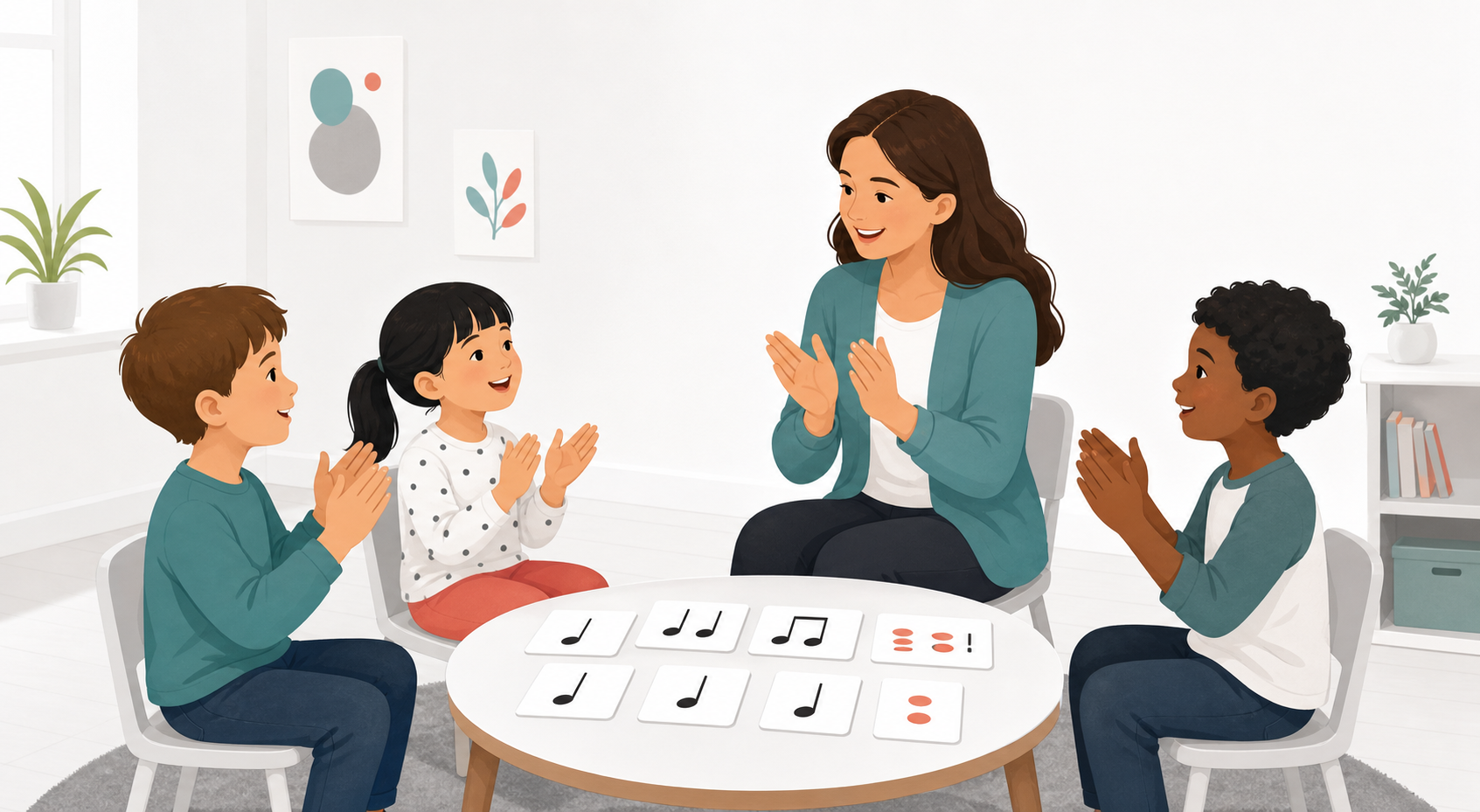
What parents should look for in a song-based program
Not every program that mentions songs is actually structured for beginners. Parents should look for a balance of motivation and method. The class should feel fun, but it should also have a sequence.
Useful signs include:
- The teacher can explain what skill each song is building.
- Beginners are not expected to read everything before they can play anything.
- Students get repetition without feeling stuck on one mistake.
- Practice assignments are small enough for a family to repeat at home.
- The program builds from simple patterns toward reading, rhythm, coordination, and musical independence.
- Parents know the next step after the song is introduced.
That last point matters. A favorite song can open the door, but the program should keep moving toward stronger musicianship.
Does song-based learning replace note reading?
No. The best song-based lessons do not avoid reading; they make reading feel connected to a musical purpose. A child may first learn to hear and play a short pattern, then begin to connect that pattern to note names, rhythm values, staff direction, or fingering.
That sequence can be especially helpful for young beginners. Instead of asking children to decode symbols before they understand what music feels like, the teacher gives them sound, movement, and repetition first. Reading can then become a way to remember and share the music, not a wall that blocks the first lesson.
If your family is wondering whether a child needs to read music before starting, this guide may help: Does My Child Need to Read Music Before Piano Lessons?
How parents can support song-based practice at home
Parents do not need to turn home practice into a performance. The goal is to help the child repeat one small musical target often enough that it feels familiar.
- Name the song or pattern. Start with the thing your child recognizes.
- Clap or count once. Rhythm away from the instrument helps the body understand the beat.
- Play a small section. One line, one phrase, or one hand may be enough.
- Notice the win. Say what improved: steadier beat, easier start, better listening, or calmer restart.
- Stop before frustration takes over. Short practice protects the next session.
If practice is becoming a battle, start with a smaller target. You can also read how to help your child practice without becoming the teacher.
How iPianoLab uses early wins
iPianoLab is built for children and beginning students. Students play songs they enjoy early, then build the fundamentals behind those songs: rhythm, counting, keyboard geography, listening, note reading, two-hand coordination, melody, chords, and music literacy.
That approach helps beginners feel successful without lowering the musical bar. A child can enjoy a first song and still learn the skills that make the next song easier.
Families can choose the path that fits their routine: school-based classes, online learning support, or a signup path that helps parents choose the right next step.
Find school-based classes Explore online piano learning
Parent checklist: choosing song-based piano lessons
- Does the program help beginners play something musical early?
- Can the teacher explain the skill behind the song?
- Is practice short and clear enough for home?
- Does the class build rhythm, counting, reading, and coordination over time?
- Does your child leave with a win they can repeat?
- Is there a clear next step if your child wants to continue?
FAQ
Are song-based piano lessons good for beginners?
Yes, when they are structured. Songs help beginners hear progress early, but the teacher should still connect each song to rhythm, counting, note reading, listening, and coordination.
Will my child only learn by ear?
Not in a strong program. A song-based approach can begin with listening and pattern recognition, then connect those sounds to reading, rhythm symbols, and written music as the child is ready.
What if my child only wants to play one favorite song?
That interest can be useful. A teacher can use the favorite song as motivation while gradually adding new patterns, skills, and listening goals. The key is to keep the lesson moving forward.
How quickly should a beginner play a recognizable song?
Many beginners can play a short musical pattern or simplified song early, but the timeline depends on age, attention span, class format, and practice routine. Early success should be encouraging, not rushed.
Ready to help your child start with music they can enjoy? Create an iPianoLab account and choose a beginner-friendly next step.