How to Help a Child Play Piano With Both Hands
To help a child play piano with both hands, make the task smaller: choose one short phrase, check each hand on its own, then join just the first beat at a comfortable pace. Build from that small success instead of asking for the whole song again. If one hand stops when the other begins, the assignment may need fewer notes or a simpler rhythm.
Two-hand playing can feel like a new skill even when your child already knows the notes. A parent can help by keeping the task clear and noticing exactly where it becomes difficult. You do not need to play the piano yourself, and your child does not need to master a complete hands-together song before starting lessons.
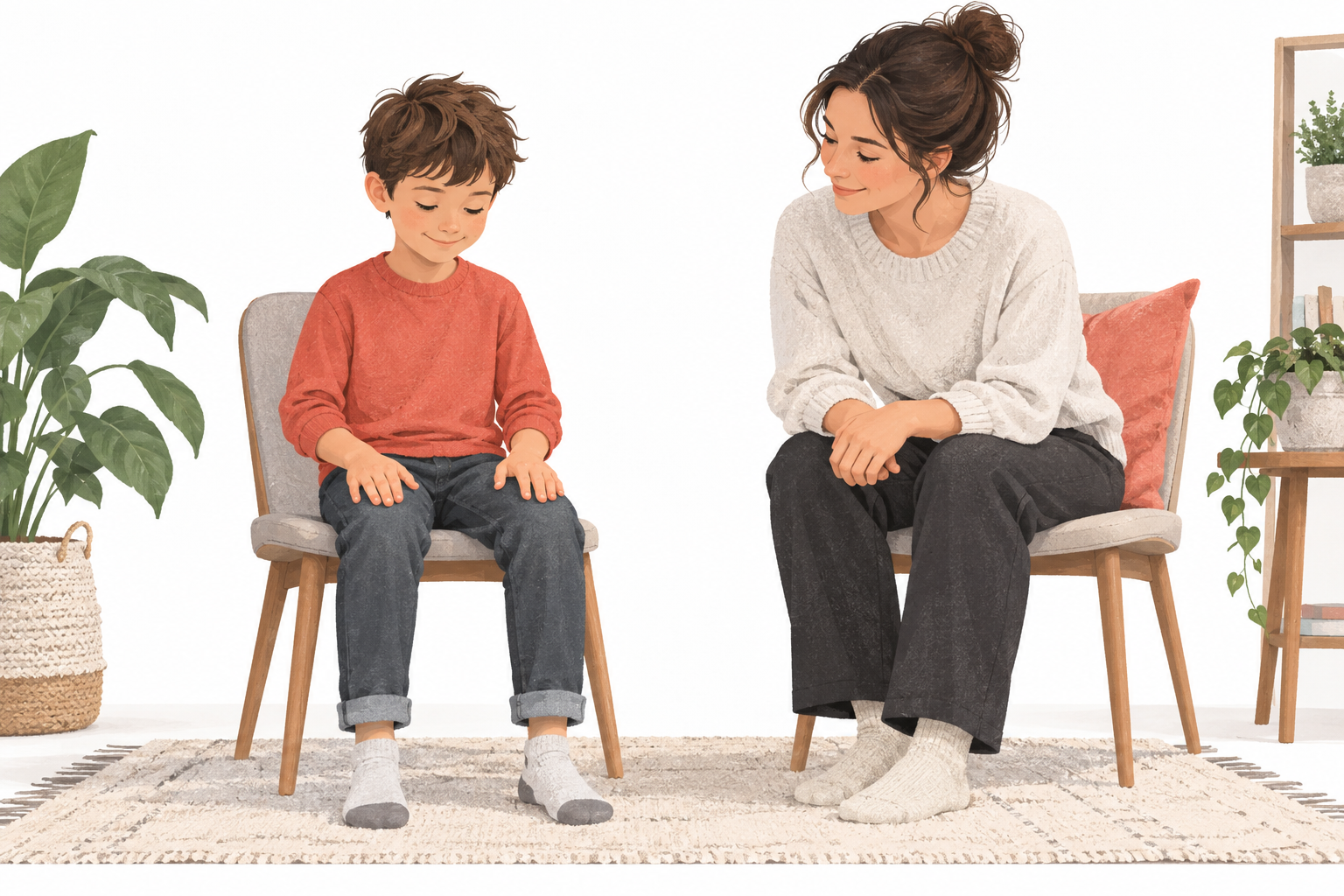
Why can my child play each hand separately but not together?
Playing the parts separately answers one question: does each hand know its own job? Playing together adds another: can the child coordinate when the parts begin, move, hold and stop? A melody may change notes while an accompaniment holds one note. The hands share a beat, but they do not always do the same thing.
Watch for the exact point of difficulty. Does the left hand copy the right-hand rhythm? Does the child pause before a new note? Do both hands work until a position change? That observation is more useful than saying, “You knew this a minute ago.” Tell the teacher what you noticed so the next practice task addresses the right problem.
A small-step routine for putting the hands together
Use a phrase the teacher has assigned. The following is a practice framework, not a replacement for the child's fingering or lesson instructions. Stop while the child can still listen and make a useful adjustment.
- Choose a tiny section. Cover the rest of the page if it distracts your child. Begin with one beat, one measure, or another short unit the teacher has marked. There is no prize for starting with the longest section.
- Name each hand's job. Try plain language: “This hand changes notes; that hand holds.” If neither of you knows what happens, use the lesson demonstration or ask the teacher before repeating guesses.
- Check the parts separately. Let the child find the starting notes and play each short part at a pace they can manage. Separate practice is preparation; it need not become a demand for flawless playing before any two-hand attempt.
- Join the beginning. Place both hands before starting. Count in, play only the first shared moment, and stop deliberately. A planned stop is different from losing the beat halfway through a longer attempt.
- Add the next event. Once the beginning feels manageable, include the next note or held beat. Keep the same comfortable pace. If that addition causes confusion, return to the smaller piece.
- Connect and finish with music. Link the short pieces, then play a familiar, easier song or phrase. Practice should give the child something musical to enjoy, as well as one problem to solve.
For example, a teacher might assign a right-hand melody over one held left-hand note. First check the shared start. Next check that the left hand keeps holding while the melody changes. Do not add a moving accompaniment simply because the first version sounds easy.
A coordination warm-up away from the keys
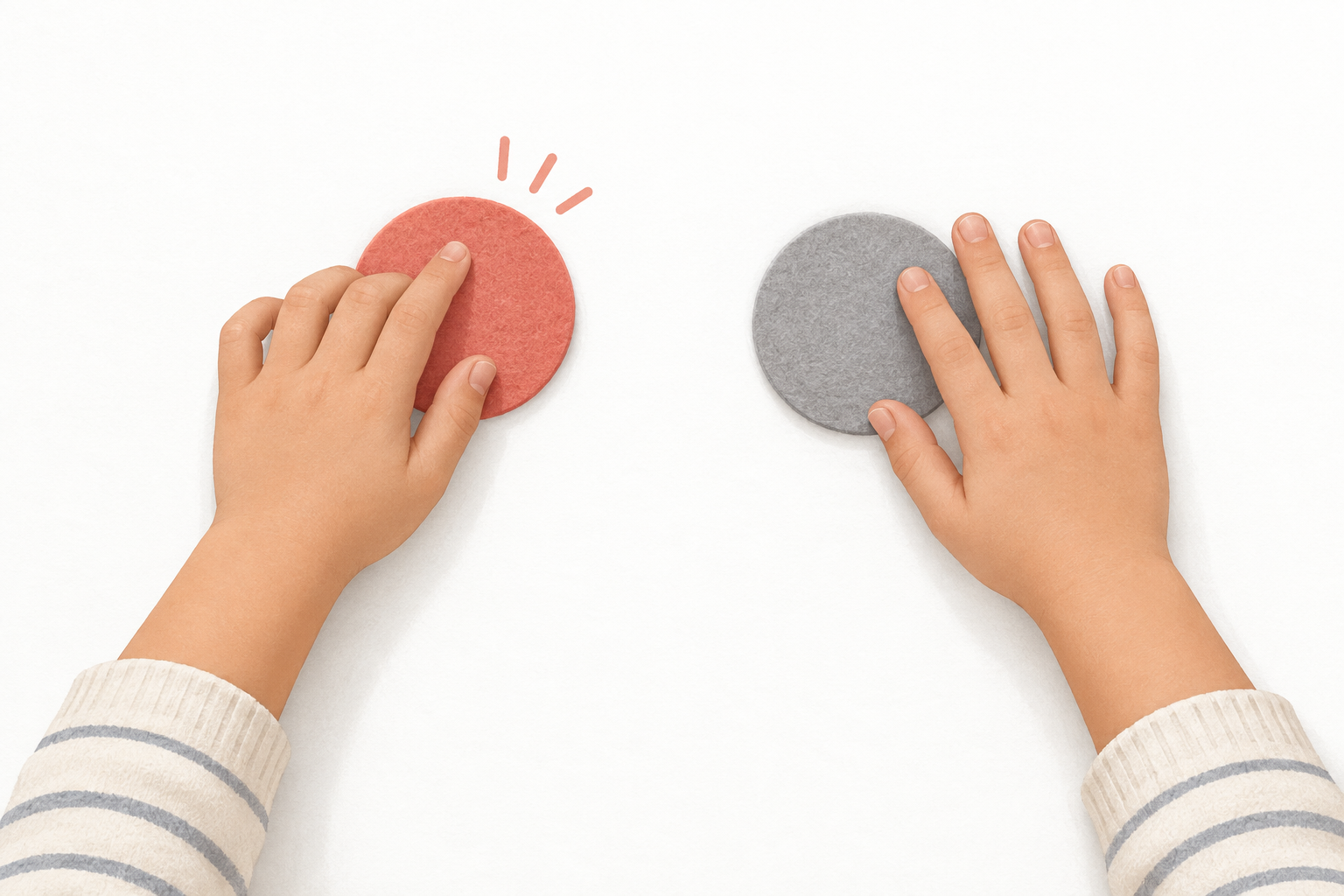
Sit comfortably with hands on knees or a table. Tap a gentle, steady pulse with both hands together. Then try one very short pattern in which one hand taps while the other rests. Say “together, rest” or another cue that matches the action. Keep the movement small and relaxed.
This is a way to simplify timing before adding pitches and fingering. It does not prove readiness for a particular piece, and it does not replace practice at an instrument. If the pattern itself is confusing, make it easier rather than adding more instructions.
What to change when both hands keep getting stuck
- One hand copies the other: say or tap each rhythm first, then join only the first shared beat. Ask the teacher whether one part can be simplified.
- The child stops at the same note: start just before that spot and continue just after it. Replaying the whole opening gives less practice to the actual difficulty.
- Everything works slowly but falls apart faster: keep the comfortable pace. Add speed only when the movement and rhythm remain understandable.
- The child watches one hand and loses the other: prepare both starting positions first. Ask the teacher to mark a sensible looking point or reduce the number of position changes.
- Hands become stiff or uncomfortable: stop the attempt and ask the teacher to check setup, reach and movement. Do not press through discomfort or force a stretch.
- Practice becomes an argument: end with a smaller success and bring the specific difficulty to the next lesson. More repetitions of a confusing task are not a clear plan.
A metronome can be useful once the short pattern makes sense, but adding a click while the child is still finding the notes can add another demand. See when to introduce a metronome for a separate readiness check.
What parents should ask a beginner piano program
When comparing lessons, ask how the program moves from a first song to simple two-hand playing. Request an example of a beginner assignment and how it would be adjusted for a child who gets stuck. A clear answer should explain the next musical step, not promise a fixed deadline for every student.
iPianoLab's song-based approach builds keyboard basics, rhythm, note reading, chords and coordination around music children want to play. The iPianoLab online learning page explains current learning formats. Check the level of teacher help in the option you choose; a video library and a teacher-led lesson provide different kinds of support.
Already taking lessons? Use the guide to recognizing piano progress to notice gains such as an easier shared start or fewer interruptions, even before the whole song is ready.
Frequently asked questions
When should a child start playing piano with both hands?
When the task fits the child's current understanding and movement. A very simple two-hand part can be introduced before a child can play a complicated one-hand melody. Follow the teacher's sequence rather than an age or week-by-week deadline.
Should children always practice hands separately first?
Separate practice is useful when a child needs to learn a part, but it is not a universal rule. A simple pattern may make sense with both hands from the beginning. Use the approach that makes the assigned musical task clearer.
How long does it take to learn hands-together piano?
There is no single timeline. Starting two notes together and playing a melody over a moving accompaniment are different tasks. Look for progress on the assigned pattern instead of comparing your child with another student's video.
Can online piano lessons help with two-hand coordination?
A clear demonstration can help a child see each hand's role. If the child cannot work out why the parts will not combine, individual feedback may be useful. Before enrolling, check how the chosen format offers demonstrations, practice guidance and teacher support.
Give your child a clear next step
Look for beginner learning that connects small, manageable skills to real songs. Explore iPianoLab online piano learning or compare iPianoLab signup options.