Is This Piano Song Too Hard for My Child?
If your child keeps stopping in the same measure, avoids practice, or says a song is "too hard," it does not always mean piano is going badly. It may simply mean the song is not at the right level yet.
For beginners, the best piano song is not the easiest song in the book. It is the song that gives the child a small, clear challenge they can solve with steady practice and teacher support.
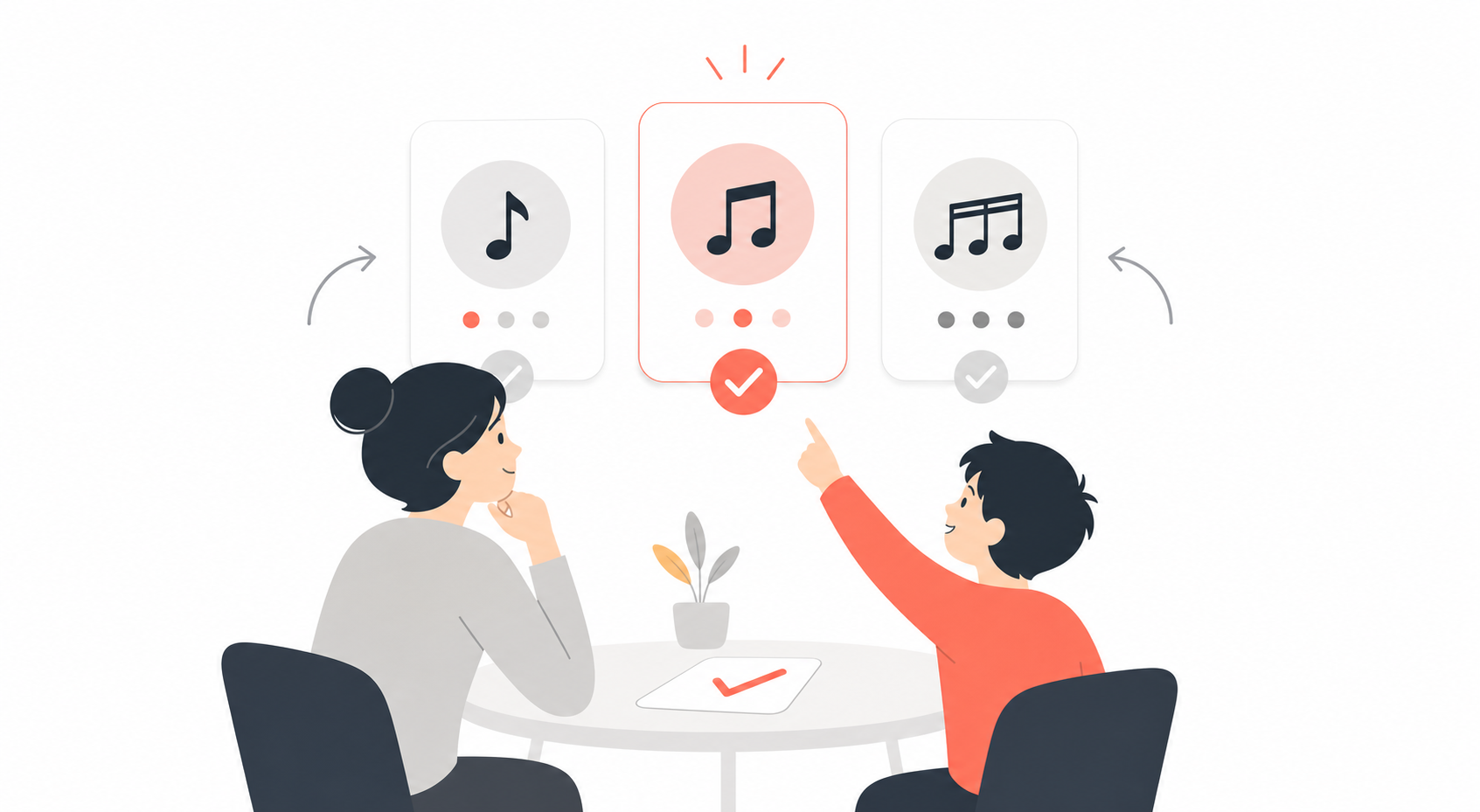
Quick answer: how hard should a beginner piano song feel?
A beginner piano song is probably the right level if your child can play small sections correctly after a few slow tries, remember the main pattern between lessons, and still feels willing to come back to it. It may be too hard if every practice session starts from scratch, the same mistake never improves, or your child starts avoiding the instrument altogether.
At iPianoLab, teachers watch for that balance carefully. Students build confidence by playing songs they enjoy early, then add fundamentals such as rhythm, counting, note reading, keyboard geography, two-hand coordination, and music literacy in manageable steps.
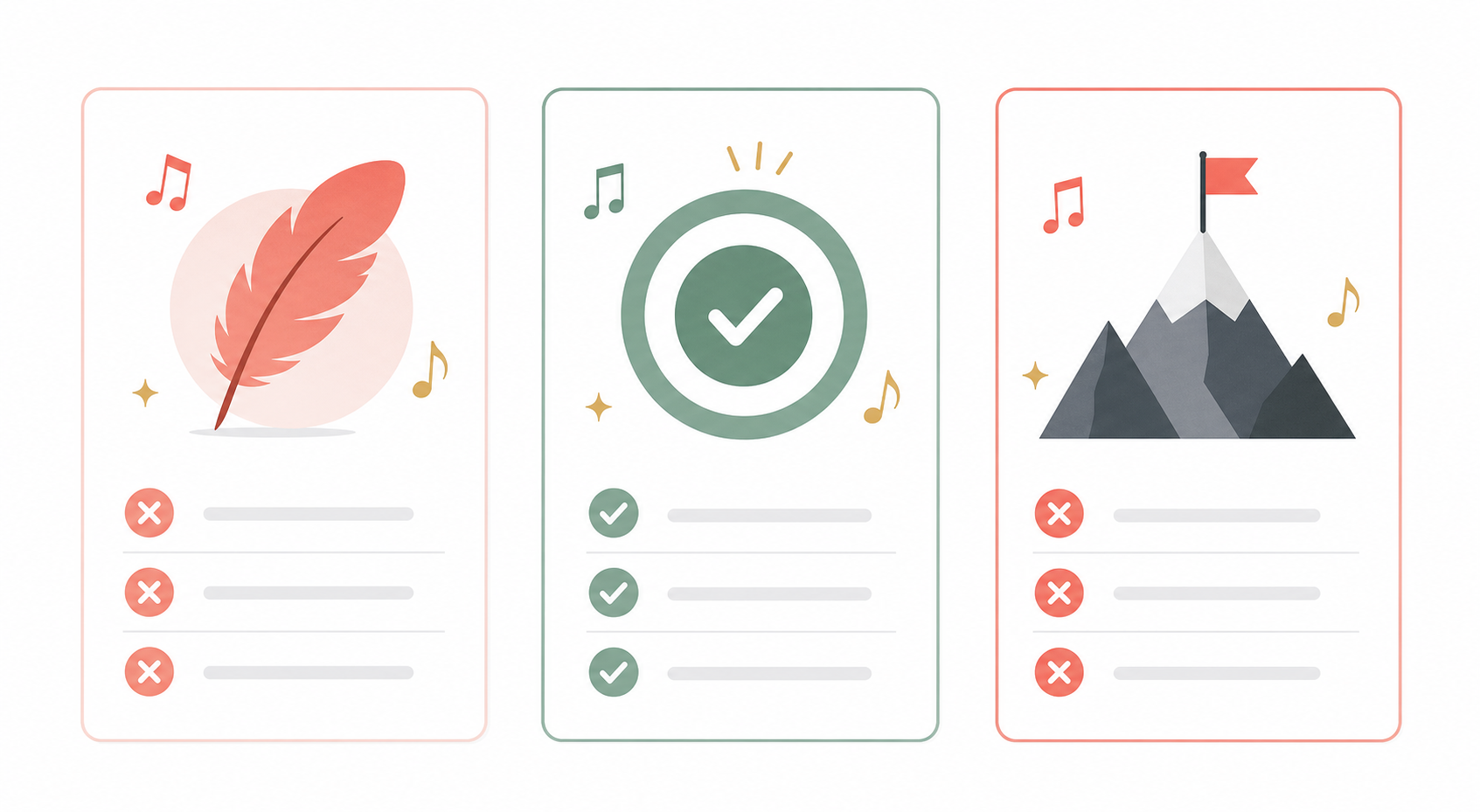
Signs the song is too easy
A song that is too easy can be useful for review, but it will not move a beginner forward for very long. Watch for these signs:
- Your child can play it accurately without looking closely at the music or lesson steps.
- There is no new rhythm, note pattern, hand movement, or coordination challenge.
- Practice turns into autopilot instead of focused listening.
- Your child sounds bored, rushes through it, or asks for something new every time.
That does not mean you should throw the song away. Easy songs are helpful for warming up, rebuilding confidence, and preparing for a recital or family performance. They just should not be the only material your child practices.
Signs the song is just right
A just-right song gives your child a little stretch without turning practice into a battle. It usually has one or two new skills, not five at once.
The song is probably a good fit when:
- Your child can play a small section slowly after a few attempts.
- Mistakes are specific, such as one rhythm, one hand change, or one tricky jump.
- The song sounds better by the end of a short practice session.
- Your child can explain what part needs work.
- The teacher can give one clear next step for the week.
This is where good beginner teaching matters. A student may not be ready to play the entire song fluently yet, but they can still be ready to practice it in small pieces.
Signs the song is too hard
A too-hard song usually creates confusion rather than productive challenge. The warning sign is not one mistake. It is the same pattern of frustration with no meaningful improvement.
The song may be too hard right now if:
- Your child cannot keep track of the rhythm, notes, and hand position at the same time.
- Every practice session starts from the beginning and stalls in the same place.
- The hands cannot coordinate even after the music is slowed down.
- Your child guesses instead of reading, counting, or following the lesson steps.
- Practice ends with tears, shutdown, or arguments more often than progress.
When this happens, the answer is usually not "practice longer." A better move is to make the task smaller, slower, and clearer.
What parents can do when a song feels stuck
Parents do not need to become piano teachers at home. Your job is to protect the practice routine, keep the tone calm, and help your child use the plan their teacher has already given them.
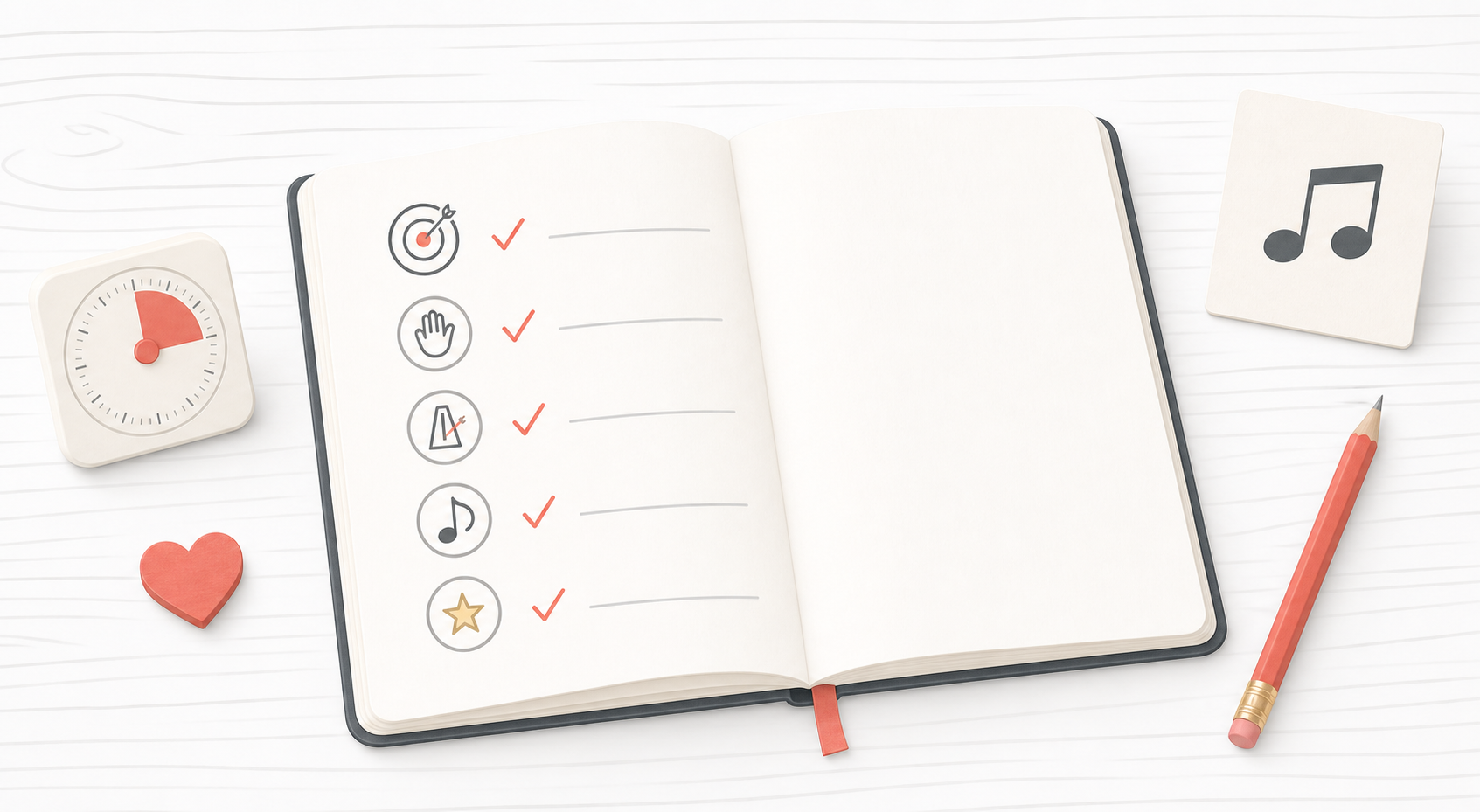
Try this simple reset:
- Make the section smaller. Practice two measures instead of the whole song.
- Slow it down. Accuracy matters more than speed for beginners.
- Separate the challenge. Clap the rhythm, say the note names, or play one hand alone before putting everything together.
- End with one win. Stop after one cleaner repeat instead of pushing until everyone is tired.
- Tell the teacher what happened. A good teacher can simplify, review, or swap the song when needed.
If practice has become tense in general, start with our guide to helping your child practice piano without battles. If the issue is hands-together coordination, this guide on when a child is ready to play piano with two hands may help you understand the next milestone.
Should my child quit a song that is too hard?
Not always. Sometimes a song should be paused, simplified, or divided into smaller sections. Other times, switching to a better-fit song is the healthiest choice.
The decision should depend on what the song is teaching. If it introduces one useful skill, the teacher may keep it and adjust the assignment. If it is blocking several skills at once, a different song may build the same foundation with less frustration.
This is one reason iPianoLab focuses on a structured path rather than random song choices. Students get music they can enjoy, but teachers still guide the order of skills so confidence and fundamentals grow together.
How to talk about difficulty without discouraging your child
Children often hear "too hard" as "I am not good at this." Try changing the language:
- Instead of "This is too hard," say "This part needs a smaller step."
- Instead of "You should know this," say "Let's find the measure that changed."
- Instead of "Play it again," say "Can you make just these two notes cleaner?"
- Instead of "You are rushing," say "Let's make the rhythm easy enough to count."
The goal is to make difficulty feel normal. Beginner musicians should learn that hard parts are not failure. They are information.
When to ask the teacher for help
Ask the teacher for help if your child has practiced the same small section several times and still cannot tell what to fix. That is a teaching moment, not a character problem.
Helpful details to share include:
- Which measure or section causes the stop.
- Whether rhythm, note reading, hand position, or coordination seems to be the problem.
- How long your child can practice before frustration starts.
- Whether the song felt manageable at the lesson but harder at home.
For brand-new students, you may also find it useful to review what usually happens in the first six weeks of piano lessons for kids.
FAQ: beginner piano song difficulty
How many songs should a beginner practice at once?
Many beginners do best with one main challenge song, one easier review song, and one short skill activity such as rhythm, note names, or a small coordination drill. The exact mix should follow the teacher's assignment.
Is it bad if my child wants to play songs that are above their level?
No. Wanting harder songs can be a good sign of motivation. The teacher may use a simplified version, a short excerpt, or a related skill song first so your child can work toward the goal without getting overwhelmed.
Should we buy harder music to keep our child interested?
Not automatically. Interest matters, but harder books can add frustration if the reading, rhythm, and coordination are too advanced. If your child is outgrowing beginner material, ask the teacher what the next level should be. If your family is still choosing an instrument, the First Time Keyboard Buyer's Guide can help with setup basics.
What if my child only wants easy songs?
Use easy songs for confidence, then add one small stretch. A teacher can often make the next step feel less intimidating by changing tempo, simplifying the left hand, or breaking the song into short goals.
Find the right next step
If your child is getting stuck, bored, or frustrated, the right teacher-guided plan can make piano feel manageable again. iPianoLab offers beginner-friendly piano learning through online lessons and school-based group classes, with the same programs and team continuing as iPianoLab becomes PianoFlight in Summer 2026.
Families can also explore online piano learning or school-based group classes for students through iPianoLab at school.