Should Kids Use the Sustain Pedal on Piano?
Beginner children can use the sustain pedal when the music or teacher calls for it, but they do not need it in every song. The right pedal can make notes continue after the fingers lift, connect sounds that the hand cannot comfortably join, and add color. Used at the wrong time—or held down too long—it can also blur notes, hide rests, and make it harder to hear what the fingers are doing.
For most beginners, the best first goal is not “use more pedal.” It is “hear when the sound should continue and when it should become clear again.” Let the teacher decide when pedaling belongs in the assigned music, then help your child practice one small press-and-release change at a time.
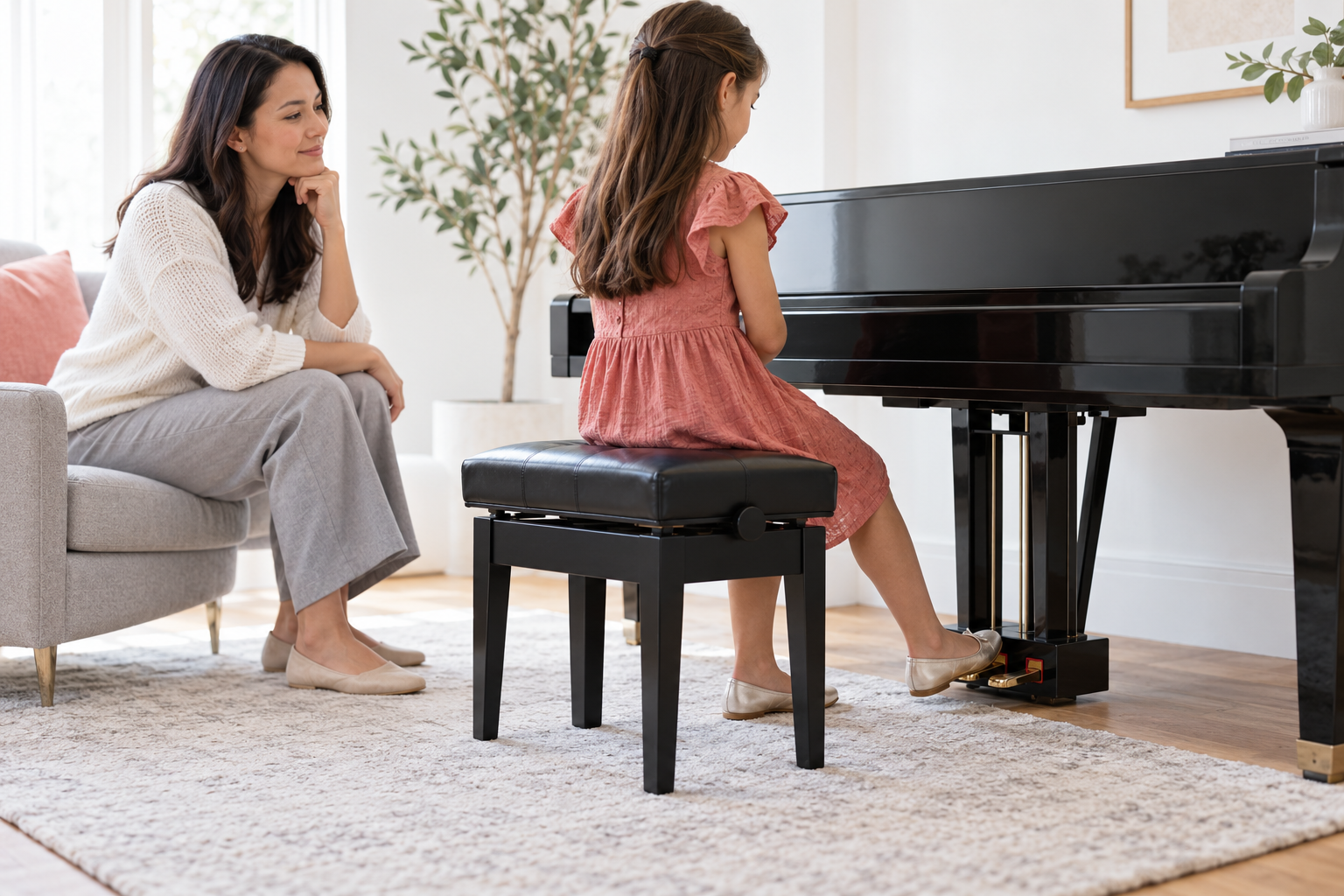
When should a beginner child use the sustain pedal?
A beginner should use the sustain pedal when it supports a musical purpose the child can hear and the teacher has introduced. That may mean allowing a chord to ring, connecting notes that are too far apart to hold with the fingers, or creating the sound requested in a particular piece.
A child should usually practice without the pedal when the main goal is learning notes, fingering, rhythm, rests, or a clean finger connection. Practicing without it makes details easier to hear. Once the passage is secure enough, the pedal can be added as a separate layer.
Age alone does not decide readiness. A younger child may enjoy a simple pedal effect with guidance, while an older beginner may need more time to coordinate the foot with both hands. The important questions are whether the child can sit safely, reach the pedal without losing balance, follow one clear cue, and listen for the moment the sound changes.
What does the sustain pedal do?
The right pedal is commonly called the sustain pedal or damper pedal. On an acoustic piano, pressing it lifts the dampers away from the strings, so sounds continue after the keys are released. A digital piano or keyboard produces a similar sustaining effect electronically.
That longer sound is useful, but it does not automatically make a performance smoother. If every note continues into the next one, harmonies can overlap and rests can disappear. Good pedaling includes both pressing and clearing: the child listens for when the pedal should go down and when it should come fully back up.
The other pedals have different jobs, and the middle pedal does not have the same function on every upright or digital instrument. A beginner parent does not need to teach all three at once. Start with the right pedal only when it appears in the lesson.
How can you tell if your child is ready to learn pedal?
Look for a few practical signs rather than a birthday or grade level:
- Stable sitting: the child can stay balanced on the bench while one foot moves.
- Safe reach: the right foot can use the pedal without sliding forward, twisting, or stretching from the toes.
- One-step listening: the child can hear whether a sound is ringing or has stopped.
- Simple coordination: the child can press after a note or chord and release on a clear cue.
- A musical reason: the assigned piece or teacher demonstration gives the pedal a specific job.
Your child does not need perfect hand technique before exploring the pedal. But if note reading, rhythm, and fingering already use all of their attention, adding a foot action may make the passage less clear. In that case, separate the jobs: learn the hands, practice the pedal motion alone, then combine only one small spot.
A five-minute listen–press–clear pedal routine
Use this only after the teacher has introduced the pedal or confirmed that it belongs in the music. Keep the example small enough that the child can listen instead of trying to coordinate an entire song.
- Listen without pedal. Play one familiar note or chord and let it stop naturally.
- Press after the sound begins. Play the same sound, then gently lower the right pedal while the keys are still held.
- Release the fingers. Notice that the sound continues even though the hands are no longer holding the keys.
- Clear the sound. Lift the front of the foot while keeping the heel supported. Listen for the exact moment the sound stops.
- Try one change. Repeat with two simple chords or two teacher-approved spots, clearing the pedal as the new sound begins.
Stop after a few clear repetitions. Pedaling is a timing and listening skill, not a strength exercise. The foot should not stamp, hover tensely, or pump through the whole song.
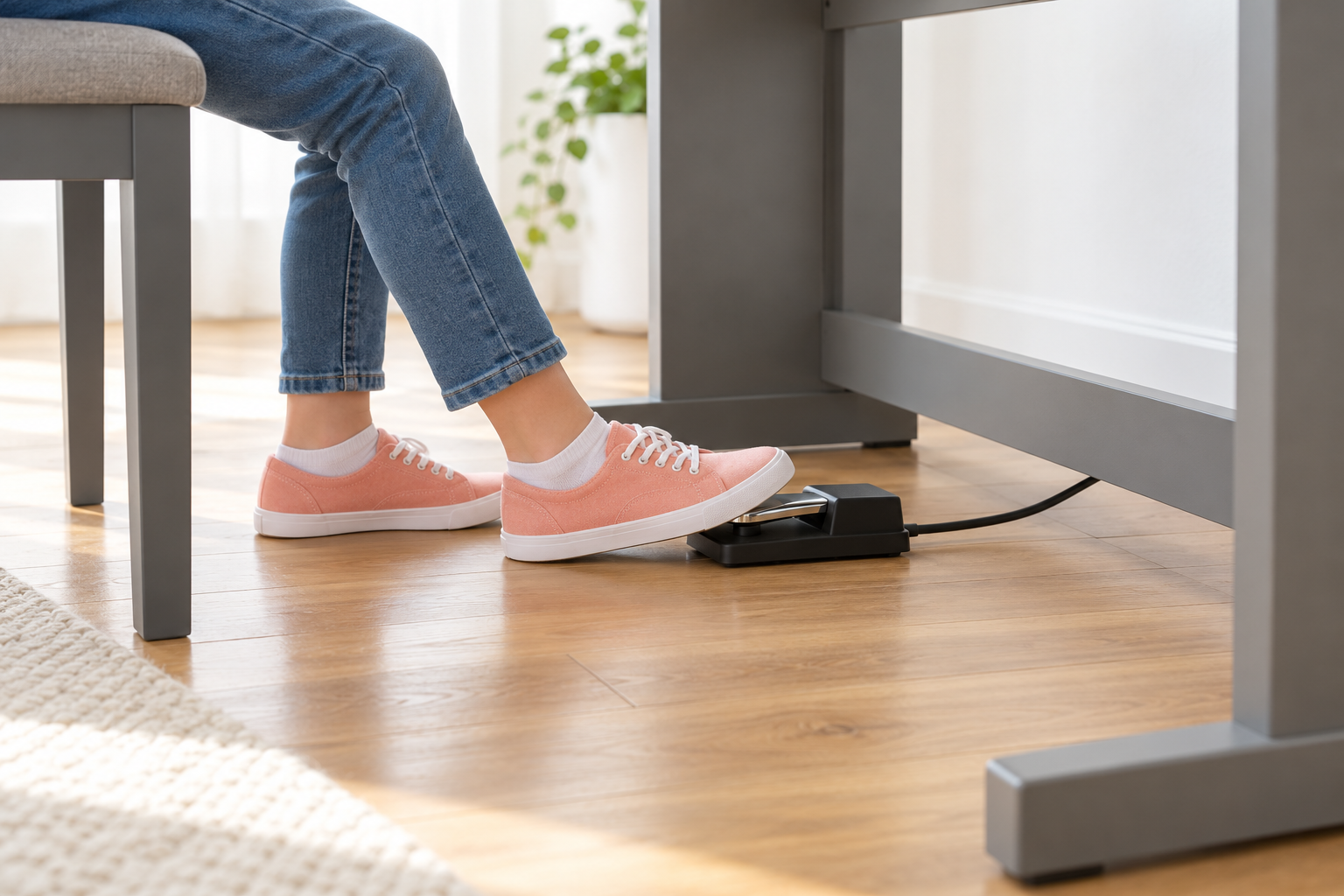
What if your child cannot reach the piano pedal?
Do not ask a child to slide to the edge of the bench, point the toes, or lean the body just to reach. Those compensations can make the seat unstable and pull attention away from the music. First check the overall setup with the teacher. The separate iPianoLab guide to piano bench height for children explains how elbow height, bench distance, and foot support work together.
A stable pedal extender or an appropriate raised pedal unit can bring the control within reach for a smaller child. The exact solution depends on the instrument. It must sit on a wide, flat, non-slip base and remain secure when pressed. Yamaha’s child-pedaling guidance likewise emphasizes adjusting a compatible pedal unit to the child’s height on a sufficiently large, flat, stable support.
For a portable digital piano, a single sustain footswitch may be easier to position than a fixed three-pedal unit, but it should not skate across the floor. Confirm compatibility with the instrument and check that the polarity works correctly before the lesson. If the sound sustains when the pedal is up instead of down, turn off the instrument and follow the manufacturer’s instructions rather than improvising during practice.
Why does the pedal make the piano sound muddy?
A muddy or blurry sound usually means too many notes are ringing together. The pedal may be staying down across a chord change, going down before the new sound is played, or hiding a rest that should be silent. Sometimes the room or instrument has a long natural resonance, so less pedal is needed than the child expects.
| What you hear or see | Likely practice issue | Try this first |
|---|---|---|
| Old and new chords overlap | The pedal did not clear at the harmony change | Practice one change slowly and listen for a clean new sound |
| Written rests disappear | The pedal is holding through a required silence | Mark the release point with the teacher and practice the silence alone |
| The foot pumps on every note | The child is following motion instead of sound | Return to one held chord and one deliberate release |
| The playing sounds clean only with pedal | The pedal may be masking finger releases or uneven connection | Practice the hands without pedal, then add it back to one spot |
| The pedal slides or the child loses balance | The setup is not secure or the pedal is out of reach | Stop and fix the physical setup before continuing |
If the notes still overlap when the pedal is not being used, the issue may be finger release rather than foot timing. Use the checks in Why Do My Child’s Piano Notes Sound Blurry? to separate held keys, articulation, and pedal causes.
Should children practice with or without the pedal?
Both, for different reasons. Practice without the pedal when your child needs to hear note accuracy, finger connection, articulation, rhythm, and rests clearly. Practice with the pedal when the child is learning the intended color or connection and can focus on one planned change.
A useful order is:
- Play the short passage with the hands alone.
- Tap or mime the pedal changes without playing.
- Combine one pedal change with the hands.
- Record a short attempt and listen for clarity.
A phone recording can help because the child no longer has to play and judge at the same time. Ask one question: “Can you hear where the new sound begins?” Avoid giving several corrections at once.
What should parents ask the piano teacher?
Bring the exact musical spot instead of asking whether the child is “good at pedal.” Useful questions include:
- Where should the pedal first go down?
- Should it clear with the new note, chord, phrase, or rest?
- Should this passage first be practiced without pedal?
- Is our home pedal secure and close enough for a balanced position?
- Does this digital piano support gradual or half-pedal control, or only on/off sustain?
Those questions give the teacher something specific to demonstrate. They also protect the child from turning a musical effect into a vague instruction to “pedal more.”
Build listening and coordination one layer at a time
iPianoLab helps beginners build note reading, rhythm, coordination, listening, and dependable practice habits through a structured learning path.
Explore iPianoLab online learning for a flexible home option, or find an iPianoLab beginner path for your child.
Frequently asked questions
What age should a child start using the piano pedal?
There is no single starting age. Begin when the teacher introduces a musical reason, the child can sit safely and reach a secure pedal, and one foot action does not overwhelm the hand task. A pedal extender or adjusted unit may help a smaller child reach without losing balance.
Which piano pedal should a beginner use?
The right pedal—the sustain or damper pedal—is usually the first one introduced. The other pedals have different functions, and the middle pedal can vary by instrument. Follow the teacher and the piano or keyboard manual.
Should a beginner hold the sustain pedal for the whole song?
Usually not. Holding it throughout can blur harmonies and erase rests. The child should learn specific press-and-release points based on the music and listen for when the sound needs to clear.
Does using the pedal hide mistakes?
It can hide uneven finger connections or releases by allowing many notes to ring together. Practice the hands without pedal when checking accuracy and articulation, then add the pedal for its intended musical effect.
Can a child use a sustain pedal with a digital keyboard?
Yes, if the keyboard has a compatible sustain-pedal connection. Secure the footswitch so it cannot slide, check the instrument manual, and confirm that pressing the pedal extends the sound while releasing it clears the sound.
What is half-pedaling?
Half-pedaling changes the amount of sustain by using part of the pedal’s travel. It requires a compatible instrument and pedal. Beginners do not need to master it before learning a clear full press and release.
Technique references: Yamaha, “How to Use Keyboard Pedals” and Yamaha Music, “Fix It: Piano Pedaling Teaching Tips.”