Are Online Piano Lessons Effective for Kids? What Parents Should Look For
Online piano lessons can be effective for kids when the program gives them a clear path, music they want to play, short tasks they can actually complete, and a reliable way to get help. The screen is only the delivery tool. What matters is whether your child knows what to do at the keyboard, can repeat the skill during the week, and can see progress from one lesson to the next.
A strong online program should do more than keep a child entertained. It should build rhythm, counting, keyboard geography, note reading, two-hand coordination, melody, chords, and musical independence in a sequence that makes sense for a beginner. This guide gives parents a practical way to judge that quality before enrolling.
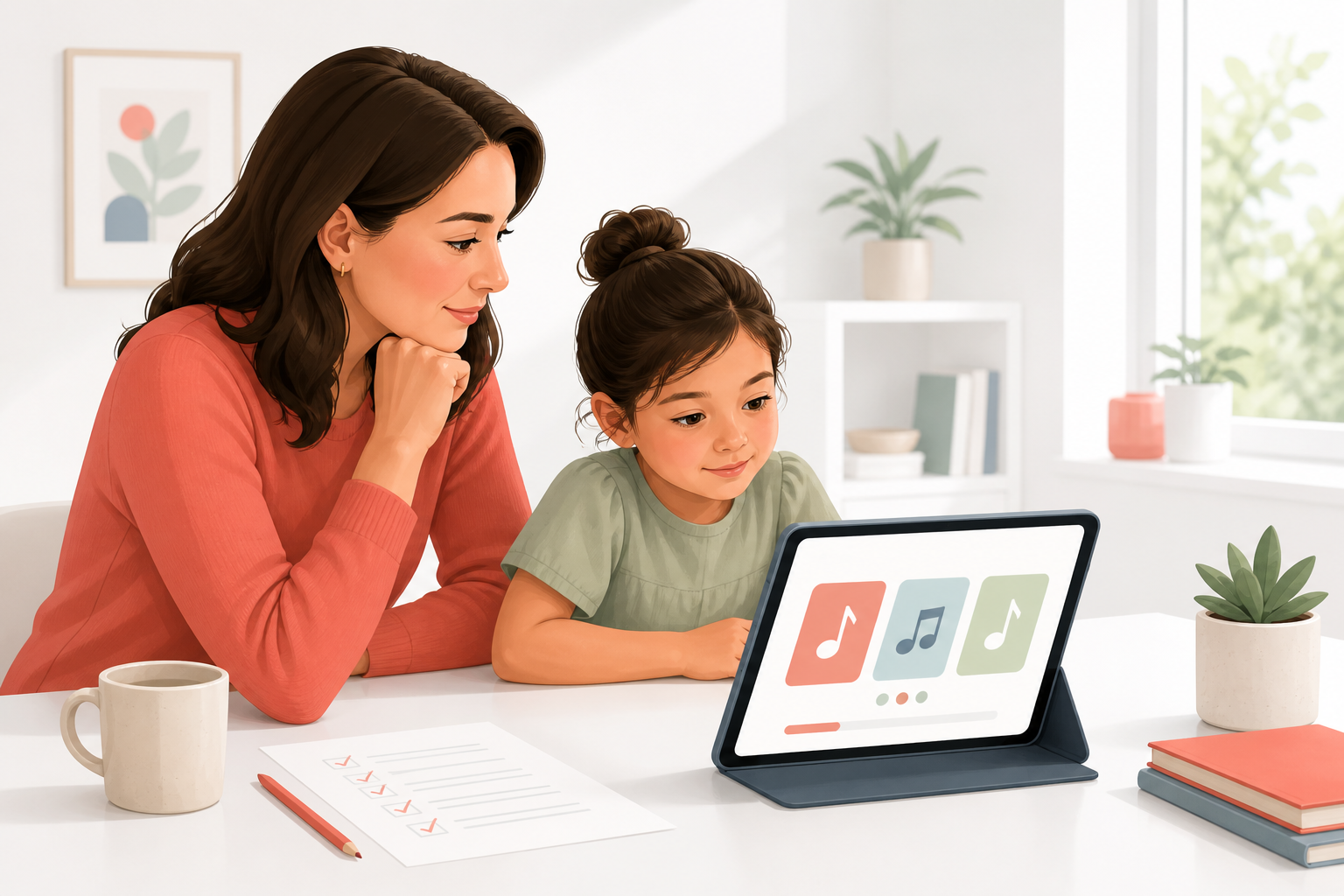
What makes online piano lessons work for a child?
Online learning works best when four parts support one another: the lesson is easy to follow, the musical task is small enough to practice, the child receives useful feedback, and the family can fit the routine into real life. If one part is missing, even polished videos or a large song library may not lead to steady progress.
The right program should help a child answer three questions without guessing:
- What am I learning today? The lesson has one clear skill or musical goal.
- What should I do after the video ends? The child has a specific play, repeat, listen, or read task at the keyboard.
- How will I know I am ready to continue? The program provides a checkpoint, teacher response, or observable success sign.
Children do not need to learn everything at once. In fact, online lessons are often easier to use when one short activity leads naturally to the next. The goal is not to finish the most videos. It is to turn each lesson into something the child can hear, play, remember, and build on.
Seven signs of an effective online piano program for kids
1. It has a clear beginner starting point
A new student should not have to browse a large library and decide what to learn first. Look for a defined entry lesson and a simple sequence. A useful starting path introduces the keyboard, steady beat, counting, finger movement, and a playable musical idea without assuming prior experience.
If your child is completely new to music, that is not a problem. Read the guide to beginner piano lessons with no musical background for a realistic first-stage picture.
2. Lessons lead to real playing
The child should regularly move from watching or listening to doing. An effective lesson might ask a beginner to find a keyboard area, clap a rhythm, count four beats, copy a short pattern, or play a small part of a song. The activity should be concrete enough that a parent can recognize whether it happened.
Be cautious when most of the experience is tapping a screen while the instrument stays quiet. Games can support learning, but they should connect to keyboard skills and musical understanding rather than replace them.
3. The sequence builds from one skill to the next
Good online lessons are organized as a curriculum, not just a playlist. Each level should revisit earlier skills while adding a manageable new challenge. Parents should be able to understand what the child is building now and what comes next.
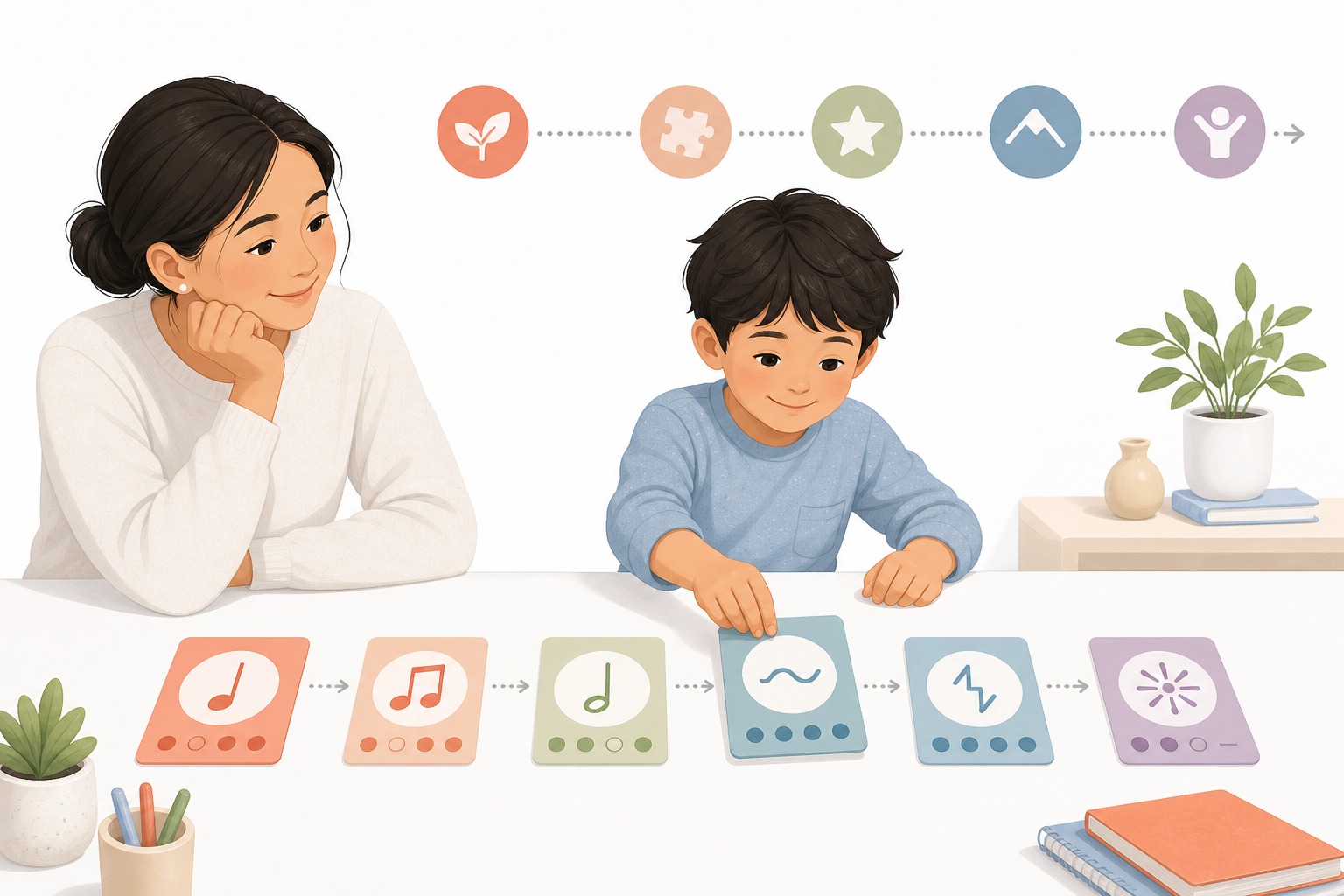
iPianoLab uses multiple levels with six lessons in each level. That gives families a visible checkpoint for reviewing progress instead of treating the learning path as endless scrolling. The full beginner piano level guide explains how structured checkpoints can help.
4. The music creates an early reason to continue
Fundamentals matter, but children also need to feel that the work leads somewhere musical. A program can introduce songs early while still teaching rhythm, reading, coordination, and chords. Recognizable musical results give a beginner a reason to repeat the harder parts.
Ask to see how the program balances songs and skills. A child should not be limited to isolated drills, but a song library alone is not a complete curriculum. The strongest path uses appealing music to practice specific fundamentals.
5. There is a practical feedback path
Children need a way to know when they misunderstood a rhythm, skipped a step, or are ready to continue. Feedback may come from a live teacher, a recorded response, a clear self-check, a scheduled coaching point, or a combination of these.
Before enrolling, ask exactly how help works. Can a family ask a question? Is live support available when a child stalls? Does the program explain common mistakes? A vague promise of “interactive learning” is less useful than a clear support process.
6. The parent role is specific and limited
Parents should know what to set up, how often to prompt, and when to step back. For a young beginner, the adult may open the lesson, check that the keyboard and headphones are ready, and help protect a short practice window. The parent should not need to become the piano teacher.
A useful program speaks to parents plainly: here is today’s goal, here is the recommended routine, and here is how to get help. If the adult must interpret every lesson or correct every note, the program is asking the family to supply too much of the instruction.
7. Progress is visible without turning music into a race
Look for signs that connect completed lessons to musical growth. A child may keep a steadier count, find notes more independently, coordinate two hands for a short section, recover from a mistake, or begin a familiar activity without help. Those are stronger measures than speed through the library.
Progress should be reviewable, but children do not need public leaderboards or constant comparison. A calm checkpoint helps a family decide whether to repeat, ask for support, or move forward.
Online program quality checklist for parents
| What to check | Strong sign | Question to ask |
|---|---|---|
| Starting point | A clearly labeled beginner sequence with no prior knowledge assumed | Where should a brand-new child begin? |
| Lesson structure | One focused skill followed by a real keyboard activity | What should my child be able to do after this lesson? |
| Curriculum | Skills build across defined levels and checkpoints | How do lessons connect from one level to the next? |
| Music | Songs motivate practice while reinforcing fundamentals | How are songs connected to rhythm, reading, and coordination? |
| Feedback | A child can receive help before confusion becomes a habit | What happens when my child gets stuck? |
| Parent support | The adult receives simple setup and routine guidance | What do you expect a parent to do each week? |
| Progress | Checkpoints reflect musical skills, not just screen time | How will we know the program is working? |
How much parent involvement do online piano lessons require?
The answer depends on the child’s age, reading independence, and comfort using the device. Younger beginners usually need more help starting the lesson and following the routine. Older children may need only a consistent time, a quiet setup, and an occasional progress check.
A practical beginner routine can look like this:
- Before: open the correct lesson and make sure the instrument, headphones, and materials are ready.
- During: let the child watch, pause, repeat, and play without correcting every attempt.
- After: ask the child to show one small thing they learned and identify the next practice step.
- Later in the week: use short return sessions instead of one long catch-up session.
The weekly online video lesson plan and the parent setup checklist give families more detail on the home routine.
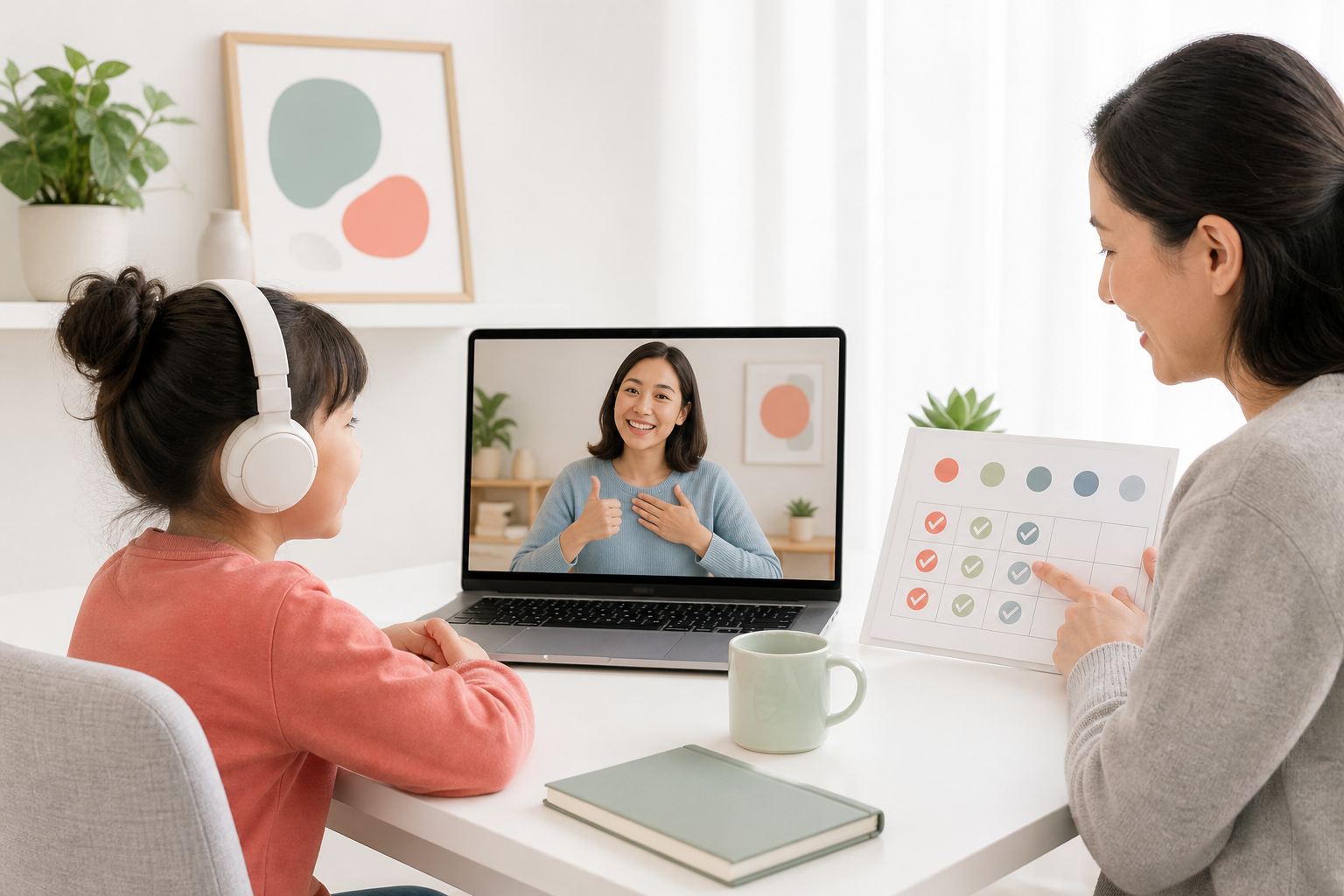
How long should you try an online piano program?
Give the child enough time to learn the routine and complete a small block of lessons. One enthusiastic first day does not prove long-term fit, and one distracted day does not prove failure. A defined level or several consistent weeks usually provides better evidence.
During that period, look for movement in four areas:
- Access: Can the child start the correct lesson with less help?
- Understanding: Can the child explain or demonstrate the current task?
- Practice: Does the child return to the skill between lessons?
- Progress: Is something becoming more accurate, coordinated, or independent?
If none of these improves, ask whether the starting level is wrong, the sessions are too long, the child needs more direct feedback, or the format is not a good match. Changing the support plan is more useful than simply asking the child to try harder.
When are live lessons a better choice?
A live teacher may be a better starting point when a child cannot translate the video into action, needs immediate correction, benefits from a scheduled relationship, or consistently avoids practicing without a live check-in. Some families prefer a blended path: flexible online lessons for repetition plus live support when a skill needs personal attention.
The comparison of live online and self-paced video lessons for kids can help you choose. Families who want a scheduled local or school-based option can also review current iPianoLab signup options.
Frequently asked questions
Can a child really learn piano online?
Yes, many children can learn through a structured online program when lessons lead to real keyboard practice, skills build in sequence, and help is available when needed. The best fit depends on the child’s independence, attention, routine, and feedback needs.
What age is best for online piano lessons?
There is no single age that works for every child. Younger beginners generally need more parent help with the device and routine. School-age children who can follow short directions, copy a pattern, and return to an activity are often ready to try a structured beginner path.
Do we need a piano before starting online lessons?
Your child needs regular access to an appropriate piano or keyboard to turn lessons into playing. You do not need the most expensive setup on day one. The guide to starting lessons with a home piano or keyboard explains what can wait.
Are piano apps the same as online piano lessons?
Not always. Some apps teach useful skills, while others focus mainly on screen interaction or song playback. Evaluate the curriculum, keyboard practice, feedback, parent guidance, and progress checkpoints rather than relying on the word “interactive.”
How often should a child practice with online lessons?
Beginners usually benefit from several short returns during the week instead of one long session. A simple starting point is four or five practice days with brief, focused tasks. Adjust the routine to the child and the lesson plan.