How Piano Lesson Levels Work for Beginners: A Parent Guide
Beginner piano levels work best as short learning checkpoints, not as grades a child has to race through. A useful level gathers a manageable set of skills, gives the student repeated chances to use them in music, and ends with a clear review: what feels comfortable, what still needs support, and what should come next.
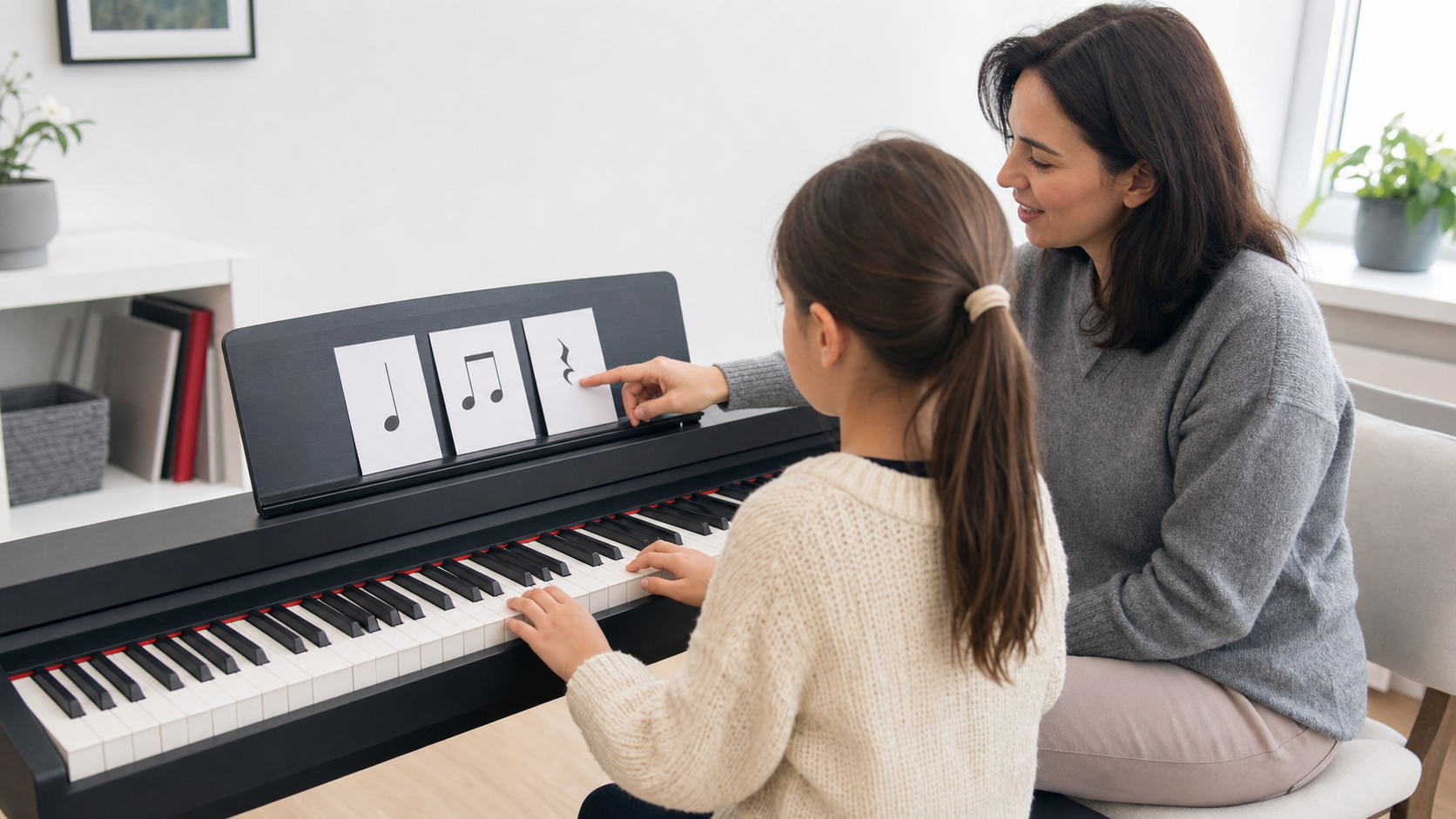
Parents often see words such as beginner, Level 1, or early elementary and wonder what they actually mean. There is no single level system used by every piano program. One teacher may organize learning by books, another by school terms, and another by a sequence of songs and skills. The label matters less than the learning inside it.
At iPianoLab, levels are structured as six lessons. That gives families a natural review point while keeping the focus on early musical success, confidence, and practical fundamentals. The purpose is not to promise that every child will master the same material on the same day. It is to make the next step visible.
What is a piano lesson level?
A piano lesson level is a small section of a larger learning path. It should answer three questions:
- What is the child learning now?
- How will the child use that skill in music?
- What evidence shows the child is ready for the next step?
For a beginner, the answers may involve keyboard geography, steady rhythm, counting, note reading, melody, simple chords, two-hand coordination, or another foundational skill. These ideas do not have to appear in one rigid order. A good program connects them gradually to songs and musical patterns the child can recognize and enjoy.
A level is therefore different from a test score. It is a teaching structure: a way to make a large subject feel approachable and to prevent a child from being handed too much at once.
Why short levels can help a beginner
“Learn piano” is too large to be a useful weekly goal. “Find the starting notes, keep a steady count, and play the first pattern with both hands” is something a child, parent, and teacher can discuss.
Short levels can help because they:
- give the child a reachable next step;
- let the teacher revisit a skill in more than one song or activity;
- help parents ask specific questions instead of only asking whether the child is “good at piano”;
- create a natural point to adjust pace, format, or support; and
- make progress visible even before a piece sounds polished.
This matters for retention as much as instruction. A child is more likely to understand why practice matters when the next goal is clear and connected to music.
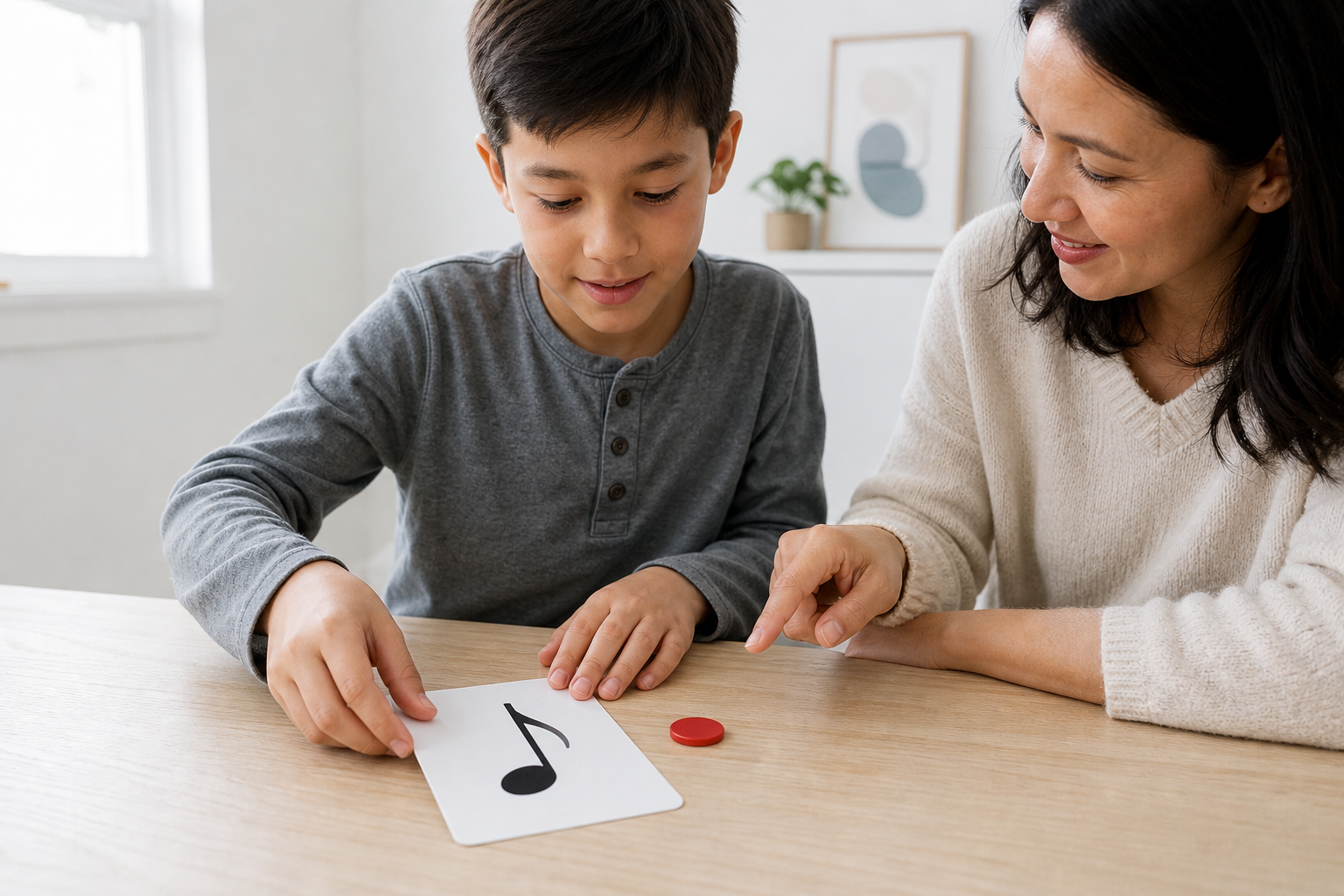
What might a beginner piano level include?
The exact content depends on the child and program, but a well-designed beginner level often combines several kinds of learning rather than isolating one worksheet skill.
Keyboard geography
The child begins to recognize the repeating groups of two and three black keys and uses those landmarks to find nearby white-key notes. This is more useful than memorizing one isolated key without understanding how the keyboard repeats.
Rhythm and counting
The child keeps a simple beat, notices long and short sounds, and connects spoken counting to playing. Rhythm can be practiced by clapping, tapping, moving, or playing a short pattern.
Note reading and musical patterns
The child starts connecting what appears on the page or screen with direction, spacing, rhythm, and position at the keyboard. Early reading should support playing, not become a separate pile of symbols.
Melody and chords
The child may play a short melody, add a simple chord or accompaniment pattern, or recognize how the parts fit together. Playing a song early can give the underlying fundamentals a practical reason.
Two-hand coordination
The first two-hand task may be very small: holding one note while the other hand moves, alternating between hands, or combining a melody with one chord. Coordination grows through manageable patterns, not by rushing directly into a difficult arrangement.
These categories are examples, not a promise that every beginner will meet them in the same level or order. The better question is whether the child can use the current skills with increasing clarity and less prompting.
How do you know a child is ready for the next piano level?
Readiness does not require a flawless performance. Look for usable learning:
- The child can find the starting place with less help.
- The child can keep or recover a basic rhythm.
- The child understands the main instruction in their own words or actions.
- The child can use the skill in more than one short example.
- The child notices and corrects at least some mistakes.
- The child can begin a home practice task without the parent reteaching the lesson.
One uneven day does not erase progress. A child may understand a concept but need more time for coordination, attention, or confidence to catch up. The next level can sometimes introduce a small new idea while the prior skill continues to strengthen.
What if a child is not ready to move forward?
Repeating or adapting part of a level is not failure. It may mean the task needs to be smaller, the song needs a simpler arrangement, the practice cue is unclear, or the learning format needs more support.
Ask the teacher:
- Which exact skill is secure?
- Where does the child become unsure?
- What should the child practice first at home?
- Can the task be reduced to one hand, fewer notes, or a slower count?
- Should the child repeat the full level or only one part?
Specific questions protect confidence because they separate “this skill needs another pass” from “you are not good at piano.” If practice is becoming a recurring argument, use this guide to help your child practice without becoming the teacher.
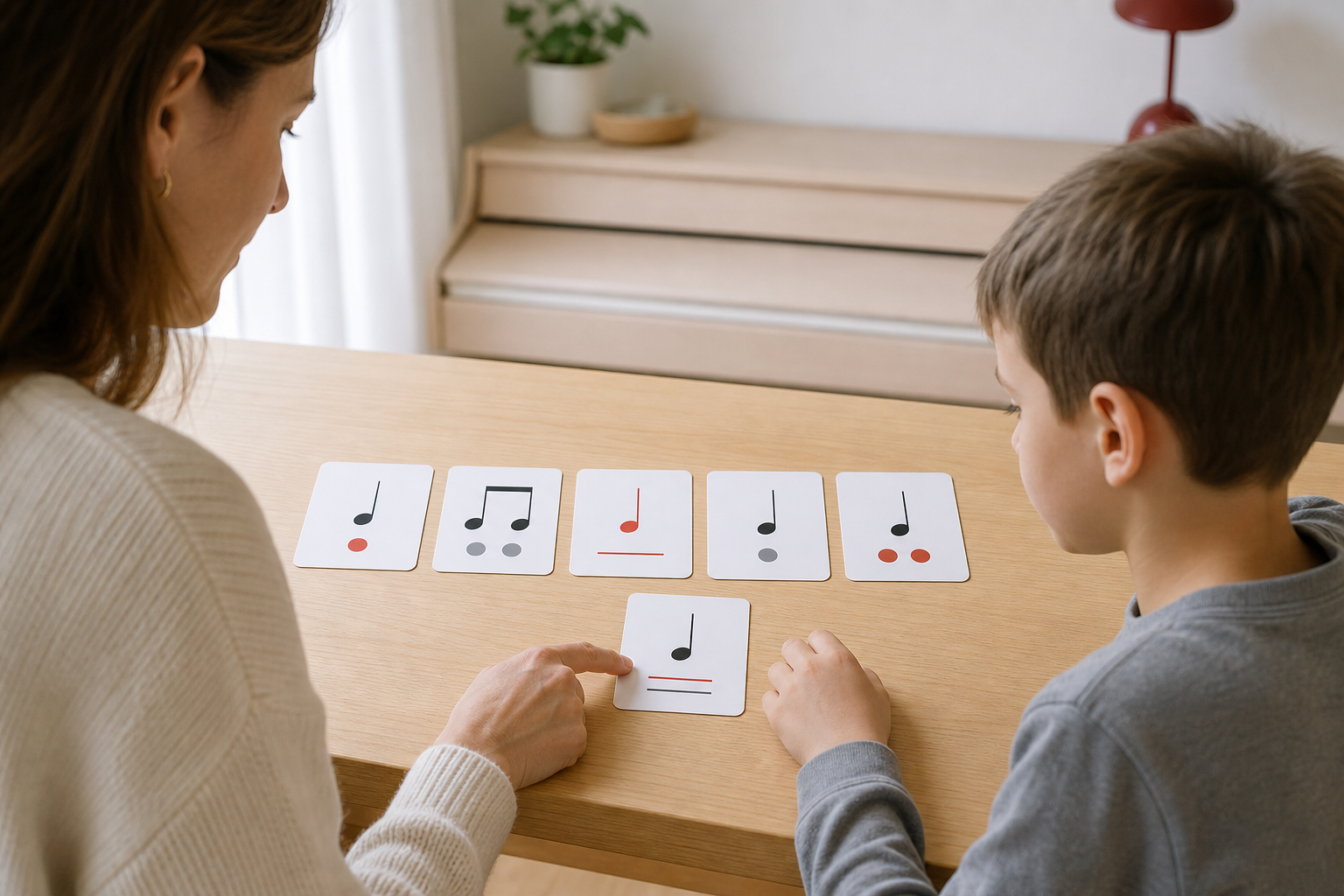
A six-lesson parent review
At the end of a six-lesson level, use a short conversation instead of a high-pressure home exam. Ask the child to show one favorite activity or song section, then review the broader learning with the teacher.
What became easier?
Look for a more confident start, steadier rhythm, faster note-finding, better hand organization, clearer practice habits, or a willingness to try again.
What still needs support?
Name one or two concrete needs. “The left-hand chord change is still slow” is more helpful than “the whole song is hard.”
What should happen next?
The next step may be a new level, a short review, a different song, more feedback, or a change in how practice is organized. The decision should preserve both learning continuity and the child’s sense that progress is possible.
Parents who want a broader early timeline can also read what to expect during the first six weeks of piano lessons.
Do level numbers transfer between piano programs?
Not necessarily. “Level 1” in one program may include different songs, skills, or expectations from “Level 1” somewhere else. When comparing programs, ask for the skills and learning experience behind the label.
Useful comparison questions include:
- What can a student usually do by the end of this level?
- How are songs connected to rhythm, reading, and coordination?
- How often does the teacher review progress?
- What happens if one skill needs more time?
- How does the next level build on this one?
If you are still choosing a format, use these 12 questions for comparing piano lessons for a child.
Frequently asked questions
How long is a beginner piano level?
There is no universal length. Programs organize levels in different ways. At iPianoLab, a level is six lessons, which creates a regular checkpoint for reviewing skills, confidence, and next steps.
Should a child repeat a piano level?
A child may benefit from repeating or adapting part of a level when a core skill is not yet usable. The teacher should identify the exact skill, reduce the task where appropriate, and keep the review connected to music rather than treating repetition as a punishment.
Does finishing a song mean the level is complete?
Not by itself. A song can show progress, but the teacher should also look at rhythm, understanding, independence, coordination, and whether the child can use the skill again in another short example.
Are piano levels based on age?
Beginner levels are usually more useful when they are based on current skills and learning needs rather than age alone. Two children of the same age may need different pacing, songs, or support.
What should parents track between levels?
Track practical signals: whether the child can begin with less help, remember the first step, keep a simple rhythm, find notes, use feedback, and return to practice without the parent reteaching everything.
Choose a learning path with visible next steps
A useful beginner level makes progress understandable. It gives the child music to play, fundamentals to build, and a clear next step without pretending every learner moves at the same speed.
Ready to find the right iPianoLab starting path? Families can create an iPianoLab account, explore online piano learning options, or look for an after-school class at your child’s school.