Why Does My Child Play the Left Hand Too Loud on Piano?
Quick answer: a beginner's left hand often sounds too loud because the two hands are still learning different jobs. The child may press the accompaniment firmly to keep it dependable while trying to follow the melody with the right hand. Practice each hand's role separately, then combine a tiny pattern with the right-hand melody at a comfortable sound and the left hand as a softer support.
This is a coordination and listening challenge, not a sign that your child has a “bad” left hand. Playing one hand softer while the other remains clear asks the brain to control two different sound levels at the same time. That skill develops gradually.
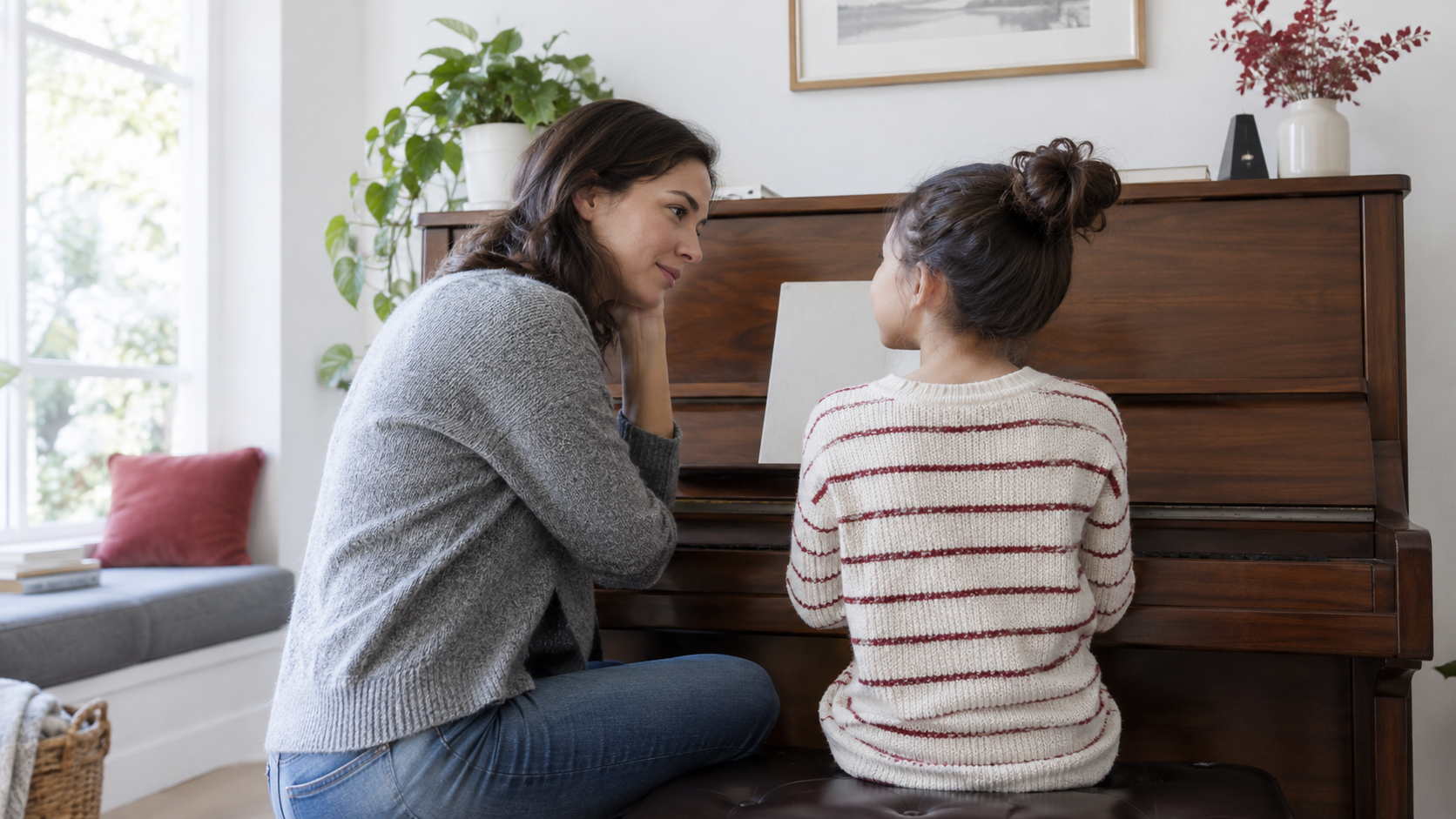
Why is the left hand louder than the right hand?
In many beginner songs, the right hand carries the melody while the left hand supplies single bass notes, intervals, or chords. The listener should usually notice the melody first. A child may reverse that balance for several ordinary reasons:
- The left hand is working harder to feel secure. A firm motion can make the accompaniment feel easier to locate and repeat.
- Both hands are using one volume setting. The child can play loudly or softly with both hands together but has not yet separated their roles.
- The accompaniment is more physically demanding. A chord or wider movement may sound heavier than a one-note melody even when the child is not trying to make it louder.
- Attention is going to the difficult hand. When the child concentrates on left-hand notes, that hand may become the loudest part simply because it receives the most effort.
- The right-hand melody is not automatic yet. If finding melody notes takes most of the child's attention, there may be little attention left for sound balance.
- The instrument responds unevenly. A piano or keyboard may make some sounds seem stronger, especially in a lower register. The teacher can help distinguish technique from instrument response.
Before changing anything, listen to a short phrase. Is the left hand too loud throughout, only on chords, only after a jump, or only when both hands start together? A specific pattern gives the child and teacher something useful to solve.
What should parents listen for?
Ask one simple question: Which part would you sing? That is often the melody. You should be able to follow it without the accompaniment disappearing completely. The left hand does not need to become silent; it needs to sound like support rather than the main character.
Use a short musical section and listen for three things:
- Can you hear the melody from beginning to end?
- Does one left-hand note or chord suddenly jump out?
- Does the balance change when the child speeds up?
Avoid calling every strong bass note “wrong.” The written music may sometimes ask the left hand to lead, or the melody may move between hands. If you are uncertain, ask the teacher which line should be most prominent in that passage.
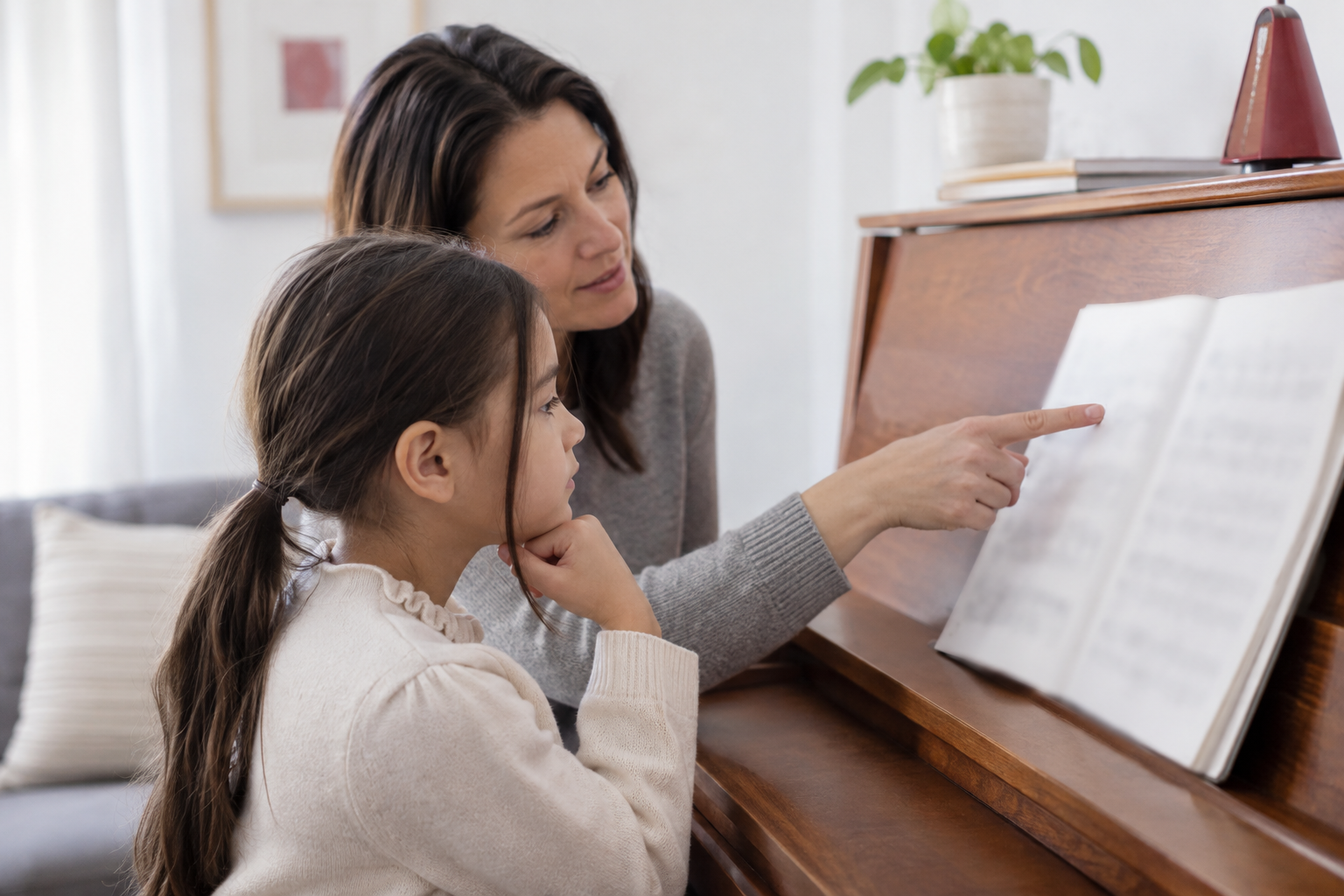
A five-minute “melody and support” routine
Choose one tiny pattern: two to four melody notes with the matching left-hand note or chord. Stop before the child becomes tired or frustrated.
- Sing or hum the melody. Let the child identify the part the listener should notice first. No perfect singing is required; the goal is to hear the musical shape.
- Play the melody hand alone. Ask for a comfortable, clear sound—not the loudest possible sound. Repeat it twice.
- Play the support hand alone. Ask the child to imagine that the left hand is playing behind the melody. Try the pattern softly without forcing the fingers or holding the wrist rigid.
- Combine one event. Play only the first right-hand note with its left-hand support. Listen, stop, and decide which part arrived in front.
- Add the next event. Build the pattern one small step at a time while keeping the melody easy to follow.
- Record one short try. A ten-second phone recording can make the balance easier to hear than it feels while playing. Listen once, choose one improvement, and put the phone away.
If the left hand becomes loud again when the phrase grows, return to one or two musical events. That is not failure. It identifies how much independent control is ready today.
Should the left hand always play softly?
No. “Left hand soft, right hand loud” is a useful beginner exercise, not a permanent rule. Music can place the melody in either hand, and some passages need equal weight. The transferable skill is choosing which musical line should lead and adjusting the other parts around it.
Use role-based language instead of fixed-hand language: “melody” and “support,” “front” and “background,” or “singer” and “helper.” That keeps the idea accurate when a later song gives the left hand the melody.
What can a parent say without becoming the teacher?
Short listening prompts work better than repeated volume commands:
- “Which part is the melody here?”
- “Can I still follow the part you would sing?”
- “Try one note with the melody in front and the support behind it.”
- “Which left-hand note jumped out?”
- “Can you make the left hand lighter without making it disappear?”
- “Let's compare those two short versions.”
Avoid pressing down on the child's hand, asking for an exaggerated whisper for the entire song, or repeating “softer” during every note. Those approaches can create tension and divide attention. Give the child one sound goal, let the phrase finish, and discuss it afterward.
What if both hands are always the same volume?
Start away from the full song. Ask the child to tap one hand clearly on their knee while the other taps lightly. Switch roles. Then try the same contrast on a single note from each hand at the piano. Keep the movement comfortable and stop if the child feels pain.
You can also use an echo game. Play or clap a short pattern at one sound level, then ask the child to echo it more softly. This builds listening before the hands must coordinate different notes. For a broader listening reset, see the guide on helping a child use more than one piano volume.
How does hand balance connect to playing too hard?
A loud left hand and hard key presses can overlap, but they are not always the same problem. A child may play both hands comfortably yet still make the accompaniment louder than the melody. Or the child may use extra force in both hands. Listen for whether the issue is musical balance, physical tension, or both.
If every note sounds forceful, use the separate guide on why children press piano keys too hard. If the shoulders rise or the body looks braced, check the bench and setup with the shoulder-tension parent guide.
When should the piano teacher take the lead?
Ask the teacher when the same imbalance continues across several careful practice sessions, the written music does not make the melody clear, a chord feels much harder than nearby notes, or the child becomes tense while trying to play softly. Stop and seek qualified guidance if playing causes pain, numbness, tingling, or persistent discomfort.
Bring a precise observation: “The left-hand chord is balanced alone, but it becomes loud when the right-hand melody reaches the third note,” or, “The melody is clear slowly and disappears when the tempo increases.” The teacher can then check the music, fingering, movement, setup, and instrument response.
How balanced playing builds musicianship
Learning to balance two hands is more than a volume exercise. The child is learning to hear layers, choose a musical priority, and shape a phrase instead of merely pressing the correct notes. That same listening skill supports dynamics, accompaniment, ensemble playing, and expressive performance.
iPianoLab helps beginners connect songs they enjoy with rhythm, note reading, coordinated movement, and careful listening. Small, repeatable sound experiments help a child become the person who notices and adjusts the music—not just the person waiting for a correction.
Frequently asked questions
Is it normal for a beginner's left hand to be louder?
Yes. Beginners are still learning to control two hands independently. A stronger accompaniment often means the child is using extra effort to keep the left hand dependable, not that they lack musical ability.
How can my child play the left hand more softly?
Practice a very short left-hand pattern alone at a comfortable soft level, then combine it with one clear melody note. Build the phrase slowly while listening for melody in front and accompaniment behind.
Should the right hand always be louder on piano?
No. The hand carrying the melody often leads, but the melody can move to the left hand and some passages need equal balance. Teach the musical role, not a permanent right-hand rule.
Why does the left hand get louder when my child speeds up?
Faster playing leaves less attention for separate sound levels. Return to a tempo where the child can plan both the notes and the balance, then increase speed in small steps.
Can a recording help a child hear uneven piano hands?
Yes. A brief recording can reveal which line is easiest to follow. Keep it short, listen once, choose one change, and avoid turning practice into a long recording session.