Why Does My Child Pause at Every Bar Line on Piano?
Quick answer: a child often pauses at every bar line because they learned the music one measure at a time and have not yet practiced the connection between measures. The printed line looks like a stopping point, even though the beat usually continues. Help by practicing the last two beats of one measure and the first two beats of the next as one tiny “bridge.”
A bar line organizes the written music; it does not automatically tell the player to stop. For a beginner, however, it can feel like a wall. The child finishes the notes they know, looks ahead, moves a hand, or restarts the count. That extra planning creates a small gap.
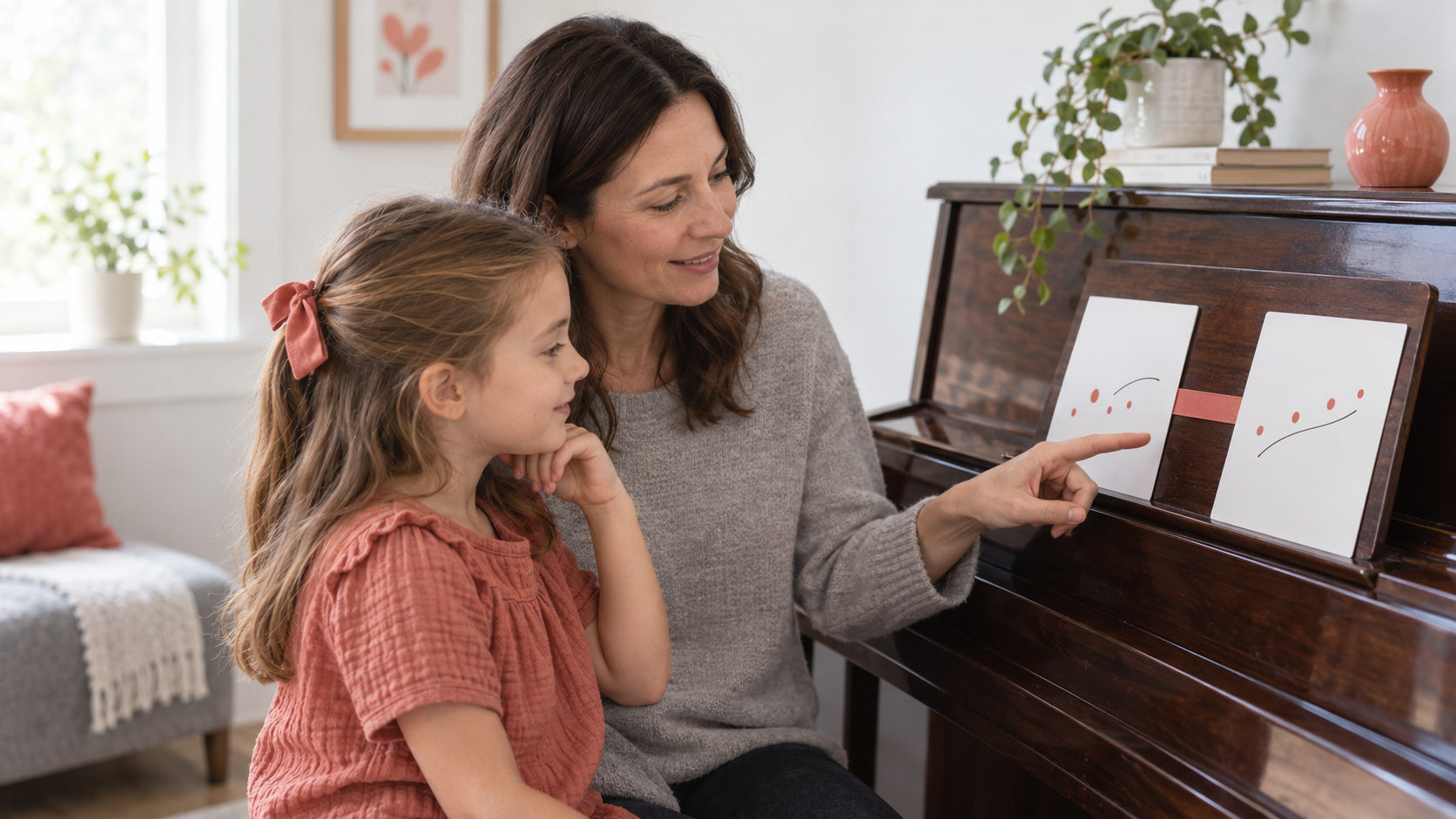
Why does my child stop between measures?
A pause at a bar line can have several ordinary causes. Listen for the pattern before asking your child to “keep going.”
The music was practiced in separate boxes
Working one measure at a time is useful. The problem appears when each practice repetition begins on beat one and ends at the next bar line. The child becomes good at the inside of every measure but never rehearses the movement from one measure into another.
The next note is not ready yet
The child may be reading the current note only after it arrives. At the end of the measure, the eyes and hands have no plan for what comes next. This is especially common before a hand-position change, chord, leap, or new fingering.
The count restarts at one
A beginner may count each measure as a separate event: finish, stop, say “one,” and begin again. The numbers are correct, but the pulse disappears between them. The goal is to let the final beat flow into the next beat one without adding an extra silent beat.
The printed line looks more important than it sounds
Bar lines are visually strong. A child who is new to reading music may treat them like punctuation that always means “period.” In real music, a phrase can continue across the line just as a sentence can continue onto the next printed line.
A real musical event occurs there
Not every pause is accidental. The music may include a rest, a fermata, a breath-like phrase ending, or an instruction from the teacher. A page turn or difficult movement can also create a practical delay. Check the assignment before removing every space.
What should parents check before correcting the pause?
Choose one place where the gap repeats. Ask these questions:
- Is there a written rest or another symbol that asks for extra time?
- Does the hand move to a new position after the bar line?
- Does the child look down, search for a note, or change fingering?
- Does the pause happen only when both hands play?
- Can the child clap or tap the rhythm across the line without stopping?
- Does the phrase sound unfinished before the gap?
If the rhythm is steady away from the piano but breaks when notes are added, the child probably needs a smaller coordination task. If the tapping also stops, begin with the pulse rather than the keys.
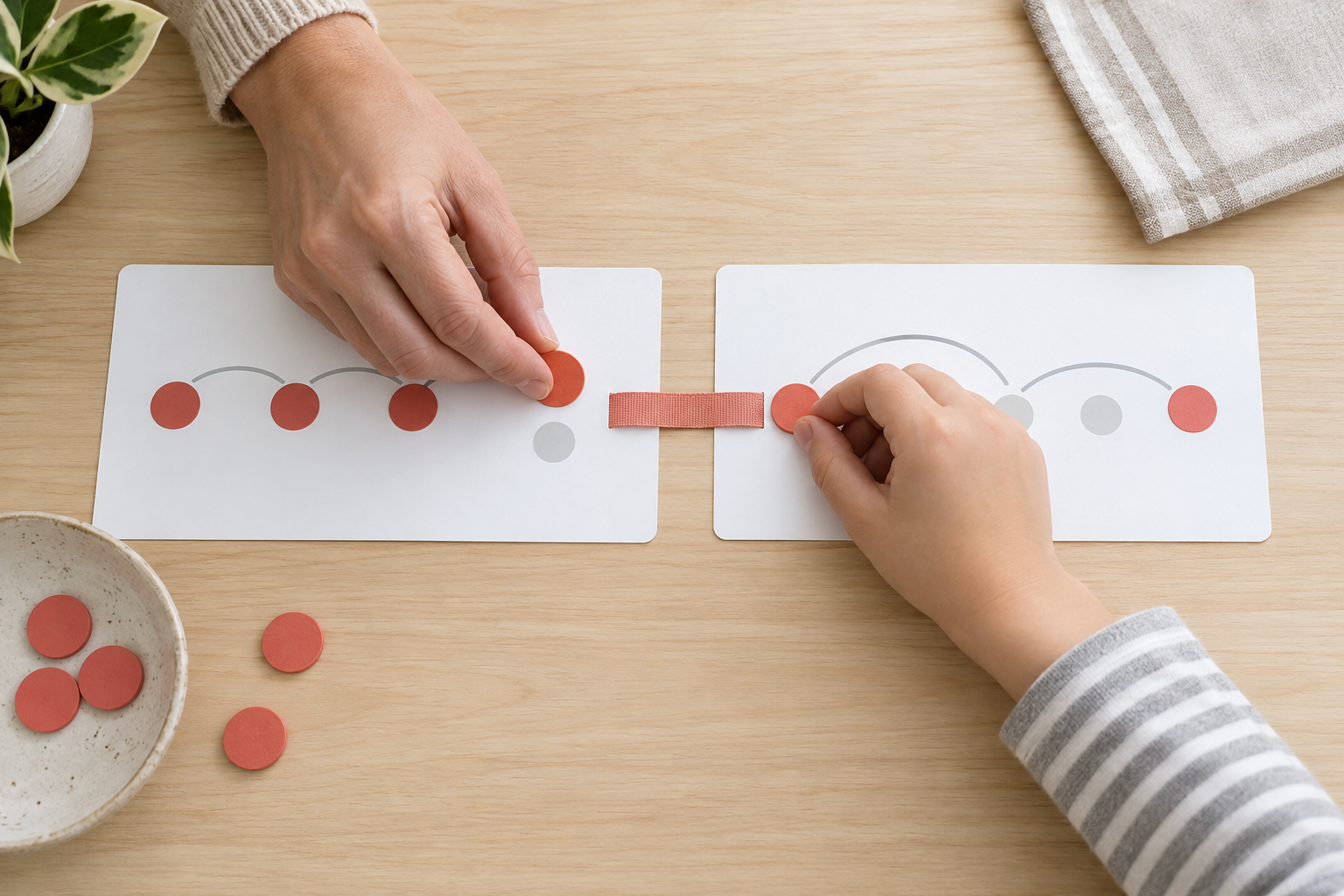
A five-minute “last beat–first beat” routine
Use one troublesome bar line, not the entire page. Keep the tempo comfortable enough that the child can think ahead.
- Mark the bridge. Point to the final two beats before the bar line and the first two beats after it. These four beats are the only practice target.
- Tap through the line. Tap the rhythm while counting continuously. Do not add a pause before the next beat one. Repeat twice.
- Prepare the landing. Without playing, move the hands from the last position before the line to the first position after it. Notice which finger, note, chord, or hand shift must be ready.
- Play the four-beat bridge. Begin before the bar line and finish after it. The goal is a connected pulse, not full speed or perfect dynamics.
- Repeat three calm times. If the pause returns, slow down or use fewer notes. Do not repeat the gap at the same speed.
- Widen the view. Add the rest of the measure before the bridge, then the rest of the measure after it. Finally, reconnect the full phrase.
The important change is where practice starts and stops. Starting just before the problem and ending just after it teaches the child that the bar line belongs inside a continuous musical action.
Should my child ignore bar lines?
No. Bar lines help organize beats into measures and show where each measure begins. The child should understand them without inserting an extra beat of silence. A helpful comparison is a lane marker on a road: it organizes the path, but it is not a stop sign.
Keep the explanation simple. The teacher can introduce time signatures and measure structure in more detail. At home, the useful question is, “Can the beat travel across this line?”
What can a parent say without becoming the piano teacher?
Use one short observation at a time:
- “I heard an extra space at this line. Is a rest written there?”
- “Let’s connect the last beat to the next first beat.”
- “Can you tap those four beats without stopping?”
- “What does your hand need to prepare before the next measure?”
- “Try starting before the line instead of on the line.”
- “The notes are right. Now let’s keep the musical sentence moving.”
Avoid covering every bar line, telling the child to play the whole song faster, or restarting from the beginning after each gap. Speed can hide the planning problem briefly, while full-song repetitions give the child many chances to repeat the same pause.
How is this different from pausing between every note?
A child who pauses between every note may still be finding pitches, choosing fingers, or decoding rhythm one symbol at a time. A child who plays smoothly inside each measure but pauses at the bar line usually has a connection problem between practiced chunks.
If the hesitation occurs throughout the phrase, use the separate guide on helping a child connect piano notes. If the notes are correct but the beat changes, review why correct piano notes can still have the wrong rhythm. If your child repeatedly looks away and cannot find the next place, see the guide to visual tracking in piano music.
When should the piano teacher take the lead?
Bring the exact measure to the teacher when the pause continues after several slow bridge repetitions, the child is unsure whether a rest belongs there, the hand shift feels uncomfortable, or the fingering changes every time. The teacher can check the rhythm, fingering, phrase, eye movement, setup, and whether the music is currently an appropriate reading challenge.
Describe what you noticed without diagnosing it: “The rhythm stays steady while tapping, but there is a pause when the left hand moves after this bar line,” or, “Each hand crosses the line alone, but both hands stop together.” That gives the teacher a useful starting point.
Why crossing bar lines matters
Connecting measures helps a child hear music in phrases instead of boxes. It also builds the habit of looking and preparing slightly ahead. The result is not merely fewer gaps; it is a steadier sense of beat, clearer musical direction, and more confident reading.
iPianoLab helps beginners connect songs they enjoy with rhythm, note reading, keyboard geography, coordinated movement, and musical listening. Small practice bridges turn a frustrating stop into one clear skill a child can build.
Help your beginner connect the next musical step
iPianoLab combines engaging songs with structured support for rhythm, note reading, two-hand coordination, and confident practice.
Explore iPianoLab online piano lessons, or choose a program and get started.
Frequently asked questions
Does a bar line mean stop in piano music?
No. A bar line separates measures and organizes the beat. The player stops only when the music includes a rest, ending, fermata, or another instruction that creates space.
Why does my child pause after every measure?
Your child may have practiced each measure separately, be searching for the next note, moving a hand, or restarting the count. Practice a small group that begins before the bar line and ends after it.
How can my child play smoothly across bar lines?
Tap the rhythm continuously, prepare the first note of the next measure, and repeat the last two beats plus the first two beats as one bridge. Then expand back to the full phrase.
Should I make my child use a metronome for bar-line pauses?
A metronome can reveal an extra gap, but it may add too much demand if the notes and movement are not ready. First make the bridge small and comfortable; use a steady external beat when the teacher recommends it.
Is pausing at bar lines the same as losing place in the music?
Not always. A child may know exactly where they are but need time to prepare the next movement. If the eyes repeatedly search for the next spot, visual tracking may be part of the problem.