Why Does My Child Lose Their Place in Piano Music?
Quick answer: a beginner may lose their place because reading the page, finding keys, choosing fingers, and keeping the beat are still separate jobs. Do not restart the whole song each time. Mark one short line, let your child track it with a finger before playing, and practice finding the same starting spot three times.
Losing the place is not the same as forgetting every note. Often the child knows what to play but looks down at the hands, glances back up, and returns to the wrong note or line. The useful goal is not “never look away.” It is learning how to leave the page briefly and find the correct place again.
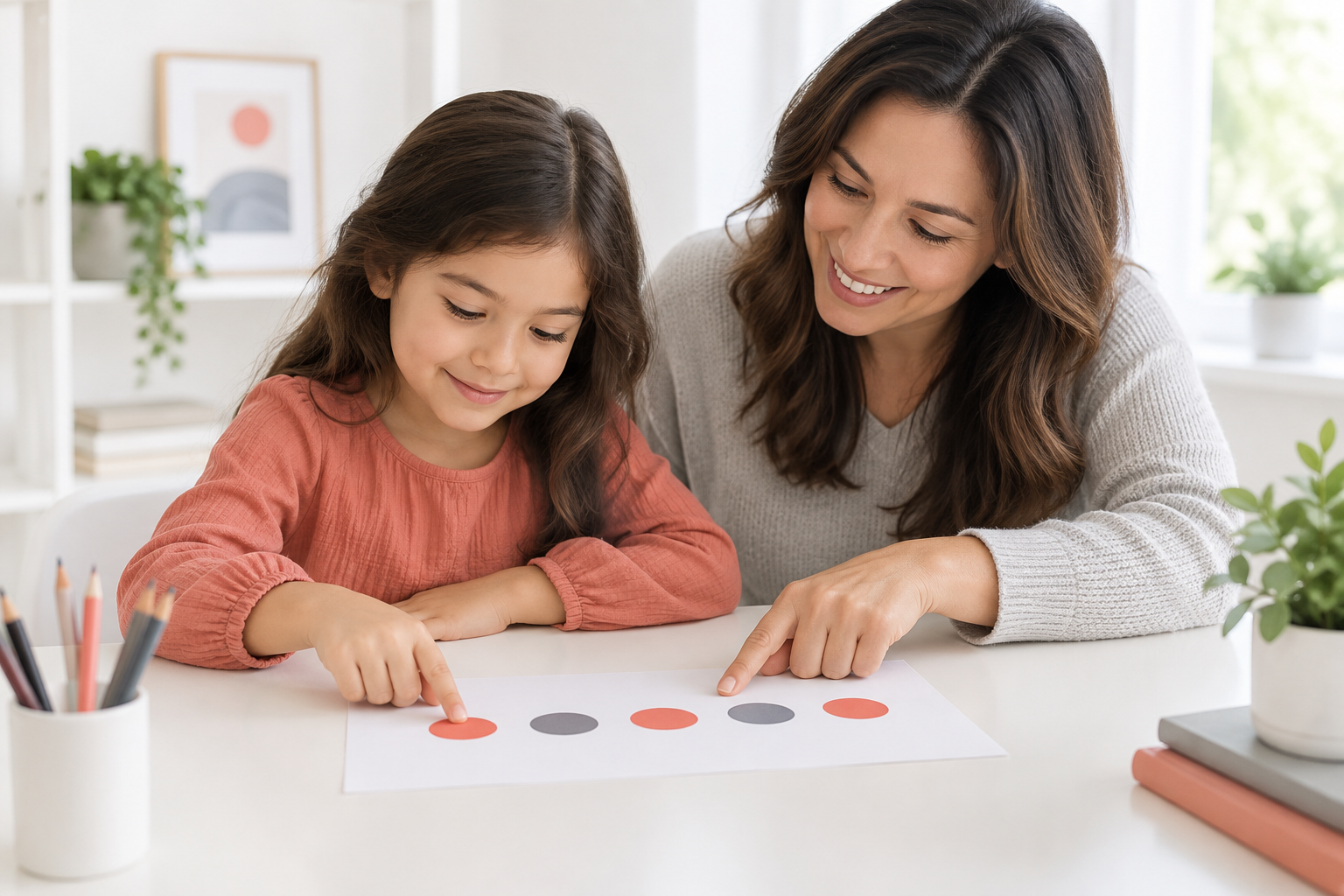
Why do beginner pianists lose their place?
Printed music asks a child to follow information from left to right while also noticing whether notes move up, down, or repeat. At the same time, both hands may be moving and the child may be counting. When attention shifts to a difficult key, finger, or rhythm, the eyes can stop tracking the page.
Common reasons include:
- The child looks down and cannot find the return point. The page does not yet have a familiar visual landmark.
- The line is too long for one practice goal. The child is trying to hold more information than the small passage requires.
- The starting place is unclear. “Play it again” is difficult when the child does not know which measure, hand, or note begins the retry.
- The music is partly memorized. The hands keep going while the eyes drift, then the child cannot reconnect when memory pauses.
- The rhythm stops during note finding. A long search makes it hard to tell which beat or note should come next.
If your child pauses between nearly every note, start with the guide to note-by-note hesitation. If the main issue is frequent hand watching, see when children should look at their hands while playing.
A five-minute “find, follow, return” routine
Use one short line or two to four measures from the assigned music. Keep the passage easy enough that the child can practice tracking rather than struggle through the whole song.
- Find. Ask your child to point to the first note, name the hand that begins, and place the starting finger. Do this before any sound.
- Follow. Away from the keys, move one finger under the notes from left to right. Stop at the end of the small section.
- Play. Try the same section slowly. The parent can point underneath the music once, but should avoid covering notes or tapping ahead.
- Look away on purpose. After one or two notes, let the child glance at the hands, then pause. Ask them to find the exact return point on the page.
- Return. Reset and locate the starting spot again without being told. Repeat the small section three calm times.
The practice win is not a perfect performance. It is the child finding the same place independently. Once that feels easy, move the starting point to a different measure so the child does not rely on always beginning at the top.
Should a parent point to every note?
Pointing can help for one slow demonstration, especially when the child does not yet understand where the line begins or ends. But constant pointing can become another cue the child waits for. Use your finger once, then ask the child to do the tracking.
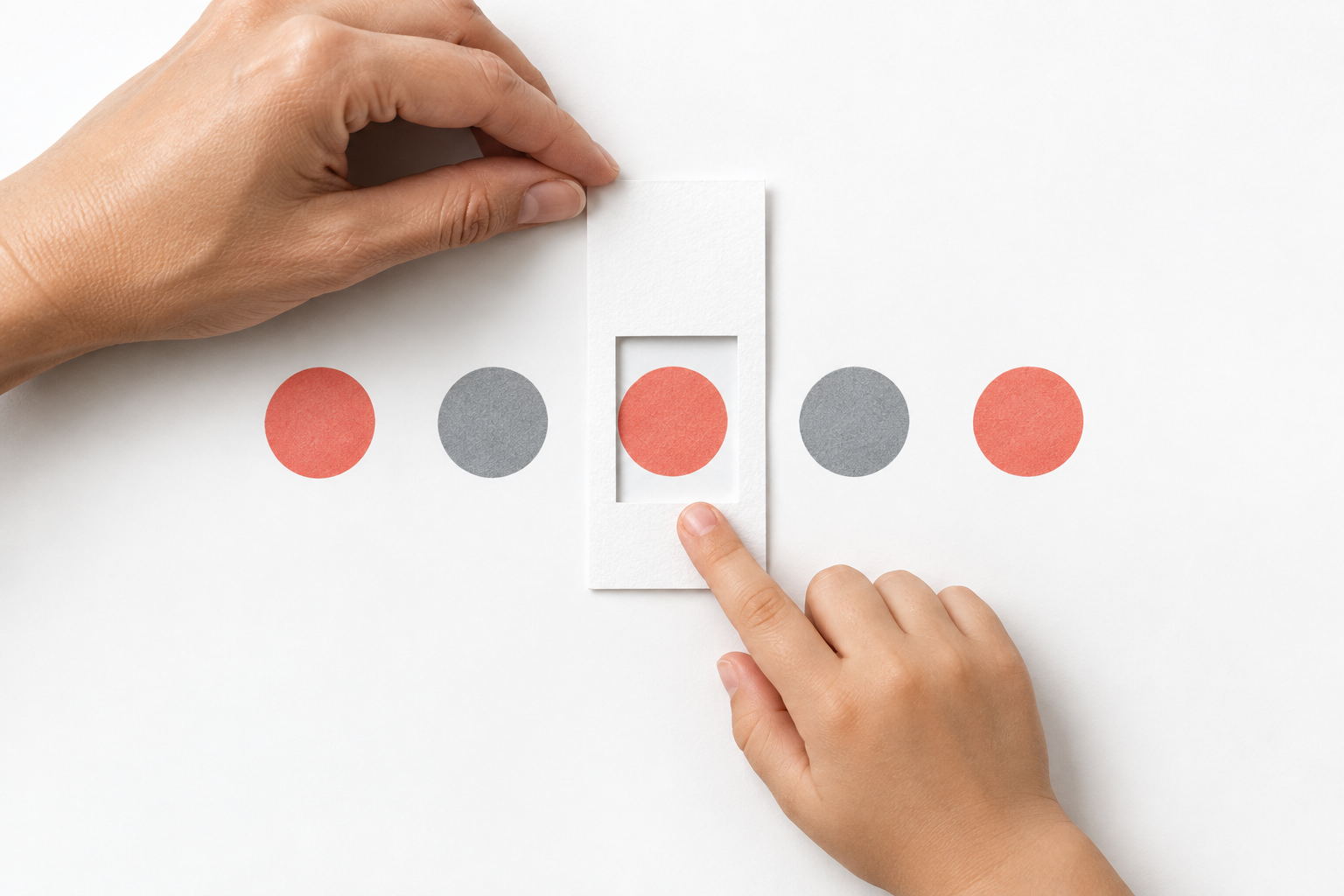
Keep the finger below the notes rather than on top of them. Move steadily and stop at the practice boundary. If the child follows your finger instead of reading, replace it with a small paper window that reveals only the current section.
How to use a paper window without covering the music
Cut a simple window from an index card or use two blank sticky notes to frame one measure. The purpose is to reduce visual clutter, not to hide the notes the child needs.
- Frame one measure or short pattern.
- Keep the clef, key signature, and starting note visible when they matter.
- Move the window only after the child reaches the end of the selected section.
- Remove the window for the final attempt so the child reconnects the part to the whole page.
Do not add note names to every symbol as a tracking fix. If note reading itself is the concern, read how music reading develops for beginners and when a small written clue can help.
What should parents say after the child gets lost?
Use a location question instead of giving the answer immediately:
- “Which line were you on?”
- “What note or pattern came just before the stop?”
- “Can you point to the place where your eyes should return?”
- “What is one clear landmark near the starting note?”
Avoid “Start over from the beginning” as the automatic response. Beginning again may hide the problem because the top of the page is easy to find. Starting from the middle teaches the more useful skill: locating a specific place and continuing from there.
When should you ask the piano teacher?
Ask for help when the same short section remains hard to locate, the child cannot identify where a practice assignment begins, or the page feels much more crowded than recent music. Bring the exact page and ask: “What visual landmark should my child use here, and where should we practice restarting?”
The teacher may choose a smaller section, clarify a starting finger or hand position, simplify the rhythm, or select easier reading material. Parents do not need to redesign the lesson. They only need one clear place and one clear goal for the next practice.
How tracking supports independent piano practice
A child becomes more independent when they can find the assigned spot, follow a short passage, notice where they stopped, and return without waiting for an adult to supply every note. That skill supports reading, rhythm, coordination, and calmer practice.
iPianoLab helps beginners connect note reading, rhythm, keyboard geography, and songs in a structured path. The aim is not to rush through a page. It is to give children enough guidance to know what comes next—and enough independence to find it.
Frequently asked questions
Is it normal for a beginner to lose their place in piano music?
Yes. Beginners are coordinating reading, movement, fingers, and rhythm at the same time. The helpful response is to make the section smaller and practice finding a clear return point.
Should my child keep their eyes on the sheet music?
Not every second. Beginners may need to glance at their hands. The important skill is knowing where to look back on the page. Practice one intentional glance and return inside a very short passage.
Does memorizing the song cause the problem?
Memorizing is not automatically a problem, but the eyes may stop tracking when the hands can continue from memory. Ask the child to begin from a middle measure or point to the current place while listening.
Can I use a ruler or index card to help?
Yes. A simple paper window can reduce visual clutter when it frames a small section without covering necessary symbols. Remove it for the final attempt so the child reconnects the section to the full page.
Why does my child always restart at the beginning?
The beginning is the easiest location to find. Practice starting from two or three other marked places. This teaches the child to recognize landmarks instead of depending on a full restart.