Does My Child Need to Read Music Before Piano Lessons?
No. A child does not need to know how to read music before starting piano lessons. Reading music is one of the skills beginners can develop during lessons, alongside listening, rhythm, keyboard geography, coordination, and playing simple songs.
A strong beginner path does not make children choose between having fun and learning to read. It gives them an early musical win, then connects what they hear and play to the symbols they see. That gradual connection is often easier to understand than studying notation in isolation before touching an instrument.
This guide explains what children can learn first, how music reading usually grows, and what parents can look for in a beginner piano program.
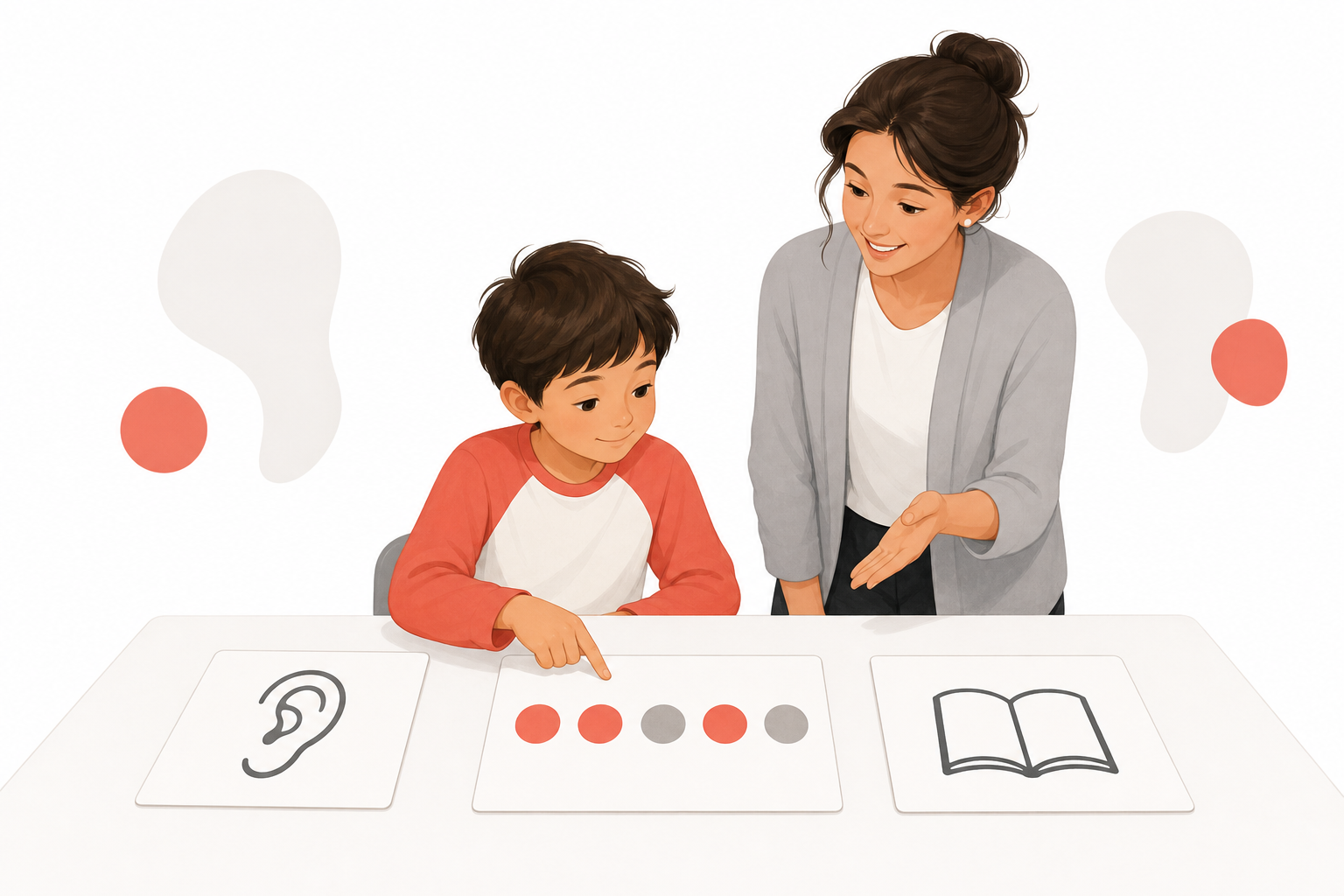
Do children need to read music before piano lessons? The short answer
Children can begin piano as complete musical beginners. They do not need to identify notes on a staff, understand rhythm values, or read sheet music independently before the first lesson. They do need a lesson format that meets them at their current level and introduces new skills in manageable steps.
For many children, the most useful early sequence combines several kinds of learning:
- Listening for high and low sounds
- Feeling and copying a steady beat
- Finding groups and patterns on the keyboard
- Following short directions
- Coordinating one hand, then two
- Playing a recognizable musical idea
- Connecting those sounds and movements to written symbols
Reading is important, but it is not an entrance exam. It becomes more meaningful when the child can connect a symbol with a sound, movement, or pattern they have already experienced.
What should a beginner learn before or alongside note reading?
Piano is a multi-skill activity. A child may be strong in one area and still be developing another. That is normal. Early lessons can build a balanced foundation instead of waiting for every reading skill to be perfect.
| Beginner skill | What the child does | Why it helps |
|---|---|---|
| Listening | Notices whether sounds match, rise, fall, or repeat | Builds attention and musical memory |
| Rhythm | Claps, taps, counts, and keeps a steady pulse | Gives written rhythms a physical meaning |
| Keyboard geography | Recognizes repeating groups and finds starting places | Helps the child navigate without guessing |
| Coordination | Uses fingers in a planned order and combines both hands gradually | Turns a musical idea into controlled movement |
| Music reading | Connects note direction, position, and rhythm symbols with sound | Supports accuracy and independent learning |
These skills do not have to appear one at a time. A beginner might clap a rhythm, hear it, see it represented, and then play it in the same activity. That combination helps the page feel connected to real music rather than like a separate academic subject.
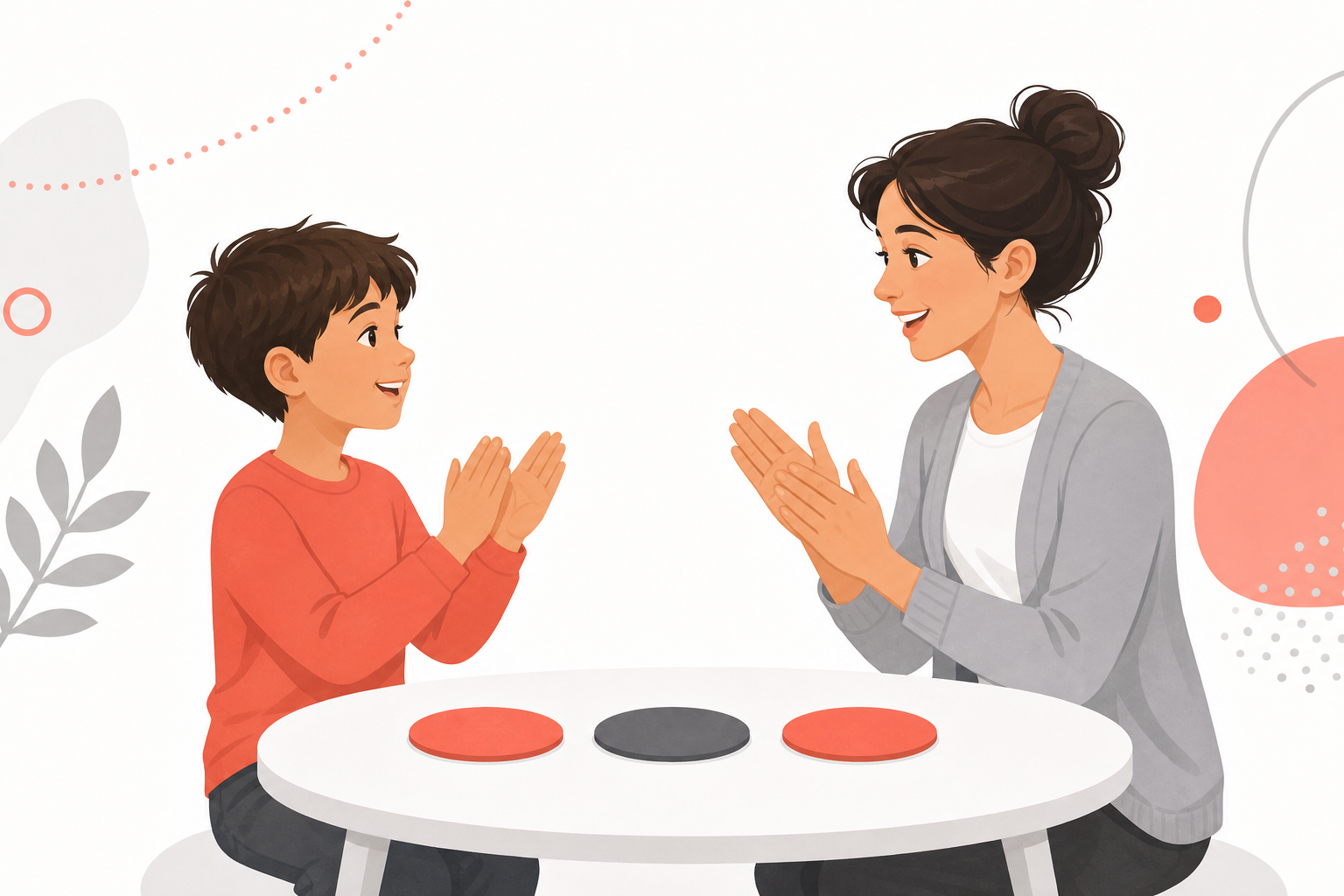
Music reading is not an all-or-nothing skill
Parents sometimes imagine that a child either “reads music” or does not. In practice, reading grows through smaller abilities. A beginner may first notice whether notes move up, down, or stay the same. Next, the child may recognize a familiar rhythm, locate a starting note, or follow a short pattern. Over time, those pieces combine into more independent reading.
A useful progression can include:
- Seeing direction and repetition. The child notices visual shapes that match what they hear.
- Connecting rhythm with symbols. Clapping and counting make written durations easier to understand.
- Finding reliable starting points. The child learns how the written page connects to a location on the keyboard.
- Reading short musical patterns. Small phrases are easier to process than an entire page at once.
- Combining reading with expression. The student can think about sound, timing, dynamics, and musical shape—not just correct notes.
This is why a child who cannot yet read a full page may still be making real progress. The better question is not “Can my child read everything?” It is “Can my child understand and use a little more musical information than before?”
Is learning by ear a problem?
No. Listening and playing by ear are valuable musical skills. A child who remembers a melody, notices a wrong note, or copies a short pattern is using musical attention. The goal is not to remove that strength. The goal is to add reading so the student has more than one way to learn.
Problems can appear when a student relies on memory alone and never learns how the page works. The opposite can also happen: a student may decode notes mechanically without listening to whether the result sounds musical. A balanced program asks children to listen, read, remember, move, and make decisions.
iPianoLab's song-based approach gives beginners a reason to play early while building fundamentals such as rhythm, counting, note reading, two-hand coordination, melody, chords, and music literacy. You can read more about why early song wins matter.
When should note reading begin?
Note reading can begin from the start, but “begin” does not have to mean a dense page of notation. A teacher might introduce one idea at a time: direction, a rhythm, a starting note, or a short pattern. The amount should match the child's attention, age, and current coordination.
For younger beginners, teachers may use movement, listening, simple visual cues, and imitation before expecting sustained independent reading. Older children may be ready to connect more symbols quickly. Readiness matters more than a single universal age.
If you are deciding whether your child is ready to begin, our parent readiness guide focuses on practical signs rather than one exact birthday.
What should parents ask a beginner piano program?
A clear program should be able to explain how reading fits into the full learning path. Before enrolling, ask:
- Can a complete beginner start without prior music experience?
- How do lessons balance songs, rhythm, listening, technique, and reading?
- What should a child understand after the first six lessons?
- How does the teacher help a child who memorizes instead of reading?
- What happens when a student understands rhythm but struggles to locate notes?
- How will parents know which skill to practice at home?
Specific answers are more useful than promises that a child will learn “fast.” A strong explanation should tell you what the child will do, how the teacher responds when something is difficult, and how progress becomes visible.
You can also review how beginner piano lesson levels work and what a structured six-lesson checkpoint can clarify.
How parents can support music reading at home
You do not need to teach the lesson again. Your job is to help the child return to the assigned step calmly and consistently. Keep home practice small enough that the student can succeed without turning every session into a test.
- Start with the exact assignment. Ask the child to show you the starting place, pattern, or rhythm the teacher selected.
- Let the child say or clap before playing. Separating rhythm from finger movement can reduce overload.
- Use short sections. One line or phrase is easier to read accurately than a full page.
- Ask noticing questions. Try “What repeats?” or “Does that move up or down?” instead of immediately naming the answer.
- Stop after a clear win. A focused, correct repetition is more useful than extending practice until everyone is frustrated.
If practice regularly turns into conflict, share that pattern with the teacher. The assignment may need a clearer starting point, a shorter section, a different explanation, or more guided practice during the next lesson.
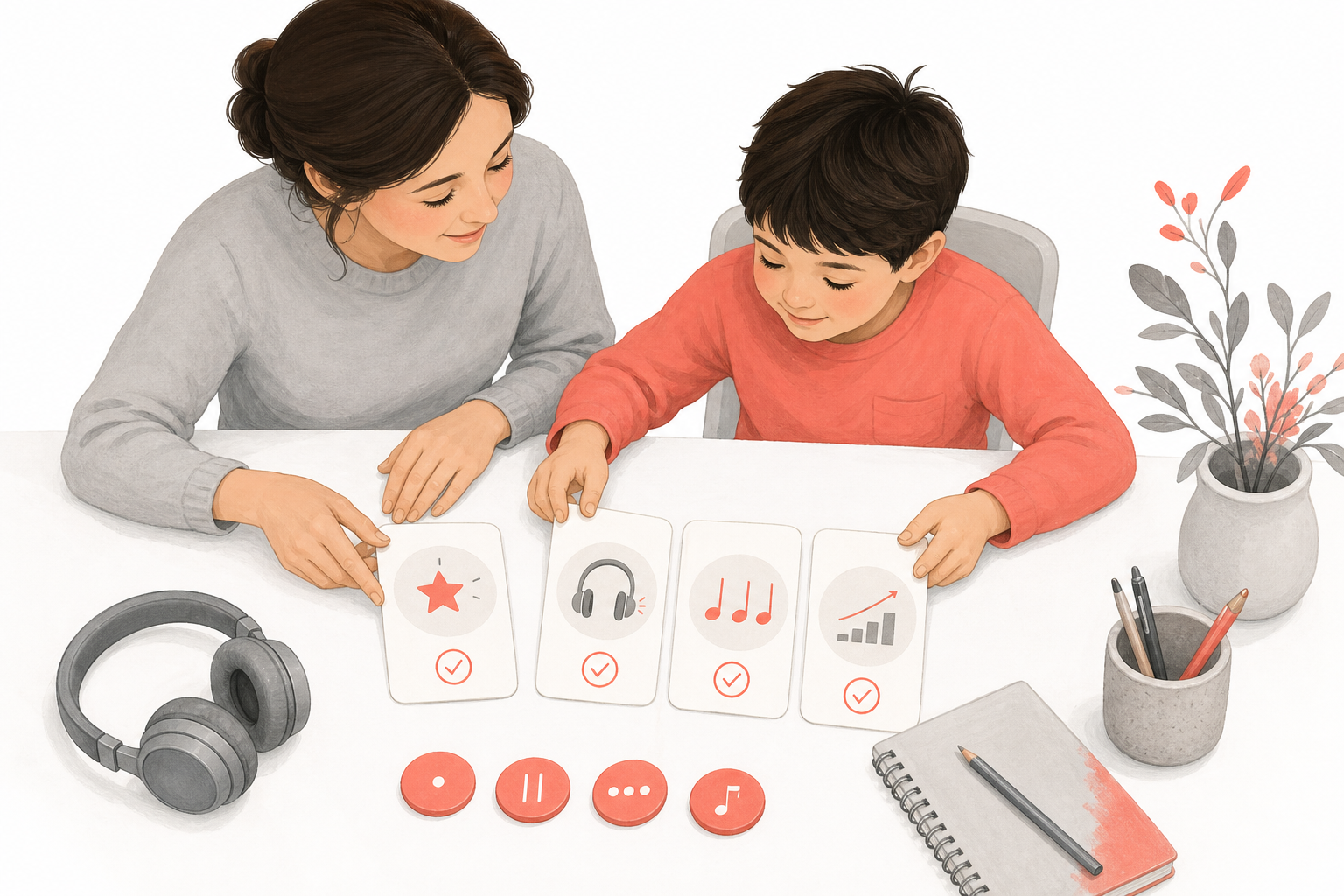
Signs your child is building real music-reading skills
Look for small, observable changes:
- Your child can find the starting place with less help
- They notice when the sound does not match the pattern
- They can clap or count a short rhythm before playing
- They recognize a repeated musical idea
- They need fewer reminders to track the next symbol
- They can explain one thing the written page is telling them
Progress may be uneven. A child can read rhythm well but need more help with pitch, or recognize notes while still working on coordination. The lesson should identify the next manageable skill instead of treating one hard area as a reason not to continue.
Frequently asked questions
Can a child play piano without reading sheet music?
Yes. Children can copy patterns, play by ear, and remember songs without reading sheet music. Those are useful abilities, but reading gives them another way to learn new music and work independently. A balanced beginner program develops both listening and reading.
Should children learn notes or songs first?
They can learn both together. A simple song gives new notes and rhythms a musical purpose. The teacher can introduce only the amount of notation needed for the child's current step, then expand the reading demands as confidence grows.
What age should a child read music?
There is no single required age. Children can begin recognizing direction, patterns, rhythms, and a few note locations before they read music independently. The pace should match the child's attention, development, and lesson format.
How long does it take to learn to read piano music?
Music reading develops gradually and depends on lesson consistency, practice, the complexity of the music, and the child's current skills. Instead of one deadline, look for progress in short patterns, rhythm accuracy, starting-note independence, and fewer prompts over time.
What if my child resists reading music?
First identify what feels hard. The page may contain too much information, the rhythm may be unclear, the child may be relying on memory, or the music may not feel meaningful. Ask the teacher to narrow the task and reconnect the written pattern with sound, movement, or a song the child understands.
Your child can learn to read while learning to play
Prior music reading is not a requirement for beginning piano. A well-designed path lets children experience music first-hand while gradually building the literacy that helps them become more independent. The best starting point is a lesson that feels possible now and clearly shows what comes next.
Explore iPianoLab programs and choose a beginner starting path for your child. Families who need a flexible home option can also review iPianoLab online learning. If your child has no prior experience at all, see our guide to beginner piano lessons with no musical background.