Why Can My Child Play the Right Piano Notes but Not the Rhythm?
Quick answer: if your child can find the right piano notes but plays the rhythm incorrectly, note reading may be using all of their attention. The beat, note lengths, and pauses have not yet become one movement. Do not ask them to fix everything at once. First clap or tap one short rhythm away from the piano, then play it on just one comfortable key, and only then add the written notes.
This is common beginner work, not proof that your child has no sense of rhythm. They may understand what a quarter note or half note means when asked, yet lose that information while also finding keys, choosing fingers, watching the page, and listening for mistakes.

Why can a child play the correct notes but the wrong rhythm?
Beginner piano playing asks the brain and body to coordinate several things at once. A child may need to read the direction of the notes, find the correct part of the keyboard, choose a finger, remember what comes next, and keep a steady pulse. When that load is too large, the easiest detail to drop is often time.
You may hear every note played for the same length, long notes cut short, rests skipped, or a song that pauses and restarts even though the pitch order is correct. The child may also play accurately when you count aloud but lose the pattern as soon as your voice stops. Those clues point to a coordination problem between reading and rhythm—not simply a lack of effort.
Listen for the specific rhythm problem
Before correcting the whole song, listen once and name only what happened. One of these patterns is usually easier to solve than “the rhythm is wrong”:
- Every note becomes one beat. The child is finding pitches but not holding longer notes.
- Pauses appear before difficult notes. Note finding is interrupting the pulse.
- Rests disappear. Silence does not yet feel like part of the music.
- The song speeds up in familiar spots. Memory is pulling faster than the steady beat.
- The pattern works with counting but falls apart alone. The external cue has not yet become an internal pulse.
If the main issue is speeding up rather than note length, see why beginner piano songs rush. If pauses happen between nearly every note, the more useful starting point may be the three-note connection routine.
A five-minute “rhythm first” reset
Choose one measure or one very short musical idea. Do not begin at the top of the song unless the first measure is the exact place that needs help.
- Tap a steady pulse for 30 seconds. Use the table, knees, or four small objects in a row. Keep the pulse comfortable, not fast.
- Speak the rhythm. Count in the same way the teacher uses, or say a neutral syllable for each sound. Keep silent space where the music has a rest.
- Play the rhythm on one key. Pick one comfortable key and ignore the written pitches. Hold long sounds for their full time.
- Add only the real notes in that small group. Keep the same calm pulse. Stop after the chosen measure.
- Reconnect one measure before and after. Test whether the corrected rhythm survives in context.
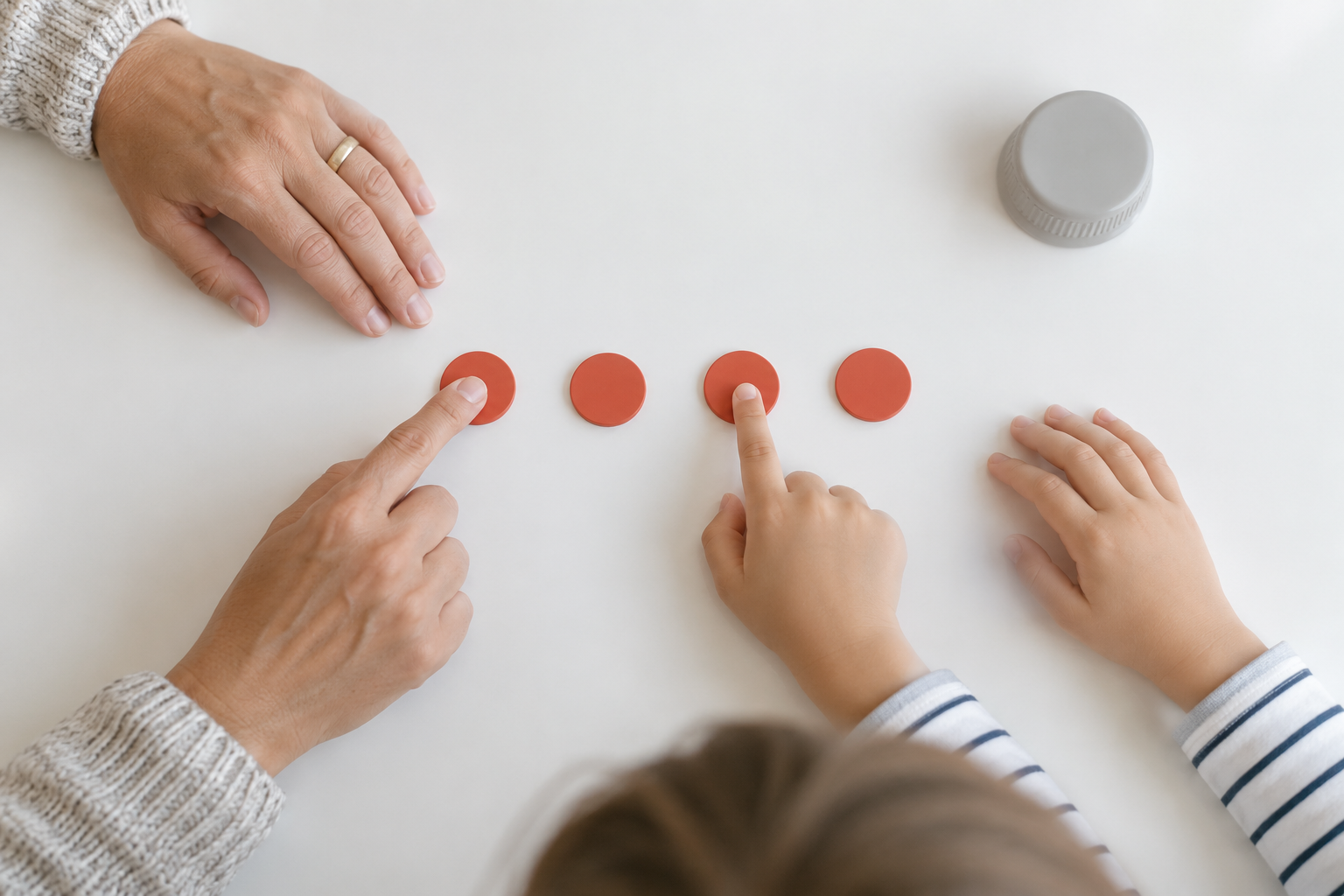
The purpose is not to repeat the full song five times. It is to let the child feel one correct rhythm clearly, then carry that feeling back to the notes.
Should parents count aloud while a child plays?
Counting aloud can help, but it works best as temporary support. Start by counting with your child. Then make your voice softer, count only the first beat of each group, or tap without speaking. Finally, let the child try alone.
If your child can play only while you count every beat, do not suddenly remove all support and call it a test. Fade one cue at a time. The goal is for the child to carry the pulse, not to prove independence in one attempt.
What should parents avoid?
- Do not correct notes and rhythm at the same moment. Choose the skill that matters in this repetition.
- Do not make “slow down” the whole instruction. A slower tempo helps only if the child knows what to listen or count for.
- Do not clap while the child guesses at the keys for a long section. Short groups make the relationship easier to hear.
- Do not turn every practice into a quiz on note values. Knowing the definition and coordinating it while playing are different tasks.
- Do not erase every pause immediately. A pause may reveal the exact note, fingering, or reading decision that needs teacher help.
When should you ask the piano teacher?
Bring one precise observation instead of saying that rhythm is always a problem. Try: “The notes are correct in this measure, but every sound becomes one beat unless I count aloud. Which count or practice cue do you want us to use?”
Ask sooner if the child seems unsure how the teacher counts, if the printed assignment and the demonstration feel different, or if the same short rhythm remains confusing after several calm attempts. The teacher can check whether the issue is the rhythm itself, the fingering, the reading level, or the size of the assigned section.
How rhythm fits into beginner progress
Correct notes are one part of a song. Rhythm gives those notes shape and forward motion. A healthy beginner path develops both gradually through listening, counting, movement, short patterns, and songs that make the skill worth using.
If you are deciding what early progress should look like, the first six weeks of piano lessons should include small, usable signs: finding starting notes, following a simple rhythm cue, playing a short pattern, and knowing one clear next step.
Frequently asked questions
Is it normal for a beginner to play the right notes with the wrong rhythm?
Yes. A beginner may use most of their attention to find pitches and fingers, leaving less attention for beat and note length. Short, separated rhythm work can help reconnect the skills.
Should my child use a metronome?
A metronome can be useful when the child already understands the short rhythm and needs a steady external pulse. If the pattern itself is unclear, first clap, speak, and play it on one key. Ask the teacher what tempo and counting language match the assignment.
What if my child knows note values but still plays them incorrectly?
Naming a note value is a knowledge task; holding it correctly while reading and moving is a coordination task. Practice one short pattern away from the full song, then add the real notes.
How long should we practice a difficult rhythm?
Use a few focused minutes on one small section. Stop after a clear improvement or a useful question emerges. Long repetitions can hide the exact point of confusion and increase tension.
Can parents help if they do not read music?
Yes. A parent can listen for a steady pulse, notice where a pause or rushed spot repeats, and help the child follow the teacher’s written or demonstrated routine. You do not need to reteach the whole piece.