Why Does My Child Play Piano Songs Too Fast?
If your child races through a piano song, start with the beat rather than another reminder to “slow down.” Clap or tap a comfortable pulse together, choose just one short phrase, and play it at a pace where the notes and rhythm stay clear. A child may know the opening well and still rush through a less familiar middle or ending. The goal is a steady, playable pace—not the slowest possible performance.
Rushing is a useful clue, not a character flaw. Excitement, an uncertain rhythm, a difficult hand change, or the wish to get past a tricky spot can all sound like “too fast.” A parent who does not read music can still help by listening for whether the beat feels even and by asking one specific question.
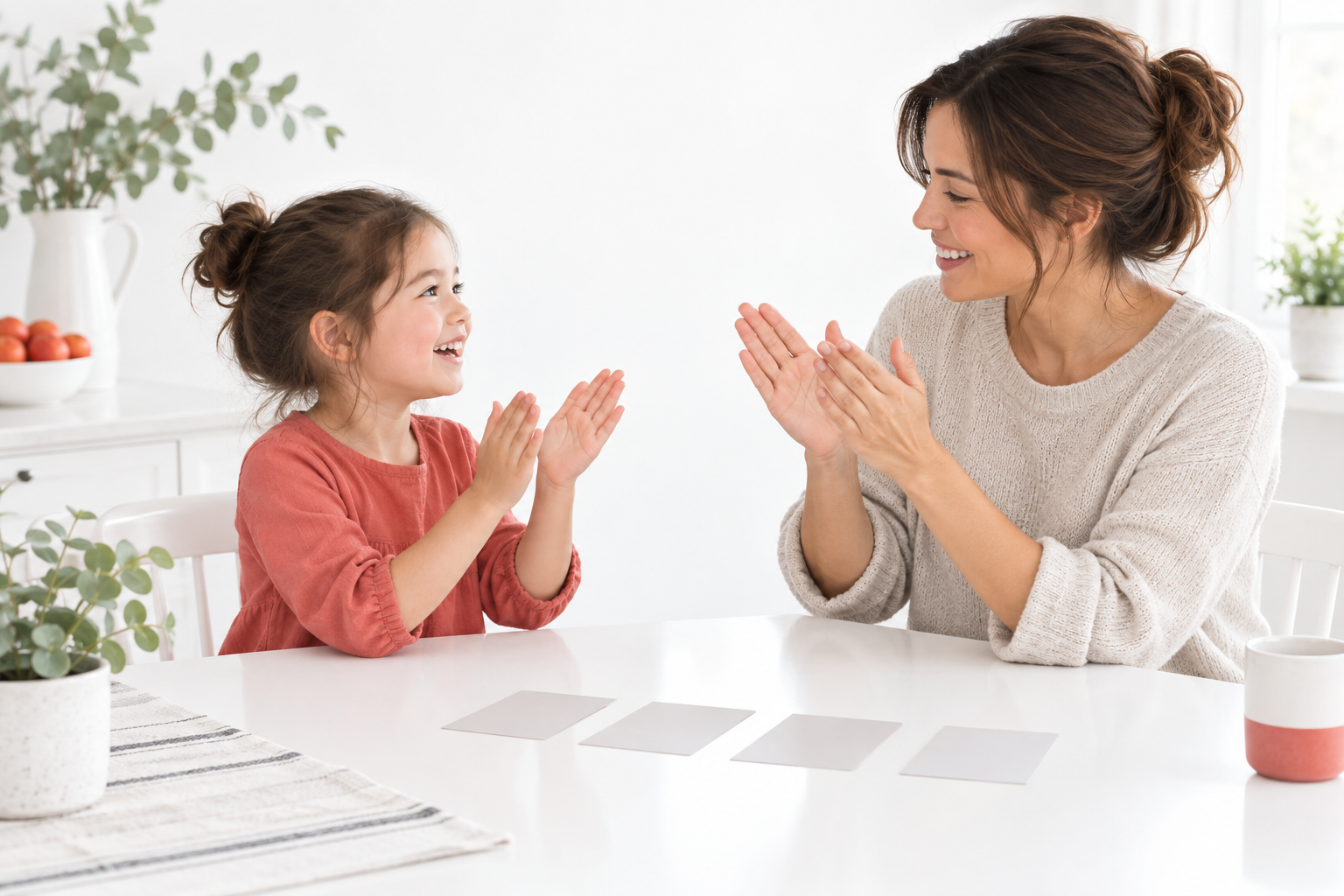
How can a parent tell if piano playing is too fast?
Speed by itself is not the problem. Listen for a change in the distance between beats: does the beginning feel measured, then does the child squeeze notes together or hurry through a transition? Do longer notes lose their full count? Does the ending speed up as though the child wants to be done? Ask your child to clap the rhythm of a short phrase before playing it. If the clap also rushes, start there. If the clap is steady but the playing rushes, the hand movement or note-finding may need a smaller step.
There is no universal “correct speed” for every beginner song. Follow the teacher’s assignment and the music your child is actually learning. For a new phrase, an even pace that leaves room to think is usually more useful than a fast run with repeated stumbles. If a song itself is beyond your child’s current step, see our guide to recognizing when a piano song is too hard.
A five-minute reset for a child who rushes
- Minute 1: listen and choose. Have your child play the part once without interrupting. Together pick one phrase of a few notes or one measure where the beat changes unexpectedly. Avoid restarting the whole song.
- Minute 2: make the pulse visible. Clap, tap the table, or take gentle steps at a comfortable, even pace. Say “one, two, three, four” only if that count fits the assigned music; otherwise use a simple steady tap and ask the teacher how to count it.
- Minutes 3–4: play the small phrase. Ask your child to play it while you quietly tap the pulse. If it breaks down, make the phrase shorter or let one hand do its part alone if the teacher has introduced that approach. Keep the pulse steady instead of forcing the fingers to chase it.
- Minute 5: connect and finish. Add the note or measure just before and after the phrase. End with a familiar part played at a comfortable pace. Tell the child what you heard: “The ending had the same beat as the beginning.”
Try this once, then return to the teacher’s normal assignment. It is a troubleshooting tool, not a demand to repeat every song slowly for an arbitrary number of minutes. If your child starts to tense up or argue, stop and bring the exact phrase to the next lesson.
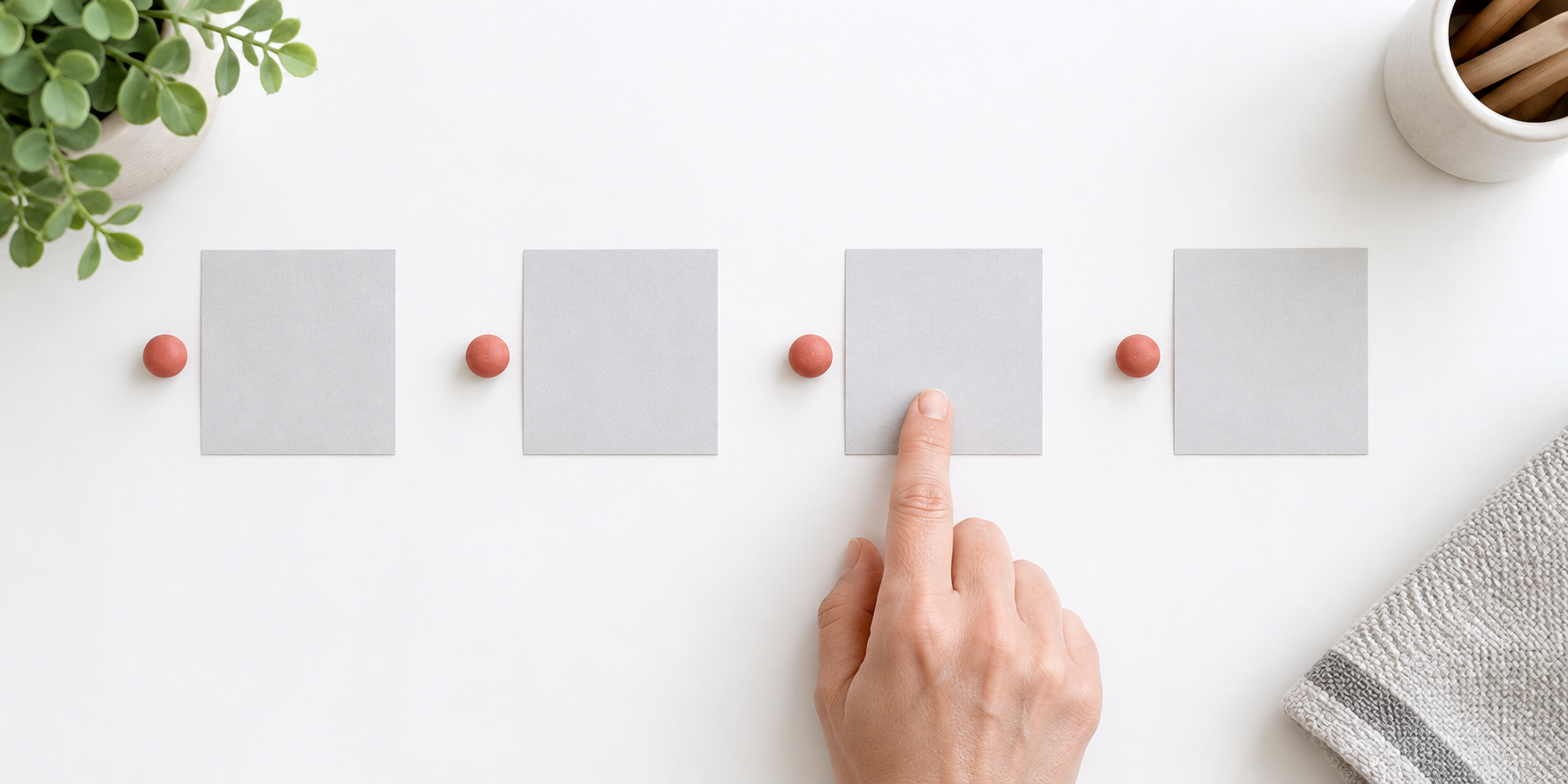
Why do children rush through a piano song?
The opening is familiar, but the next phrase is not
Children may launch at the speed of the part they know best and then scramble to keep that pace when the music changes. Start from the unfamiliar phrase, not always from the beginning. For children who repeatedly restart after a mistake, our restart-points guide explains how to practice the middle and ending too.
The rhythm is unclear
If clapping or speaking the rhythm is uneven even without the piano, note-finding is not the first problem to solve. Ask the teacher to demonstrate the count, then copy a very small section. Do not invent a count that conflicts with the assignment.
A hand change or jump takes more preparation
A child might race into a new position to avoid a pause, or hurry after a pause to “catch up.” Practice the move between two nearby points at a pace where the hand can arrive deliberately. Ask the teacher whether separate-hand practice is appropriate. Our guide to playing with both hands offers more small-step ideas.
The child wants to finish or perform
Sometimes the speed is excitement; sometimes it is fatigue. Give the child a choice of one short phrase to improve and one familiar song to enjoy. Praise listening and control, not simply faster playing. If every practice ends in conflict, ask the teacher whether the assignment, length, or lesson path needs adjustment.
Should you use a metronome?
Not necessarily. A metronome can be helpful once the child understands the phrase and can clap or play a simple pulse without fighting the click. It can also add another task too early. Start with a human tap or clap; ask the teacher whether and how to introduce a metronome for this piece. See our separate metronome guide for a fuller readiness check.
What should you tell the piano teacher?
Give a specific observation rather than “my child always plays too fast.” For example: “The first line stays even, but the last four notes speed up,” or “Clapping is steady, but the left-hand change makes the beat uneven.” Ask which phrase to practice, what pulse or counting method to use, and what “ready to move on” should sound like this week. That lets the teacher connect the home routine to the actual lesson.
iPianoLab helps beginners play songs they enjoy while building rhythm, counting, keyboard geography, reading, and coordination over time. A useful lesson path gives a child both musical excitement and a manageable next step. If you are comparing formats, explore iPianoLab online learning alongside your family’s schedule and the feedback your child needs.
Frequently asked questions
Is playing fast a sign that my child has mastered the song?
Not by itself. Ask whether the rhythm stays even, the notes remain clear, and the child can start from a middle phrase at a comfortable pace. Control at more than one point in the song tells you more than one quick run from the beginning.
Should I stop my child each time they speed up?
No. Listen to one full attempt first, then choose one short place to revisit. Constant interruptions can make a child focus on avoiding correction rather than hearing the music.
What if my child will not play slowly?
Try clapping the phrase together away from the instrument, make the goal smaller, and let the child choose which few notes to repeat. If the resistance persists, tell the teacher exactly where it happens and ask for a different practice cue.
How fast should a beginner play?
Use the teacher’s guidance for the assigned piece. During learning, choose a pace at which the child can keep a reasonably even pulse and notice what happens next. A single beats-per-minute number is not useful without the specific music and child.
Turn speed into a listening skill
Choose a small phrase, find a shared pulse, and notice one improvement. A child who can hear when the beat changes has a way to make the next attempt more musical. If you are choosing a beginner program, review current iPianoLab signup options and choose a path that fits your child and family.