Why Does My Child Play Piano Chords One Note at a Time?
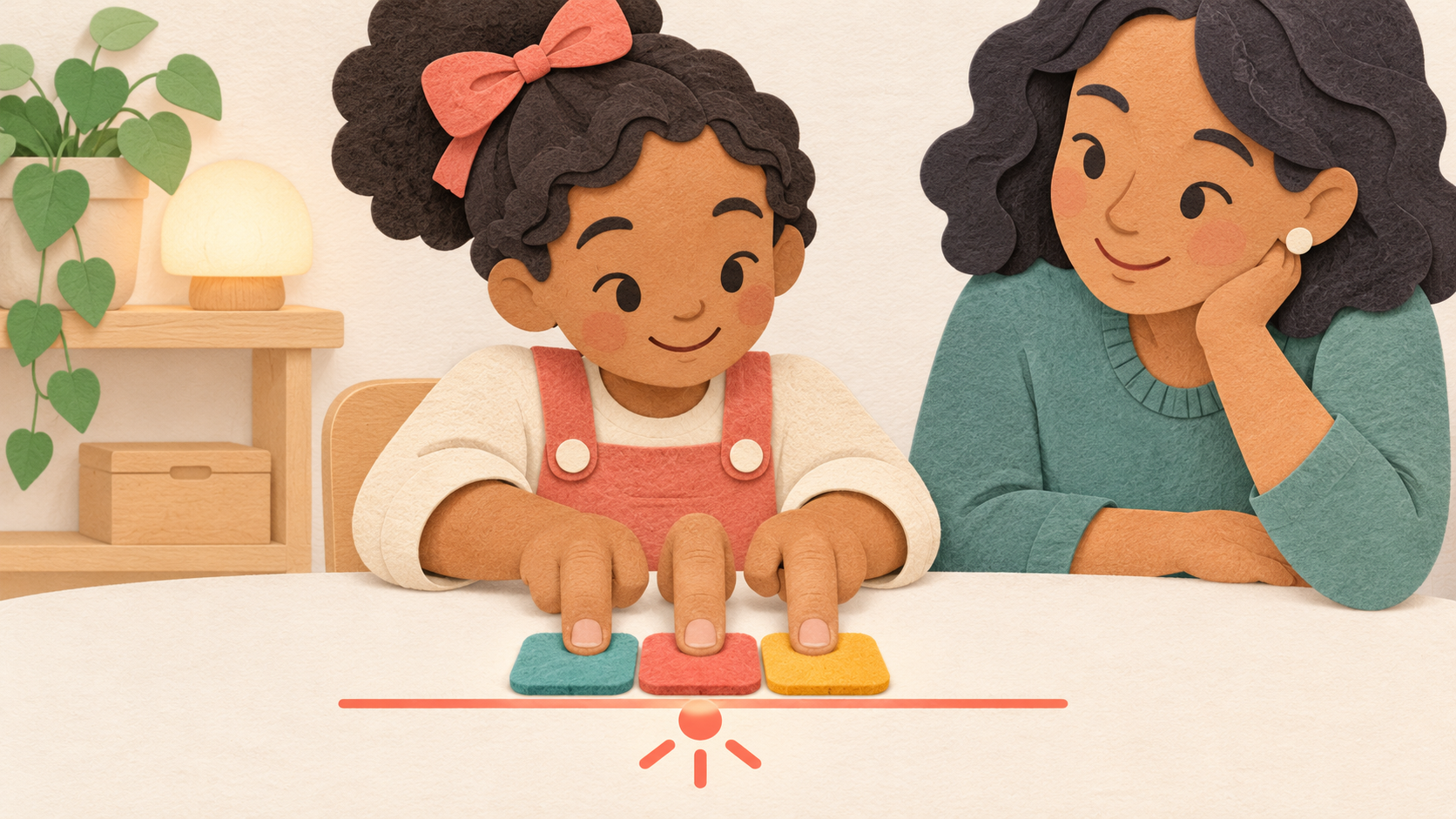
Quick answer: A beginner may play chord notes one after another because the fingers are still learning to arrive together, the hand shape feels too wide, the fingering is unclear, or the child is using a broken-chord pattern on purpose. Before correcting the sound, check what the teacher or music actually asks for. If the notes should sound together, use a small, comfortable shape and practice one shared start.
A chord is a group of notes that creates harmony. Sometimes those notes are played at the same moment. Sometimes a composer or teacher intentionally asks for them one after another. The parent’s first job is to tell the difference—not to press the child’s fingers down.
Blocked chord or broken chord?
| What you hear | What it may mean | Best next check |
|---|---|---|
| All notes begin together | A blocked chord | Can the child start and release without tension? |
| Notes follow one another in a planned pattern | A broken chord or accompaniment pattern | Does the order and rhythm match the assignment? |
| Notes are meant to begin together but arrive unevenly | A coordination or hand-shape problem | Can a smaller shape begin on one shared pulse? |
If the notation or demonstration is unclear, ask the teacher. “Together” and “one after another” are different musical jobs, and repeating the wrong version can make the confusion more familiar.
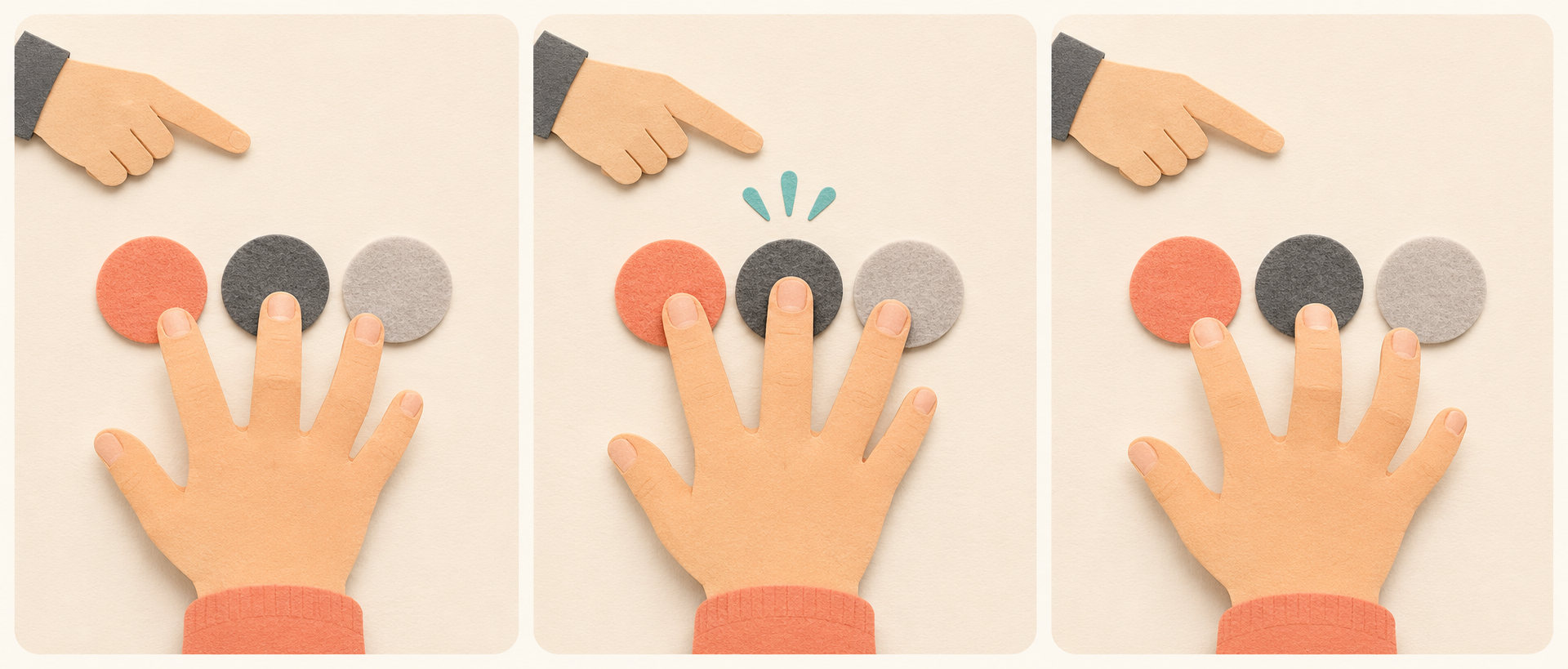
Why beginner chord notes arrive at different times
- The fingers are finding their places separately. The child may locate one key, then search for the next instead of preparing the full shape before playing.
- The hand is trying to stretch too far. A chord that is comfortable for an adult may be too wide for a young beginner. The teacher may use fewer notes, a smaller voicing or a broken version.
- One finger starts the motion. A confident finger may press first while the others follow. That does not mean the child is lazy; it shows that the shared start is not coordinated yet.
- The fingering changes on every attempt. A different finger plan changes the hand shape and makes the next start less predictable.
- The child is rushing to keep the song moving. Starting before every finger is ready can turn one chord into a quick cascade.
Listen for the pattern. Does the same note always arrive first? Does the chord work slowly but separate at a faster tempo? Does the child twist, hold the wrist rigid or shake out the hand? A specific observation gives the teacher more useful information than “the chord sounds wrong.”
A five-minute prepare–press–release routine
Use one chord the teacher has already assigned. This routine helps with timing; it does not replace the teacher’s fingering or ask the child to force a reach.
- Confirm the sound. Ask whether the notes should begin together or follow a pattern. Use the lesson demonstration, marked music or teacher direction instead of guessing.
- Choose a comfortable shape. Start with two notes or a small three-note chord that fits the child’s current reach. If the assigned shape feels wide, stop and ask the teacher how to adapt it.
- Prepare before playing. Let the fingertips rest lightly over their keys. Check that each finger has a clear place before any key moves.
- Use one shared pulse. Say “ready—together” or tap one gentle beat. The goal is one calm start, not a louder or faster chord. Try twice, then pause and listen.
- Release and reconnect. Let the hand relax after the chord. Add one neighboring beat or the next small part of the song only when the shared start remains comfortable.
If two notes begin together but the third still follows, keep the successful pair and ask the teacher whether to add the last note, change the fingering or use a smaller voicing. Building from a clear success is more useful than squeezing harder.
What parents should avoid
- Do not push the child’s fingers into the keys.
- Do not ask for a wider stretch because the chord looks easy for an adult.
- Do not repeat the entire song when one chord is the problem.
- Do not add speed before the hand can prepare calmly.
- Do not continue an activity that causes pain, tingling or persistent discomfort.
A child can learn harmony without playing every chord in its largest form. iPianoLab’s guide for children with small hands explains that teachers can use two-note shapes, smaller voicings, broken chords or other adaptations while preserving the musical goal.
When the piano teacher should take the lead
Ask the teacher to check the exact chord when the child cannot reach it comfortably, the marked fingering feels awkward, the same finger always arrives late, the hand becomes rigid, or the notes separate again as soon as the chord returns to the song. Also ask whether the chord is supposed to be blocked or broken.
Bring one short observation: “The first and third notes start together, but the middle note arrives late,” or, “The shape works alone but separates after the melody.” That helps the teacher address coordination, fingering, reach or rhythm directly.
Frequently asked questions
Should a beginner press all chord notes with equal force?
Begin with a comfortable, balanced start, but do not turn equal force into a squeezing exercise. The teacher can guide tone and balance once the shape and timing are clear.
Can a child practice a chord as separate notes first?
Yes, when that makes the notes and fingering clear. Then prepare the full shape and join one shared start. Separate practice is a step toward the assigned sound, not always the finished version.
Are broken chords wrong?
No. Broken chords are a normal musical pattern when the notes are meant to sound one after another. The issue is only whether the child is playing the version the music calls for.
What if the chord hurts?
Stop the painful activity and tell the teacher which chord or passage caused it. Do not ask a child to push through pain or force a larger span.
Help your child build chords inside real music
iPianoLab connects early songs with rhythm, listening, keyboard geography, note reading, chords and two-hand coordination in manageable steps. Ready to find a beginner path? Visit the iPianoLab school program page to look for a class at your child’s school.